Understanding the Canadian Air Force Ranks
Navigating the hierarchy of the Royal Canadian Air Force requires understanding a distinct structure that blends British Commonwealth traditions with unique Canadian military identifiers. The rank system is divided into two primary cat...
Navigating the hierarchy of the Royal Canadian Air Force requires understanding a distinct structure that blends British Commonwealth traditions with unique Canadian military identifiers. The rank system is divided into two primary categories: Officers and Non-Commissioned Members, each reflecting specific levels of leadership, responsibility, and specialized technical expertise.
Contents
The Royal Canadian Air Force (RCAF)—known officially in French as Aviation royale canadienne—operates as the air and space component of the Canadian Armed Forces. Operating under a unified command structure since the 1968 unification of the Canadian military, the air force maintains its own distinct rank titles, uniform distinctions, and traditions while sharing its overarching pay scales and structural tiers with the Canadian Army and Royal Canadian Navy. Whether you are conducting historical research, preparing for a career in military service, or interacting with defense personnel, decoding these insignia and titles is essential for recognizing authority and operational roles within Canada's air defense infrastructure.
The Structure of Canadian Military Ranks
Military rank structures exist to establish clear chains of command, ensure operational accountability, and define spheres of responsibility. In the Canadian Armed Forces, the rank structure is broadly partitioned into two distinct cohorts: Officers and Non-Commissioned Members (NCMs).
Officers hold King's commissions, granting them the authority to lead personnel, formulate tactical and strategic plans, and manage complex military operations. They are generally university graduates or individuals who have completed rigorous commissioning programs through institutions like the Royal Military College of Canada. Non-Commissioned Members, by contrast, make up the backbone of the operational and technical workforce. They enter the military without a commission, starting as recruits and advancing through specialized trade training to master technical fields, supervise junior personnel, and advise commanding officers on practical matters.
Within both officers and NCMs, ranks are further subdivided. Junior officers handle tactical execution at the squadron level, while senior and general officers manage large-scale administrative, logistical, and strategic deployments. Similarly, junior NCMs focus on hands-on trade execution, master corporals and sergeants take on frontline leadership, and chief warrant officers serve as senior advisors to commanding officers regarding troop morale, discipline, and standards.
Non-Commissioned Members (NCMs) Ranks
Non-Commissioned Members perform the core technical, mechanical, administrative, and tactical work that keeps the air force operational. From aerospace telecommunication and information systems technicians to flight engineers and loadmasters, NCMs ensure that aircraft are maintained, bases run smoothly, and missions succeed.
The progression of NCM ranks moves upward from entry-level recruits to the pinnacle of the enlisted structure, the Canadian Forces Chief Warrant Officer.
- Aviator (Avr): The initial entry rank for enlisted personnel. Depending on qualifications and time served, it can be unclassified or categorized into trained pay increments.
- Corporal (Cpl): A foundational rank achieved after completing initial trade training and gaining foundational experience. Corporals are skilled technicians and operators.
- Master Corporal (MCpl): A unique rank in the Canadian Armed Forces. Master Corporals are senior corporals appointed to junior leadership positions, supervising small teams of aviators and corporals.
- Sergeant (Sgt): Mid-level supervisors responsible for section-level leadership, technical oversight, and mentorship of junior troops.
- Warrant Officer (WO): Senior tactical leaders who manage larger sections or sub-units, providing administrative and technical expertise to officers.
- Master Warrant Officer (MWO): Senior advisors who typically serve as the second-in-command of a major squadron or functional unit, overseeing discipline and standards.
- Chief Warrant Officer (CWO): The highest NCM rank. CWOs serve as the senior enlisted advisors to commanding officers at wing, division, or national levels, representing the interests of the entire enlisted force.
Officer Ranks
Officers command operational units, direct strategic policy, and coordinate multi-domain air operations. The officer corps is structured hierarchically from junior officers freshly graduated from training to senior flag officers who shape national defense strategy.
Air force officer ranks utilize unique historical terminology derived from British traditions, distinguishing them from naval equivalents while aligning with army pay and structural tiers.
- Officer Cadet (OCdt): The initial rank for officer candidates undergoing training at the Royal Military College or through civilian university commissioning programs.
- Second Lieutenant (2Lt): The junior commissioned rank held by newly graduated officers before completing advanced trade or occupational training.
- Lieutenant (Lt): An experienced junior officer who has completed basic occupational training and assumes direct command of minor sub-units or staff duties.
- Captain (Capt): The primary rank for experienced operational officers, flight leads, and staff officers. Many career air force pilots and navigators spend significant years at this rank.
- Major (Maj): Mid-level leaders who typically command squadrons or hold significant senior staff responsibilities at wings and headquarters.
- Lieutenant-Colonel (LCol): Senior officers who command wings, large squadrons, or direct major operational departments.
- Colonel (Col): Senior commanders responsible for entire military wings (bases) or high-level strategic planning staffs.
- Brigadier-General (BGen): The lowest general officer rank, responsible for major formations, divisions, or multi-role task forces.
- Major-General (MajGen): High-ranking flag officers holding significant operational commands or top-level directorates at National Defence Headquarters.
- Lieutenant-General (LGen): Senior general officers holding major command positions, such as the Commander of the Royal Canadian Air Force or Vice Chief of the Defence Staff.
- General (Gen): The highest attainable rank in the contemporary Canadian Armed Forces, typically held only by the Chief of the Defence Staff.
Comparative Overview of RCAF Ranks
To better visualize how Non-Commissioned Members and Officers compare across the service hierarchy, the following table outlines the complete rank structure from entry-level to senior leadership, paired with their official abbreviations.
| Rank Category | Rank Title | Abbreviation | Structural Level |
|---|---|---|---|
| NCM | Aviator | Avr | Entry / Junior |
| NCM | Corporal | Cpl | Junior |
| NCM | Master Corporal | MCpl | Junior Leader |
| NCM | Sergeant | Sgt | Intermediate Leader |
| NCM | Warrant Officer | WO | Senior Leader |
| NCM | Master Warrant Officer | MWO | Senior Leader |
| NCM | Chief Warrant Officer | CWO | Apex Enlisted |
| Officer | Officer Cadet | OCdt | Entry / Training |
| Officer | Second Lieutenant | 2Lt | Junior Officer |
| Officer | Lieutenant | Lt | Junior Officer |
| Officer | Captain | Capt | Mid-Level Officer |
| Officer | Major | Maj | Field Grade |
| Officer | Lieutenant-Colonel | LCol | Field Grade |
| Officer | Colonel | Col | Senior Commander |
| Officer | Brigadier-General | BGen | General Officer |
| Officer | Major-General | MajGen | General Officer |
| Officer | Lieutenant-General | LGen | General Officer |
| Officer | General | Gen | Apex Officer |
Insignia, Uniforms, and Historical Context
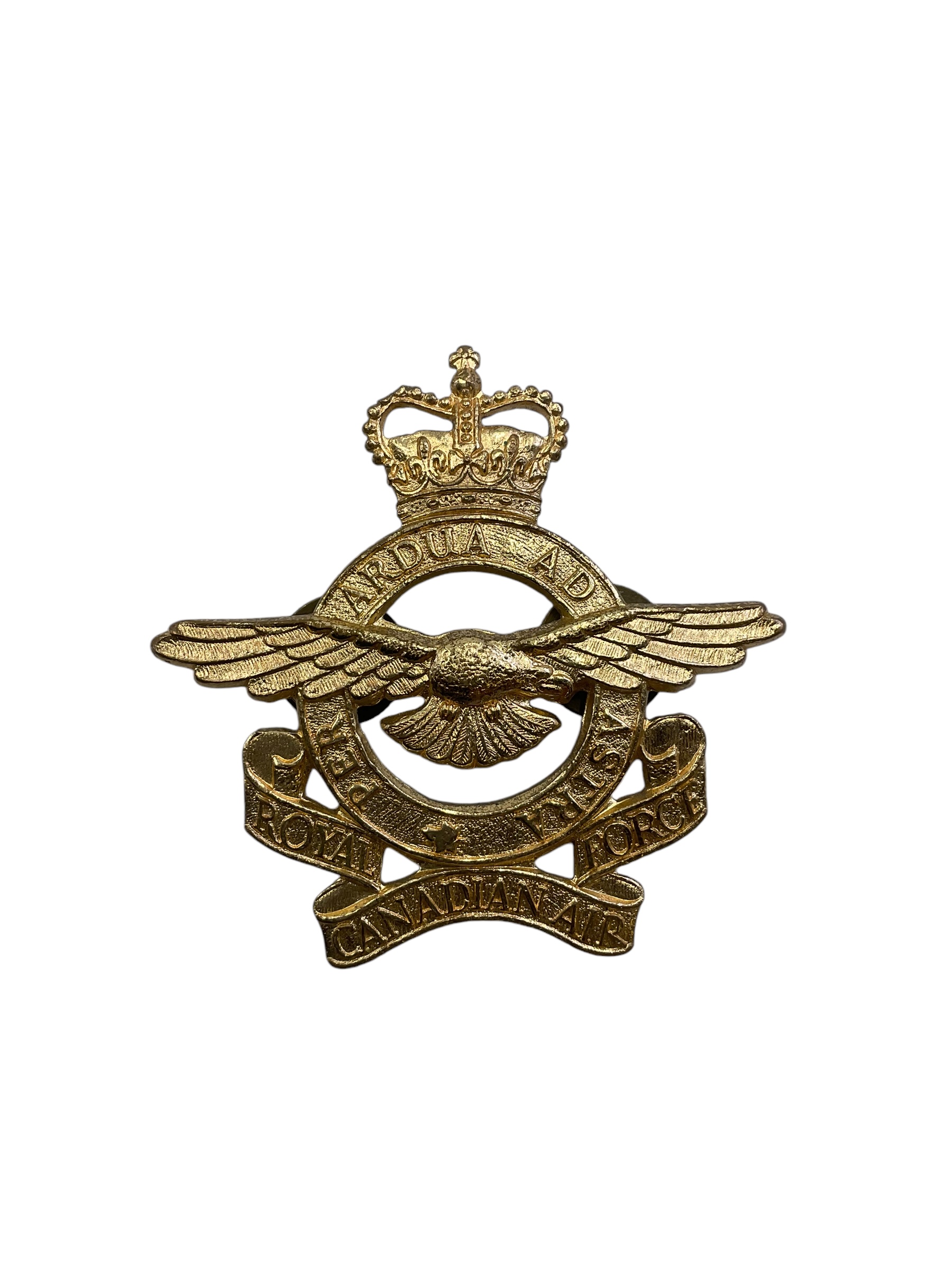
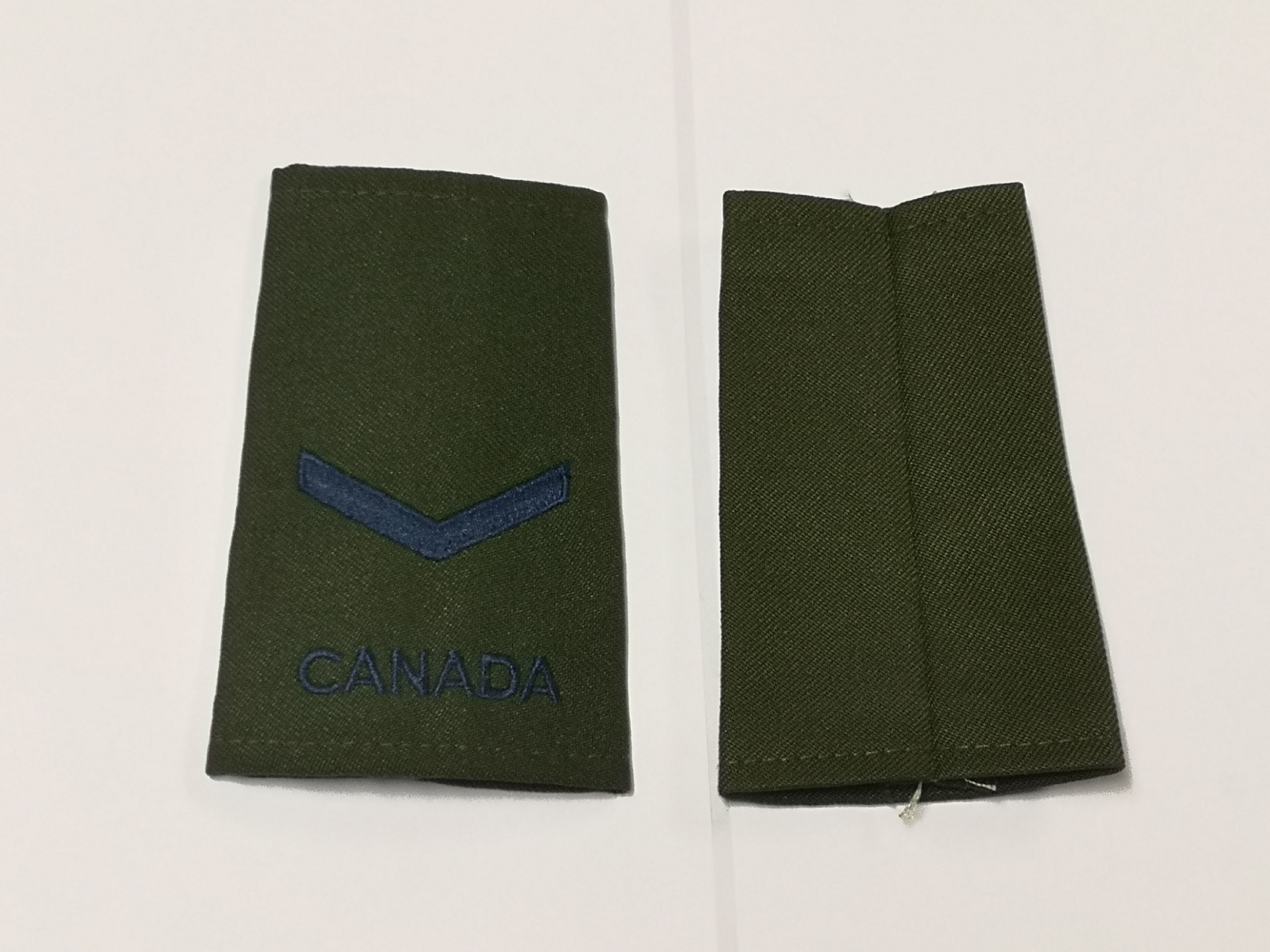
The visual identification of RCAF ranks relies heavily on uniform insignia worn on sleeves, shoulders, or slip-ons. Following the unification of the Canadian Armed Forces in 1968, air force personnel initially wore dark green uniforms with standardized gold braid rank insignia similar to the army. However, following the authorized re-adoption of distinct air force environmental identifiers in the 1980s and 1990s, the RCAF returned to traditional distinct blue uniforms and light blue or pearl-grey rank braid.
For Non-Commissioned Members, rank insignia are traditionally worn on the sleeves of service dress jackets or on slip-on epaulets for operational and everyday dress. These include chevrons pointing downwards for corporals and sergeants, complex multi-chevron and crown motifs for warrant officers, and the Canadian Coat of Arms for Chief Warrant Officers.
For Officers, rank is indicated by stripes of varying widths worn on the lower sleeves of service dress jackets or on shoulder slip-ons. These stripes feature distinct spaces between them, distinguishing air force officer braids from naval executive curls or army straight braids. General officer ranks are denoted by gold maple leaf clusters and crossed swords or batons on shoulder boards and gorget patches.
Frequently Asked Questions
How long does it take to promote through RCAF ranks?
Promotion timelines vary significantly based on trade demand, individual performance evaluations, completion of professional military education courses, and time-in-rank prerequisites. For example, moving from Aviator to Corporal typically occurs automatically after standard training and service milestones, while advancing to senior ranks like Major or Chief Warrant Officer requires competitive selection boards and years of dedicated service.
Are RCAF ranks different from the Canadian Army?
While the pay grades, structural tiers, and overall authorities are identical across all elements of the Canadian Armed Forces, the actual titles used for Non-Commissioned Members and Junior Officers differ to reflect historical traditions. For instance, an air force private is called an "Aviator," whereas an army equivalent is a "Private," and a naval equivalent is an "Ordinary Seaman" or "Able Seaman."
What is the role of a Master Corporal in the air force?
A Master Corporal is an NCM rank unique to the Canadian military system. It sits above a Corporal and below a Sergeant. Master Corporals are working leaders who possess advanced technical skills in their specific trade while holding formal authority to supervise small teams of junior personnel.
Can a Non-Commissioned Member become an Officer?
Yes, qualified Non-Commissioned Members can apply for commissioning programs such as the Regular Officer Training Plan (ROTP) or the Commissioning from the Ranks Plan (CFRP). These programs allow enlisted personnel with the requisite aptitude and educational background to transition into the officer corps.
Where can official military dress and rank regulations be found?
Official guidance regarding uniform standards, deportment, and the wearing of rank insignia is governed by the Department of National Defence and the Canadian Armed Forces through policy documents such as the Canadian Forces Dress Instructions (A-AD-265-000/AG-001), maintained via the Government of Canada National Defence portal.
Next Actions and Further Reading
For those pursuing a career in military service, conducting genealogical research, or studying defense policy, mastering the rank structure provides an essential foundation for operational literacy. Aspiring candidates should review official recruitment portals to understand specific educational prerequisites and fitness standards required for entry into either the officer corps or specialized NCM trades. Researchers looking for deep historical context on uniform evolution can consult archival publications provided by the Directorate of History and Heritage within the Department of National Defence.
Image Gallery