How to Calculate a Yearly to Monthly Salary Conversion
Converting an annual salary into a monthly figure requires dividing the total yearly compensation by twelve, though precise calculations depend on pay frequency, standard working hours, and whether bonuses or overtime are factored into...
Converting an annual salary into a monthly figure requires dividing the total yearly compensation by twelve, though precise calculations depend on pay frequency, standard working hours, and whether bonuses or overtime are factored into the gross earnings.
Contents
Understanding how to calculate a yearly to monthly salary conversion is essential for personal financial planning, evaluating job offers, budgeting for housing or loans, and preparing tax documents. While the math seems straightforward at first glance, subtle variations in payroll schedules, hourly pay structures, and supplemental compensation can alter the final figures. Navigating these conversions accurately ensures that employees, human resources professionals, and freelancers can translate financial figures across different timelines without confusion.
The Basic Formula for Yearly to Monthly Salary Conversion
The foundational method for converting an annual salary into a monthly amount relies on a simple division principle. Because there are twelve months in a calendar year, you take the gross annual salary and divide it by 12.
For example, if a position offers a gross annual salary of $60,000, the basic calculation is:
$$\text{Monthly Salary} = \frac{\text{Annual Salary}}{12}$$
$$\text{Monthly Salary} = \frac{$60,000}{12} = $5,000$$
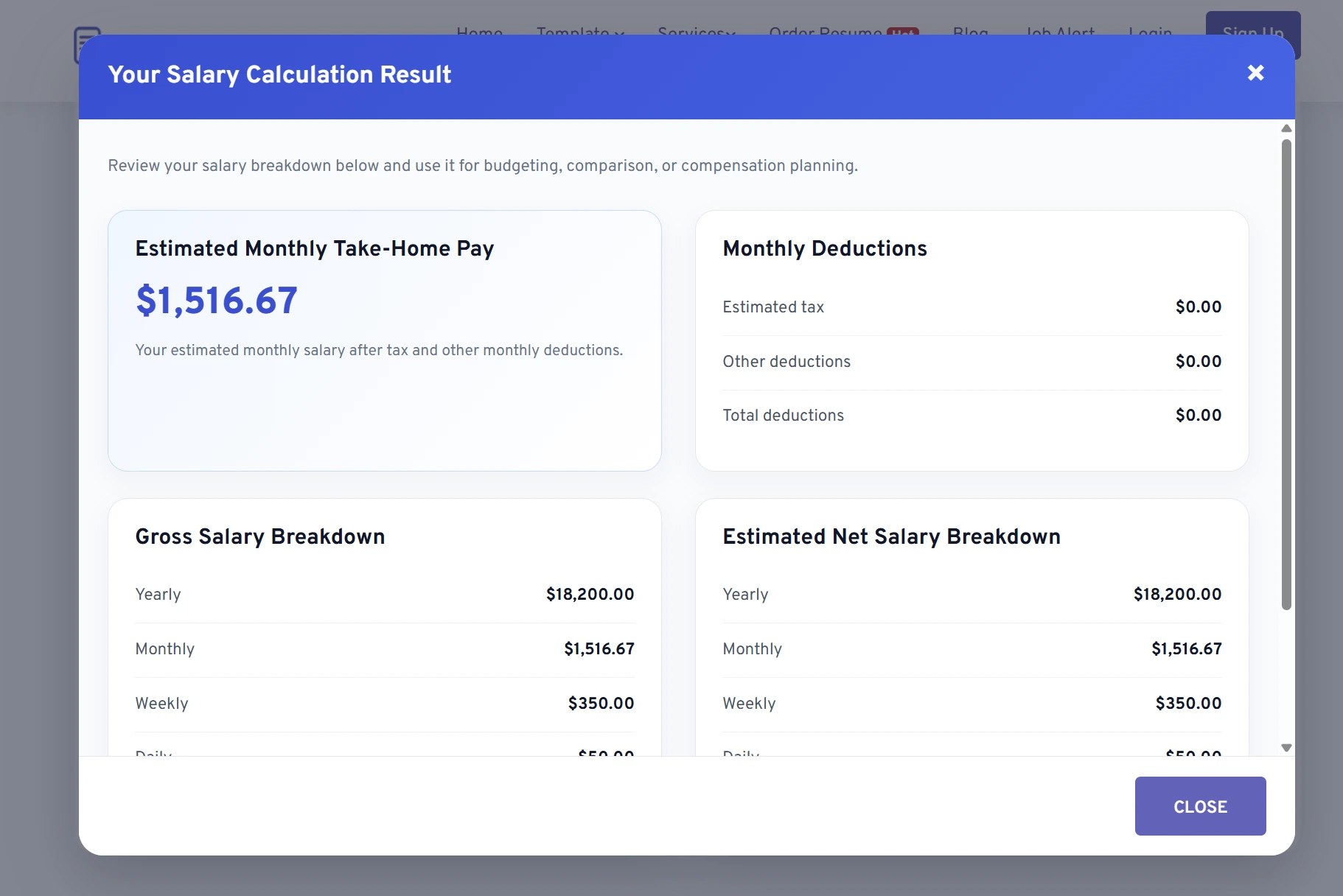
This gross monthly figure represents earnings before any payroll deductions such as federal, state, and local income taxes, Social Security contributions, Medicare, health insurance premiums, and retirement account withholdings. When evaluating job offers, it is critical to distinguish between gross salary—the total amount agreed upon before deductions—and net salary, which is the actual take-home pay landing in a bank account.
Why Gross Versus Net Pay Matters
Using gross figures provides a baseline for comparing job offers across different companies or regions. However, net pay dictates everyday purchasing power. Two individuals earning a $72,000 yearly salary—translating to a $6,000 gross monthly income—might take home entirely different monthly sums depending on their state tax burdens, filing statuses, and benefit elections. Always factor in local tax laws and deduction choices when moving from a yearly salary to an expected monthly budget.
Converting Hourly Wages and Annual Salaries
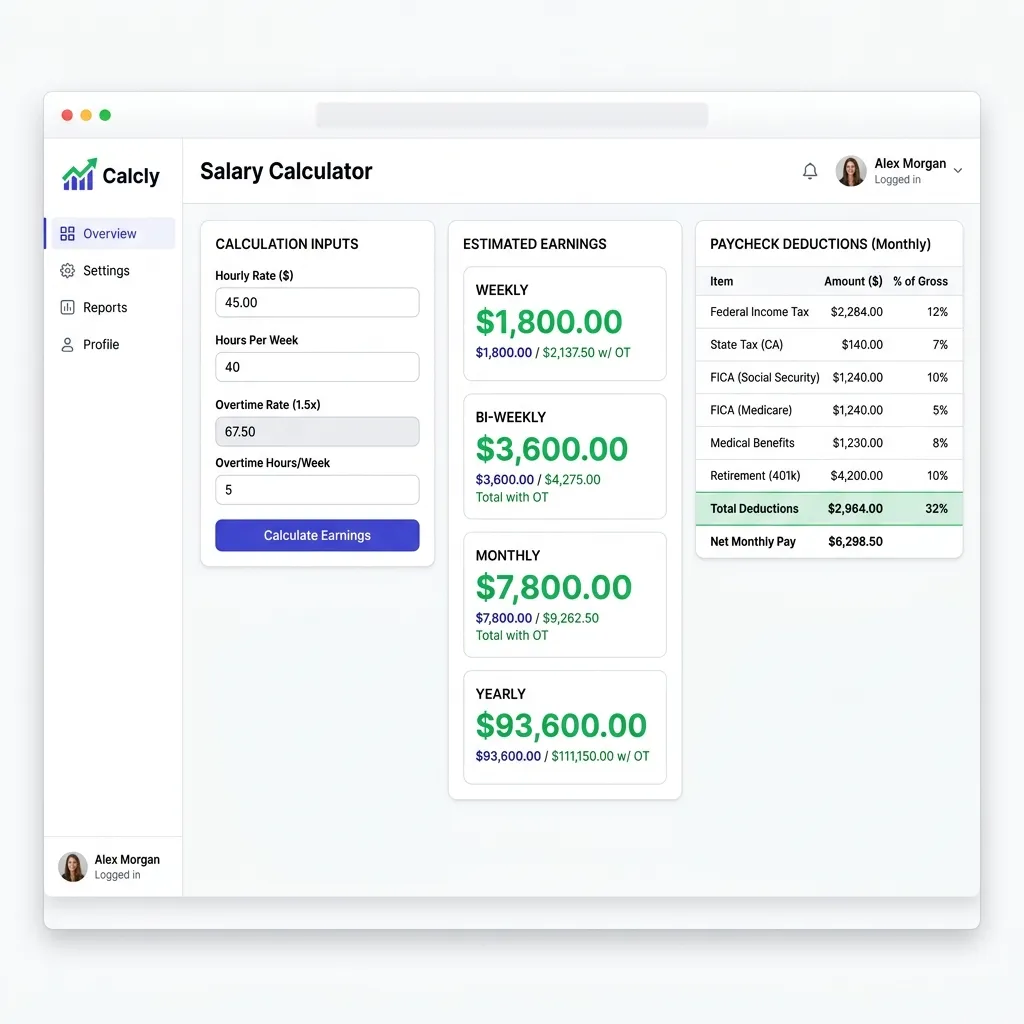
Not all positions are salaried with fixed annual figures. Many professionals earn hourly wages, requiring an intermediate calculation before determining a monthly equivalent. To bridge the gap between hourly rates and annual salaries, you must account for standard working hours and weeks worked per year.
The standard full-time work schedule in many jurisdictions is 40 hours per week for 50 or 52 weeks a year. Assuming a standard 2,000 hours per year (40 hours $\times$ 50 weeks) or 2,080 hours per year (40 hours $\times$ 52 weeks), the conversion process involves scaling the hourly rate up to an annual figure before dividing by twelve.
| Pay Structure | Calculation Method | Example ($25/Hour, 40 Hours/Week) |
|---|---|---|
| Hourly to Annual | Hourly Rate $\times$ Hours per Week $\times$ Weeks per Year | $$25 \times 40 \times 52 = $52,000$ Annual |
| Annual to Monthly | Annual Salary $\div$ 12 Months | $$52,000 \div 12 = $4,333.33$ Monthly Gross |
| Hourly to Monthly Direct | (Hourly Rate $\times$ Annual Hours) $\div$ 12 | $($25 \times 2,080) \div 12 = $4,333.33$ Monthly Gross |
When evaluating part-time or variable schedules, adjusting the total annual hours to reflect actual expected work periods ensures greater accuracy. Seasonal workers or contractors with fluctuating hours should use historical average earnings rather than standard multipliers.
Factoring in Pay Frequencies and Semi-Monthly Versus Bi-Weekly Cycles
A common point of confusion during salary conversion stems from the difference between being paid bi-weekly and semi-monthly. While both are common payroll cycles, they do not result in the exact same number of paychecks per year, which impacts cash flow budgeting.
Bi-Weekly Pay Cycles
Under a bi-weekly schedule, employees receive a paycheck every two weeks, resulting in 26 paychecks per year. To find the gross amount per paycheck from an annual salary, divide the yearly total by 26:
$$\text{Bi-Weekly Paycheck} = \frac{\text{Annual Salary}}{26}$$
For a $65,000 salary, this equals approximately $2,500 per paycheck. Because there are 52 weeks in a year, two months out of the year will feature three paychecks instead of two. Relying strictly on a monthly average ($65,000 \div 12 = $5,416.67 gross per month) means those three-paycheck months provide a temporary cash flow surplus.
Semi-Monthly Pay Cycles
Under a semi-monthly schedule, employees are paid twice a month on fixed dates, such as the 15th and the last day of the month. This results in exactly 24 paychecks per year:
$$\text{Semi-Monthly Paycheck} = \frac{\text{Annual Salary}}{24}$$
For the same $65,000 salary, a semi-monthly paycheck equals approximately $2,708.33. Every month features exactly two paychecks, making budget forecasting simpler for fixed monthly expenses like rent and loan repayments.
Incorporating Bonuses, Commissions, and Variable Compensation
Many professional compensation packages include base salaries supplemented by performance bonuses, commissions, or profit-sharing distributions. When calculating yearly to monthly salary conversions, deciding whether to include variable pay depends on the stability of those earnings.
- Guaranteed Bonuses: If a contract specifies a non-discretionary sign-on bonus or guaranteed annual retention bonus, it can be added directly to the base salary before dividing by twelve.
- Performance-Based Commissions: Because commissions fluctuate based on sales performance or market conditions, relying on them for fixed monthly budgeting introduces financial risk. Financial advisors typically recommend calculating monthly budgets using the guaranteed base salary alone, treating variable commissions as supplemental savings or debt-paydown funds when received.
Common Mistakes in Salary Conversion
Miscalculating income conversions can lead to budgeting shortfalls, misinformed career moves, or errors on credit and housing applications. Avoiding frequent calculation pitfalls safeguards financial accuracy.
- Confusing Gross and Net Income: Assuming a gross monthly conversion is the exact amount available for spending leads to severe budget deficits once taxes and deductions are removed.
- Assuming 4 Weeks Equal 1 Month: Multiplying a weekly salary by 4 yields 48 weeks instead of 52. Always multiply weekly income by 52 to find the true annual total before dividing by 12.
- Overlooking Unpaid Leave: For hourly or contract workers, failing to account for unpaid holidays, sick days, or vacation time inflates projected annual earnings.
- Ignoring Pre-Tax Deductions: Health savings accounts (HSAs), flexible spending accounts (FSAs), and employer-sponsored retirement plans (such as a 401(k)) reduce taxable income and net pay, altering take-home calculations.
Frequently Asked Questions
How do I convert a yearly salary to a monthly salary if I work irregular hours?
For irregular or freelance schedules, calculate your total earnings over a representative past period—such as the last 12 months—to establish an annualized baseline. Divide that sum by 12 to find your average monthly gross income. Do not rely on peak earning months to project your baseline monthly budget.
Does a monthly salary conversion account for taxes?
No. Standard conversions divide gross annual salary by twelve. To determine your net monthly take-home pay, you must subtract federal, state, and local income taxes, FICA taxes (Social Security and Medicare), and any pre-tax benefit deductions from the gross monthly figure.
Why do some months feel like they have more money than others on a salary?
If you are paid on a bi-weekly schedule (every two weeks), you will receive 26 paychecks a year. This results in two months out of the year where you receive three paychecks instead of two, creating a temporary increase in cash flow during those specific months.
How do I calculate my hourly rate from an annual salary?
Divide your annual salary by the total number of hours you work per year. For a standard full-time employee working 40 hours per week for 50 weeks, divide the annual salary by 2,000. If your employer counts paid time off across all 52 weeks, divide the annual salary by 2,080.
Are bonuses included in standard monthly salary conversions?
Usually, standard salary conversions only use the base annual salary. Discretionary bonuses, overtime, and commissions should be excluded from baseline monthly conversions to avoid overestimating fixed monthly income.
Next Actions for Financial Planning
Once you have successfully converted your yearly salary into an accurate monthly figure, leverage this data to strengthen your financial position. Compare your gross monthly income against standard budgeting frameworks, such as allocating 50% of net income to needs, 30% to wants, and 20% to savings and debt reduction. If you are preparing a mortgage application or renting an apartment, verify whether landlords or lenders evaluate gross or net monthly income to ensure your application meets their debt-to-income requirements.
Image Gallery