Understanding the Endowment Effect Bias: Causes, Impact, and Practical Solutions
The endowment effect bias is a psychological phenomenon where individuals place a higher financial or subjective value on an item simply because they own it. Driven primarily by loss aversion and psychological ownership, this cognitive...
The endowment effect bias is a psychological phenomenon where individuals place a higher financial or subjective value on an item simply because they own it. Driven primarily by loss aversion and psychological ownership, this cognitive bias leads people to demand significantly more money to give up an object than they would be willing to pay to acquire it.
Contents
What Is the Endowment Effect Bias?
The endowment effect bias describes a fundamental departure from standard economic theory. In classical economics, an individual's evaluation of an item's worth is expected to remain constant regardless of whether they currently own it. However, behavioral science consistently demonstrates that ownership alters perception: once an object enters a person's possession, its perceived value increases instantly.
First formally coined by Nobel laureate Richard Thaler in 1980, the endowment effect was demonstrated through empirical studies showing that people required much higher prices to sell items in their possession (such as coffee mugs, event tickets, or stock shares) than non-owners were willing to pay to buy them. This discrepancy between the Willingness to Accept (WTA) as a seller and the Willingness to Pay (WTP) as a buyer represents the core manifestation of the endowment effect.
Understanding this bias is critical because it directly influences personal financial decisions, real estate transactions, portfolio management, business negotiations, and everyday consumer spending. When left unmanaged, the endowment effect can lead to irrational asset retention, overvalued property listings, missed investment opportunities, and emotional attachments to unproductive resources.
The Psychological Mechanisms Driving the Bias
The endowment effect does not occur in isolation. Instead, it stems from several intersecting psychological and cognitive mechanisms that distort how the human brain processes value, risk, and ownership.
- Psychological Drivers
- Loss Aversion (Prospect Th.)
- Psychological Ownership
- Status Quo Bias (Inertia & Pain)
1. Loss Aversion and Prospect Theory
The primary psychological engine behind the endowment effect is loss aversion, a foundational concept of Prospect Theory developed by Daniel Kahneman and Amos Tversky. Research demonstrates that the psychological pain of losing an object is roughly twice as intense as the pleasure experienced from gaining an equivalent object.
When a person considers selling an item they own, their brain categorizes the transaction as a loss of property rather than a financial gain. To compensate for the emotional pain associated with that perceived loss, the owner artificially elevates their selling price above the objective market value.
2. Psychological Ownership and Self-Identity
Psychological ownership occurs when an individual feels a deep, personal connection to an asset, even if legal ownership is minimal or temporary. Over time, or even within minutes of handling an object, people begin to integrate the physical item or financial asset into their self-concept and identity.
Giving up the item feels like giving up a part of oneself. This phenomenon is frequently exploited in commercial settings through physical touch, interactive product trials, and personalized services, all of which accelerate psychological ownership before a purchase is ever completed.
3. Status Quo Bias and Endowment Inertia
The status quo bias is the psychological preference for maintaining one's current state of affairs. Relinquishing an owned item requires deliberate action, decision-making, and risk-taking, whereas keeping the item allows the individual to maintain their existing baseline. The endowment effect reinforces this inertia: retaining an asset feels safe and predictable, whereas trading or selling it introduces cognitive effort and potential regret.
Real-World Examples Across Key Domains
The endowment effect extends far beyond academic laboratory settings, actively shaping real-world economic behavior across financial markets, real estate, commerce, and daily decision-making.
Financial Markets and Portfolio Management
In individual and professional investing, the endowment effect frequently leads to sub-optimal asset allocation:
- Overvaluing Legacy Holdings: Investors often refuse to sell underperforming stocks simply because they inherited them or have held them for years. They view the shares as inherently more valuable than alternative investment opportunities currently available on the market.
- Reluctance to Cut Losses: When an asset declines in value, selling it requires admitting a loss and surrendering the asset. Investors hold onto failing assets in hopes of recovering value, forfeiting the opportunity to deploy that capital into higher-yielding investments.
Real Estate and Housing
The real estate market provides one of the most visible displays of the endowment effect:
- Overpricing Residential Homes: Homeowners frequently list their properties above realistic market values because they factor in personal memories, emotional milestones, and customized renovations.
- Extended Days on Market: Because buyers evaluate the property based on neutral objective utility while sellers evaluate it based on emotional endowment, a pricing gap emerges. This mismatch causes properties to sit unsold for months until the seller adjusts to realistic market benchmarks.
Consumer Marketing and Sales Tactics
Modern businesses design customer experiences specifically to trigger early endowment effects:
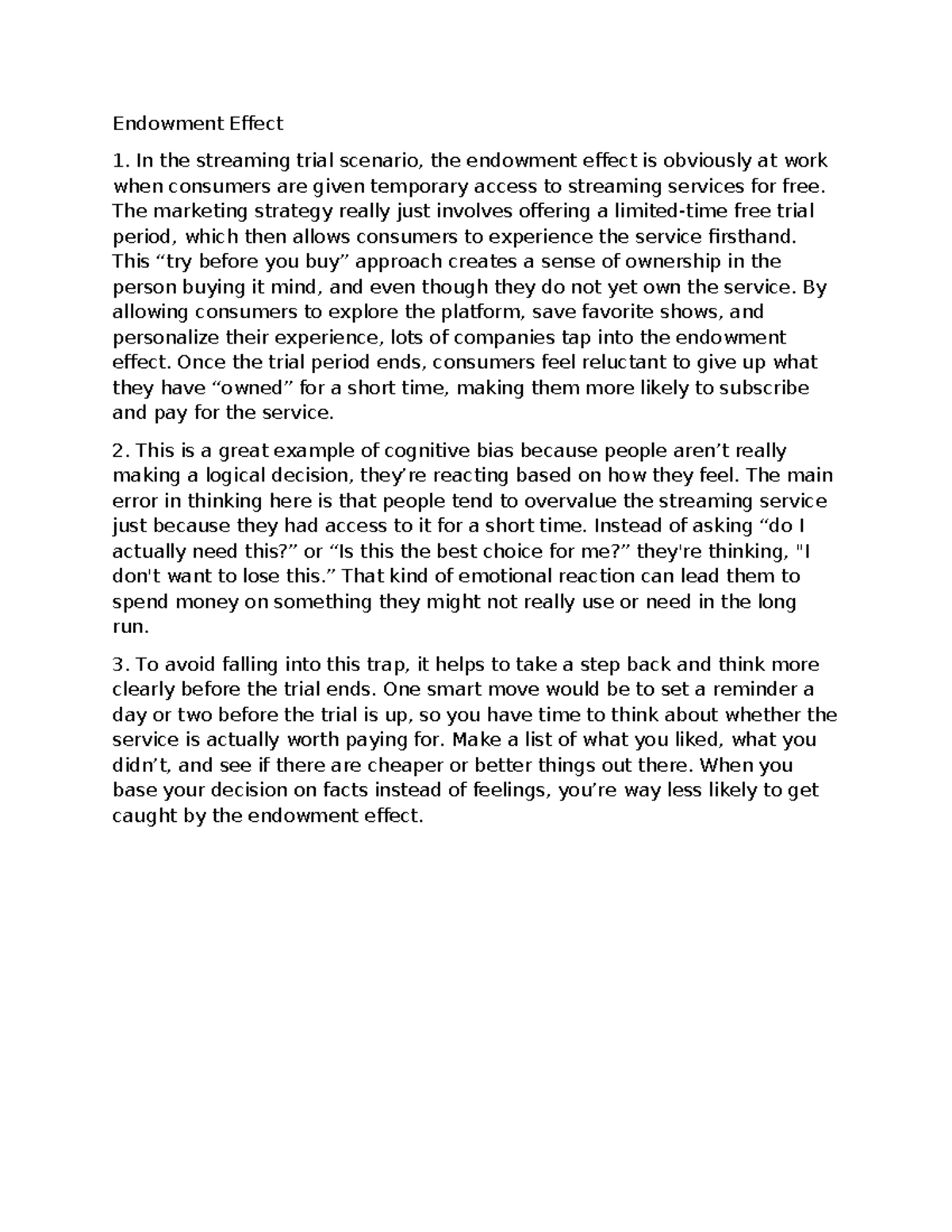
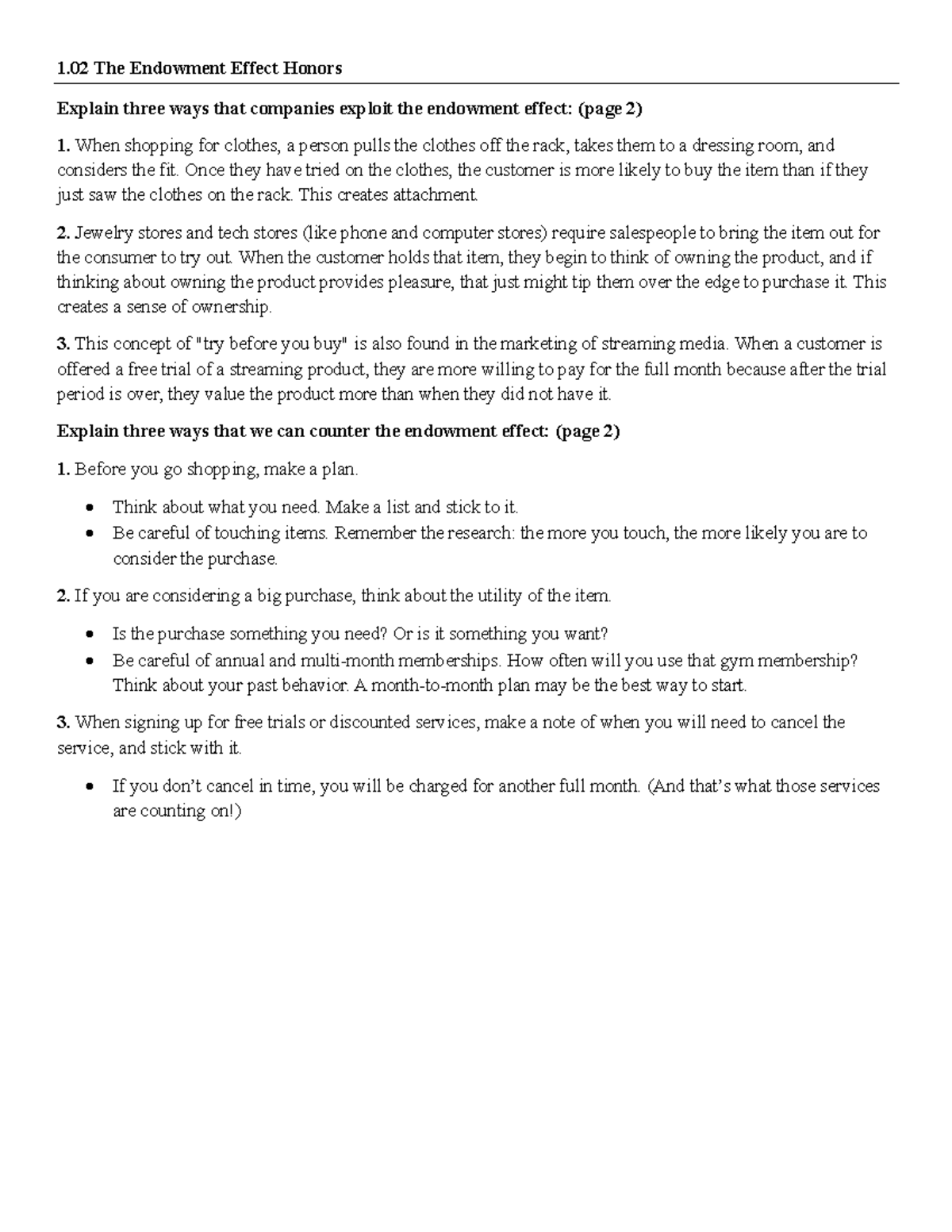
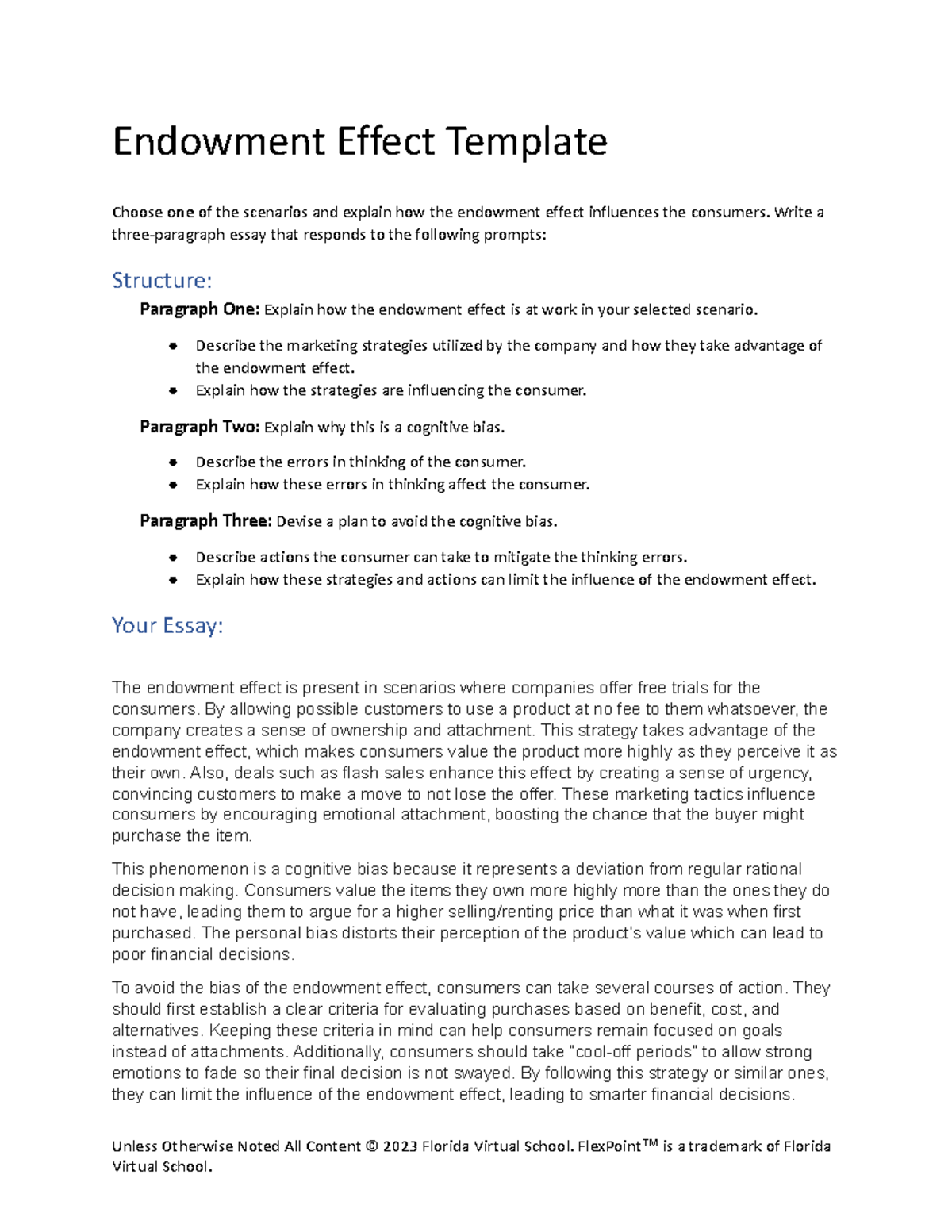
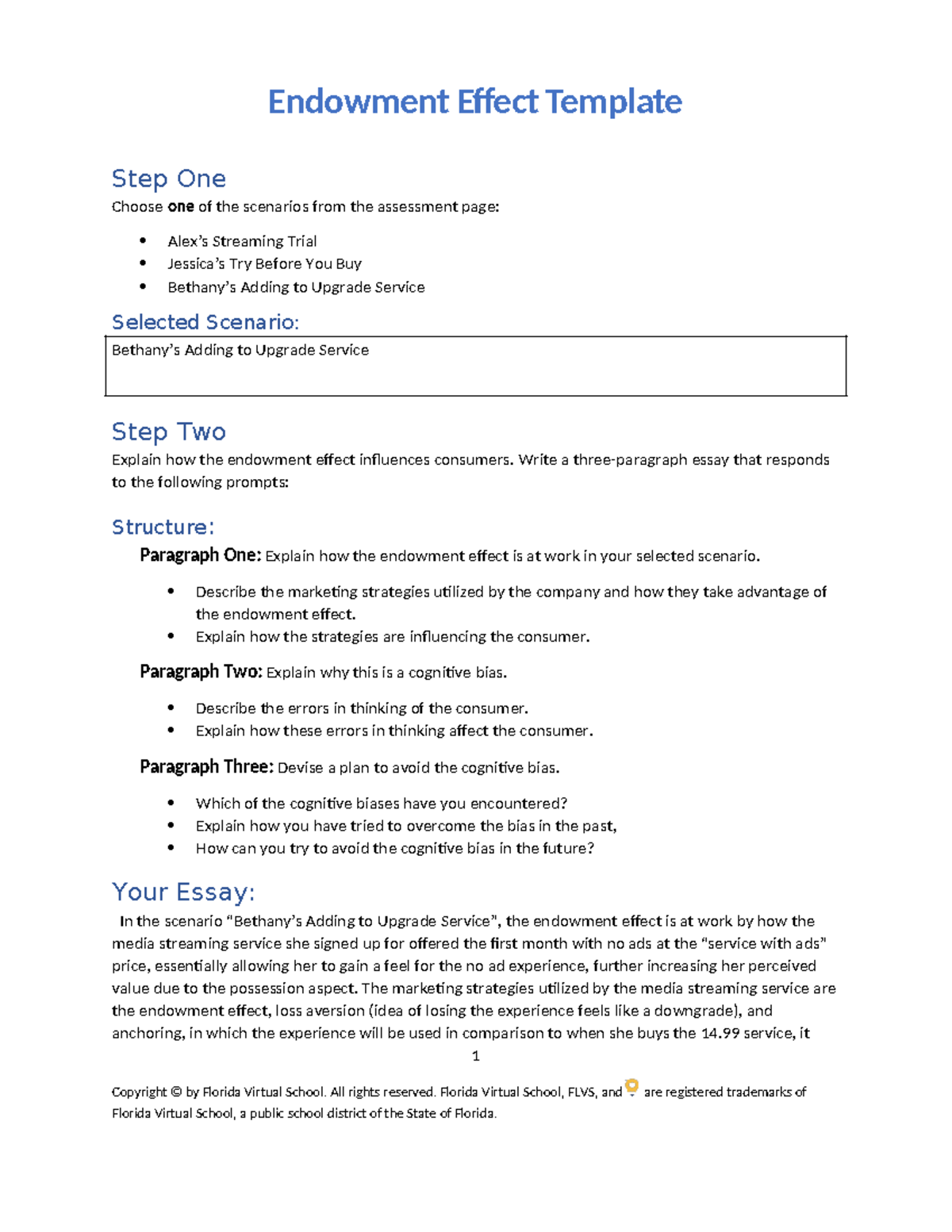
- Free Trial Models: Streaming platforms, SaaS companies, and subscription services offer 30-day free trials. Once users integrate the product into their daily workflow, ending the trial feels like a tangible loss, leading to high conversion rates into paid subscriptions.
- Generous Return Policies: Retailers offering "30-day money-back guarantees" encourage consumers to take products home. Once the item is in the consumer's home, psychological ownership takes root, drastically reducing the likelihood of a return.
- Interactive Showrooms: Allowing customers to test-drive cars, wear clothing, or arrange furniture virtually leverages physical interaction to establish psychological endowment before money changes hands.
Comparative Analysis of Related Cognitive Biases
To accurately diagnose behavioral errors, it is essential to distinguish the endowment effect from closely related cognitive biases in behavioral economics.
| Cognitive Bias | Primary Driver | Core Manifestation | Typical Real-World Impact |
|---|---|---|---|
| Endowment Effect | Ownership and Loss Aversion | Demanding higher values to sell owned items than to acquire them. | Overpricing personal assets, holding onto obsolete holdings. |
| Sunk Cost Fallacy | Desire to justify past expenditure | Continuing investment in a project based on non-recoverable past costs. | Throwing good money after bad in failed ventures or projects. |
| Status Quo Bias | Preference for predictability and inertia | Resisting change and keeping current circumstances intact. | Defaulting to existing service providers despite better alternatives. |
| Disposition Effect | Fear of regret and gain/loss asymmetry | Selling winning assets too early and holding losing assets too long. | Realizing small gains while allowing major losses to compound. |
| Mere Exposure Effect | Familiarity and repeated exposure | Developing a preference for items simply because they are familiar. | Favoring familiar brand names over superior, lower-cost options. |
Practical Strategies to Overcome the Endowment Effect
Recognizing the endowment effect is the first step; mitigating its influence requires structured evaluation frameworks and objective decision rules.
- Mitigation Framework
- The Clean-Slate Test
- Objective Value Audits & Pros
- Pre-Committed Exit Strategy
1. Apply the "Clean-Slate" (Re-acquisition) Test
To neutralize emotional endowment, frame decision-making through a clean-slate perspective. Ask yourself:
"If I did not already own this asset today, how much of my own cash would I pay to buy it right now?"
If the answer is less than the current market value or less than what you could sell it for, the endowment effect is likely distorting your judgment. If you would not buy the asset at its current price today, you should sell it.
2. Establish Objective Appraisal and Independent Valuation
Relying entirely on self-assessment guarantees bias. When selling major assets—such as real estate, businesses, or rare collectibles—utilize independent third-party appraisers, automated valuation models (AVMs), or quantitative market data. Force yourself to establish asking prices within standard deviation bounds set by recent market transactions rather than personal emotional valuation.
3. Implement Pre-Committed Exit Rules
In financial management and corporate planning, set clear rule-based exit strategies before acquiring an asset.
- Establish explicit stop-loss levels and profit targets at the time of initial investment.
- Conduct periodic portfolio rebalancing based on target percentage allocations rather than subjective feelings about individual holdings.
- Set operational deadlines for underperforming business units or projects.
4. Reframe Transactions in Terms of Opportunity Cost
Instead of viewing the sale of an item as losing property, reframe the transaction as acquiring liquidity and opportunity. Consider what alternative benefits could be gained by converting an idle or overvalued asset into cash. Shifting focus from what is lost to what can be gained elsewhere reduces the neural response to loss aversion.
Frequently Asked Questions
What is the primary cause of the endowment effect?
The primary cause of the endowment effect is loss aversion—the psychological tendency to experience the pain of losing something much more intensely than the pleasure of gaining an equivalent item. This is further magnified by psychological ownership, where an individual incorporates an owned asset into their sense of self.
How does the endowment effect impact stock market investors?
For stock market investors, the endowment effect leads to holding underperforming or legacy stocks longer than justifiable by financial fundamentals. Investors often overvalue securities already in their portfolios, resisting selling them to reallocate funds into assets with superior risk-adjusted growth prospects.
What is the difference between the endowment effect and the sunk cost fallacy?
The endowment effect centers on ownership: valuing an item more simply because it is currently in your possession. The sunk cost fallacy centers on past investment: continuing to invest time, money, or effort into a project or asset because of unrecoverable resources already spent in the past.
Can the endowment effect apply to ideas and opinions?
Yes, the endowment effect frequently applies to non-physical entities such as business strategies, political opinions, personal projects, and intellectual concepts. People often display an intellectual endowment effect, overvaluing their own ideas and resisting superior alternative solutions simply because the original idea originated with them.
How do companies use the endowment effect to increase sales?
Companies utilize the endowment effect by offering low-friction experiences that build temporary psychological ownership before purchase. Common tactics include 30-day free trial periods, no-hassle return policies, interactive product customizers, and hands-on showroom testing.
Next Steps and Implementation
To protect your investments, business operations, and consumer choices from the distortion of the endowment effect bias, consider implementing the following actions:
- Audit Your Portfolio and Inventory: Conduct a systematic review of your investments, home items, or business assets. Identify items held for more than two years without positive returns or active utility.
- Execute the Re-acquisition Test: Run your key holdings through the clean-slate question. Identify which assets you hold merely due to ownership inertia rather than prospective value.
- Adopt Systematic Rules: Establish clear stop-loss criteria, rebalancing metrics, or independent valuation requirements to automate divestment decisions without emotional interference.
Image Gallery