Understanding Average Credit Card Fees: A Complete Breakdown for Consumers and Merchants
Average credit card fees depend on whether you are an individual cardholder or a business accepting payments. For cardholders, annual fees typically range from $0 to $95 on standard cards, while APRs average between 21% and 24%. For me...
Average credit card fees depend on whether you are an individual cardholder or a business accepting payments. For cardholders, annual fees typically range from $0 to $95 on standard cards, while APRs average between 21% and 24%. For merchants, credit card processing fees average between 1.5% and 3.5% of each transaction value.
Contents
Disambiguating Credit Card Fees: Cardholder vs. Merchant Costs
To understand average credit card fees, it is essential to distinguish between the costs borne by individual consumers holding a card and the transaction fees paid by merchants accepting credit payments. Although both categories stem from the same credit card networks—such as Visa, Mastercard, American Express, and Discover—their fee structures, regulatory frameworks, and calculation methods differ substantially.
Consumer credit card fees are charged by card issuers (such as Chase, Bank of America, or Capital One) directly to account holders. These charges cover account maintenance, borrowing risks, and penalties for non-payment or international usage.
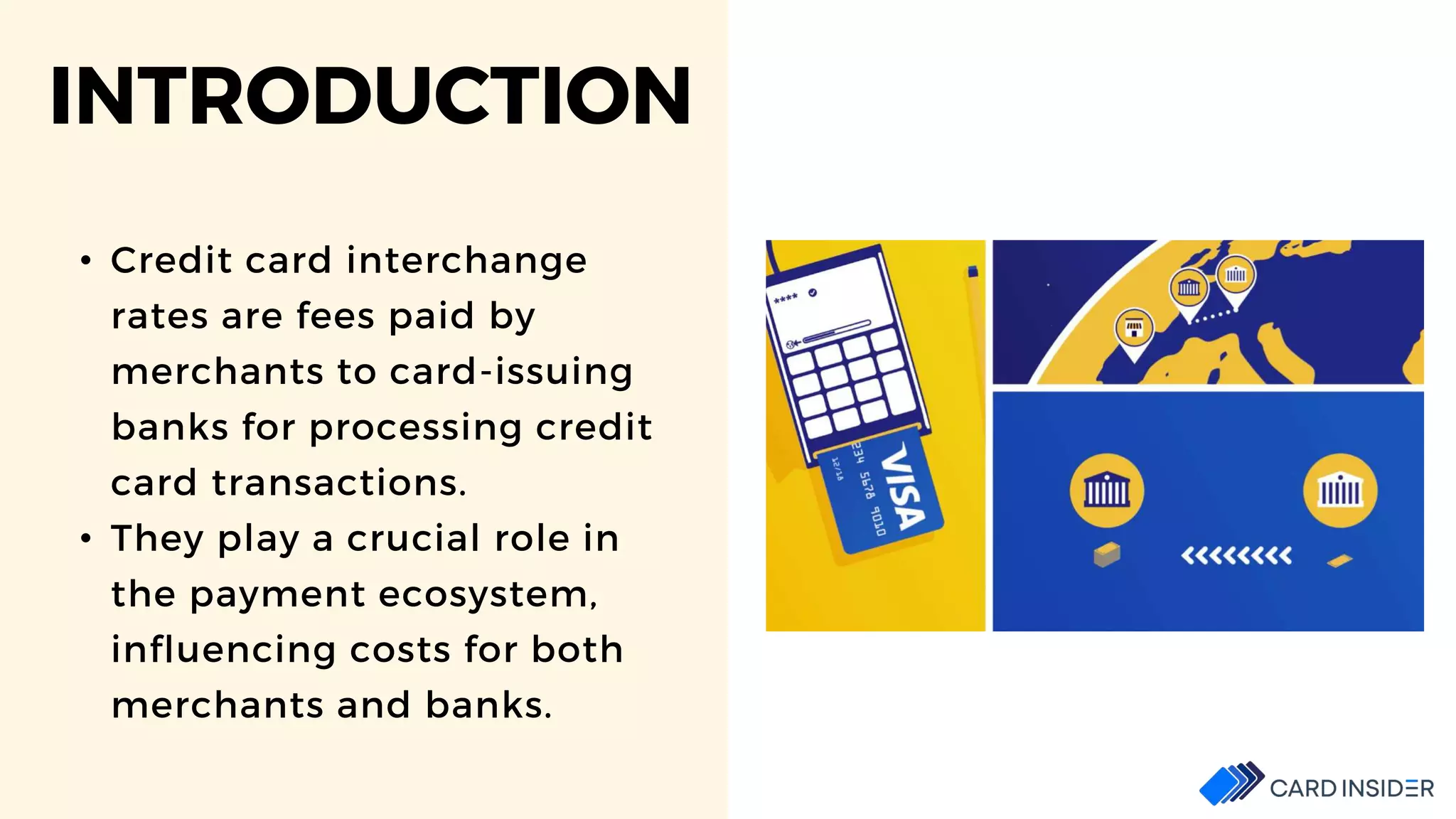
Merchant credit card fees, commonly referred to as merchant processing fees or swipe fees, are paid by businesses to process customer transactions. Every time a consumer swipes, dips, or taps a credit card, the merchant pays a percentage of the total purchase amount plus a fixed transaction fee. This fee is divided among the issuing bank, the card network, and the payment processor.
| Consumer Fees (Paid by Cardholders to Issuers) | Merchant Fees (Paid by Merchants to Processors) |
|---|---|
| • Annual Fees ($0 - $695+) | • Interchange Fees (1.15% - 3.3%) |
| • Interest / APR (21% - 24% avg) | • Assessment Fees (0.13% - 0.15%) |
| • Late Fees ($30 - $40 avg) | • Processor Markups (0.2% - 1.5%) |
| • Foreign Transaction (0% - 3%) | • Flat Gateway Fees ($0.10 - $0.30) |
Consumer Credit Card Fees: What Cardholders Typically Pay
Consumer card fees vary according to credit tiers, card benefits, and usage habits. While many cardholders pay zero routine fees by choosing no-annual-fee cards and paying their balances in full each billing cycle, others incur substantial annual, interest, or penalty charges.
Annual Fees
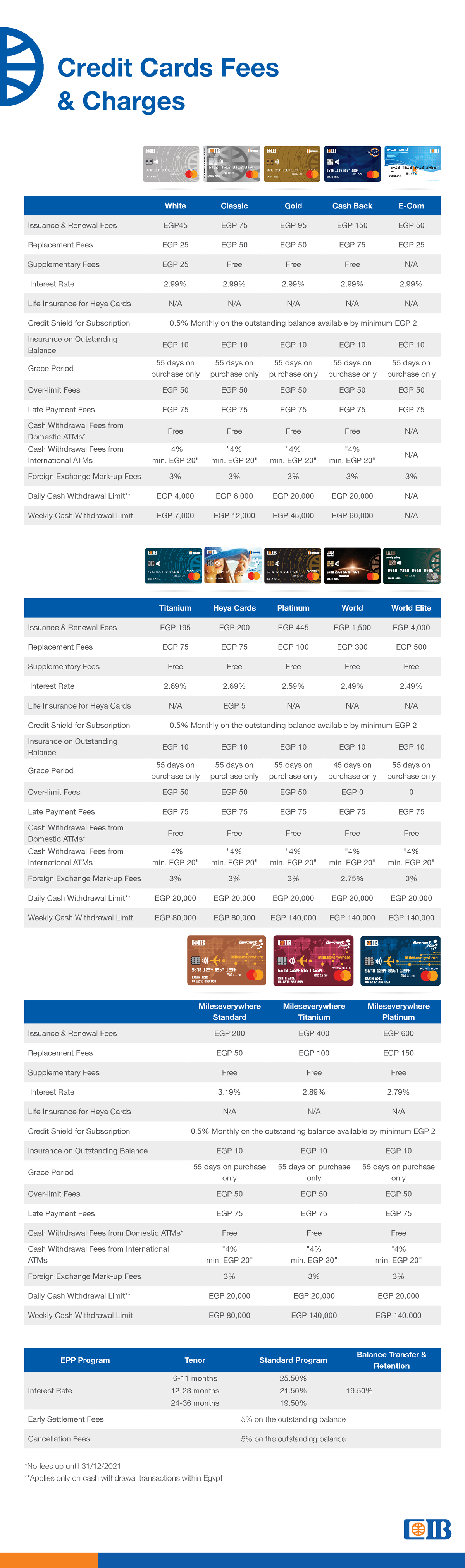
An annual fee is an automatic recurring charge for maintaining a credit card account.
- No-Fee Cards ($0): Basic cash-back and entry-level credit-building cards usually carry no annual fee.
- Mid-Tier Rewards Cards ($95 – $150): Travel and rewards cards offering bonus points, sign-up bonuses, and annual statement credits frequently charge an annual fee within this range.
- Premium Travel Cards ($400 – $695+): Cards offering extensive perks—such as airport lounge access, elite hotel status, and comprehensive travel insurance—charge higher annual fees.
Interest Rates and Finance Charges (APR)
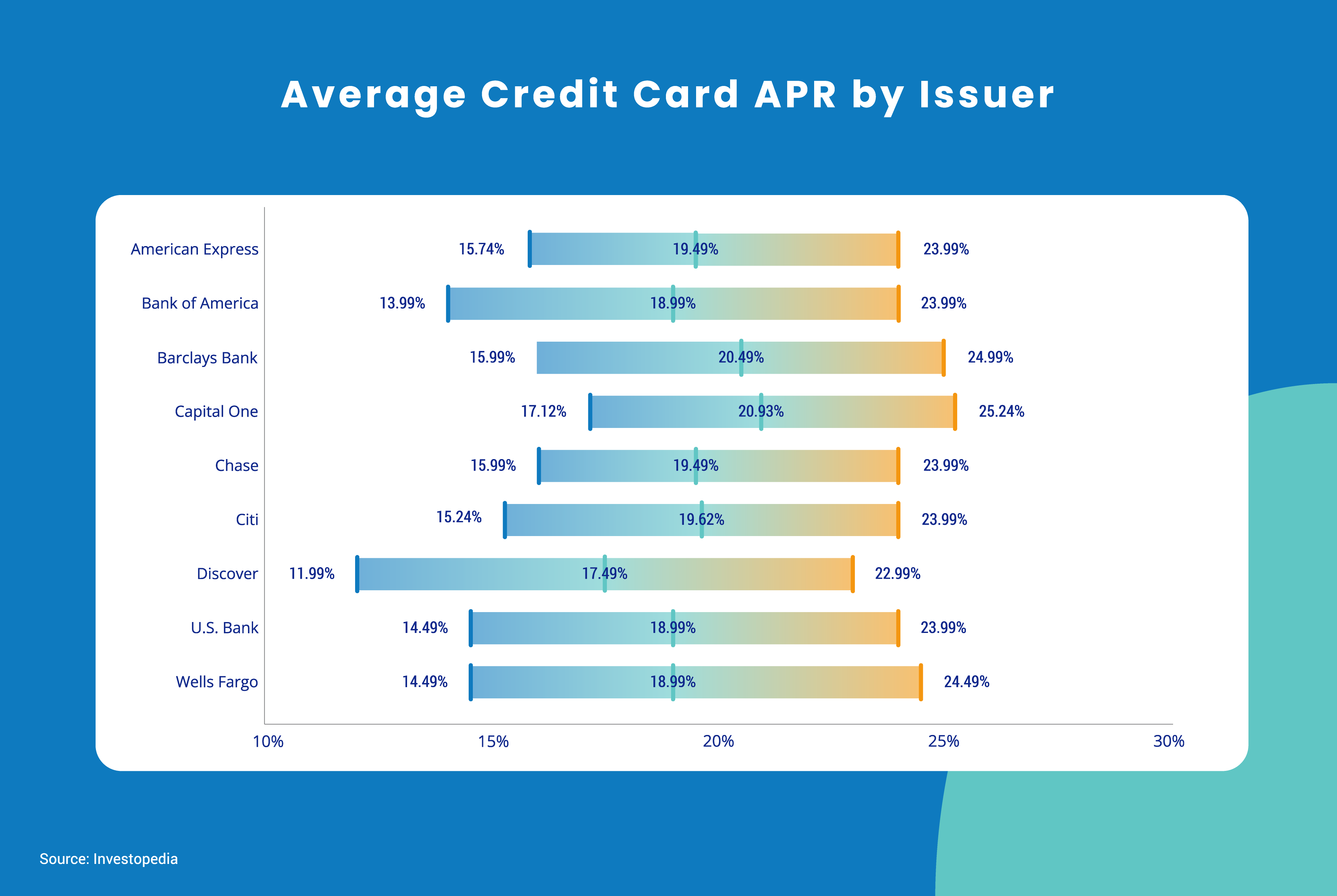
The annual percentage rate (APR) is the cost of borrowing money on a credit card when carrying a balance past the grace period. Credit card APRs are variable and tied to the U.S. Prime Rate. Across all accounts, the national average credit card APR generally floats between 21% and 24%, while accounts assessed interest average between 22% and 25%.
Cards designed for building or rebuilding credit often feature APRs exceeding 28% to 29.99%, whereas low-interest cards for high-credit-score applicants may offer rates between 15% and 18%.
Penalty and Operational Fees
- Late Payment Fees: When a cardholder fails to make the minimum required payment by the due date, issuers assess a late fee. Standard late fees typically range from $30 for first-time occurrences to $40 for repeat violations within six billing cycles, subject to inflation-adjusted safe harbor limits monitored by the Consumer Financial Protection Bureau (CFPB).
- Foreign Transaction Fees: Charged on purchases made outside the cardholder's home country or in a foreign currency. These fees typically equal 1% to 3% of the total purchase price. Many dedicated travel cards waive this fee entirely.
- Balance Transfer Fees: Assessed when transferring existing debt from one card to another, usually to take advantage of a 0% introductory APR offer. The industry standard fee is 3% to 5% of the transferred balance, with a typical minimum charge of $5 to $10.
- Cash Advance Fees: Incurred when using a credit card to withdraw cash from an ATM or bank branch. Cash advance fees usually run 3% to 5% of the advance amount (minimum $10), and interest begins accruing immediately without a grace period, often at a higher APR than standard purchases.
Merchant Credit Card Fees: What Businesses Pay per Transaction
For merchants, processing credit card transactions represents a major operational cost. Total processing expenses are expressed as an effective rate—the total dollar amount paid in processing fees divided by total credit card sales volume. The average effective credit card processing rate for most businesses ranges between 1.5% and 3.5%.
Merchant processing fees comprise three distinct components: interchange fees, assessment fees, and processor markups.
| Component | Share of Total Merchant Processing Fee (1.5% - 3.5%) |
|---|---|
| 1. Interchange Fee (Paid to Card-Issuing Bank) | ~70% - 80% |
| 2. Assessment Fee (Paid to Card Network) | ~5% - 10% |
| 3. Processor Markup (Paid to Payment Processor) | ~10% - 20% |
1. Interchange Fees (Paid to Issuing Banks)
Interchange rates make up the largest portion of processing costs, accounting for 70% to 80% of total fees paid by merchants. Set directly by the credit card networks (Visa, Mastercard, Discover, and American Express) twice a year, interchange rates are paid to the cardholder's issuing bank to cover fraud risk and handling fees.
Average interchange rates range from 1.15% + $0.05 for basic in-person debit transactions to 3.30% + $0.10 for premium, rewards-heavy credit cards used in online (card-not-present) environments.
2. Assessment Fees (Paid to Card Networks)
Assessment fees are paid directly to the card networks (Visa, Mastercard, Discover) for using their infrastructure. These are non-negotiable rates that typically range from 0.13% to 0.15% of the total transaction volume.
3. Payment Processor Markups
The payment processor charges a markup above the interchange and assessment fees for facilitating access to the payment rails, supplying hardware/software terminals, and providing customer support. Payment processing pricing models generally fall into three categories:
- Interchange-Plus Pricing: The processor charges the actual interchange rate plus a fixed transparent markup (e.g., Interchange + 0.30% + $0.10 per transaction). This is generally the most cost-effective and transparent pricing structure for medium to high-volume businesses.
- Flat-Rate Pricing: Popularized by payment aggregators like Square, Stripe, and PayPal. Merchants pay a fixed rate regardless of underlying interchange costs, typically 2.6% to 3.5% + $0.10 to $0.30 per transaction. This structure provides simplicity for low-volume merchants but is more expensive at higher transaction volumes.
- Tiered Pricing: Processing transactions are grouped into qualified, mid-qualified, and non-qualified tiers. Qualified rates (standard cards swiped in person) might start at 1.5%, while non-qualified rates (rewards cards or manual online entries) can exceed 3.5%. Tiered pricing is often non-transparent and generally yields higher overall costs.
Overview of Average Credit Card Fees
The following table summarizes average consumer and merchant credit card fees, showing who pays, typical rates, and key cost drivers.
| Fee Type | Category | Average Cost / Rate | Primary Determinant |
|---|---|---|---|
| Annual Fee | Consumer | $0 – $95 (Standard) / $400 – $695+ (Premium) | Card tier, rewards structure, luxury perks |
| Standard APR | Consumer | 21.00% – 24.00% (Variable) | Prime rate, cardholder creditworthiness |
| Late Payment Fee | Consumer | $30 – $40 per instance | Regulatory caps, payment history |
| Foreign Transaction Fee | Consumer | 1% – 3% per foreign purchase | Card network policy, card tier |
| Balance Transfer Fee | Consumer | 3% – 5% ($5 to $10 minimum) | Issuer promotion terms, transfer amount |
| Cash Advance Fee | Consumer | 3% – 5% + higher APR (no grace period) | Cash withdrawal size, issuer terms |
| Interchange Rates | Merchant | 1.15% – 3.30% + per-item fee | Card type, rewards level, entry method |
| Network Assessment | Merchant | 0.13% – 0.15% of volume | Card network (Visa, Mastercard, etc.) |
| Flat-Rate Processing | Merchant | 2.6% – 3.5% + $0.10 – $0.30 | Aggregator pricing policy (Square, Stripe) |
| Interchange-Plus Markup | Merchant | Interchange + 0.10%–0.40% + $0.05–$0.20 | Processing volume, contractual negotiation |
Factors That Influence Credit Card Fee Rates
Credit card fee rates vary significantly based on risk parameters, transaction mechanics, and product tiers across both consumer and merchant categories.
For Consumers
- Credit Score and History: Individuals with higher credit scores (740+) typically qualify for cards with lower APR range brackets and lower ongoing borrowing costs.
- Card Classification: Basic credit-building or plain-vanilla cash-back cards usually carry zero annual fees. Conversely, premium travel cards charge high annual fees to offset rewards costs, airport lounge access, and concierge services.
- Account Management: Paying balances in full before the billing cycle ends completely avoids interest charges. Using automated payments eliminates late payment fees.
For Merchants
- Card Type and Rewards Tier: Processing a basic consumer card costs significantly less than processing an elite rewards card or a corporate card. Higher customer cash-back and points obligations are funded directly by higher interchange fees passed to the merchant.
- Transaction Environment (Card-Present vs. Card-Not-Present): In-person transactions (swiped, dipped, or tapped via EMV chip/NFC) carry lower interchange rates because the fraud risk is lower. E-commerce, phone orders, and manually keyed transactions carry higher rates to cover increased fraud exposure.
- Merchant Category Code (MCC): Card networks assign MCC codes based on industry risk profiles. High-risk industries—such as online gaming, travel services, or subscription software—incur higher processing fees and processor markups than low-risk brick-and-mortar retail businesses.
- Monthly Processing Volume: High-volume businesses processing over $50,000 per month have leverage to negotiate lower processor markups and fixed transaction fees compared to micro-merchants.
Practical Strategies to Minimize Credit Card Costs
Both consumers and merchants can reduce overall credit card costs by adopting targeted management practices.
Consumer Optimization Strategies
- Pay Balances in Full: Maintain a routine of paying off the statement balance every month. This preserves interest-free grace periods on purchases and eliminates finance charges entirely.
- Audit Annual Fees Regularly: Perform an annual review of fee-charging cards. If the value of the rewards earned does not comfortably exceed the annual fee, ask the issuer to downgrade the account to a no-annual-fee product option to preserve account history.
- Use No-Foreign-Fee Cards Abroad: When traveling internationally, use cards that waive the 1% to 3% foreign transaction fee.
- Set Up Autopay: Schedule automated minimum payments to prevent accidental late fees and protect credit scores from late payment reporting.
CONSUMER COST REVISION CHECKLIST: [ ] Set up automated minimum payments to avoid late penalties. [ ] Calculate annual reward value vs. annual fee for paid cards. [ ] Use non-fee, zero-foreign-transaction cards for overseas spending. [ ] Maintain zero balances past grace periods to avoid APR interest.
Merchant Optimization Strategies
- Request Interchange-Plus Pricing: Transition from flat-rate or tiered processing models to interchange-plus pricing once processing volume exceeds $10,000 to $15,000 per month.
- Promote Chip and Contactless Payments: Ensure in-person checkout terminals use EMV chip dips or contactless taps rather than manual key entry to qualify for lower card-present interchange rates.
- Implement Address Verification (AVS) and Security Codes: For online transactions, requiring AVS matching and CVV verification reduces fraud chargebacks and helps transactions qualify for lower processing fee tiers.
- Implement Surcharging or Cash Discount Programs: Subject to local laws and network compliance rules, merchants can pass processing costs to customers via credit card surcharges (typically capped at 2% to 3%) or offer cash discount incentives.
Frequently Asked Questions
What is the average credit card processing fee for small businesses?
The average credit card processing fee for small businesses generally ranges between 2.2% and 3.5% per transaction when using flat-rate payment aggregators like Square, Stripe, or PayPal. Businesses with higher processing volumes utilizing interchange-plus pricing models often lower their overall effective processing rate to between 1.5% and 2.4%.
Why do premium rewards cards cost merchants more to accept?
Premium rewards cards cost merchants more because card networks set higher interchange fees on elite products (such as Visa Infinite or Mastercard World Elite) to fund rewards, cash-back bonuses, and concierge benefits. When a consumer uses a premium card, the issuing bank receives a larger percentage of the transaction to cover these cardholder perks.
Can credit card late payment fees be waived?
Yes. Many credit card issuers will grant a one-time late fee waiver to cardholders with a strong payment history upon request. Calling customer service promptly after incurring a fee and setting up automatic payments often leads to a successful fee courtesy removal.
What is the difference between interchange fees and payment processor markups?
Interchange fees are non-negotiable rates set by card networks (Visa, Mastercard) and paid to card-issuing banks to cover transaction clearing and credit risk. Payment processor markups are the negotiable charges added by payment processing companies to cover software, terminal hardware, network infrastructure, and profit margin.
Are foreign transaction fees charged on online purchases made from home?
Yes. If an online merchant is processed through a foreign acquiring bank or settled in a foreign currency, your card issuer may assess a foreign transaction fee (usually 1% to 3%), even if you complete the transaction physically from your home country.
Strategic Next Steps
Managing credit card fees requires active oversight based on your financial role:
- For Consumers: Review recent credit card statements to identify recurring annual fees, foreign transaction fees, or interest charges. Switch to no-annual-fee cards or set up automated monthly statement pay-offs to eliminate avoidable interest expenses.
- For Merchants: Calculate your current effective processing rate by dividing total processing fees by total gross card sales volume from your latest monthly statement. If your effective rate exceeds 2.5% for in-person transactions or 3.2% for e-commerce, contact payment processors to request interchange-plus pricing terms or compare competitive merchant service proposals.
For detailed merchant processing regulations and consumer protections, consult published guidance directly from the Federal Reserve Board and the Consumer Financial Protection Bureau.
Image Gallery