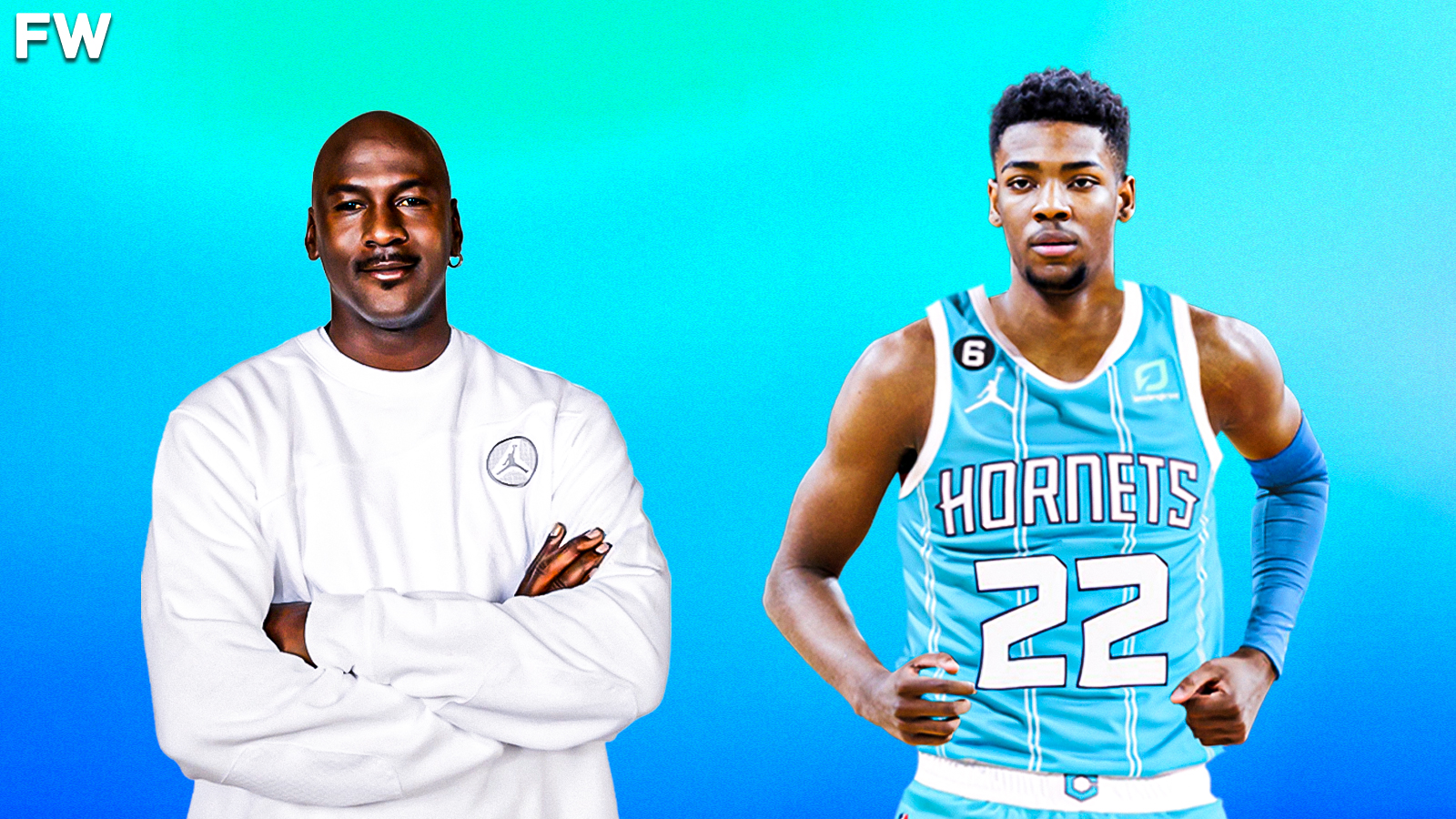
Michael Jordan’s Ownership of the Charlotte Hornets Explained: Financial Win vs. On-Court Struggles
Michael Jordan’s tenure as the majority owner of the Charlotte Hornets (2010–2023) represents one of the most financially lucrative yet competitively disappointing ownership runs in modern professional sports history. While Jordan stru...
Michael Jordan’s tenure as the majority owner of the Charlotte Hornets (2010–2023) represents one of the most financially lucrative yet competitively disappointing ownership runs in modern professional sports history. While Jordan struggled to build a winning team on the court, he achieved a monumental return on investment, purchasing controlling interest for $275 million and selling the majority stake at a $3 billion valuation.
Contents
When Basketball Hall of Famer Michael Jordan acquired majority control of the Charlotte franchise in 2010, he became the first former NBA player to own a controlling stake in a franchise and the league's only Black majority owner. His 13-year run as the primary governor of the franchise ended in August 2023, leaving behind a complex legacy split between financial savvy and basketball frustration.
The Path to Purchase: How Jordan Took Control
Michael Jordan’s executive career began long before he acquired majority control of the Charlotte Hornets. Following his second retirement from the NBA, Jordan acquired a minority ownership stake and became President of Basketball Operations for the Washington Wizards in 2000. That tenure ended abruptly when owner Abe Pollin relieved Jordan of his executive duties in 2003, shortly after Jordan's final retirement as an active player.
Undeterred by his experience in Washington, Jordan sought a path back to NBA governance. In 2006, he purchased a minority stake in the Charlotte Bobcats from team founder Robert L. Johnson. Johnson, who had founded Black Entertainment Television (BET), paid $300 million for the expansion franchise in 2002 after the original Hornets relocated to New Orleans. However, under Johnson’s control, the Bobcats struggled with staggering financial operating losses and poor attendance.
Timeline of Jordan's Hornets Ownership: 2006: Buys minority stake in Charlotte Bobcats 2010: Buys controlling majority stake for $275M 2014: Franchise reclaims the "Charlotte Hornets" name 2019: Sells minority stake to Gabe Plotkin and Daniel Sundheim 2023: Finalizes sale of controlling stake for $3B (retains minority share)
By 2010, Johnson sought an exit to cut his financial losses. Jordan stepped forward to buy out Johnson's controlling stake. The league’s Board of Governors officially approved the transfer of ownership in March 2010.
Deal Structure and Initial Valuation
The transaction valued the franchise at approximately $275 million. However, the cash layout required from Jordan was significantly lower because he agreed to assume the existing debt associated with the franchise and stadium operations:
- Valuation: $275 million total enterprise value.
- Debt Assumption: Jordan assumed roughly $150 million in existing team debt.
- Equity Cash Payment: Jordan invested an estimated $25 million to $30 million in primary capital to cover operating losses and complete the equity purchase.
Through this structure, Jordan secured roughly 80% control of the team without having to deploy hundreds of millions in liquid cash, laying the groundwork for a massive eventual return on investment.
Reclaiming Identity: The Bobcats-to-Hornets Rebrand
One of the most praised operational moves of Jordan’s ownership tenure was restoring the "Hornets" monicker to Charlotte.
When the original Charlotte Hornets relocated to Louisiana in 2002, they retained the Hornets name, history, and records. However, when the New Orleans franchise rebranded to the New Orleans Pelicans in 2013, the historic Hornets name, colors, and records became available.
Jordan recognized the deep brand loyalty North Carolina fans maintained for the original 1990s Hornets identity, complete with teal and purple pinstripes and the Hugo the Hornet mascot. Jordan petitioned the NBA to transfer the historic legacy back to Charlotte.
In May 2014, the NBA officially approved the name change. The Charlotte Bobcats became the Charlotte Hornets, and the league agreed to restore all historical records, statistics, and franchise history from 1888 to 2002 back to Charlotte, while the Pelicans retained records from their 2002 arrival in New Orleans forward. The rebrand instantly revitalized team merchandise sales and boosted local ticket subscriptions.
On-Court Record: Front Office Missteps and Draft History
While Jordan succeeded in restoring the brand and securing franchise stability, his 13 seasons as controlling owner yielded minimal success on the hardwood. Under his leadership, the franchise recorded a combined regular-season record of 423 wins and 600 losses (.413 winning percentage).
Jordan Era On-Court Summary (2010–2023): Playoff Appearances: 3 (2010, 2014, 2016) Playoff Series Wins: 0 Winning Seasons: 3 out of 13 Worst Season: 2011–12 (7-59, .106 winning percentage - NBA Record)
During Jordan's tenure as primary owner, the Hornets reached the NBA playoffs only three times (2010, 2014, and 2016) and failed to win a single playoff series, exiting in the first round each time.
Draft Night Struggles and Roster Decisions
Critics point to front-office decision-making and draft talent evaluation as primary reasons for Charlotte’s struggles. As controlling owner, Jordan maintained final approval on personnel decisions, often relying on a small circle of trusted advisors rather than expanding traditional analytics and scouting departments.
Key draft missteps and high-profile misses marked his tenure:
- The 2011 Draft: After the lockout-shortened 7-59 season—the lowest single-season winning percentage (.106) in NBA history—Charlotte held the best odds for the #1 overall draft pick but fell to #2 in the draft lottery. They selected Michael Kidd-Gilchrist over future All-Stars Anthony Davis (picked #1), Bradley Beal (#3), and Damian Lillard (#6).
- The 2015 Draft: Charlotte drafted Frank Kaminsky at #9, reportedly turning down a substantial trade package from the Boston Celtics that included up to four first-round picks (which Boston sought to use to select Justise Winslow).
- Draft Successes: The franchise did land franchise cornerstone talent, selecting All-Star guard Kemba Walker (#9 overall in 2011) and Rookie of the Year point guard LaMelo Ball (#3 overall in 2020).
Despite individual talents like Walker and Ball, the front office routinely failed to build deep rosters or attract high-profile unrestricted free agents to Charlotte, leaving the team perpetually stuck in NBA middle-ground status—neither bad enough to consistently secure top draft picks nor good enough to make deep postseason runs.
The Financial Explosion: From $275 Million to $3 Billion
If Jordan’s basketball operations performance drew sharp criticism, his financial returns set an unprecedented benchmark for NBA team ownership.
Between 2010 and 2023, macroeconomic shifts transformed the financial architecture of professional sports leagues. When Jordan bought the team in 2010, NBA team valuations were driven primarily by local gate receipts and market size. Over the following decade, three primary catalysts drove sports franchise values exponentially upward:
- National Broadcast Contracts: In 2014, the NBA signed a nine-year, $24 billion media rights deal with ESPN/ABC and Turner Sports, tripling annual rights fees distributed equally to all 30 teams.
- Collective Bargaining Agreement (CBA) Adjustments: The 2011 and 2017 CBAs capped player salaries at approximately 49% to 51% of Basketball-Related Income (BRI), guaranteeing operational profitability for small-market teams through enhanced revenue-sharing pools.
- International Expansion and Streaming Rights: Global viewership growth in Asia and Europe dramatically increased international licensing and digital distribution revenue.
Comparing Jordan's Acquisition and Exit Metrics
| Metric | 2010 Acquisition (Bobcats) | 2023 Majority Sale (Hornets) |
|---|---|---|
| Franchise Enterprise Value | ~$275 Million | ~$3.0 Billion |
| Jordan Control Ownership | ~80% | Minority Stake Retained (~10–15%) |
| Estimated Net Cash Outlay | ~$25 Million - $30 Million | ~$2.7 Billion Gross Return |
| League Average Team Value | ~$369 Million | ~$3.08 Billion |
| Playoff Appearances (Tenure) | 0 (Prior to takeover) | 3 |
In August 2023, Jordan officially sold his controlling majority stake to an investor group led by Gabe Plotkin (founder of Melvin Capital) and Rick Schnall (co-president of private equity firm Clayton, Dubilier & Rice). Plotkin was already a minority owner in the Hornets, while Schnall had held a minority stake in the Atlanta Hawks.
The purchase agreement valued the franchise at $3.0 billion—more than ten times the $275 million valuation Jordan paid in 2010. The transaction yielded Jordan an estimated net profit exceeding $2 billion on his initial cash layout, solidifying his position on the Forbes 400 list of wealthiest individuals. Detailed reports on the financial structure were documented in NBA's official announcement of the ownership transaction.
Current Ownership Structure and Jordan’s Retained Role
Following the sale approval by the NBA Board of Governors in July 2023 and closing in August 2023, Michael Jordan stepped down from his daily role as Team Governor.
However, Jordan did not cut ties with the franchise entirely. As part of the sale agreement:
- Minority Ownership: Jordan retained a significant minority ownership stake in the team, estimated between 10% and 15%.
- Governance: Gabe Plotkin and Rick Schnall now serve as co-chairmen and Alternate Governors of the franchise, controlling all final personnel, draft, and business decisions.
- Alternate Operations: Jordan freed his personal capital to focus on other business endeavors, including 23XI Racing (his NASCAR team founded alongside Denny Hamlin), the Jordan Brand (a subsidiary of Nike), and real estate holdings.
Frequently Asked Questions
Why did Michael Jordan sell his majority stake in the Hornets?
Jordan sold his controlling stake primarily to capitalize on an unprecedented surge in NBA franchise valuations. Having held the team for 13 years and realizing more than a 10-fold expansion in enterprise value, selling provided liquidity while allowing him to step away from day-to-day front-office scrutiny.
Did Michael Jordan make a profit on the Charlotte Hornets?
Yes, Jordan generated one of the largest personal investment returns in sports history. After buying the majority stake at a $275 million valuation with an estimated $30 million personal cash investment, he sold control at a $3 billion valuation, netting billions in capital gains.
Does Michael Jordan still own any part of the Charlotte Hornets?
Yes. Although he no longer holds controlling interest or primary decision-making power, Jordan retained a minority equity share in the franchise.
How many playoff series did the Hornets win under Michael Jordan?
The Hornets won zero playoff series during Jordan's 13-year majority ownership tenure. The team qualified for the postseason three times (2010, 2014, and 2016), losing in the first round on all three occasions.
Who owns the Charlotte Hornets now?
The Charlotte Hornets are currently owned by an investor group led by co-managing owners Gabe Plotkin and Rick Schnall, alongside minority partners including musician J. Cole, country singer Eric Church, and Michael Jordan.
Key Takeaways and Final Summary
Michael Jordan’s tenure as majority owner of the Charlotte Hornets serves as a dual case study in sports management. From a purely competitive perspective, his front-office tenure failed to construct a consistent postseason contender, hampered by drafting misses and small-market free-agency challenges.
However, from an executive and financial standpoint, Jordan executed one of the most successful business transactions in sports history. By acquiring an ailing franchise at an opportunistic price in 2010, restoring its cultural brand identity in 2014, and riding a historic wave of league media rights expansion, Jordan converted a $30 million equity commitment into a multi-billion-dollar payout. Investors and sports executives study Jordan's entry and exit terms as a masterclass in financial leverage and timing within elite sports asset management.
Image Gallery