Shipyards in Pascagoula, MS: Comprehensive Guide to Facilities, Capabilities, and Industrial Operations
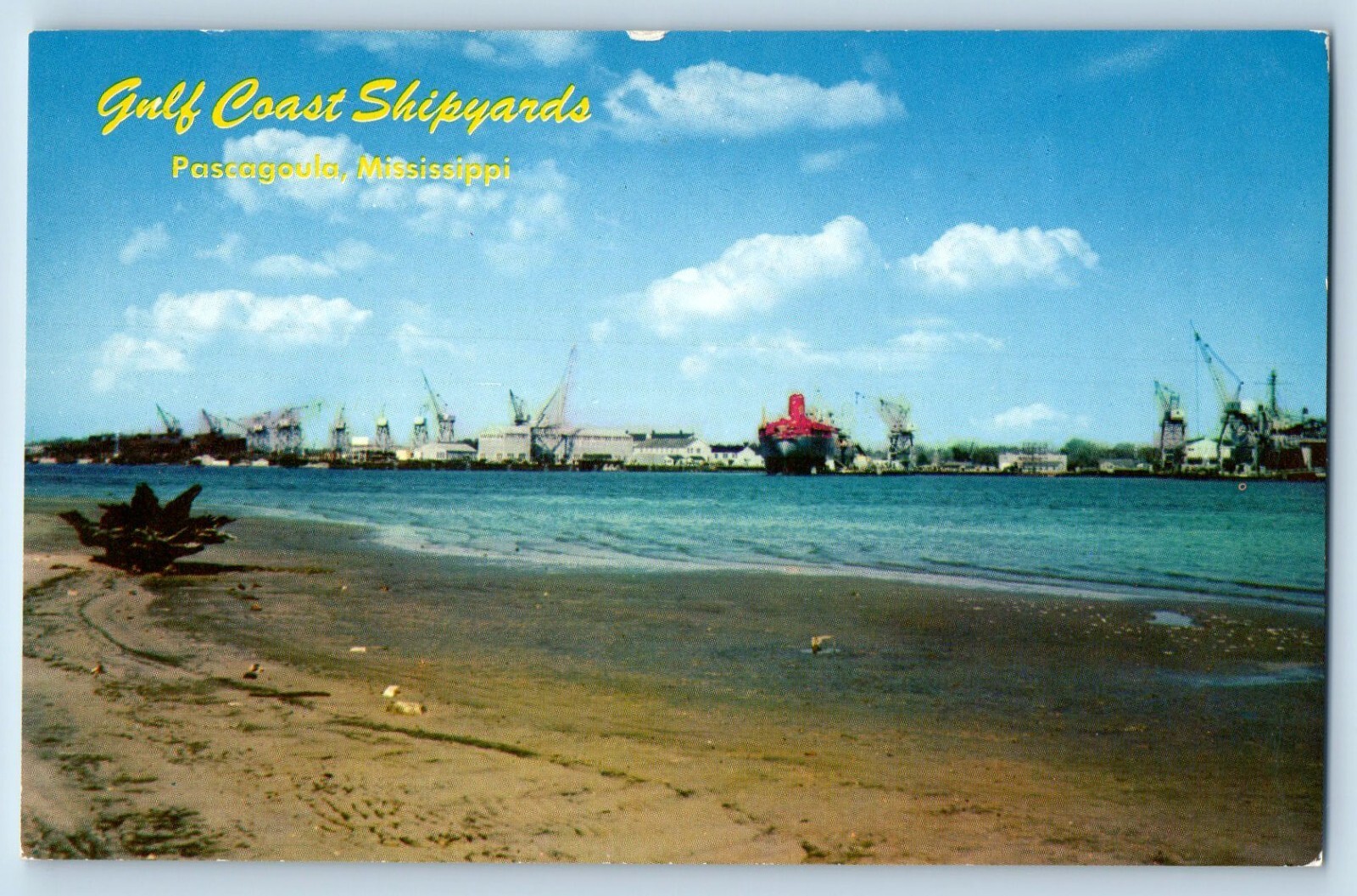
Pascagoula, Mississippi, serves as one of the primary naval and commercial shipbuilding hubs in the United States. Driven by industrial heavyweights such as HII’s Ingalls Shipbuilding and Bollinger Shipyards Pascagoula, the region spec...
Pascagoula, Mississippi, serves as one of the primary naval and commercial shipbuilding hubs in the United States. Driven by industrial heavyweights such as HII’s Ingalls Shipbuilding and Bollinger Shipyards Pascagoula, the region specializes in designing, fabricating, maintaining, and retrofitting military warships, Coast Guard cutters, complex commercial vessels, and heavy marine propulsion systems.
Contents
Located in Jackson County along the Mississippi Sound and the Gulf of Mexico, Pascagoula provides direct deepwater access, extensive dry-docking capacity, and dedicated industrial infrastructure. For defense contractors, commercial vessel operators, maritime suppliers, and skilled tradespeople, understanding the specific operational footprint, regulatory environment, and technical capabilities of Pascagoula’s shipyards is essential for effective procurement, subcontracting, and project execution.
Strategic Infrastructure and Regional Maritime Footprint
The concentration of shipyards in Pascagoula relies on a unique combination of natural geographic advantages and developed maritime infrastructure. Situated at the mouth of the Pascagoula River and adjacent to the Bayou Casotte industrial area, the Port of Pascagoula maintains deepwater navigation channels maintained to withstand heavy displacement vessels.
Key operational assets across the Pascagoula maritime complex include:
- Deepwater Navigation Access: Ship channels supporting draft requirements up to 42 feet, allowing large-displacement surface combatants, amphibious warfare ships, and heavy ocean-going commercial hulls to transit safely to open ocean trials.
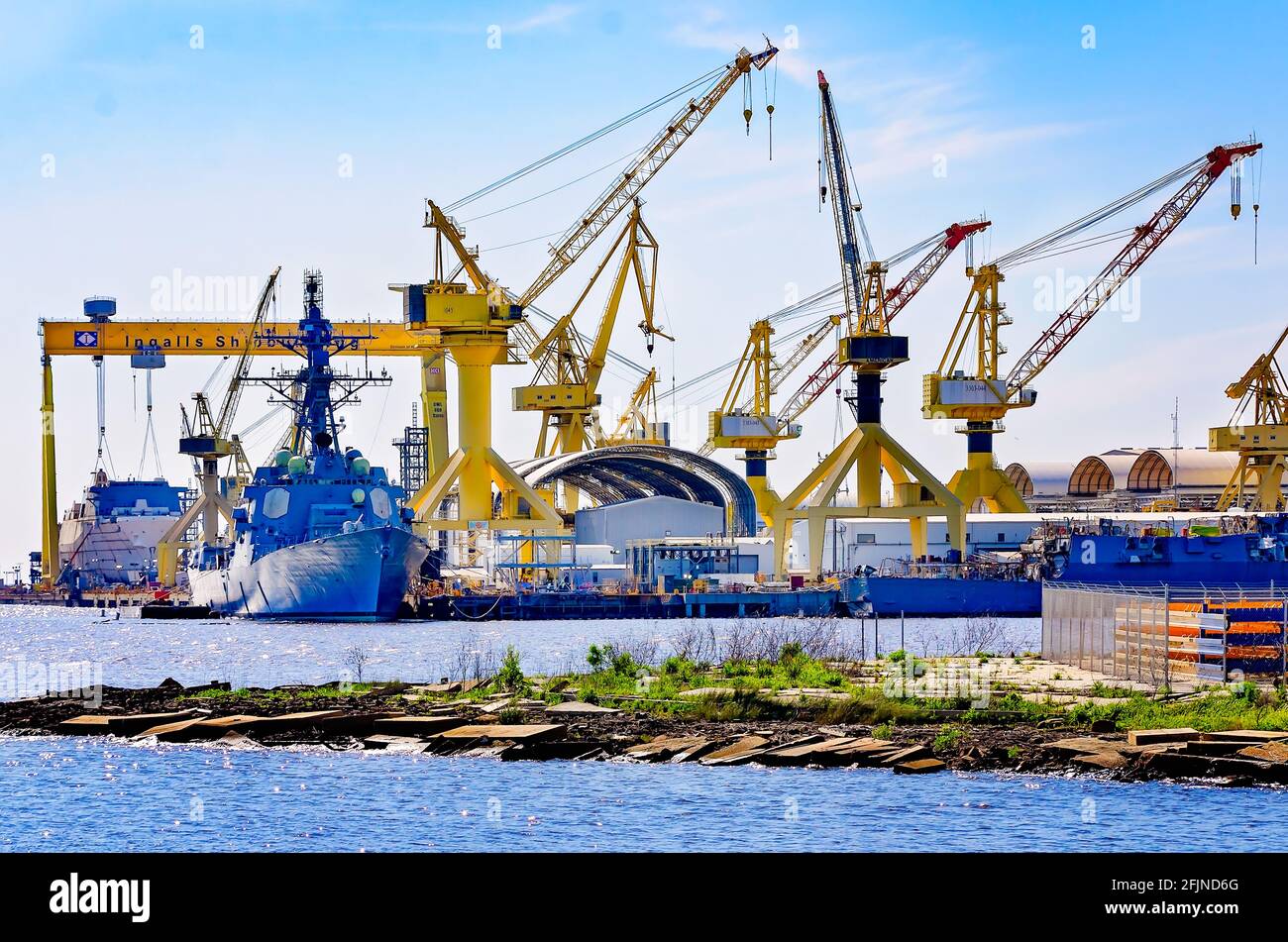
- Heavy Lifting and Module Transfer Facilities: High-capacity gantry cranes, land-level slipways, and heavy-transporter rail systems engineered for modular vessel integration.
- Outfitting and Pier Infrastructure: Thousands of linear feet of deepwater berthing spaces equipped with shore-power infrastructure, high-pressure air, gaseous media supplies, and direct rail-to-pier logistics connections.
- Specialized Manufacturing Enclosures: Environmental blast and paint facilities, automated panel line assembly shops, and climate-controlled clean rooms for advanced electronics and combat system integration.
Key Shipyards and Marine Manufacturing Operations in Pascagoula
1. Ingalls Shipbuilding (A Division of Huntington Ingalls Industries)
Ingalls Shipbuilding is the largest manufacturing employer in Mississippi and a primary shipyard for the U.S. Navy and U.S. Coast Guard. Occupying an 800-plus acre facility along the west bank of the Pascagoula River, Ingalls has delivered complex surface warships for more than eight decades.
INGALLS SHIPBUILDING FOOTPRINT
- Arleigh Burke-Class Destroyers (DDG 51)
- America-Class Amphibious Assault Ships (LHA)
- San Antonio-Class Amphibious Transport Docks (LPD)
- Legend-Class National Security Cutters (NSC)
Major Programs and Vessel Classes
- Arleigh Burke-Class (DDG 51) Destroyers: Ingalls is one of only two facilities in the United States equipped to build Flight III guided-missile destroyers, integrating the AN/SPY-6(V)1 Air and Missile Defense Radar (AMDR) and upgraded electrical generation capacity.
- San Antonio-Class (LPD 17) & America-Class (LHA) Amphibious Ships: Production of large-deck amphibious assault ships and transport docks designed to deploy U.S. Marine Corps personnel, vehicles, and landing craft.
- Legend-Class National Security Cutters (NSC): The flagship vessel program for the U.S. Coast Guard, performing multi-mission ocean security, maritime interdiction, and environmental monitoring operations.
Operational Capabilities
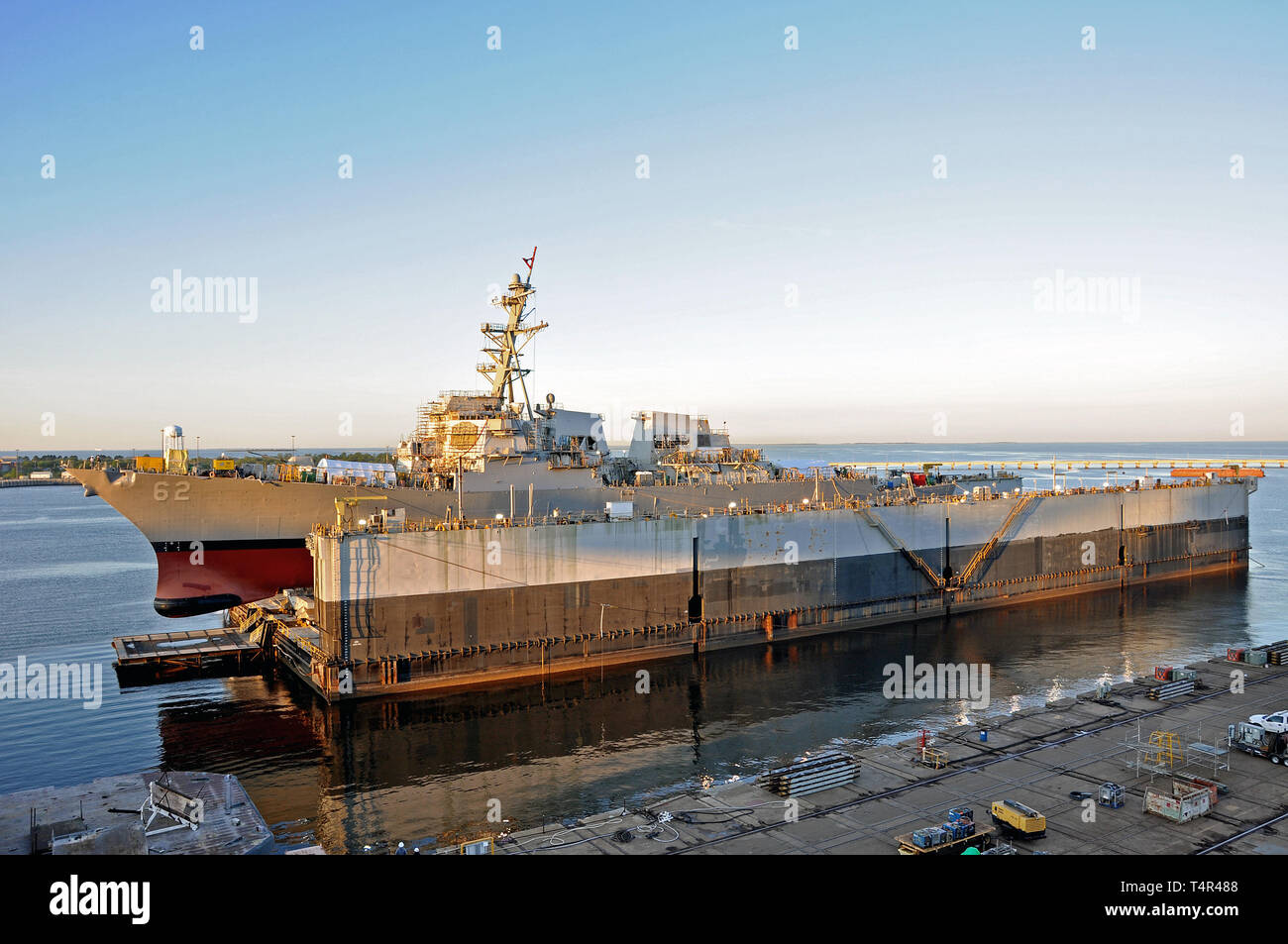
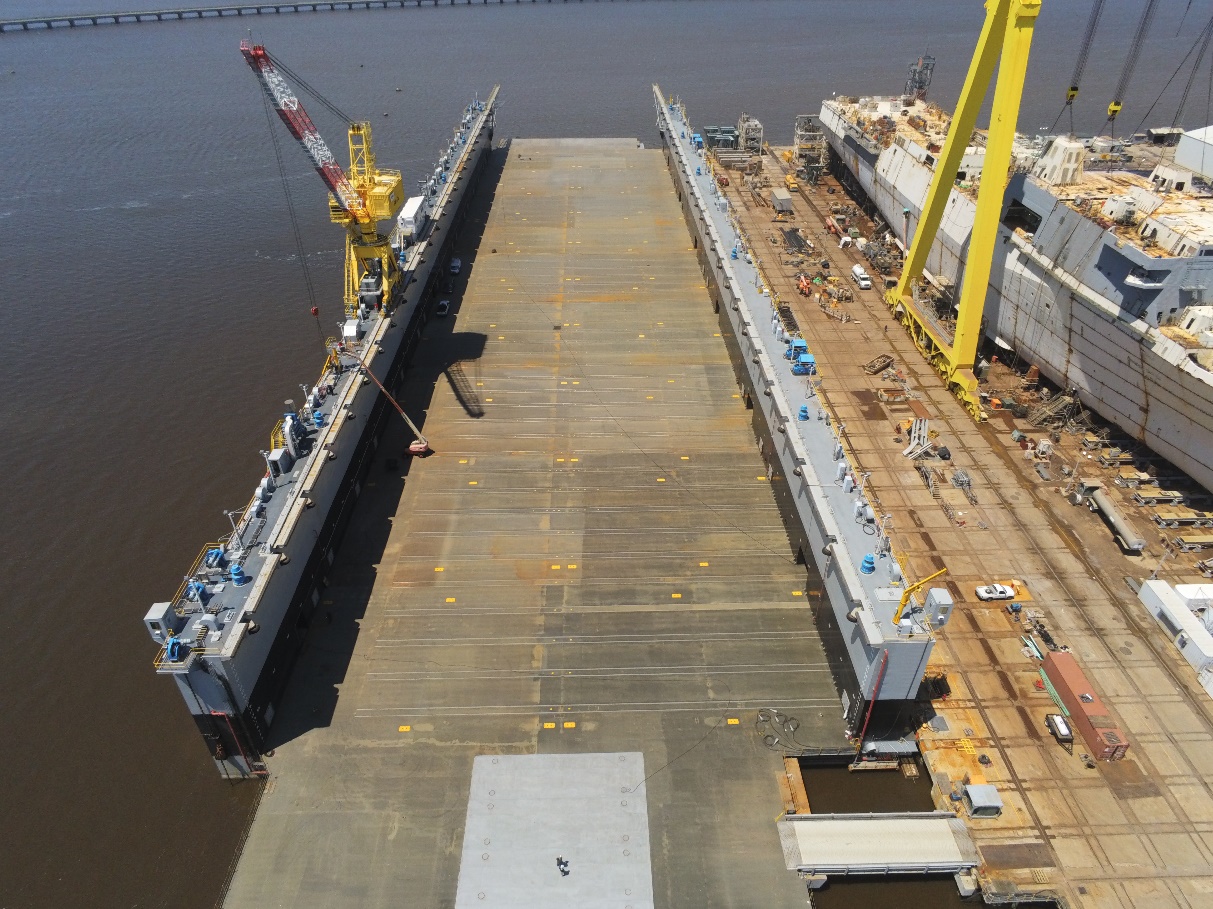
Ingalls utilizes land-level modular construction methodologies. Large structural steel modules (weighing up to thousands of tons) are fabricated inside covered facilities, pre-fitted with piping, electrical runs, and machinery, and then rolled out onto land-level transfer tracks for final hull joining prior to launch via floating dry dock.
2. Bollinger Shipyards Pascagoula (Formerly VT Halter Marine)
Following Bollinger Shipyards' acquisition of VT Halter Marine and ST Engineering Halter Marine Offshore, Bollinger expanded its Gulf Coast operations into Pascagoula. Located near Bayou Casotte and the lower river system, this facility expands Bollinger's government and commercial shipbuilding footprint.
Primary Operations and Projects
- Polar Security Cutter (PSC) Program: Facility upgrades were engineered to build the U.S. Coast Guard’s heavy polar icebreakers, requiring high-strength steel fabrication and heavy structural framing suitable for ice-strengthened hulls.
- Auxiliary and Research Ships: Production of oceanographic survey vessels, hydrographic ships, and specialized logistics support platforms for government agencies, including NOAA and Naval Sea Systems Command (NAVSEA).
- Commercial Hulls and Tug-Barge Systems: Fabrication of Articulated Tug-Barge (ATB) units, offshore supply vessels (OSVs), and specialized workboats for industrial commercial fleets.
3. Rolls-Royce Naval Propeller & Propulsion Center
While not a full hull construction yard, the Rolls-Royce facility in the Pascagoula manufacturing zone plays a vital role in the national naval shipbuilding industrial base.
- Capabilities: Specializes in high-precision casting, multi-axis CNC machining, hydrodynamic testing, and assembly of fixed-pitch and controllable-pitch propeller systems.
- Fleet Support: Manufactures propulsion components for Navy destroyers, submarines, aircraft carriers, and Coast Guard cutters, supporting both new-construction shipyards in Pascagoula and maintenance facilities nationwide.
Technical Comparison of Primary Facilities
The following table summarizes the core operational differences, primary outputs, and operational characteristics of the major shipyards and marine facilities in Pascagoula, Mississippi.
| Facility / Entity Name | Primary Output / Vessel Types | Facility Footprint & Launch Infrastructure | Key Customers & Agencies Served | Dominant Manufacturing Standards |
|---|---|---|---|---|
| Ingalls Shipbuilding (HII) | Guided-missile destroyers (DDG), Amphibious warfare ships (LPD/LHA), National Security Cutters (NSC) | 800+ acres, land-level integration bays, floating dry docks, heavy gantry rail systems | U.S. Navy, U.S. Coast Guard | NAVSEA, MIL-STD, ABS Naval Vessel Rules (NVR), ISO 9001 |
| Bollinger Shipyards Pascagoula | Heavy Polar Icebreakers (PSC), oceanographic vessels, ATBs, commercial workboats | Multi-site footprint, deepwater launch slips, heavy panel fabrication lines | U.S. Coast Guard, NOAA, U.S. Navy, commercial operators | NAVSEA, USCG Commercial Vessel Inspection Rules, ABS Heavy Ice Class |
| Rolls-Royce Naval Facility | Marine propellers, controllable-pitch hub assemblies, propulsion shafting | Dedicated foundry, high-tonnage multi-axis machining facilities | U.S. Navy, Tier-1 Naval Shipyards, commercial marine operators | NAVSEA Hydrodynamic Specs, ISO 9001, AS9100 quality frameworks |
Technical Standards, Quality Protocols, and Regulatory Compliance
Operating within Pascagoula’s shipbuilding ecosystem requires adherence to strict federal, industrial, and environmental frameworks. Because work centers heavily on government contracting, compliance parameters are significantly more complex than standard commercial fabrication.
PASCAGOULA REGULATORY & QUALITY MATRIX
- OSHA (29 CFR 1915): Shipyard Safety & Work Conditions
- NAVSEA / MIL-STD: Military Surface Ship Design & Metallurgy
- ABS NVR: Classification & Structural Integrity
- NIST SP 800-171 / CMMC: Defense Supply Chain Cybersecurity
- EPA / MDEQ NPDES: Water Quality & Air Emission Permits
Safety and Occupational Standards
Shipyard operations are subject to federal OSHA standards governing shipyard employment (29 CFR Part 1915). Key focus areas include:
- Confined Space Entry: Strict testing and certification by Certified Marine Chemists before workers enter double bottoms, fuel tanks, or sealed void spaces.
- Fall Protection and Scaffolding: Mandatory tie-off rules and engineered scaffolding systems for multi-story hull erections.
- Hot Work Security: Dedicated firewatch personnel and combustible gas monitoring during welding, burning, and plasma-cutting operations.
Quality and Technical Specifications
- NAVSEA Standard Items: Military ship construction requires strict adherence to Naval Sea Systems Command standards covering surface preparation, non-destructive testing (NDT), electrical cable pulling, and pipe-brazing protocols.
- ABS Naval Vessel Rules (NVR): Commercial and military craft constructed in Pascagoula must meet hull structural integrity and machinery reliability standards certified by the American Bureau of Shipping.
- Cybersecurity Compliance: Subcontractors and vendors interacting with defense shipbuilders must comply with NIST SP 800-171 and Cybersecurity Maturity Model Certification (CMMC) requirements to protect Controlled Unclassified Information (CUI).
Environmental Regulations
Situated along the sensitive Mississippi Sound coastal environment, yards must strictly follow guidelines managed by the Mississippi Department of Environmental Quality (MDEQ) and the U.S. Environmental Protection Agency (EPA):
- NPDES Stormwater Permits: Blast media grit, paint overspray, and heavy metal runoff are contained using closed-loop reclamation and filtration systems.
- Title V Air Quality Standards: Volatile Organic Compound (VOC) emissions from marine coatings are closely monitored and controlled through high-efficiency particulate air (HEPA) and carbon-absorption containment systems.
Subcontracting and Supply Chain Integration
Building and maintaining major sea platforms requires an extensive supply chain of qualified vendors, equipment manufacturers, and specialized marine tradespeople.
VENDOR ONBOARDING PIPELINE
- Entity Registration & SAM.gov Validation
- Quality System Audit (ISO 9001 / NAVSEA Standard Items)
- Cybersecurity Clearance (NIST SP 800-171 / CMMC Level 2)
- Facility & Personnel Security Clearance (DCSA / FCL)
Onboarding as a Defense Supplier
Companies seeking to supply materials, component assemblies, or site services to primary yards such as HII Ingalls or Bollinger must fulfill strict supplier requirements:
- Unique Entity Identifier (UEI) & SAM Registration: Active registration in the federal System for Award Management (SAM.gov) is required for prime defense contracts and major Tier-1 subcontracts.
- Quality System Audit: Subcontractors must maintain a quality management system certified to ISO 9001:2015, AS9100, or direct NAVSEA-approved quality procedures.
- Facility and Personnel Clearance: Subcontractors working on classified shipboard systems (such as combat systems, electronic warfare suits, or specialized propulsion) must hold a Facility Security Clearance (FCL) issued through the Defense Counterintelligence and Security Agency (DCSA).
- Specialized Trade Certifications: Welding operations must conform to AWS (American Welding Society) D1.1 (Structural Steel), AWS D1.2 (Aluminum), and NAVSEA S9074-AR-GIB-010/278 (Requirements for Fabrication Welding and Inspection).
Specialized Marine Trades Demand
Pascagoula shipyards continuously recruit skilled trade professionals across multiple disciplines:
- Marine Pipefitters: Skilled in cupronickel (CuNi), stainless steel, and high-pressure steam line installations.
- Structural Fitters and Aluminum Welders: Trained in pulse-MIG, TIG, and shielded metal arc welding (SMAW) for structural plates and stiffeners.
- Marine Electricians: Responsible for pulling MIL-SPEC armored cabling, terminating switchboards, and installing sensor networks.
- Nondestructive Testing (NDT) Technicians: Certified in Radiographic (RT), Ultrasonic (UT), Magnetic Particle (MT), and Liquid Penetrant (PT) testing to verify weld integrity.
Frequently Asked Questions
What are the main shipyards operating in Pascagoula, MS?
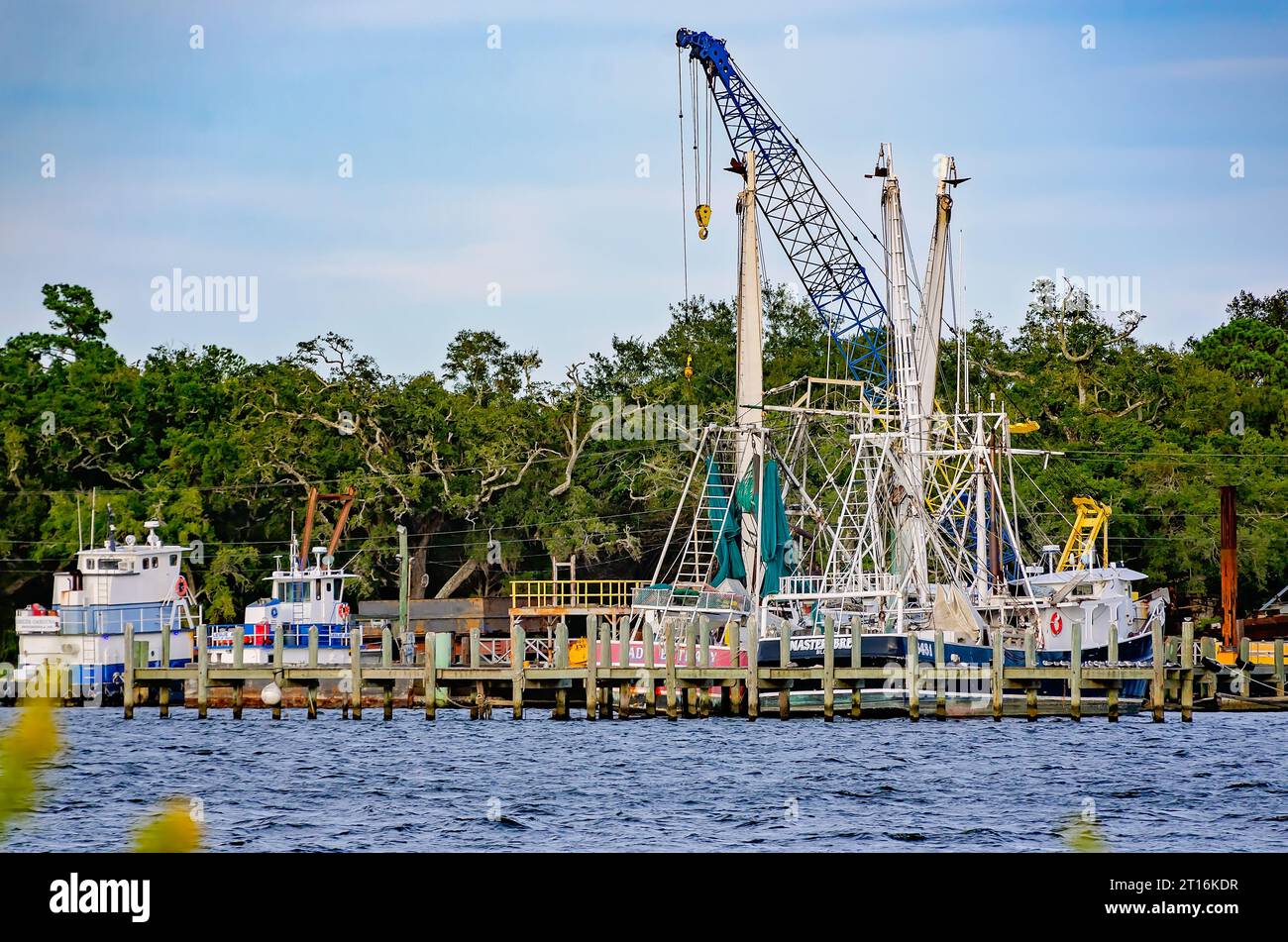
The primary industrial shipbuilding facilities in Pascagoula are Ingalls Shipbuilding (a division of Huntington Ingalls Industries) and Bollinger Shipyards Pascagoula (which acquired VT Halter Marine). Additionally, the area hosts major propulsion component manufacturers, including the Rolls-Royce Naval Propeller Center, alongside smaller marine repair, barge maintenance, and fabrication yards.
What types of ships are built in Pascagoula shipyards?
Pascagoula facilities build both defense and commercial vessels. Ingalls Shipbuilding constructs U.S. Navy Arleigh Burke-class destroyers, San Antonio-class and America-class amphibious warfare ships, and U.S. Coast Guard Legend-class National Security Cutters. Bollinger Shipyards Pascagoula focuses on specialized federal craft like the Polar Security Cutter, research oceanographic vessels, commercial workboats, and barges.
How can a supplier or contractor win work with Pascagoula shipyards?
Suppliers must register through the respective procurement portals of HII Ingalls or Bollinger Shipyards. Vendors must demonstrate compliance with ISO 9001 quality systems, meet NAVSEA or ABS technical specifications, comply with NIST SP 800-171 cybersecurity standards, and maintain appropriate insurance and safety metrics (such as an acceptable Experience Modification Rate).
What security clearances are required to work at Pascagoula defense yards?
Security requirements depend on the project and role. Basic access to defense construction sites requires passing U.S. citizenship verification and background checks for TWIC (Transportation Worker Identification Credential) cards and site badges. Work involving sensitive radar, combat control systems, or classified vessel compartments requires secret-level security clearances managed by the Defense Counterintelligence and Security Agency (DCSA).
What environmental regulations apply to Pascagoula shipyard operations?
Shipyard operations must comply with federal EPA regulations and Mississippi Department of Environmental Quality (MDEQ) rules. Key permits govern wastewater and stormwater runoff under the National Pollutant Discharge Elimination System (NPDES), abrasive blast media handling, hazardous waste disposal under RCRA, and Volatile Organic Compound (VOC) emissions under Title V of the Clean Air Act.
Strategic Guidance and Recommended Next Steps
Navigating business opportunities, employment, or project logistics within Pascagoula’s shipbuilding corridor requires systematic preparation:
For Prospective Vendors and Subcontractors:
- Audit internal quality management and cybersecurity protocols against ISO 9001 and NIST SP 800-171 standards before initiating vendor portal applications.
- Obtain certification for trade staff through accredited institutions (such as AWS structural certifications or NAVSEA-qualified NDT levels).
- Monitor formal procurement portals via HII Supplier Relations and Bollinger Shipyards Procurement channels.
For Job Seekers and Skilled Trades Professionals:
- Secure a valid Transportation Worker Identification Credential (TWIC) through the Transportation Security Administration (TSA) to facilitate base access.
- Complete specialized training through regional vocational partners, such as Mississippi Gulf Coast Community College (MGCCC), which offers tailored maritime trade programs supported by local shipbuilders.
For Commercial Vessel Operators and Procurement Teams:
- Evaluate vessel displacement, draft restrictions, and dry-dock capabilities relative to Pascagoula channel depth limits (42-foot main channel depth).
- Coordinate directly with yard management to schedule dock space and long-lead material planning well in advance due to high defense-program throughput.
EDITORIAL CATEGORY METADATA:
Image Gallery