What Is the Best Checked Luggage Hard Shell? 2026 Buying Guide & Engineering Breakdown
The best checked hard-shell luggage depends on your priority between material elasticity, total weight, structural security, and price. Pure polycarbonate suitcases offer the optimal balance of impact resistance and weight, flexing und...
The best checked hard-shell luggage depends on your priority between material elasticity, total weight, structural security, and price. Pure polycarbonate suitcases offer the optimal balance of impact resistance and weight, flexing under high-stress baggage handling without cracking. Aluminum provides maximum shell rigidity and puncture resistance, while polypropylene delivers ultra-lightweight resilience at accessible price points.
Contents
Understanding Hard-Shell Luggage Shell Materials
Evaluating checked hard-shell luggage requires understanding the raw materials used in shell construction. Unlike carry-on bags, checked luggage experiences severe kinetic stress, cold cargo hold temperatures, high-stack pressure, and violent impacts during automated conveyor transfers. The chemical composition of the shell determines whether a suitcase absorbs impact energy or fractures under pressure.
1. Polycarbonate (PC)
Polycarbonate is the industry standard for high-performance checked luggage. It is an amorphous thermoplastic known for high impact strength, heat resistance, and structural elasticity.
- Impact Absorption: Polycarbonate does not fracture easily when dropped or subjected to heavy pressure; instead, it flexes to absorb the energy of an impact and snaps back into its original shape.
- Virgin vs. Recycled PC: Premium luggage brands use 100% virgin polycarbonate (such as Makrolon polycarbonate manufactured by Covestro). Virgin PC exhibits uniform chemical strength without micro-fractures, whereas re-ground or recycled PC blends can become brittle over repeated stress cycles.
- Texture & Finish: Polycarbonate shells are often textured (matte, diamond-grit, or micro-grooved) to obscure surface scratches and scuffs caused by baggage handling belts.
2. Aluminum & Aluminum-Magnesium Alloys
Aluminum represents the ultimate standard for frame rigidity and puncture resistance in checked travel gear. Typically manufactured using 5052 or 6060 aluminum alloys, these shells are stamped or die-cast into structural panels.
- Structural Integrity: Aluminum provides absolute protection against sharp objects and extreme compression. It does not crack under zero-degree cargo hold conditions.
- Deformation & Patina: Aluminum does not flex like plastic. Severe impacts create localized dents rather than elastic deformation. High-frequency travelers often consider these dents a characteristic travel patina, but severe corner impacts can misalign the outer metal frame.
- Weight Consideration: Aluminum luggage weighs substantially more than synthetic alternatives, eating into the standard 50-pound (23 kg) airline free checked weight limit.
3. Polypropylene (PP)
Polypropylene is a low-density polymer widely utilized for lightweight checked bags and molded zipperless shells.
- Elasticity & Density: PP has the lowest density among standard luggage plastics, making it exceptionally lightweight. It possesses notable flex and high chemical resistance.
- Manufacturing Application: Polypropylene is commonly used in custom-molded injection processes, permitting molded-in structural ribbing and integrated latch channels without requiring separate metal frames.
- Scratch Susceptibility: While highly resistant to cracking, polypropylene has a softer surface hardness than polycarbonate, making it slightly more susceptible to visible surface abrasion and deep gouges.
4. Acrylonitrile Butadiene Styrene (ABS)
ABS is an entry-level thermoplastic resin created by polymerizing styrene and acrylonitrile in the presence of polybutadiene.
- Rigidity & Cost: ABS is inexpensive to manufacture and offers a rigid initial feel, giving consumers a perception of strength in store environments.
- Brittle Fracture Modes: Unlike polycarbonate, ABS lacks high elasticity. When subjected to severe stress or heavy drops—particularly at sub-zero temperatures encountered in aircraft cargo bays—ABS is significantly more prone to spiderweb cracking and catastrophic shell structural failure.
- ABS/PC Blends: Manufacturers frequently create composite sheets combining an ABS core with a thin polycarbonate outer layer. While superior to pure ABS, these composite shells remain less durable than 100% virgin polycarbonate.
Critical Engineering Features to Evaluate
Beyond shell raw materials, the real-world durability of checked hard-shell luggage depends on hardware engineering, closure mechanisms, and chassis components.
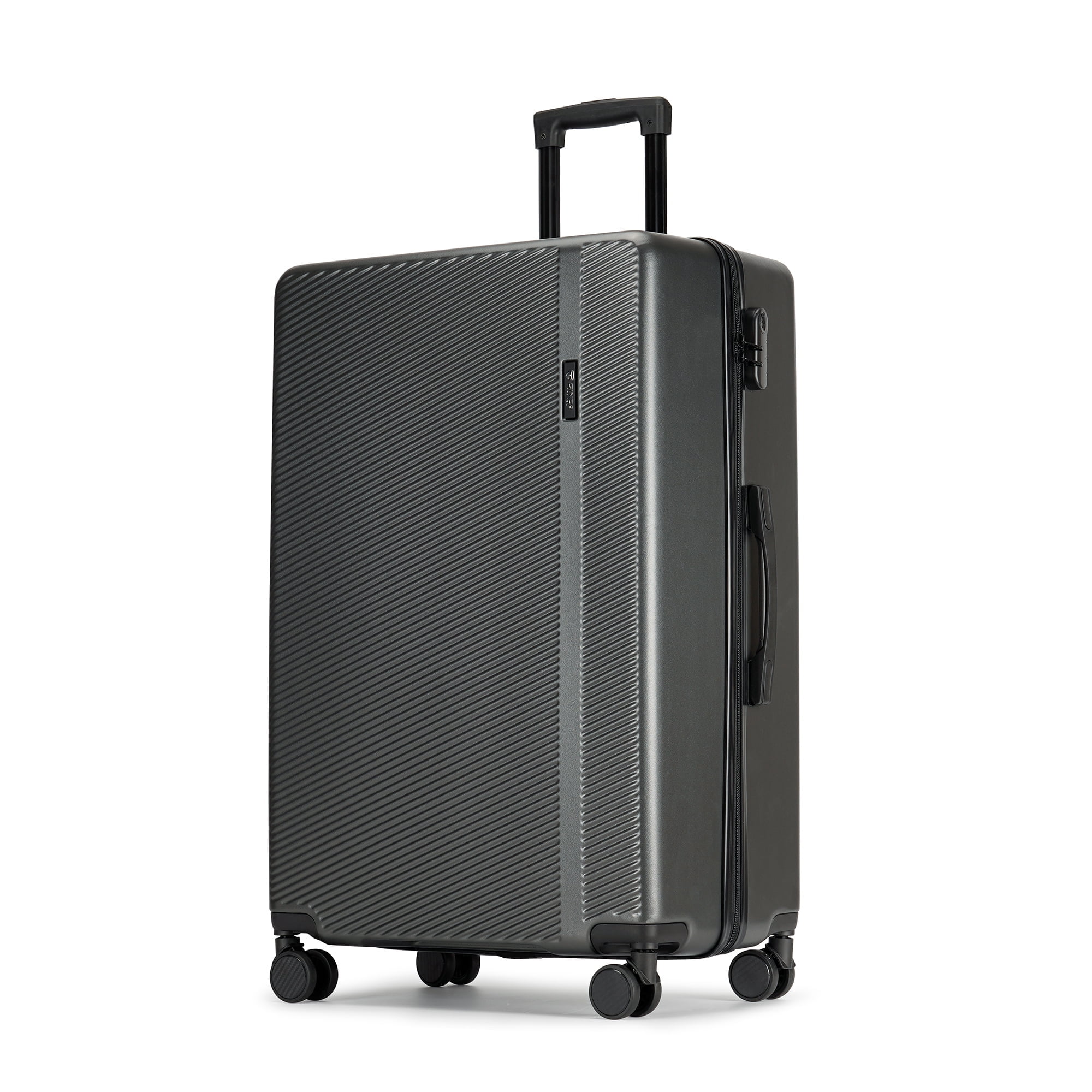
Structural Anatomy of Hard-Shell Checked Luggage:
- Telescoping Handle System
- Top Corner Guards (Die-Cast Alum / Molded Rubber)
- Polycarbonate / Aluminum Outer Shell
- Closure System: Dual-Coil Zipper OR Gasketed Aluminum Frame with Draw-Bolt Latch
- Bottom Corner & Chassis Reinforcement Plates
- Dual Spinner Wheel Assemblies
Closure Architecture: Zippered vs. Zipperless Latch Systems
The closure system determines both weather resistance and structural rigidity:
- Double-Coil Zippered Systems: High-end zippered checked luggage utilizes double-layer burst-resistant zippers (such as YKK Tough Zipper technology). Standard single-coil zippers can be punctured and opened with a common ballpoint pen; double-coil designs resist puncture forces and prevent track separation when the bag is overpacked.
- Zipperless Aluminum Frame Latches: Premium polycarbonate and aluminum luggage replace flexible zipper tracks with a rigid aluminum perimeter frame featuring rubber gaskets and TSA-approved draw-bolt key or combination latches. This provides superior waterproofing, crush protection, and anti-theft resistance.
Wheel Systems and Axle Housing
Checked bags endure continuous weight loads across uneven pavement, curbs, and terminal floor joins.
- Dual-Wheel Spinners (8-Wheel Configuration): Single wheels wear down quickly and catch on surface gaps. Dual caster wheel assemblies feature two independent tires per corner, distributing weight over eight contact points.
- Bearing and Tire Composition: Look for Japanese Hinomoto Lisof silent-run polyurethane tires. High-grade ball bearings mounted in reinforced nylon wheel housings prevent heat buildup and axle deformation under heavy loads.
- Corner Housing Integration: The weakest point on any hard-shell suitcase is where the wheel housing bolts to the shell. High-quality luggage incorporates internal reinforcement plates to distribute wheel impacts across a broader surface area of the shell.
Telescoping Handle Tubes
Handle systems should be recessed internally or flush-mounted to avoid impact damage on luggage carousels. Look for multi-stage telescoping handles constructed from high-grade extruded aluminum tubing rather than thin-walled steel. Internal locking pins should engage cleanly without excessive lateral movement or wobble.
Comparative Material & Performance Matrix
The following table summarizes the structural attributes, weight profiles, and price points of primary hard-shell luggage categories:
| Shell Material Type | Impact Resistance | Elasticity / Recovery | Average Tare Weight (28" Large Checked) | Structural Frame Type | Primary Vulnerability | Ideal Travel Profile |
|---|---|---|---|---|---|---|
| 100% Virgin Polycarbonate | Exceptional | High (Flexes and pops back) | 9.5 – 11.5 lbs (4.3 – 5.2 kg) | Zippered or Aluminum Latches | Surface scuffing & scratching | Frequent long-haul & international travel |
| Stamped Aluminum Alloy | Maximum | Low (Dents under impact) | 13.5 – 16.0 lbs (6.1 – 7.2 kg) | Zipperless Aluminum Frame | High tare weight; shell denting | High-value cargo; extreme durability needs |
| Molded Polypropylene | High | Very High | 8.5 – 10.0 lbs (3.8 – 4.5 kg) | Integrated Frame or Zippered | Deep gouging; frame alignment | Weight-sensitive travel & budget long-haul |
| ABS / PC Composite | Moderate | Medium-Low | 9.0 – 10.5 lbs (4.0 – 4.7 kg) | Zippered | Cold-temperature panel cracking | Intermittent leisure & domestic travel |
| Pure ABS | Low | Low (Brittle failure) | 8.0 – 9.5 lbs (3.6 – 4.3 kg) | Zippered | Structural stress cracking under weight | Occasional short domestic travel |
Top Checked Hard-Shell Luggage Recommendations
Best Overall Polycarbonate Checked Luggage: Monos Check-In Large / Away The Large
For most travelers, 100% polycarbonate checked bags offer the best combination of weight efficiency, packable volume, and impact resilience.
- Construction: Aerospace-grade virgin polycarbonate shells engineered with low-profile corner profiles.
- Key Features: Integrated TSA-accepted combination locks, whisper-quiet dual spinner wheels, internal compression panels, and puncture-resistant double-coil YKK zippers.
- Performance: The elastic shell absorbs heavy conveyor belt impacts without stress-fracturing. The lightweight profile allows travelers to pack more contents before triggering airline 50-pound overweight surcharges.
Best Heavy-Duty Aluminum Luggage: Rimowa Original Check-In L / Tumi 19 Degree Aluminum
For travelers who prioritize security, structural rigidity, and longevity over weight minimization, aluminum cases remain the benchmark.
- Construction: Heavy-gauge aluminum-magnesium alloy shell panels riveted directly to an extruded aluminum structural frame.
- Key Features: Dual TSA combination lever-action draw-bolt latches, custom-engineered rubber perimeter environmental seals, and heavy-duty corner caps.
- Performance: Completely immune to puncture attacks and zipper tampering. While heavy (averaging 13+ pounds empty), these cases protect delicate contents, optical gear, and high-value equipment from extreme external crushing forces.
Best Lightweight & High-Security Zipperless Case: Lojel Frame Series / Samsonite S'Cure
For travelers seeking zipperless security without the extreme weight penalty of aluminum, molded polypropylene latch cases provide a compelling middle ground.
- Construction: Injection-molded polypropylene shells fitted with a 3-point latch system.
- Key Features: Integrated gasket seals running along the entire frame rim, eliminating zipper teeth entirely while maintaining rain and moisture resistance.
- Performance: Extremely lightweight, weather-sealed, and difficult to breach without keys or access codes.
Best Value Polycarbonate: Samsonite Freeform / Omni 2 Polycarbonate
For cost-conscious travelers seeking high durability without paying premium boutique prices, Samsonite’s mid-tier micro-diamond polycarbonate lines offer solid engineering.
- Construction: Textured 100% micro-diamond polycarbonate shell designed to obscure surface scratches.
- Key Features: Dual spinner wheels, expandable main compartments, recessed TSA combination locks.
- Performance: Delivers genuine polycarbonate flex and stress-recovery properties at accessible price points, backed by widespread global warranty support networks.
Airline Checked Luggage Specifications & Sizing Constraints
Choosing the correct exterior dimensions prevents expensive oversized baggage penalties at airport check-in counters.
Standard 62 Linear Inches (157 cm) Limit Rule:
- Linear Inches = Height + Width + Depth
- Example: 28" H + 20" W + 12" D = 60 Linear Inches
- (Includes wheels, side bumpers, and handles)
The 62-Linear-Inch Rule
Most commercial airlines (including major US network carriers such as Delta, United, and American, as well as international carriers governed by IATA standards) define standard checked luggage as having maximum external dimensions of 62 linear inches (157 cm).
$$\text{Linear Inches} = \text{Exterior Height} + \text{Exterior Width} + \text{Exterior Depth}$$
Note: Dimensional calculations must include external hardware, including protruding wheel casters, side feet, and folded top handles.
Checked Luggage Classifications
- Medium Checked Bags (24" to 26" Height): Typically measures between 50 and 56 linear inches. Ideal for week-long trips. Highly unlikely to trigger dimensional or weight limits.
- Large Checked Bags (28" to 30" Height): Typically measures between 59 and 62 linear inches. Offers maximum packing volume (80–110 liters) while staying within standard free-dimensional limits.
- Extra-Large Checked Bags (31"+ Height): Frequently exceeds the 62-linear-inch limit. Purchasing these bags often results in automatic oversized baggage fees ranging from $100 to $200 per leg, regardless of actual bag weight.
Weight Limits and Tare Weight Optimization
Standard international free checked baggage limits generally cap weight at 50 pounds (23 kg) for economy class passengers, or 70 pounds (32 kg) for premium cabin passengers.
Because the weight of the suitcase counts toward your total allowance, bag weight (tare weight) is critical:
- An aluminum trunk weighing 15 lbs empty leaves only 35 lbs for packed items.
- A polycarbonate bag weighing 9.5 lbs empty allows 40.5 lbs of packed items—providing over 15% more usable capacity before incurring overweight charges.
Maintenance, Care, and Longevity Optimization
Proper care extends the service life of hard-shell checked luggage and protects internal structural components from premature failure.
Cleaners and Surface Scuff Removal
- Polycarbonate Surface Scuffs: Superficial scuffs from rubber airport conveyor belts can be safely removed using a mild abrasive cleaning sponge (such as a melamine foam eraser) dampened with water. For stubborn scuffs, apply a small amount of isopropyl alcohol (70%) with a microfiber towel. Avoid harsh solvents like acetone, which can dissolve polycarbonate coatings.
- Aluminum Care: Metal shells can be cleaned using mild dish soap and warm water. Minor aluminum surface scratches can be blended using specialized metal polishes, though deep gouges and structural dents require specialized body tools or professional luggage restoration.
Storage and Wheel Maintenance
- Nesting Storage: Store luggage in a dry, temperate space. Polycarbonate and polypropylene shells should not be stored in unconditioned attics where temperatures exceed 140°F (60°C), as extreme heat can degrade internal adhesive backings and weaken synthetic liners.
- Bearing Inspection: Periodically check spinner wheel axles for trapped hair, carpet fibers, or grit. Spraying a small amount of dry silicone lubricant into the wheel bearing housing preserves smooth rotation and prevents axle binding.
Understanding Warranties and Airline Damage Claims
- Manufacturer Warranties: High-end luggage manufacturers (such as Briggs & Riley, Away, Rimowa, and Monos) offer multi-year or lifetime limited warranties covering functional structural failures, including cracked shells, broken handles, sheared wheel housings, and broken zippers.
- Airline Property Damage Claims: Warranties typically exclude cosmetic wear, airline handling dents, and surface abrasions. Inspect your checked bag immediately upon retrieving it from the baggage carousel. If you discover a cracked shell, broken wheel, or bent frame, file a formal Damage Property Report (DPR) with the airline baggage service center before leaving the arrival airport. Major airlines are contractually obligated under DOT guidelines (for domestic US flights) and the Montreal Convention (for international flights) to repair or compensate passengers for functional baggage damage caused in transit.
Frequently Asked Questions
Is polycarbonate better than aluminum for checked luggage?
Polycarbonate is better for most travelers because it flexes on impact without permanently denting and weighs 30% to 40% less than aluminum. Aluminum offers superior security, crush protection, and puncture resistance, but its higher weight consumes a larger share of your airline baggage weight allowance.
What size checked hard-shell luggage avoids airline oversized fees?
To avoid oversized fees, choose a checked suitcase with total exterior dimensions (length + width + depth, including wheels and handles) that do not exceed 62 linear inches (157 cm). Standard "Large" 28-inch checked bags typically meet this requirement, whereas 31-inch extra-large suitcases often exceed it.
Do hard-shell suitcases crack easily in cold airplane cargo holds?
Suitcases made from 100% virgin polycarbonate or polypropylene rarely crack in cold cargo holds because these materials maintain high structural elasticity at sub-zero temperatures. However, budget suitcases made from cheap ABS plastic become brittle when exposed to extreme cold and are significantly more likely to crack upon violent impact.
Are zipperless hard-shell suitcases more secure than zippered luggage?
Yes. Zipperless hard-shell suitcases featuring aluminum perimeter frames and heavy-duty TSA draw-bolt latches are more secure than zippered bags. Standard zippers—even those protected by TSA locks—can often be breached with a sharp tool and re-zipped without visible trace, whereas solid frame latches prevent forced entry and offer enhanced weather sealing.
How do I repair scuffs and dents on hard-shell luggage?
Superficial scuffs on polycarbonate luggage can be buffed out using a damp melamine foam eraser or isopropyl alcohol on a microfiber cloth. Deep dents on aluminum luggage can sometimes be pushed back out from the inside using a rubber mallet and wooden block, but cracked plastic shells cannot be safely repaired and require shell replacement under warranty.
Summary Decision Framework
When selecting the ideal checked hard-shell luggage, align your choice with your specific travel profile:
- Select 100% Virgin Polycarbonate if you want the ultimate balance of lightweight capacity, high impact flexibility, and scratch concealment for frequent commercial flights.
- Select Aluminum Alloy if you require absolute puncture protection, maximum security frame latches, and an ultra-rigid shell for delicate cargo, and do not mind higher bag weight.
- Select Polypropylene Frame Latches if you need waterproof gasket protection, zipperless anti-theft security, and low overall tare weight at a moderate price.
- Avoid Pure ABS for checked travel, as its lower elasticity and cold-temperature brittleness significantly increase the risk of shell cracking during automated baggage handling.
Image Gallery