Why the UK State Pension Matters for You
The UK State Pension acts as a vital financial foundation for retirement, providing a regular income from the government once you reach qualifying age. Understanding how it operates, how your contributions build your entitlement, and w...
The UK State Pension acts as a vital financial foundation for retirement, providing a regular income from the government once you reach qualifying age. Understanding how it operates, how your contributions build your entitlement, and what steps you can take to maximize your payments is essential for securing long-term financial stability.
Contents
Understanding the UK State Pension Landscape
The UK State Pension is a regular, reliable payment made by the government to individuals who have reached the eligible retirement age and met the necessary National Insurance (NI) contribution thresholds. For most residents, it serves as the bedrock of retirement planning, supplementing private pensions, workplace schemes, and personal savings.
Unlike defined contribution workplace pensions, which depend entirely on investment performance and market fluctuations, the State Pension provides a guaranteed income stream for life. This predictability makes it a cornerstone of household financial security in later life. However, relying on the assumption that you will automatically receive the maximum amount can lead to significant shortfalls. Government rules, historical reforms, and ongoing legislative changes mean that every individual's entitlement is unique to their employment and residency history.
Recognizing the value of this system requires looking past simple retirement age milestones. It involves a detailed examination of your working life, your National Insurance record, and the legislative framework governing payouts. Failing to engage with your state pension forecast early can leave you with restricted options when you exit the workforce.
The Mechanics of National Insurance Contributions
Your eligibility and the eventual amount you receive depend almost entirely on your National Insurance record. National Insurance is a tax on earnings and self-employed profits, but it also functions as a credits system that tracks your qualification for state benefits and the State Pension.
To build entitlement under the current "New State Pension" system, you generally need a minimum of 10 qualifying years on your National Insurance record to receive any payment at all, and typically 35 qualifying years to receive the full amount. A qualifying year is simply a tax year in which you have paid sufficient National Insurance contributions, earned above a certain threshold, or received NI credits.
| Contribution Type | How It Works | Impact on State Pension |
|---|---|---|
| Paid Employment | Deducted automatically via PAYE if earnings exceed the Lower Earnings Limit. | Builds qualifying years directly based on earnings thresholds. |
| Self-Employment | Paid via Class 2 and Class 4 National Insurance contributions through Self Assessment. | Counts toward qualifying years provided payments are met annually. |
| Voluntary Contributions | Class 3 contributions made directly to HM Revenue and Customs (HMRC). | Fills gaps in your employment or residency history to secure full years. |
| NI Credits | Awarded automatically for periods of unemployment, caregiving, or illness. | Protects your entitlement without requiring financial payments. |
Gaps in your record can occur for numerous reasons, including periods of low income, living abroad, or taking time out of the workforce to raise children or care for elderly relatives. Identifying these gaps early allows you to evaluate whether making voluntary contributions makes financial sense for your specific circumstances.
The New State Pension vs. Older Systems
The rules governing the UK State Pension underwent a major structural shift in April 2016. Individuals who reached State Pension age on or after April 6, 2016, fall under the New State Pension rules, while those who reached pension age before that date receive the Basic State Pension, often supplemented by additional state pension components (such as SERPS or the State Second Pension).
Under the post-2016 framework, the system was designed to be simpler and more transparent. A flat-rate full amount is established for everyone who meets the 35-year contribution threshold, eliminating the complex calculation of additional earnings-related state pensions. However, transitional arrangements were put in place to protect rights accrued under the older systems prior to April 2016.
For those caught in the transition, calculating the starting amount involves a dual calculation comparing the old system rights with the new system rules, granting whichever is higher as a protected amount. Navigating this transition requires checking your official government forecast, as your personal transitional calculation dictates how additional post-2016 years will scale up your final benefit.
State Pension Age Milestones and Adjustments
The age at which you can access your State Pension is not static. Legislative reforms have progressively increased the retirement age to reflect rising life expectancies and maintain fiscal sustainability across public finances.
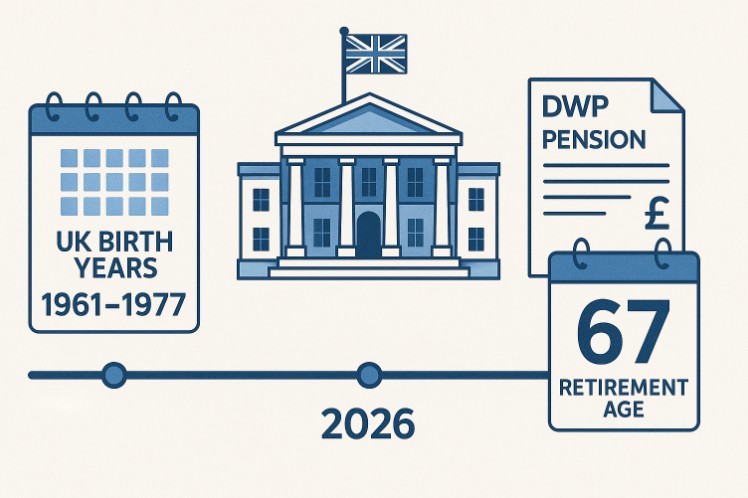
The State Pension age for both men and women is currently aligned, having reached 66, and scheduled legislative provisions map out further increases to 67 between 2026 and 2028, with future reviews examining trajectories toward 68. These adjustments mean that planning your retirement timeline requires vigilance regarding your exact date of birth and the statutory timeline applicable to you.
| Date of Birth | Scheduled State Pension Age |
|---|---|
| Up to 5 April 1954 | Reached at age 65 or earlier (historic) |
| 6 April 1954 to 5 April 1960 | Reached at age 66 |
| 6 April 1960 to 5 March 1961 | Graduated increases between age 66 and 67 |
| 6 March 1961 onwards | Reached at age 67 (under current legislation) |
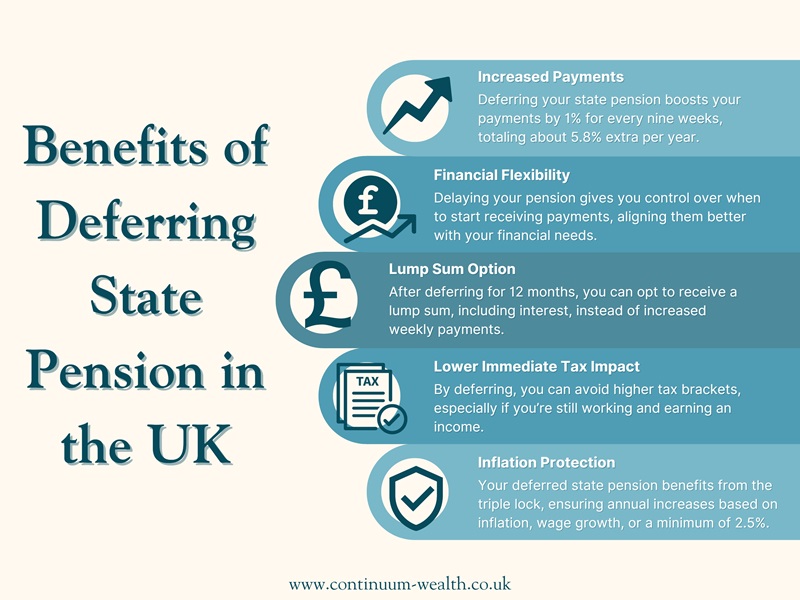
Working past your State Pension age is entirely permissible. If you choose to defer claiming your pension, the value of your payments increases for the period you delay, provided you defer for a minimum threshold of time. This mechanism offers an alternative strategy for individuals who continue earning employment income and wish to secure a higher guaranteed payout later in retirement.
Verifying and Managing Your Entitlement
Assuming your State Pension will take care of itself is a common and costly mistake. Fortunately, HM Government provides digital tools that allow citizens to monitor their records with precision.
The primary action you should take is to access your online State Pension forecast through the official GOV.UK portal. This service provides a comprehensive breakdown of:
- The exact amount you are projected to receive based on your current NI record.
- The date you will reach statutory State Pension age.
- Any specific gaps in your National Insurance record that are preventing you from reaching the maximum amount.
- An estimate of how much extra you could gain by working and contributing for additional years.
Regularly auditing your personal tax and insurance records ensures that administrative errors, name changes, or uncredited periods of parenting or caregiving are rectified promptly rather than discovered years down the line when statutory deadlines for filling gaps have expired.
Frequently Asked Questions
How many years do I need to get the full UK State Pension?
You typically need 35 qualifying years of National Insurance contributions or credits to receive the full amount of the New State Pension. If you have fewer years, your pension is calculated proportionally, provided you meet the minimum threshold of 10 qualifying years.
Can I check my State Pension forecast online?
Yes, you can check your forecast securely through the online GOV.UK portal using a Government Gateway account or a verified digital identity service. This tool displays your projected weekly or monthly payout and highlights any gaps in your National Insurance history.
What happens to my State Pension if I move abroad?
Your State Pension can generally be paid if you move overseas, but whether it increases annually (the "triple lock" uprating) depends on the country you retire to. It typically increases each year if you live in the European Economic Area (EEA), Switzerland, or a country with a reciprocal social security agreement with the UK, but may be frozen if you move to certain other nations.
Can I pay to fill gaps in my National Insurance record?
Yes, you can make voluntary National Insurance contributions (Class 3) to fill gaps in your record. There are usually time limits on how far back you can pay voluntary contributions—typically restricted to the previous six tax years, though special transitional arrangements have occasionally permitted payments for older gaps.
Is the UK State Pension taxable income?
Yes, the State Pension counts as taxable income. While income tax is not deducted directly at source before the pension is paid, your total income from the state pension, private pensions, and any part-time employment is aggregated at the end of the tax year, and you must pay income tax if your total taxable income exceeds your Personal Allowance.
Next Actions for Securing Your Retirement
Securing your financial future begins with active management rather than passive expectation. Visit the GOV.UK portal to review your personal State Pension forecast today. Identify any historical gaps in your National Insurance record, check your projected retirement age milestone, and consult an independent financial advisor if you need tailored guidance on balancing state provisions with private investments.
Image Gallery