What a Commercial Foundation Repair Company in Euless Provides
A commercial foundation repair company in Euless provides specialized engineering assessments, structural stabilization solutions, moisture mitigation systems, and preventive maintenance programs designed to preserve the integrity of b...
A commercial foundation repair company in Euless provides specialized engineering assessments, structural stabilization solutions, moisture mitigation systems, and preventive maintenance programs designed to preserve the integrity of business properties facing North Texas expansive clay soil challenges.
Contents
Operating a commercial enterprise in Euless, Texas, demands constant attention to building infrastructure. The local geography, characterized by active clay soils that swell during wet periods and shrink dramatically during droughts, places immense stress on commercial structures. When a business property displays warning signs like cracked exterior brickwork, jammed doors, or sloping concrete slabs, property owners must look beyond surface-level cosmetic fixes. They require the specialized capabilities of a commercial foundation repair company. Unlike residential contractors, commercial structural specialists manage heavy loads, strict municipal building codes, complex architectural layouts, and minimal downtime constraints to protect business investments.
Understanding the Unique Foundation Challenges in Euless
The foundation of any commercial building acts as the structural anchor for the entire enterprise. In Euless and the broader Dallas-Fort Worth metroplex, soil composition presents a unique set of obstacles that dictate the type of engineering required for structural longevity.
The Impact of Active Clay Soils on Commercial Structures
North Texas features extensive deposits of Beaumont clay and similar high-plasticity soils. These soils absorb moisture rapidly, causing them to expand and exert upward pressure on foundation systems. Conversely, during scorching Texas summers, the soil loses moisture, shrinks, and creates voids beneath concrete slabs and pier systems.
Commercial buildings—such as retail strip centers, industrial warehouses, office complexes, and multi-family units—distribute massive static and dynamic loads. When the underlying soil shifts unevenly, the foundation experiences differential settlement. This occurs when one section of the building sinks faster or rises higher than another, placing immense shearing stress on steel-reinforced concrete and load-bearing masonry walls.
Structural Differences Between Residential and Commercial Foundations
Property owners frequently wonder if a residential foundation contractor can handle a commercial facility. The short answer is no. Commercial foundations differ significantly in scale, engineering complexity, and material utilization:
- Load Requirements: Commercial structures often support heavy equipment, inventory, multi-story office loads, or high foot traffic, requiring deeper and denser structural support.
- Engineering Standards: Commercial projects require formal blueprints stamped by a licensed structural engineer, adherence to stringent local municipal codes in Euless, and comprehensive geotechnical reports.
- Access and Logistics: Commercial repairs must account for active business hours, parking lot management, tenant safety, and compliance with the Americans with Disabilities Act (ADA) during and after the construction process.
Core Services Provided by Commercial Foundation Repair Companies
A professional commercial foundation repair company delivers an end-to-end suite of services tailored to diagnose, repair, and fortify large-scale structures against ongoing environmental stress.
| Service Phase | Primary Objective & Description |
|---|---|
| 1. Diagnostic & Engineering Assessment | Comprehensive soil testing, elevation surveys, and structural analysis by licensed engineers. |
| 2. Structural Stabilization | Installation of steel piers, helical anchors, or mud jacking to lift and secure settling foundations. |
| 3. Drainage & Moisture Control | Implementation of french drains, surface grading, and root barriers to stabilize surrounding soil moisture. |
| 4. Concrete Repair & Restoration | Crack injection, slab leveling, and spalling concrete repair to restore structural load paths. |
Advanced Diagnostic and Engineering Assessments
Before a single shovel touches the ground or a pier is driven, thorough analysis is mandatory. Commercial foundation specialists collaborate with independent geotechnical engineers to determine the root cause of distress. This phase includes:
- Elevation Surveys: Utilizing high-precision digital transits and laser levels to map out floor level deviations across thousands of square feet.
- Plumb Line and Wall Alignment Checks: Assessing whether exterior brick, tilt-wall panels, or steel frames are bowing, leaning, or pulling away from the core structure.
- Sub-Surface Evaluations: Reviewing soil core samples to understand moisture profiles and load-bearing capacities at varying depths.
Structural Stabilization Methods
Once diagnostics are complete, the company deploys heavy-duty structural intervention systems. The two primary methods utilized in commercial applications are steel piers and helical piers.
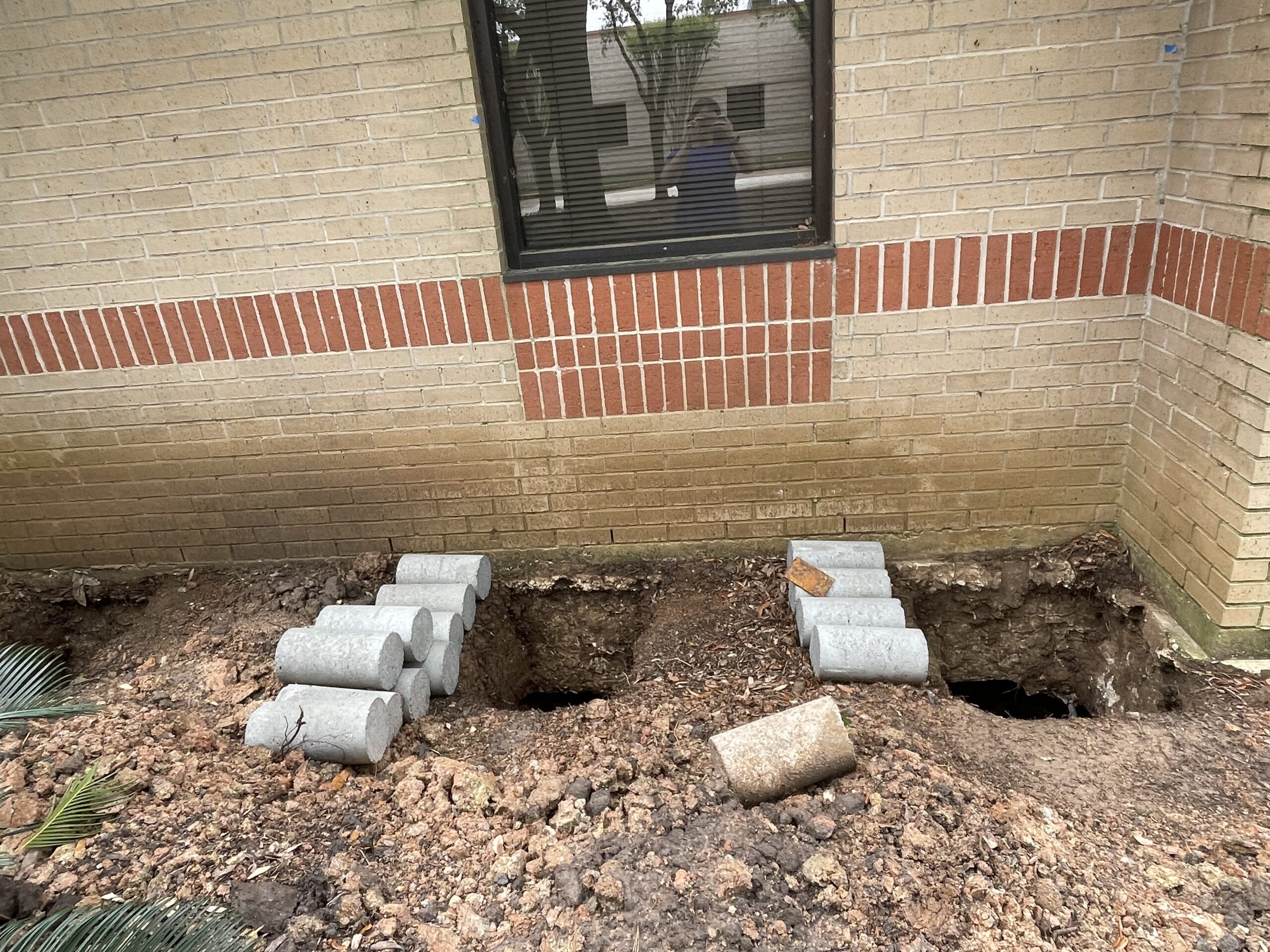
Pressed Concrete Piers vs. Steel Piers
While pressed concrete pilings are common in residential settings, commercial properties almost exclusively rely on engineered steel piers or helical piers due to the immense weight of the structures.
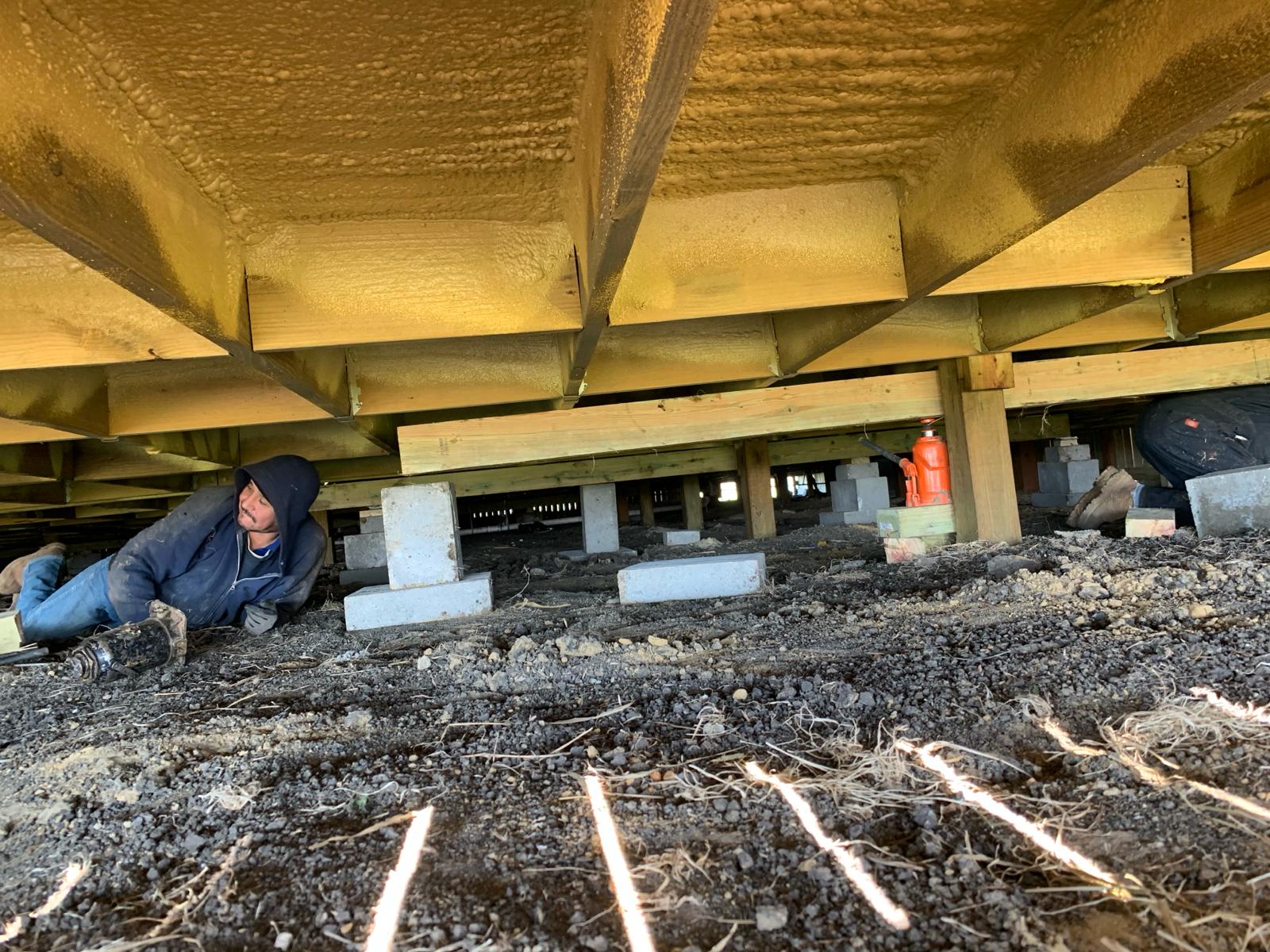
- Resistance Steel Piers: Driven hydraulically deep into stable bedrock or load-bearing strata beneath the active soil zone. These piers are capable of supporting massive structural loads and can be adjusted with heavy-duty hydraulic jacks to lift settled sections back toward their original elevations.
- Helical Piers: Steel shafts featuring one or more spiral-shaped blades (helices) that are screwed into the ground. They provide immediate torque-verified load capacity and are ideal for light commercial steel-frame buildings, exterior breezeways, and areas with restricted access.
Drainage and Moisture Mitigation Systems
Foundation repair is incomplete if the underlying moisture issues remain unaddressed. Water accumulation is the primary catalyst for expansive clay movement. Commercial foundation companies provide comprehensive water management solutions:
- Commercial French Drains: Subsurface gravel-and-pipe systems designed to intercept groundwater and channel it safely away from the building perimeter.
- Surface Grading Adjustments: Reshaping exterior landscaping, parking lot runoffs, and concrete aprons to ensure positive drainage away from foundation walls.
- Root Barriers: Installing thick moisture-impermeable plastic or metal barriers vertically into the ground to prevent large trees from pulling moisture out of the clay directly beneath the foundation edge.
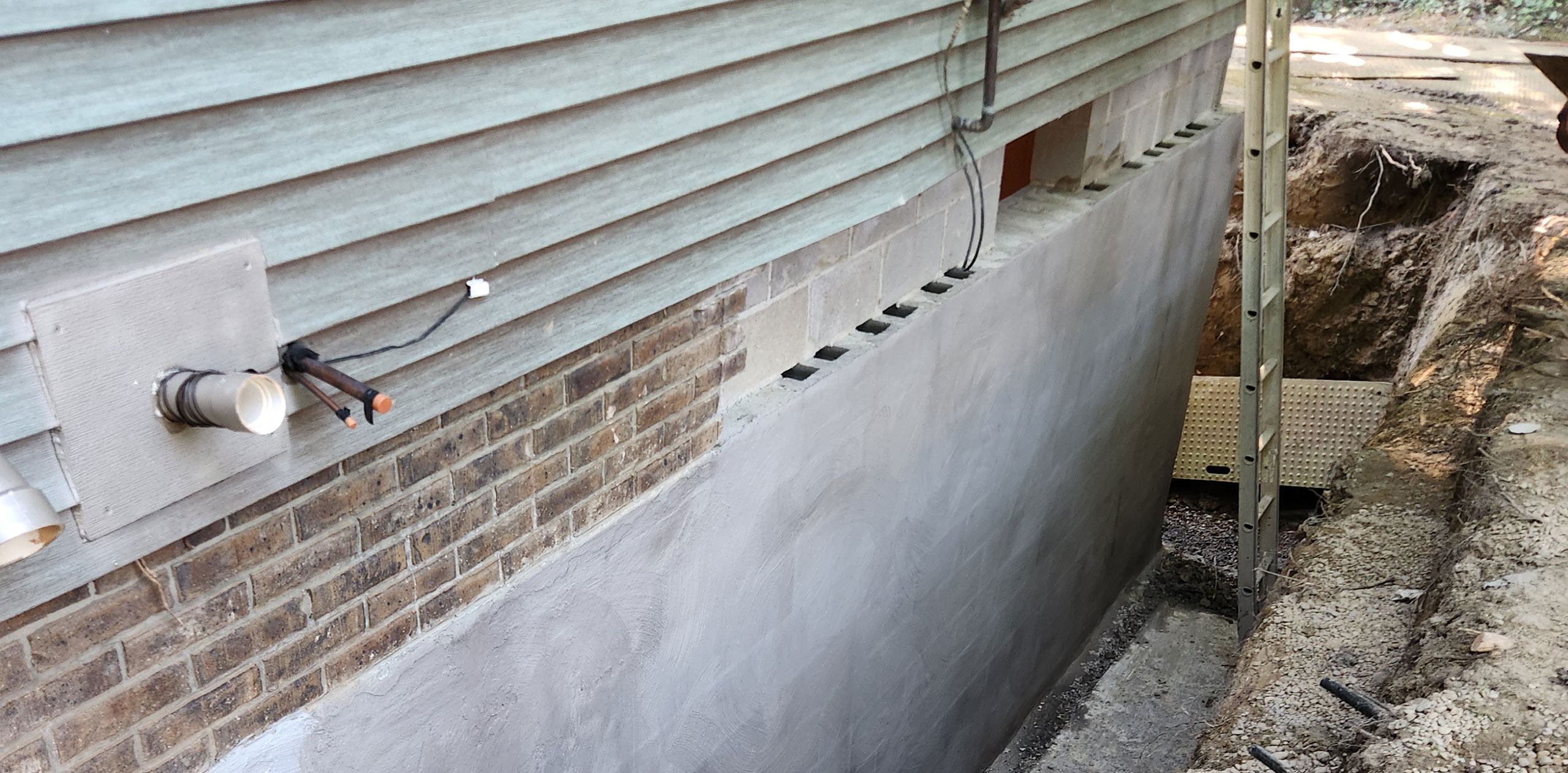
Concrete Slab Repair and Crack Injection
Cracks in concrete slabs allow moisture, chemicals, and pests to infiltrate the interior, potentially corroding internal rebar. Specialists provide:
- Epoxy and Polyurethane Injection: Sealing structural cracks under high pressure to restore monolithic strength to the concrete slab and prevent water seepage.
- Mudjacking and Polyurethane Foam Jacking: Pumping high-density expanding foam or specialized slurry beneath sunken concrete slabs (such as warehouse floors or loading docks) to lift them back into alignment without full replacement.
The Commercial Repair Process: What to Expect
Executing foundation work on an active commercial site requires meticulous planning to minimize business disruption. Professional contractors follow a structured operational lifecycle.
1. Initial Consultation and Site Evaluation
A project manager visits the Euless facility to review distress symptoms, interview property managers or business owners, and define the scope of the evaluation. Following this, engineers map out the structural parameters and issue a detailed proposal outlining the recommended repair methods, timelines, and transparent cost estimates.
2. Permitting and Engineering Oversight
Commercial projects in Euless are subject to local municipal building codes and zoning regulations. The foundation company secures the necessary commercial building permits, ensures compliance with city inspectors, and provides engineered drawings that certify the safety and load calculations of the proposed repair plan.
3. Execution and Phased Construction
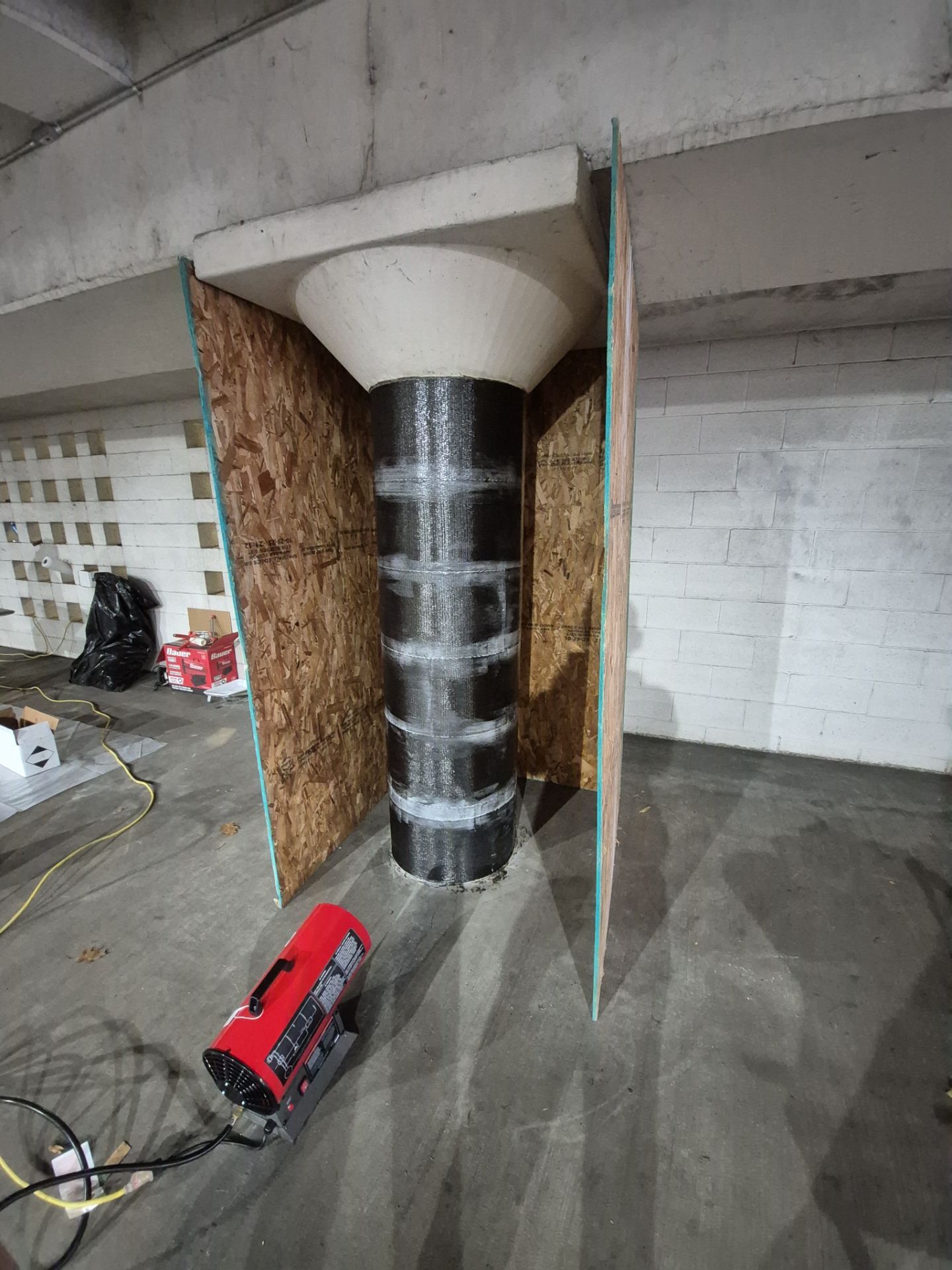
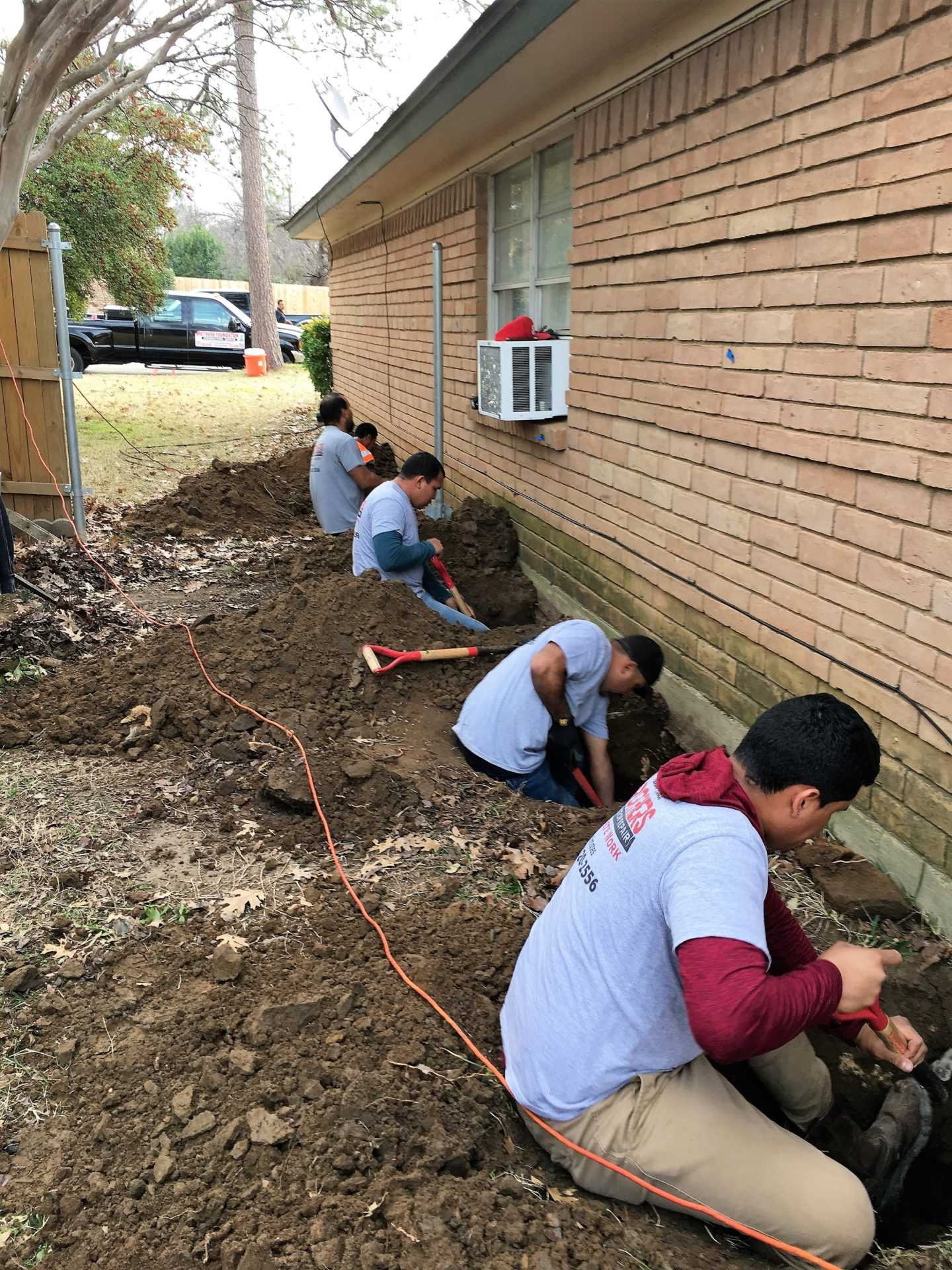
To keep businesses operational, contractors often schedule work in phases. Exterior pier installations can usually proceed without disrupting indoor operations. If interior slab stabilization is required, contractors utilize dust containment barriers, work during off-peak hours or weekends, and coordinate closely with tenants.
4. Quality Assurance and Warranty Documentation
Upon completion of the lifting and stabilization process, final elevation readings are taken to verify success. Reputable commercial foundation repair companies stand behind their workmanship by offering transferable structural warranties, providing property owners and future buyers with long-term peace of mind.
Factors Influencing Commercial Foundation Repair Costs
Because commercial buildings vary drastically in size, use, and structural makeup, foundation repair pricing is highly individualized. Several primary variables dictate the overall investment:
- Building Square Footage and Footprint: Larger footprints require more extensive elevation mapping, a higher volume of structural piers, and extended labor hours.
- Depth to Load-Bearing Strata: In some parts of the region, bedrock sits at shallow depths, while in others, piers must be driven much deeper to achieve structural refusal, directly impacting material costs.
- Severity of Damage: Minor differential settlement requiring a few strategic stabilization points costs significantly less than a full-scale structural overhaul involving wall realignment and extensive concrete replacement.
- Business Operational Constraints: Projects that require strict after-hours labor, weekend mobilization, or complex safety bridging for pedestrian walkways involve additional labor overhead.
Frequently Asked Questions About Commercial Foundation Repair
How do I know if my commercial building in Euless has a foundation problem?
Look for warning signs such as sticking or jammed commercial doors and windows, diagonal cracks in interior drywall or exterior brick veneer, gaps between window frames and walls, uneven or sloping concrete floors, and pooling water near the building perimeter.
Will foundation repair force my business to close temporarily?
In most cases, no. Experienced commercial contractors design repair phases that allow businesses to remain open. Exterior pier installations cause minimal indoor disruption, and interior work can often be scheduled during weekends or overnight hours.
Are commercial foundation repairs covered by standard property insurance?
Generally, standard commercial property insurance policies do not cover foundation damage caused by normal ground settling, soil expansion, or drought conditions. However, coverage may apply if the damage stems from a covered peril, such as a sudden plumbing leak beneath the slab. Property owners should consult their insurance carrier and review their specific policy details.
What is the difference between steel piers and concrete piers for commercial use?
Steel piers are driven much deeper into stable bedrock or load-bearing strata and offer superior load capacity and adjustability, making them the industry standard for heavy commercial structures. Pressed concrete piers are typically shallower, more economical, but generally unsuited for massive multi-story commercial loads.
Do commercial foundation repairs come with a warranty?
Yes. Established commercial foundation repair companies provide structural warranties. Many of these warranties are transferable, which adds significant value if you decide to sell or lease the commercial property in the future. Always request a clear, written copy of the warranty terms before signing a contract.
Next Steps for Euless Property Owners
Addressing commercial foundation issues promptly prevents minor cosmetic settling from escalating into catastrophic structural failure. If you observe warning signs at your facility, contact a licensed geotechnical engineer or an experienced commercial foundation repair company serving Euless to schedule a comprehensive structural evaluation. Request detailed, engineered proposals, verify contractor licensing and insurance, and ensure that local municipal permitting requirements are fully integrated into your repair plan.
Image Gallery