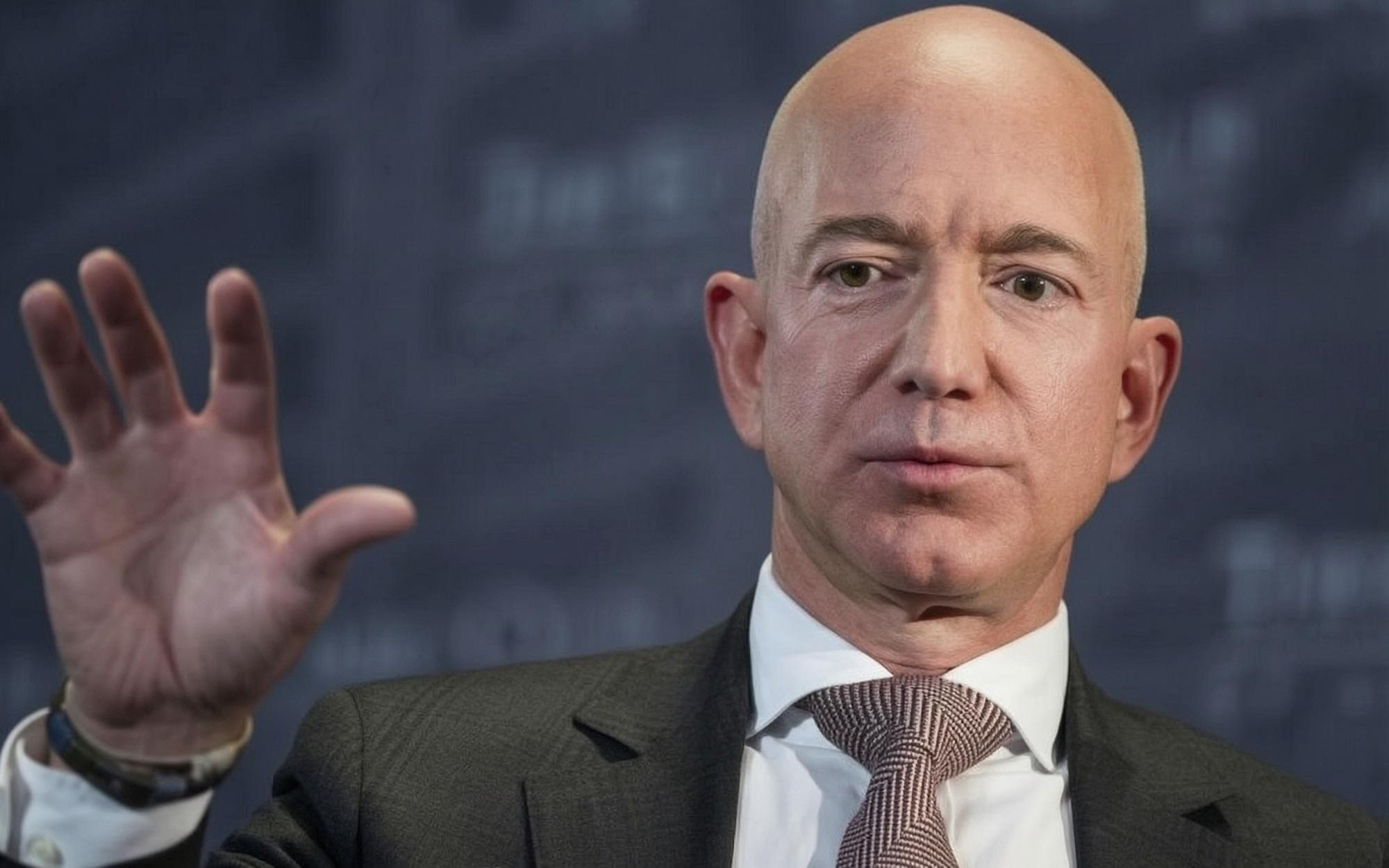
How Jeff Bezos Got So Rich: The Strategic Evolution of a Trillion-Dollar Visionary
Jeff Bezos accumulated his immense wealth primarily by founding Amazon.com and scaling it from a niche online bookstore into a global e-commerce and cloud computing dominant force. By maintaining a significant equity stake, prioritizin...
Jeff Bezos accumulated his immense wealth primarily by founding Amazon.com and scaling it from a niche online bookstore into a global e-commerce and cloud computing dominant force. By maintaining a significant equity stake, prioritizing long-term free cash flow over short-term profits, and diversifying into high-margin sectors like Amazon Web Services (AWS), Bezos transformed a garage startup into one of the world's most valuable corporations.
Contents
The Wall Street Foundation: Before the Garage
To understand how Jeff Bezos became one of the wealthiest individuals in history as of 2026, one must look at his professional trajectory before Amazon ever existed. Bezos did not stumble into entrepreneurship; he was a highly disciplined product of the financial sector. After graduating from Princeton University with degrees in electrical engineering and computer science, he worked at several firms on Wall Street, including Fitel and Bankers Trust.
However, his most pivotal role was at D.E. Shaw & Co., a quantitative hedge fund known for its use of sophisticated mathematical models. By age 30, Bezos had risen to the rank of Senior Vice President. It was here that he first encountered the statistic that changed his life: the World Wide Web was growing at a rate of 2,300% per year. This data point became the catalyst for his "Regret Minimization Framework." Bezos realized that he would never regret failing at a startup, but he would deeply regret not participating in the internet boom.
His background in finance provided him with two critical advantages: a deep understanding of capital markets and a rigorous, data-driven approach to decision-making. These skills allowed him to pitch investors effectively and manage the razor-thin margins of the early e-commerce industry.
The "Everything Store" Strategy and the 1997 IPO
In 1994, Bezos left his lucrative Wall Street career and moved to Seattle, a city chosen for its proximity to a large pool of tech talent and a major book distribution hub in Oregon. With approximately $250,000 to $300,000 in seed capital from his parents—a significant risk for them at the time—he launched Amazon from his garage.
Why Books?
Bezos chose books as his first product category because they were easy to ship, non-perishable, and had a massive universal catalog. Unlike a physical bookstore, which is limited by shelf space, an online store could offer every book in print. This was the first step toward his ultimate vision: The Everything Store.
The Power of Equity and the Public Market
Amazon went public on May 15, 1997, at $18 per share. While the company famously operated without a profit for many years, the stock price rose as investors bought into Bezos’s vision of scale. Because Bezos retained a massive percentage of the company’s shares (holding nearly 41% at the time of the IPO), his personal net worth became inextricably linked to Amazon’s market capitalization.
Over the decades, Amazon underwent several stock splits, and the share price skyrocketed from a split-adjusted pennies to thousands of dollars. By maintaining his position as the largest individual shareholder for decades, Bezos ensured that every innovation Amazon made—from the Kindle to Prime—directly compounded his personal wealth.
Amazon Web Services (AWS): The Real Wealth Engine
While most consumers associate Bezos with retail packages on their doorsteps, a disproportionate amount of his wealth is underpinned by Amazon Web Services (AWS). Launched officially in 2006, AWS was a radical pivot. Amazon realized it had become expert at managing vast amounts of server space and infrastructure to run its own retail site. It decided to rent that infrastructure to other companies.
AWS pioneered the "Cloud Computing" industry. Instead of companies buying and maintaining their own physical servers, they could pay Amazon for computing power on demand. This business model has three characteristics that fueled Bezos's wealth:
- High Margins: Unlike retail, which has low margins due to shipping and inventory costs, software and cloud infrastructure have extremely high profit margins.
- Market Dominance: AWS captured a massive first-mover advantage. By the 2020s, it provided the backbone for much of the internet, counting the CIA, Netflix, and NASA among its clients.
- Predictable Revenue: The subscription-based nature of cloud services provides a steady, predictable cash flow that Wall Street values highly.
As of 2026, AWS continues to contribute the majority of Amazon’s operating income, effectively subsidizing the lower-margin retail business and driving the stock price to the levels that sustain Bezos's multi-billion-dollar valuation.
The Flywheel Effect and Prime Ecosystem
A core component of how Bezos grew his empire is the "Flywheel Effect." This business concept, which Bezos famously sketched on a napkin, describes a virtuous cycle where lower prices lead to more customers, which attracts more third-party sellers, which expands the selection, which further lowers prices and improves the customer experience.
Amazon Prime as a Retention Tool
Launched in 2005, Amazon Prime was initially viewed by analysts as a risky move that would bankrupt the company through shipping costs. Instead, it became one of the most successful loyalty programs in history. By charging an annual fee for "free" shipping, Amazon changed consumer psychology. Prime members felt compelled to "get their money's worth," leading them to spend significantly more on the platform than non-members.
This ecosystem was expanded to include Prime Video, Prime Music, and Kindle lending, making the service indispensable. The resulting data collection allowed Amazon to refine its logistics and advertising businesses, creating new revenue streams that further bolstered the company’s valuation.
Strategic Diversification and Personal Investments
Jeff Bezos did not keep all of his wealth tied to Amazon. Over the years, he diversified his holdings through Bezos Expeditions, his personal venture capital firm. These investments have allowed him to profit from the growth of other industries and protect his wealth from retail-specific downturns.
| Investment/Entity | Year Acquired/Founded | Primary Industry | Significance to Wealth |
|---|---|---|---|
| Blue Origin | 2000 | Aerospace/Spaceflight | A passion project funded by selling ~$1B in AMZN stock annually; holds massive future value in satellite deployment. |
| The Washington Post | 2013 | Media/Journalism | Acquired for $250 million; modernized the digital platform, significantly increasing its influence and value. |
| Whole Foods Market | 2017 | Grocery/Retail | A $13.7 billion acquisition by Amazon that gave Bezos a massive physical footprint and grocery data. |
| Early Google Investment | 1998 | Technology/Search | Bezos was one of the first angel investors in Google, a stake that would be worth billions today if held. |
| Airbnb/Uber/Twitter | Various | Tech/Platforms | Bezos Expeditions participated in early funding rounds for several "unicorn" startups. |
His investment in Blue Origin is particularly noteworthy. Bezos has stated that he sells approximately $1 billion of Amazon stock each year to fund his space exploration company. While Blue Origin is a private entity and harder to value, its contracts with NASA and its potential for space tourism and satellite launches represent a significant portion of his long-term asset portfolio.
The "Day 1" Philosophy and Financial Principles
Bezos's wealth is also the result of a specific corporate culture he instilled at Amazon, known as the "Day 1" philosophy. This mindset dictates that even as a massive corporation, Amazon must maintain the agility, curiosity, and urgency of a startup.
Focusing on Free Cash Flow
In his first letter to shareholders in 1997, Bezos stated, "When forced to choose between optimizing the appearance of our GAAP accounting and maximizing the present value of future cash flows, we'll take the cash flows." By focusing on cash flow rather than net income, he was able to reinvest almost every dollar of profit back into the company for decades. This aggressive reinvestment strategy allowed Amazon to enter new markets (like groceries, healthcare, and advertising) and crush competitors who were focused on quarterly earnings.
Customer Obsession
Bezos famously left an "empty chair" in meetings to represent the customer. By focusing on customer needs—specifically low prices, fast delivery, and vast selection—Amazon built a brand trust that is difficult to disrupt. This trust translated into market share, and market share translated into the stock price appreciation that fueled Bezos's wealth.
Frequently Asked Questions
Did Jeff Bezos start Amazon with his own money?
Jeff Bezos primarily used his own savings and a significant investment from his parents, Jackie and Miguel Bezos, who invested roughly $245,573 in 1995. While he was already successful from his time on Wall Street, the initial growth of Amazon relied heavily on this early family "angel" investment and subsequent venture capital rounds.
How much did the Bezos divorce affect his wealth?
In 2019, Jeff and MacKenzie Scott finalized their divorce. As part of the settlement, MacKenzie received 25% of the couple's Amazon stock, which at the time was worth approximately $38 billion. While this significantly decreased Bezos's total share count, the continued growth of Amazon's stock price in the following years allowed his net worth to recover and reach new all-time highs.
Does Jeff Bezos make a high salary?
For most of his tenure as CEO, Bezos’s base salary was remarkably low, consistently around $81,840 per year. His wealth is not derived from a paycheck but from the appreciation of his Amazon shares and other capital assets. He essentially worked for "equity," meaning he only got rich if the company’s value increased.
What is Jeff Bezos's current role at Amazon?
As of 2026, Jeff Bezos serves as the Executive Chair of the Amazon Board. He stepped down as CEO in 2021, handing the reins to Andy Jassy (the former head of AWS). This transition has allowed him to focus more on Blue Origin and his philanthropic efforts, such as the Bezos Earth Fund, while still retaining significant influence and ownership in Amazon.
How does he manage his taxes and liquid cash?
Because the vast majority of Bezos's wealth is held in stock, he does not pay taxes on his "net worth" annually, only on realized gains when he sells shares. To access cash without selling too much stock (and triggering large tax bills or losing control), billionaires often use their shares as collateral for low-interest loans from private banks, though Bezos has also been a regular seller of stock to fund his other ventures.
Summary of Next Actions for Observers
To understand the future trajectory of Bezos’s wealth, investors and researchers should monitor the growth of AWS, as it remains the primary profit driver. Additionally, tracking the success of Blue Origin’s New Glenn rocket launches and the expansion of Amazon’s advertising business will provide insight into how his assets will continue to evolve. For those looking to emulate his success, the primary takeaway is the prioritization of long-term value over short-term accounting metrics.
Image Gallery