How to Identify and Evaluate Paid Search Experts in 2026
Paid search experts are specialized digital marketers who manage and optimize advertising campaigns on search engines like Google and Microsoft Bing. In 2026, their role centers on orchestrating artificial intelligence, managing first-...
Paid search experts are specialized digital marketers who manage and optimize advertising campaigns on search engines like Google and Microsoft Bing. In 2026, their role centers on orchestrating artificial intelligence, managing first-party data integrity, and aligning search intent with complex, multi-touch customer journeys to drive measurable business growth and high return on ad spend (ROAS).
Contents
The landscape of Search Engine Marketing (SEM) has undergone a fundamental transformation over the last decade. As we operate in 2026, the traditional image of a "PPC specialist" manually tweaking keyword bids in a spreadsheet has become obsolete. Today’s paid search experts act more like data scientists and creative strategists than technical laborers. They navigate an environment where automation handles the granular execution, leaving the human expert to focus on high-level strategy, attribution modeling, and the ethical use of consumer data.
The Strategic Pivot: The Role of Paid Search Experts in 2026
In the current 2026 marketing ecosystem, the primary value of a paid search expert lies in their ability to feed "the machine." With Google Ads and Microsoft Advertising relying almost exclusively on black-box AI models like Performance Max and evolving search-generative experiences, the expert's job is to provide the highest quality inputs. This includes defining precise conversion actions, uploading offline conversion data, and crafting compelling creative assets that resonate with specific audience segments.
Modern experts must understand the nuances of AI-driven bidding. Instead of fighting automation, they leverage it by setting appropriate constraints and guardrails. This involves a deep understanding of "Value-Based Bidding," where the expert instructs the search engine to prioritize not just any lead, but the leads with the highest predicted lifetime value (LTV). This strategic layer prevents the waste of budget on low-quality traffic that might look good on a dashboard but fails to impact the bottom line.
Furthermore, the integration of search with generative AI—often referred to as AI Overviews or Search Generative Experience (SGE)—has changed how ads are displayed. Paid search experts now optimize for conversational queries and long-tail "natural language" searches. They ensure that brand messaging remains consistent even when a search engine synthesizes information from multiple sources to answer a user's query directly on the results page.
Essential Skill Sets for Modern PPC Professionals
To be considered a true expert in 2026, a professional must possess a multidisciplinary skill set that bridges the gap between technical data management and psychological marketing.
1. Data Privacy and Tracking Infrastructure
With the total phase-out of third-party cookies and the universal adoption of privacy-centric frameworks like Global Privacy Control (GPC), experts must be proficient in server-side tracking. They must understand how to implement Enhanced Conversions and use tools like Google Tag Manager (GTM) in a server-to-server capacity to ensure data accuracy while remaining compliant with global regulations like GDPR and CCPA. Failure to maintain this technical infrastructure leads to "data blindness," where the AI cannot optimize because it cannot "see" which ads are working.
2. Attribution and Incrementality Testing
The "last-click" attribution model is a relic of the past. Experts today use sophisticated data-driven attribution models to understand how a paid search click interacts with social media, email marketing, and organic search. They frequently conduct incrementality tests—such as conversion lift studies—to prove that the paid search spend is actually driving new revenue that wouldn't have occurred otherwise.
3. Creative Excellence and Asset Production
As search engines move toward more visual and interactive ad formats, paid search experts must have a keen eye for creative. They collaborate with designers to produce high-quality video assets for YouTube (which is tightly integrated into search campaigns) and responsive display images. In 2026, the ability to write persuasive, AI-resistant ad copy that feels human and empathetic is a significant competitive advantage.
Types of Paid Search Experts: Choosing the Right Fit
Not every business requires the same level of expertise or the same organizational structure. Selecting the right partner depends on your budget, the complexity of your product, and your internal resources.
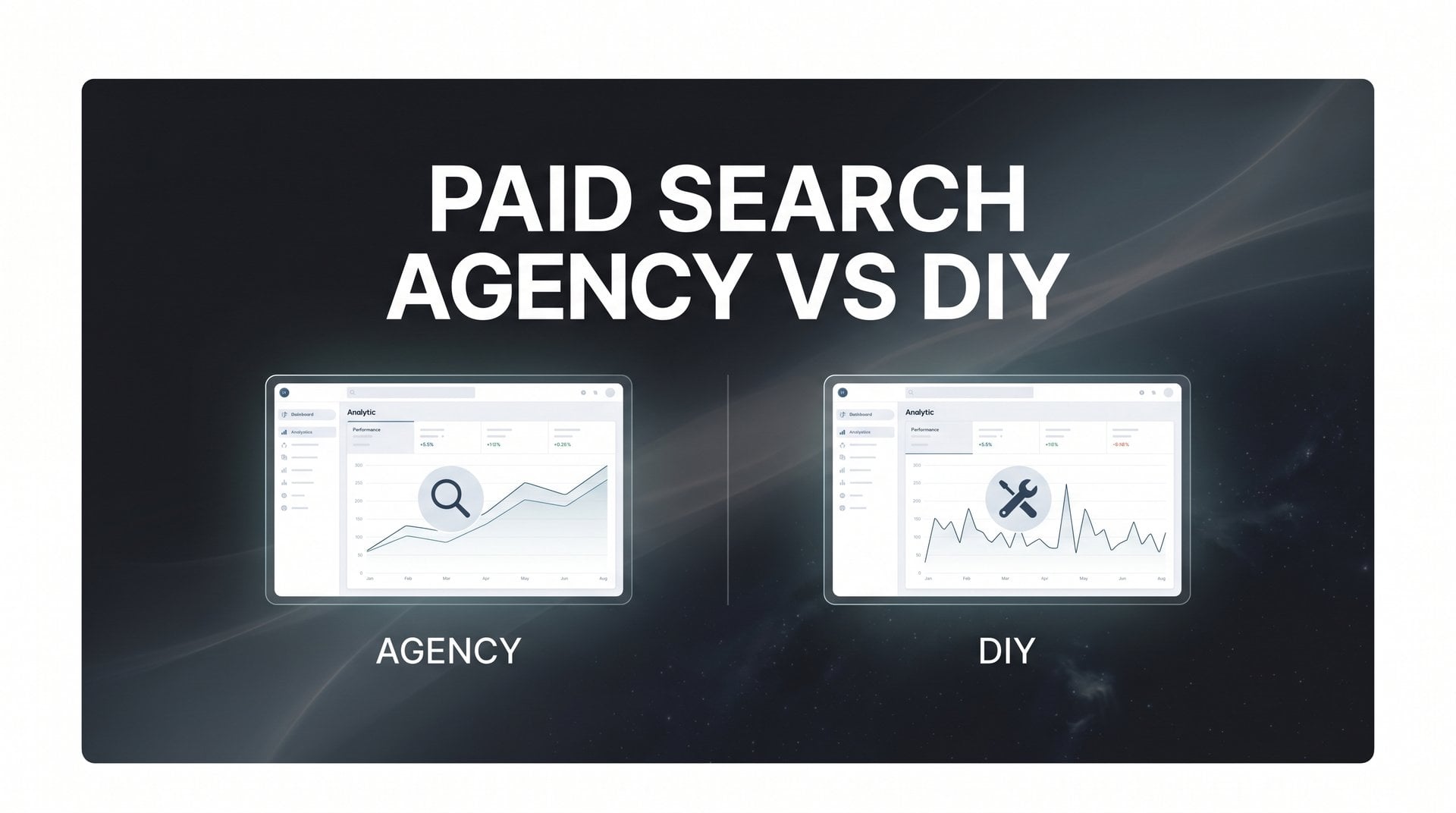
| Expert Type | Best For | Typical Pricing Structure | Primary Advantage | Primary Limitation |
|---|---|---|---|---|
| Independent Freelancer | Small to mid-sized businesses (SMBs) | Hourly or flat monthly retainer | Highly personalized attention and lower overhead. | Limited bandwidth for large-scale creative or technical dev. |
| Specialized PPC Agency | Growth-stage startups and mid-market firms | % of Ad Spend or performance-based | Deep vertical expertise and access to proprietary tools. | May prioritize "spend" over "profit" if not aligned. |
| Full-Service Digital Agency | Enterprise-level brands | Large multi-service retainers | Seamless integration across SEO, Social, and Search. | Often more expensive; search expertise can be diluted. |
| In-House Specialist | High-spend, data-sensitive industries | Annual salary + benefits | Complete brand alignment and data security. | Risk of "tunnel vision" and lack of cross-industry insight. |
The Vetting Process: Questions to Ask Before Hiring
When evaluating paid search experts, avoid focusing on "vanity metrics" like Click-Through Rate (CTR) or average Cost-Per-Click (CPC). Instead, use the following questions to gauge their strategic depth and technical readiness for the 2026 landscape.
- "How do you handle signal loss in a cookieless environment?"
- What to look for: A discussion on server-side tagging, First-Party Data integration, and the use of Consent Mode to model lost conversions.
- "Can you explain your process for incrementality testing?"
- What to look for: A structured approach to geo-testing or A/B testing that isolates paid search impact from other marketing channels.
- "How do you balance AI-automated bidding with brand safety?"
- What to look for: Mention of negative keyword lists, placement exclusions, and the use of "Brand Suits" or "Brand Verity" tools to protect the brand's reputation.
- "How do you integrate CRM data back into the search platforms?"
- What to look for: Proficiency with Offline Conversion Tracking (OCT) and tools like Zapier or custom APIs to close the loop between a click and a closed sale.
Navigating the Costs of Professional Management
The cost of hiring a paid search expert in 2026 varies significantly based on the management model. Most agencies have moved away from a simple 10% or 15% of ad spend model, as it often incentivizes higher spending rather than higher efficiency. Instead, many now utilize a hybrid model: a base retainer to cover management time and a performance kicker based on hitting specific ROAS or Profit targets.
For enterprise-level management, expect retainers to start at $5,000 per month, plus a percentage of spend once the budget exceeds a certain threshold (e.g., $50,000/month). Freelancers may charge between $100 and $300 per hour, depending on their track record. It is vital to remember that the most expensive "cost" in paid search is not the management fee, but the "waste" generated by an inexperienced practitioner misconfiguring a high-spend account.
Common Pitfalls and How to Avoid Them
Even with an expert, paid search can fail if the foundational elements are not in place. One of the most common mistakes is sending high-quality traffic to a poor-performing website. A paid search expert should also be a conversion rate optimization (CRO) consultant, advising on landing page speed, mobile usability, and the clarity of the call-to-action.
Another pitfall is the "set it and forget it" mentality. While AI handles much of the daily bidding, the environment is volatile. Competitors change their strategies, search trends shift overnight, and platform algorithms undergo updates. A true expert maintains a rigorous testing roadmap, constantly trialing new ad copy, new audience segments, and new landing page variations to ensure the account never stagnates.
Finally, beware of experts who do not provide full transparency into the ad accounts. You should always own your data and your Google Ads or Microsoft Advertising accounts. If an expert or agency refuses to grant you administrative access to your own accounts, it is a significant red flag.
FAQ
What is the difference between a paid search expert and an SEO expert? Paid search experts manage "Pay-Per-Click" (PPC) ads that appear at the top and bottom of search results, where you pay for each click received. SEO (Search Engine Optimization) experts focus on improving organic rankings through content and technical site improvements, which do not incur a per-click cost but take much longer to achieve results.
Do I need a paid search expert if I have a small budget? If your monthly budget is under $2,000, the cost of professional management might outweigh the savings they generate. In these cases, it is often better to use "Smart" campaigns or handle it in-house after a one-time consultation with an expert to set up the account correctly.
What certifications should a paid search expert have in 2026? Look for current Google Ads Certifications in Search, Display, Video, and Measurement. Additionally, certifications from Microsoft Advertising and industry bodies like the IAB (Interactive Advertising Bureau) are highly regarded.
How long does it take to see results from a new paid search expert? While ads start running immediately, the "learning phase" for AI algorithms typically takes 2 to 4 weeks. Most experts require a 3-month window to fully optimize an account, gather enough data for meaningful changes, and demonstrate a consistent trend in ROI.
Is paid search still effective with the rise of AI chat bots? Yes. While users may get some answers from AI bots, transactional intent—the desire to buy a product or hire a service—still leads users to search engines. Paid search experts in 2026 now ensure ads appear within those AI conversational interfaces as well as traditional search results.
Practical Recommendation
If you are looking to scale your business, start by auditing your current tracking setup. No paid search expert can succeed without accurate data. Hire a specialist to perform a Technical Tracking Audit first. Once your data is clean and your conversion points are correctly mapped, you can then transition into a long-term management relationship. Prioritize experts who speak the language of business outcomes (profit, LTV, contribution margin) rather than platform metrics (clicks, impressions).
Image Gallery