The Purple Parasite Discovered in Brazil: Unveiling the Rare Purpureocillium Species
In 2023, researchers identified a rare purple parasitic fungus in Brazil’s Atlantic Forest, belonging to the genus Purpureocillium. This organism specifically targets trapdoor spiders, mummifying them with a vibrant lilac-colored mycel...
In 2023, researchers identified a rare purple parasitic fungus in Brazil’s Atlantic Forest, belonging to the genus Purpureocillium. This organism specifically targets trapdoor spiders, mummifying them with a vibrant lilac-colored mycelium. As of 2026, this discovery remains a focal point for mycologists studying biodiversity, biocontrol agents, and the evolution of specialized fungal parasitism.
Contents
The Discovery in the Atlantic Forest
The discovery of the "purple parasite" occurred during an expedition into the Brazilian Atlantic Forest (Mata Atlântica), a biome known for its high levels of endemism and significant biodiversity loss. The research team, which included specialists from the New York Botanical Garden (NYBG) and the University of Campinas (Unicamp), located the specimen while investigating the complex relationships between fungi and invertebrates.
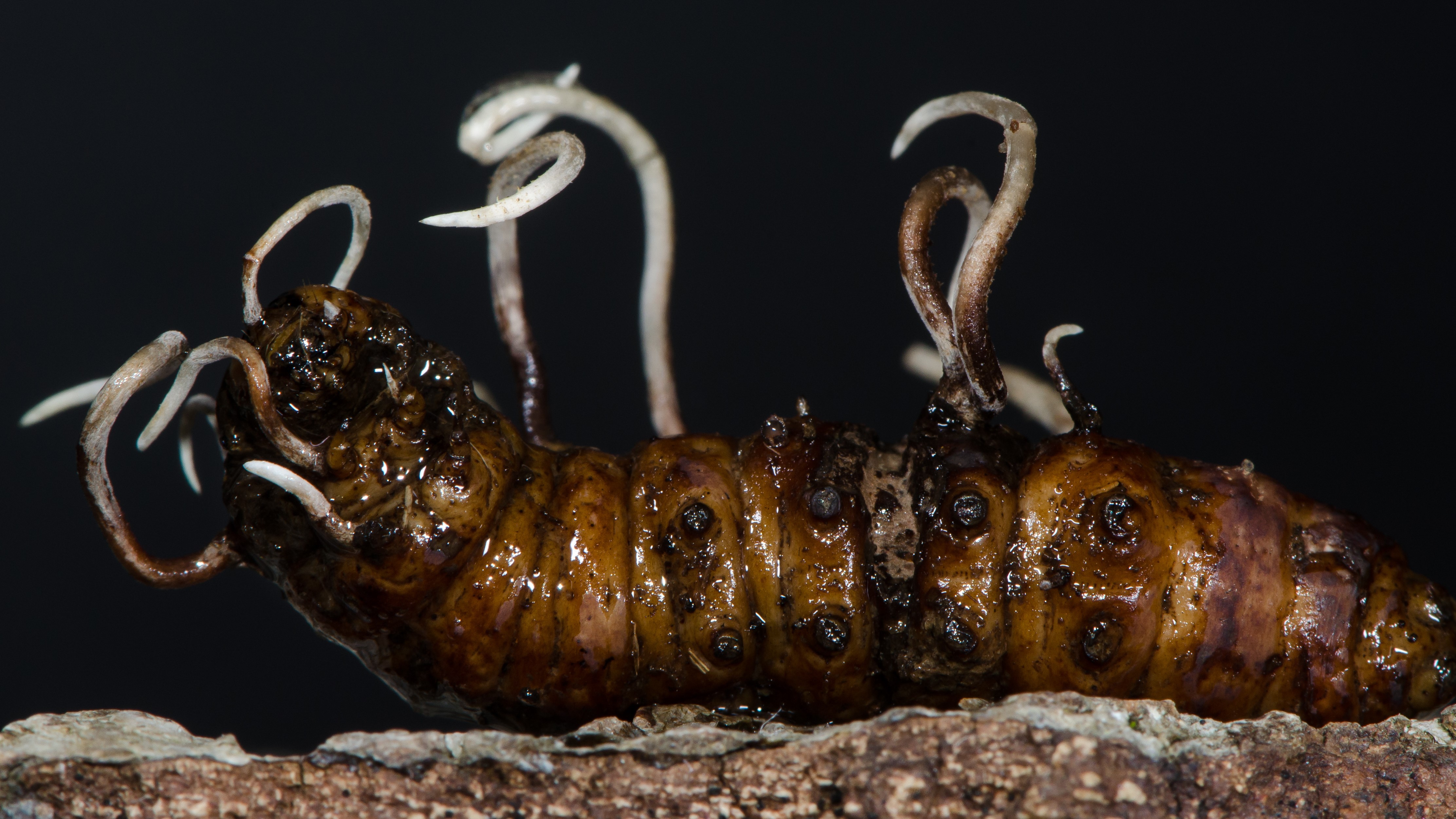
Unlike more common parasitic fungi that target ants or flies, this specific organism was found emerging from a trapdoor spider. The spider, which typically remains hidden in silk-lined burrows, had been overcome by the fungus, which then produced striking purple fruiting bodies that protruded through the soil and leaf litter. This find was particularly significant because parasitic fungi that target spiders—known as araneopathogenic fungi—are much rarer than those targeting insects (entomopathogenic fungi).
The Atlantic Forest serves as a "hotspot" for such discoveries. Despite having lost nearly 90% of its original cover, the remaining fragments continue to yield species previously unknown to science. The purple parasite represents the resilience of this ecosystem and the hidden complexity of the microbial world within the Brazilian rainforest.
Taxonomy and the Purpureocillium Genus
The "purple parasite" is classified within the genus Purpureocillium, a group of fungi that was taxonomically separated from the Paecilomyces genus in 2011. The most well-known member of this group is Purpureocillium lilacinum, a common soil fungus. However, the specimen discovered in Brazil represents a specialized lineage adapted to high-humidity forest environments and specific arachnid hosts.
Why is the Parasite Purple?
The distinctive coloration of the fungus—ranging from a pale lilac to a deep, royal purple—is due to the production of specialized pigments in its conidia (spores) and mycelium. These pigments are more than just aesthetic; they often play a role in protecting the fungus from ultraviolet (UV) radiation and may possess antimicrobial properties that prevent other competing microbes from scavenging the host carcass.
Morphological Characteristics
The fungus produces structures called synnemata, which are bundles of upright hyphae that support the spore-producing conidiophores. In the Brazilian discovery, these lilac stalks were observed rising directly from the cephalothorax of the spider. This morphology allows the fungus to elevate its spores above the ground level, facilitating dispersal by wind or passing animals in the dense undergrowth of the Atlantic Forest.
The Lifecycle: How the Parasite Infects Its Host
The lifecycle of the purple parasite is a morbidly fascinating example of biological specialization. As an obligate parasite, it requires a living host to complete its reproductive cycle. As of 2026, genomic studies initiated after the initial discovery have clarified the exact mechanism by which these fungi bypass the host's immune system.
- Attachment and Penetration: The cycle begins when a microscopic spore (conidium) lands on a trapdoor spider. The spore secretes a cocktail of enzymes, including proteases and chitinases, which chemically dissolve the spider's tough exoskeleton (cuticle).
- Internal Colonization: Once inside, the fungus transitions into a yeast-like phase, circulating through the spider’s hemolymph (blood). It consumes the host's internal tissues while carefully avoiding vital organs at first, keeping the spider alive as long as possible to maximize fungal growth.
- Behavioral Modification: While not as dramatic as the "zombie" ants controlled by Ophiocordyceps, there is evidence that some araneopathogenic fungi influence the host to move toward locations optimal for spore dispersal—such as the mouth of the burrow—before death.
- Mummification and Fruiting: After the spider dies, the fungus consumes the remaining tissues and converts the entire body into a mass of mycelium, effectively mummifying it. Finally, the purple stalks emerge, releasing thousands of new spores into the environment to find the next host.
Ecological and Scientific Significance
The discovery of this purple parasite in Brazil is not merely a biological curiosity; it has profound implications for several fields of research. In the years following the 2023 announcement, scientists have explored how these organisms maintain the balance of the ecosystem.
Natural Population Control
Parasitic fungi act as a "check and balance" system in nature. By targeting specific spider populations, the purple parasite prevents any one species from becoming overly dominant. This promotes higher overall biodiversity within the Atlantic Forest, as it allows various spider species and their prey to coexist in a complex web of interactions.
Biopesticide Development
The genus Purpureocillium is already recognized for its utility in agriculture. P. lilacinum is widely used as a biological nematicide to control parasitic worms that destroy crop roots. The discovery of a new, highly specialized species in Brazil provides a potential source for new biopesticides. If the toxins produced by this purple parasite can be isolated, they may offer new ways to control agricultural pests without the need for harmful synthetic chemicals.
Pharmaceutical Potential
Fungi in the Cordycipitaceae family are known for producing secondary metabolites with bioactive properties. These include peptaibols, which have shown promise in laboratory settings as antibacterial and antifungal agents. Researchers at Unicamp and other Brazilian institutions are currently screening the purple parasite's chemical profile for compounds that could lead to new treatments for human diseases.
Comparison of Notable Parasitic Fungi
To understand where the Brazilian purple parasite fits into the broader biological landscape, it is helpful to compare it with other well-known parasitic fungi.
| Feature | Purpureocillium (Purple Parasite) | Ophiocordyceps unilateralis | Beauveria bassiana |
|---|---|---|---|
| Primary Host | Spiders (specifically trapdoor) | Ants (specifically Carpenter) | Wide range of insects |
| Coloration | Lilac to Deep Purple | Brown to Tan | White (White Muscardine) |
| Primary Effect | Mummification | Behavioral "Zombie" Control | Rapid Death/Mummification |
| Distribution | Brazil (Atlantic Forest) | Tropical forests globally | Worldwide (Soil-borne) |
| Economic Use | Nematicide/Research | Traditional Medicine | General Biopesticide |
Understanding the Risks: Is it Dangerous to Humans?
Whenever a "new parasite" is discovered, public concern often turns toward human safety. It is important to clarify that the purple parasite discovered in Brazil is an invertebrate-specialist. Its enzymes and reproductive strategies are finely tuned to the physiology of arachnids and insects.
While certain species of Purpureocillium (notably P. lilacinum) can occasionally cause infections in humans—a condition known as hyalohyphomycosis—these cases are rare and typically limited to individuals with severely compromised immune systems or those who have undergone invasive medical procedures (such as organ transplants). For the general public and researchers in the field, the fungus found in the Atlantic Forest poses no significant threat. It cannot "zombify" humans or cross the species barrier in the manner depicted in popular science fiction.
Frequently Asked Questions
What makes the "purple parasite" different from other fungi?
The primary difference lies in its host specificity and its pigmentation. While many fungi are generalists, this species is highly adapted to trapdoor spiders in a specific Brazilian biome. Its vibrant purple color is also a rarity among araneopathogenic fungi, which are usually white, yellow, or brown.
Can the purple fungus be found outside of Brazil?
While the genus Purpureocillium is global, the specific "purple parasite" recently described by researchers is currently considered endemic to the Brazilian Atlantic Forest. Similar species may exist in other tropical regions, but they have not yet been formally identified or sequenced.
How was the fungus officially identified?
Identification involved a combination of macro-morphology (observing the purple stalks), micro-morphology (examining spore shape under a microscope), and DNA barcoding. By sequencing specific gene regions, such as the ITS (Internal Transcribed Spacer), researchers confirmed it was a distinct species within the Purpureocillium lineage.
Does this discovery prove "The Last of Us" could happen?
No. The "zombie" fungi seen in media are based on the genus Ophiocordyceps. While the purple parasite is a distant relative, its biology is restricted to cold-blooded invertebrates. The human body temperature is too high for these specific fungi to survive, and our immune systems are far too complex for their colonization strategies.
Why is the discovery of new fungi important in 2026?
Mycological research is critical because fungi are the primary decomposers and regulators of our planet's ecosystems. In 2026, as we face challenges related to climate change and food security, discovering new fungi offers opportunities for sustainable agriculture and the development of new medicines that can combat antibiotic-resistant bacteria.
Next Steps for Researchers and Enthusiasts
For those interested in the ongoing developments regarding the purple parasite, the next phase of research involves the full genomic sequencing of the organism. This will help scientists understand exactly which genes are responsible for the purple pigment and the specific toxins used to subdue spiders.
If you are a student or researcher, focusing on environmental DNA (eDNA) sampling in the Atlantic Forest is the most effective way to track the prevalence of this fungus without needing to find physical specimens, which are notoriously difficult to spot. For the general public, supporting conservation efforts for the Atlantic Forest remains the most impactful way to ensure that this and other undiscovered species do not go extinct before they can be studied.
Image Gallery