Paul McCartney Left Handed in the Spotlight: The Anatomy of a Southpaw Legacy
When James Paul McCartney stepped into the spotlight with The Beatles, he did more than help redefine modern popular music—he permanently altered the visual iconography of rock and roll. Among the most striking physical anomalies of ea...
When James Paul McCartney stepped into the spotlight with The Beatles, he did more than help redefine modern popular music—he permanently altered the visual iconography of rock and roll. Among the most striking physical anomalies of early television appearances was the sight of a bass player fretting with his right hand and plucking with his left, an orientation that made his instrument instantly recognizable. Being left-handed in a predominantly right-handed manufacturing and performance ecosystem presented unique physical, structural, and logistical challenges that McCartney navigated through ingenuity, adaptation, and an eventual partnership with specialty guitar manufacturers.
Contents
The Genesis of the Left-Handed Phenomenon
Long before global television broadcasts projected his image into millions of living rooms, a young Paul McCartney faced a fundamental learning curve shaped by his natural anatomical orientation. Born July 18, 1942, in Liverpool, McCartney is naturally left-handed. When he first attempted to learn the guitar—a right-handed acoustic model gifted to him by his father—he struggled to make meaningful progress. The instrument felt entirely counterintuitive, requiring his dominant hand to hold down complex chord shapes while his less coordinated right hand attempted to strum rhythmically.
The breakthrough occurred when McCartney realized that flipping the instrument upside down, much like the legendary country and western singer Slim Whitman, could resolve the issue. By restringing the acoustic guitar so the lower-pitched strings were at the top and the higher-pitched strings at the bottom, he aligned the physical mechanics of playing with his natural dexterity. This flipped configuration allowed him to unlock the instrument, paving the way for his transition to the bass guitar during The Beatles' formative residency years in Hamburg, Germany.
The Iconic Instrument: The Hofner 500/1 Violin Bass
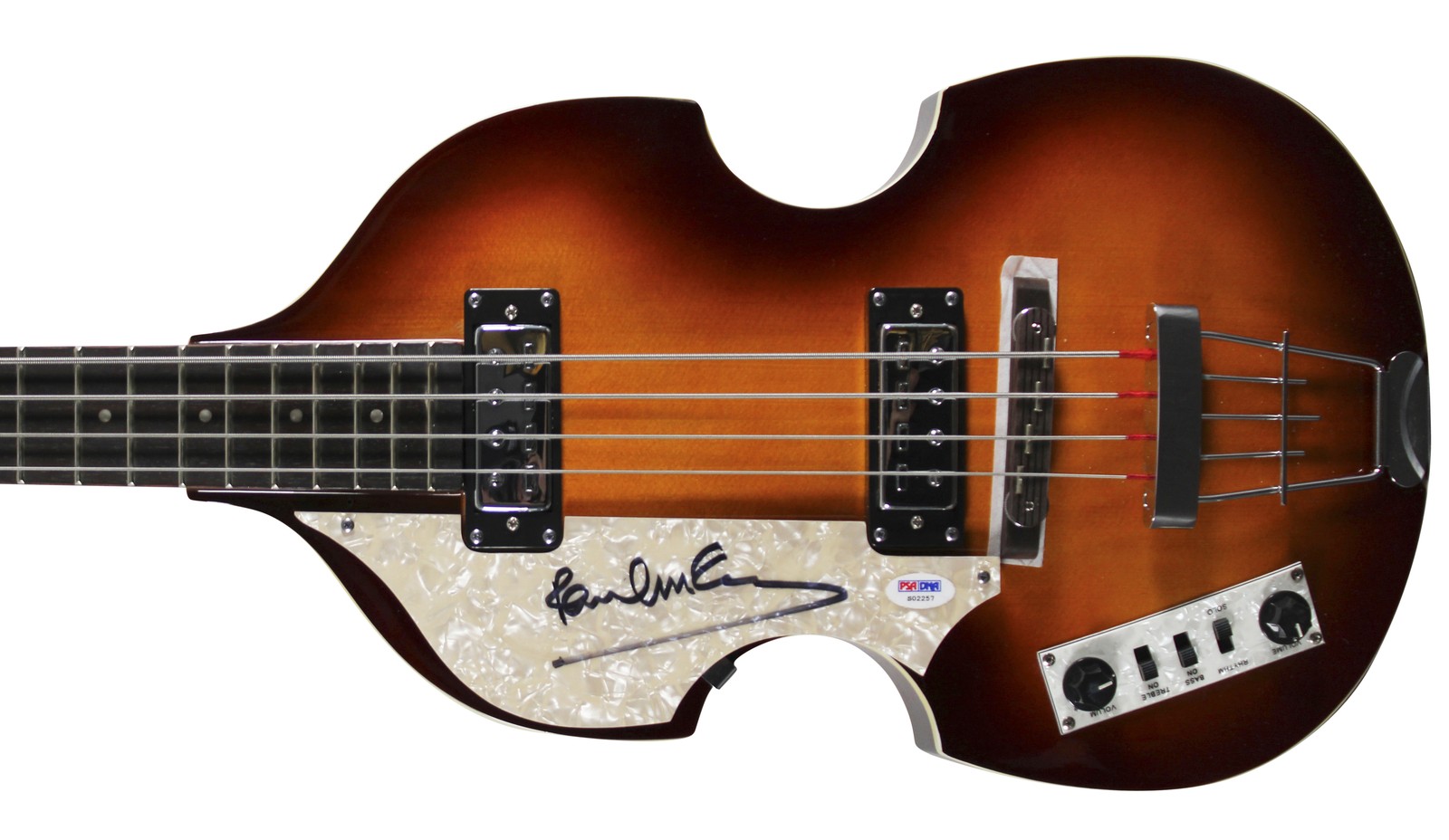
No discussion of Paul McCartney left handed in the spotlight is complete without examining his signature weapon of choice: the Hofner 500/1 violin bass. Discovered in a music shop in Hamburg in 1961, the instrument became inextricably linked to his visual identity.
The Hofner bass offered several practical advantages for a young, financially constrained touring musician, alongside one major structural complication:
- Symmetrical Body Shape: The hollow-body instrument featured a violin-style symmetrical body, which meant that when built specifically as a left-handed model, it maintained a balanced aesthetic rather than looking like an awkwardly flipped right-handed guitar.
- Lightweight Construction: Weighing significantly less than solid-body alternatives like the Fender Precision, it was comfortable for marathon live sets.
- Scale Length: The short-scale neck accommodated McCartney's playing style, which frequently blended melodic counterpoint with foundational rhythmic support.
Because Hofner primarily built instruments for right-handed players, McCartney had to special-order a purpose-built left-handed model (and subsequently a backup). This instrument defined the visual landscape of Beatlemania on The Ed Sullivan Show and during stadium tours worldwide.
| Feature / Specification | Hofner 500/1 Left-Handed Bass | Standard Right-Handed Bass (Era Equivalent) |
|---|---|---|
| Orientation | Purpose-built left-handed configuration | Right-handed configuration |
| Body Type | Fully hollow violin-style body | Typically solid-body or heavy semi-hollow |
| Scale Length | Short scale (approx. 30 inches) | Long scale (approx. 34 inches) |
| Aesthetic Symmetry | Symmetrical upper and lower bouts | Asymmetrical cutaways designed for right-handed access |
Navigating Technical and Logistical Challenges on Stage
Performing live on global television and massive concert stages introduced acute logistical hurdles for a left-handed icon in the 1960s. Standard backline amplification, microphone placement, and stage positioning were universally engineered with right-handed performers in mind.
Stage Configuration and Spatial Awareness
In a four-piece ensemble where two members (John Lennon and George Harrison) played right-handed guitars and one (Stuart Sutcliffe originally, then Paul) played bass, spatial choreography mattered. McCartney's left-handed stance meant the neck of his bass extended outward into spaces typically occupied by right-handed guitarists or vocal microphones. This required careful stage blocking during television broadcasts to prevent visual clutter and accidental microphone collisions.
Equipment Availability and Custom Orders
During the 1960s, left-handed instruments were rare commodities. Major manufacturers did not maintain mass-production lines for southpaw models. If an instrument broke on tour, replacing it required specialized sourcing rather than a quick trip to a local music store. McCartney’s reliance on custom-ordered left-handed Hofner, Rickenbacker, and Epiphone instruments highlights the specialized logistical pipeline required to keep a premier left-handed touring act operational.
The Cultural Impact on Left-Handed Musicianship
McCartney's prominent placement in the global spotlight fundamentally shifted public perception of left-handedness in music. In educational settings prior to the 1960s, left-handed children were frequently discouraged or actively forced to write and perform with their right hands. By demonstrating that a left-handed musician could achieve absolute mastery at the highest levels of global culture, McCartney served as an inadvertent pioneer for generations of southpaw instrumentalists.
Subsequent generations of rock, pop, and jazz musicians—from Jimi Hendrix to Kurt Cobain—benefited from a cultural climate where playing left-handed was viewed not as a disability or an awkward anomaly, but as a legitimate, viable artistic choice. While Hendrix famously took right-handed Fender Stratocasters and restrung them upside down, McCartney's early championing of purpose-built left-handed instruments helped push manufacturers to eventually offer standard left-handed production lines.
Frequently Asked Questions
Did Paul McCartney start out playing right-handed?
Yes. Paul McCartney's first guitar was a right-handed acoustic instrument. Because he was naturally left-handed, he initially struggled to play it properly until he realized he could reverse the string orientation and flip the guitar upside down to match his natural dexterity.
Why is the Hofner 500/1 bass symmetrical?
The Hofner 500/1 features a violin-shaped hollow body with symmetrical upper and lower bouts. This design made it visually balanced when constructed as a left-handed model, preventing the awkward visual asymmetry common when flipping traditional solid-body electric guitars.
Were left-handed guitars common during the 1960s?
No. During the 1960s, left-handed instruments were rare and typically required custom factory orders. Most major manufacturers focused exclusively on right-handed production lines, forcing left-handed players to either learn right-handed, flip standard instruments, or wait for specialized builds.
How did playing left-handed affect McCartney's stage presence?
Playing left-handed created a distinctive mirror-image visual dynamic when McCartney performed alongside right-handed guitarists John Lennon and George Harrison. This visual symmetry became one of the defining aesthetic trademarks of The Beatles' early live performances and television appearances.
Practical Next Steps for Southpaw Musicians
For aspiring musicians exploring left-handed performance today, the modern marketplace offers significantly more accessibility than the landscape McCartney navigated in the 1960s. Prospective southpaw players should evaluate whether to learn on a dedicated left-handed instrument—which ensures proper intonation, nut width, and ergonomic bridge placement—or follow historical precedents by adapting a standard model, keeping in mind that professional setups and specialized nut adjustments are required for optimal playability.
Image Gallery