Where Are Alpha Receptors Located? A Detailed Guide to Adrenergic Distribution
Alpha receptors are primarily located on the cell membranes of various tissues throughout the body, most notably within the vascular smooth muscle, the central nervous system, and the eye. As a critical component of the sympathetic ner...
Alpha receptors are primarily located on the cell membranes of various tissues throughout the body, most notably within the vascular smooth muscle, the central nervous system, and the eye. As a critical component of the sympathetic nervous system, these receptors are categorized into two main types: alpha-1 (α1), which are predominantly postsynaptic and found in blood vessels and the prostate, and alpha-2 (α2), which are located both presynaptically in the brain and postsynaptically in tissues like the pancreas and platelets.
Contents
Understanding the Adrenergic System Context
To understand where alpha receptors are located, one must first recognize their role within the autonomic nervous system (ANS). The ANS manages involuntary physiological processes, including heart rate, blood pressure, and digestion. It is divided into the parasympathetic ("rest and digest") and sympathetic ("fight or flight") systems. Alpha receptors are adrenergic receptors, meaning they respond to the catecholamines norepinephrine (noradrenaline) and epinephrine (adrenaline).
In the sympathetic response, the body must rapidly redirect blood flow, increase glucose availability, and sharpen sensory input. The strategic placement of alpha receptors allows the body to achieve these goals by modulating smooth muscle contraction and glandular secretions. By 2026, pharmacological research continues to refine our understanding of how selective targeting of these specific locations can treat conditions ranging from hypertension to glaucoma without inducing systemic side effects.
Locations and Functions of Alpha-1 (α1) Receptors
Alpha-1 receptors are G-protein-coupled receptors (specifically linked to the Gq protein). Their activation typically leads to the contraction of smooth muscle. Their distribution is widespread but concentrated in areas that manage systemic peripheral resistance and fluid flow.
Vascular Smooth Muscle
The most significant concentration of alpha-1 receptors is in the smooth muscle cells of blood vessels, particularly the arterioles in the skin, viscera, and mucous membranes. When norepinephrine binds to these receptors, it triggers a cascade involving phospholipase C, which ultimately increases intracellular calcium. This results in vasoconstriction, which increases peripheral resistance and raises blood pressure. This location is the primary target for vasopressors used in clinical settings to treat distributive shock.
The Ocular System
In the eye, alpha-1 receptors are located on the radial muscle of the iris (dilator pupillae). Stimulation of these receptors causes the muscle to contract, leading to mydriasis (pupil dilation). This anatomical distribution is utilized by ophthalmologists through the administration of alpha-1 agonists to dilate pupils for retinal examinations.
The Genitourinary Tract
Alpha-1 receptors are heavily concentrated in the sphincter of the urinary bladder, the ureters, and the smooth muscle of the prostate gland. Activation causes contraction, which helps maintain urinary continence. Conversely, because of this specific location, alpha-1 antagonists (blockers) are the standard of care for treating Benign Prostatic Hyperplasia (BPH), as they relax the prostatic smooth muscle to improve urine flow.
The Liver
While beta receptors play a more prominent role in some species, in humans, alpha-1 receptors are also located on hepatocytes. Stimulation here facilitates glycogenolysis (the breakdown of glycogen into glucose) and gluconeogenesis, ensuring the body has an immediate energy supply during periods of acute stress.
Locations and Functions of Alpha-2 (α2) Receptors
Alpha-2 receptors differ significantly from alpha-1 in both location and mechanism. They are coupled with the Gi protein, which inhibits the enzyme adenylyl cyclase and decreases intracellular levels of cyclic AMP (cAMP).
The Central Nervous System (CNS)
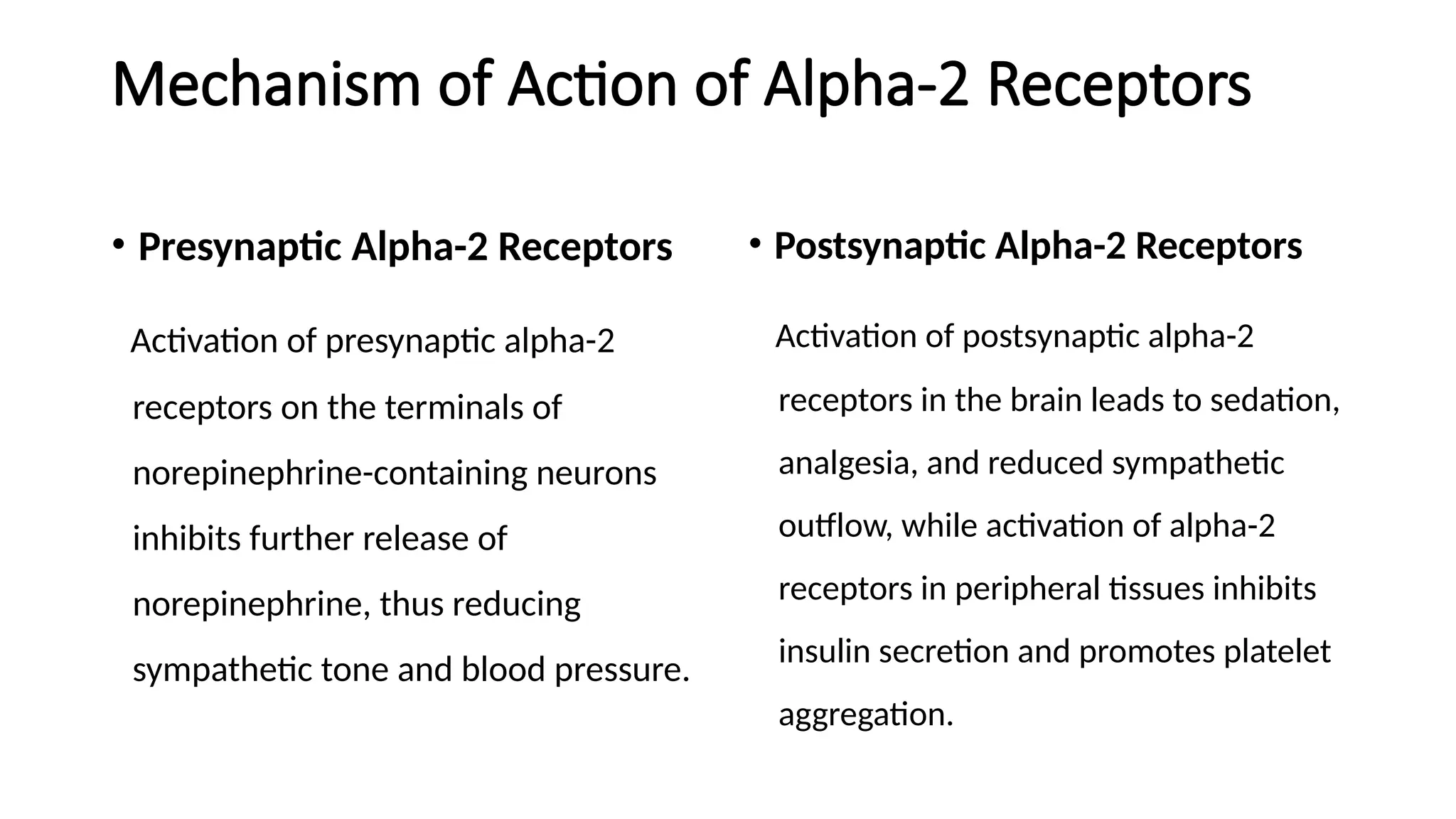
A critical location for alpha-2 receptors is the presynaptic nerve terminals within the brain and spinal cord, specifically in the vasomotor center of the medulla. Here, they act as "autoreceptors." When norepinephrine is released into the synaptic cleft, it binds to these alpha-2 receptors on the sending neuron, providing a negative feedback signal that inhibits further norepinephrine release. This inhibitory action is why centrally acting alpha-2 agonists, such as clonidine, are effective in reducing sympathetic outflow to treat hypertension and certain anxiety disorders.
Pancreatic Beta Cells
Alpha-2 receptors are located on the beta cells of the Islets of Langerhans in the pancreas. Stimulation of these receptors inhibits the secretion of insulin. This is a physiological adaptation during the "fight or flight" response; by suppressing insulin, the body prevents glucose from being stored in cells, keeping it available in the bloodstream for the brain and muscles.
Platelets
In the blood, alpha-2 receptors are found on the surface of platelets. Their activation promotes platelet aggregation. This serves as a protective mechanism to facilitate clotting in the event of an injury that triggers a sympathetic surge.
Adipose Tissue
Alpha-2 receptors are also found in fat cells (adipocytes). In these locations, they inhibit lipolysis (the breakdown of fats). This is often contrasted with beta-adrenergic receptors in fat cells, which promote fat breakdown. The balance between alpha-2 and beta receptor stimulation determines the rate of fatty acid release into the blood.
Comparative Distribution of Alpha Receptors
The following table summarizes the primary locations and the resulting physiological actions of alpha receptor stimulation as of current 2026 clinical standards.
| Receptor Subtype | Primary Tissue Locations | Physiological Effect of Stimulation |
|---|---|---|
| Alpha-1 (α1) | Vascular smooth muscle (skin, viscera) | Vasoconstriction (increased blood pressure) |
| Alpha-1 (α1) | Iris dilator muscle (radial muscle) | Mydriasis (pupil dilation) |
| Alpha-1 (α1) | Prostate and Bladder Sphincter | Contraction (urinary retention) |
| Alpha-1 (α1) | Liver (Hepatocytes) | Glycogenolysis and Gluconeogenesis |
| Alpha-2 (α2) | CNS (Presynaptic terminals) | Inhibition of norepinephrine release |
| Alpha-2 (α2) | Pancreatic Beta Cells | Inhibition of insulin secretion |
| Alpha-2 (α2) | Platelets | Increased aggregation (clotting) |
| Alpha-2 (α2) | Vascular smooth muscle (limited) | Vasoconstriction (minor peripheral effect) |
Signaling Mechanisms and Subtype Nuances
The location of these receptors is intrinsically tied to their intracellular signaling pathways. Alpha-1 receptors use the Gq pathway, which activates phospholipase C (PLC). PLC cleaves membrane phospholipids into inositol trisphosphate (IP3) and diacylglycerol (DAG). IP3 triggers the release of calcium from the sarcoplasmic reticulum, which is the direct cause of muscle contraction in the vessels and prostate.
Alpha-2 receptors utilize the Gi pathway, which is inhibitory. By lowering cAMP, these receptors generally decrease the activity of protein kinase A (PKA). In the brain, this leads to a reduction in the firing of sympathetic neurons.
Alpha-1 Subtypes (1A, 1B, 1D)
Modern pharmacology has identified that alpha-1 receptors are not a monolithic group.
- Alpha-1A: Highly concentrated in the human prostate and urethral smooth muscle.
- Alpha-1B: Predominantly found in the vascular smooth muscle, regulating blood pressure.
- Alpha-1D: Located in the bladder wall and certain areas of the spinal cord.
This subtype-specific localization is the reason why medications like tamsulosin are "uroselective." Because they target the Alpha-1A subtype found in the prostate more specifically than the Alpha-1B subtype in the blood vessels, they can treat urinary symptoms without causing a drastic drop in blood pressure.
Alpha-2 Subtypes (2A, 2B, 2C)
- Alpha-2A: The primary subtype in the CNS for blood pressure regulation and sedation.
- Alpha-2B: Found in vascular smooth muscle, where they can actually contribute to initial vasoconstriction when stimulated by intravenous agonists.
- Alpha-2C: Involved in modulating dopamine release in the basal ganglia and the stress response.
Clinical Relevance of Receptor Location
The precise mapping of alpha receptor locations is the foundation of modern emergency medicine and chronic disease management.
- Hypertension Management: Alpha-1 blockers (like prazosin) are located in the peripheral vasculature. By preventing norepinephrine from binding to these sites, the vessels remain dilated, lowering systemic vascular resistance.
- Decongestion: Topical decongestants target alpha-1 receptors in the nasal mucosa. The resulting vasoconstriction reduces swelling and mucus production.
- Glaucoma Treatment: Alpha-2 agonists (like brimonidine) are used in the eye. Their location in the ciliary body allows them to reduce the production of aqueous humor and increase its outflow, lowering intraocular pressure.
- Anesthesia and Sedation: The location of alpha-2 receptors in the locus coeruleus of the brain is the target for dexmedetomidine. By stimulating these receptors, clinicians can induce a state of "cooperative sedation" where the patient is sleepy but easily rousable, with minimal respiratory depression.
Summary of Clinical Implications
Understanding where alpha receptors are located is essential for predicting both the therapeutic effects and the side effects of medications. For instance, a non-selective alpha-blocker used for blood pressure might cause nasal congestion because it also blocks the alpha receptors in the nose that normally maintain clear passages. Similarly, a drug targeting alpha-1 receptors in the prostate might cause "dizziness" because of its secondary impact on alpha-1 receptors in the blood vessels of the legs, leading to orthostatic hypotension.
For patients and students in 2026, the focus remains on "selectivity"—using the unique locations of subtypes to deliver treatment exactly where it is needed while avoiding the tissues where it would cause harm.
Frequently Asked Questions
Are alpha receptors located in the heart?
Yes, but they are significantly less numerous than beta receptors. Alpha-1 receptors are present in the myocardium and can exert a minor positive inotropic effect (increased strength of contraction), but the heart's primary adrenergic response is governed by beta-1 receptors. In certain pathological states like heart failure, the ratio of alpha to beta receptors may change.
How do alpha receptors in the brain affect blood pressure?
Alpha-2 receptors in the brain serve as "thermostats" for the sympathetic nervous system. Located on the presynaptic membranes of neurons in the medulla, they sense the level of norepinephrine. When stimulated, they tell the brain to decrease the "fight or flight" signals sent to the rest of the body, which slows the heart rate and relaxes blood vessels.
Why does alpha-1 stimulation cause the pupils to dilate?
Alpha-1 receptors are located on the radial (dilator) muscle of the iris, not the circular (constrictor) muscle. When these receptors are activated, the radial muscle fibers shorten, pulling the iris outward and enlarging the pupil. This is distinct from the parasympathetic system, which acts on the circular muscle to constrict the pupil.
Can alpha receptors be found in the skin?
Yes, alpha-1 receptors are found in the small blood vessels of the skin and in the arrector pili muscles attached to hair follicles. Stimulation of the receptors in these muscles causes them to contract, leading to "goosebumps" (piloerection), a classic sympathetic response.
What is the difference between alpha and beta receptor locations?
While both are adrenergic, they often have opposing effects or different primary sites. Alpha-1 receptors are the primary constrictors of blood vessels in the skin and viscera, while Beta-2 receptors (located in the skeletal muscle vessels and bronchioles) promote dilation. Beta-1 receptors are primarily located in the heart, where they increase rate and force, whereas alpha receptors have a minimal role in cardiac rate.
Practical Recommendations
If you are a student or healthcare professional, focus on the "A-1-C" and "A-2-I" rule to remember how locations dictate function: Alpha-1 is generally Constrictive (vessels, sphincters), and Alpha-2 is generally Inhibitory (norepinephrine release, insulin release). When reviewing a patient’s medication list, always cross-reference the known locations of the receptors targeted by the drug to anticipate potential side effects, such as postural hypotension or dry mouth.
For further academic study on receptor distribution and molecular signaling, researchers should consult the latest pharmacological databases such as the IUPHAR/BPS Guide to Pharmacology or the National Center for Biotechnology Information (NCBI) StatPearls database for peer-reviewed updates on subtype distribution.
Image Gallery