Why Dollar Tree Raising Its Prices Matters: The Economic and Social Impact in 2026
Dollar Tree’s shift to a multi-price strategy matters because it signals the end of the traditional fixed-price retail model. As the company expands price caps to $7 and beyond in 2026, it reflects persistent inflationary pressures, a...
Dollar Tree’s shift to a multi-price strategy matters because it signals the end of the traditional fixed-price retail model. As the company expands price caps to $7 and beyond in 2026, it reflects persistent inflationary pressures, a need for diversified inventory, and a fundamental change in how low-income households manage rising living costs.
Contents
For decades, the "everything for a dollar" promise was more than a marketing slogan; it was a reliable economic anchor for millions of households. However, the retail landscape of 2026 looks vastly different. The transition from a strictly $1.00 store to a $1.25 base, and now to a multi-price destination with items reaching $7.00, represents a pivotal moment in American consumerism. This change is not merely about a few extra cents; it is a response to structural shifts in global supply chains, labor markets, and the very definition of "value" in a post-inflationary economy.
The Evolution of the Multi-Price Strategy
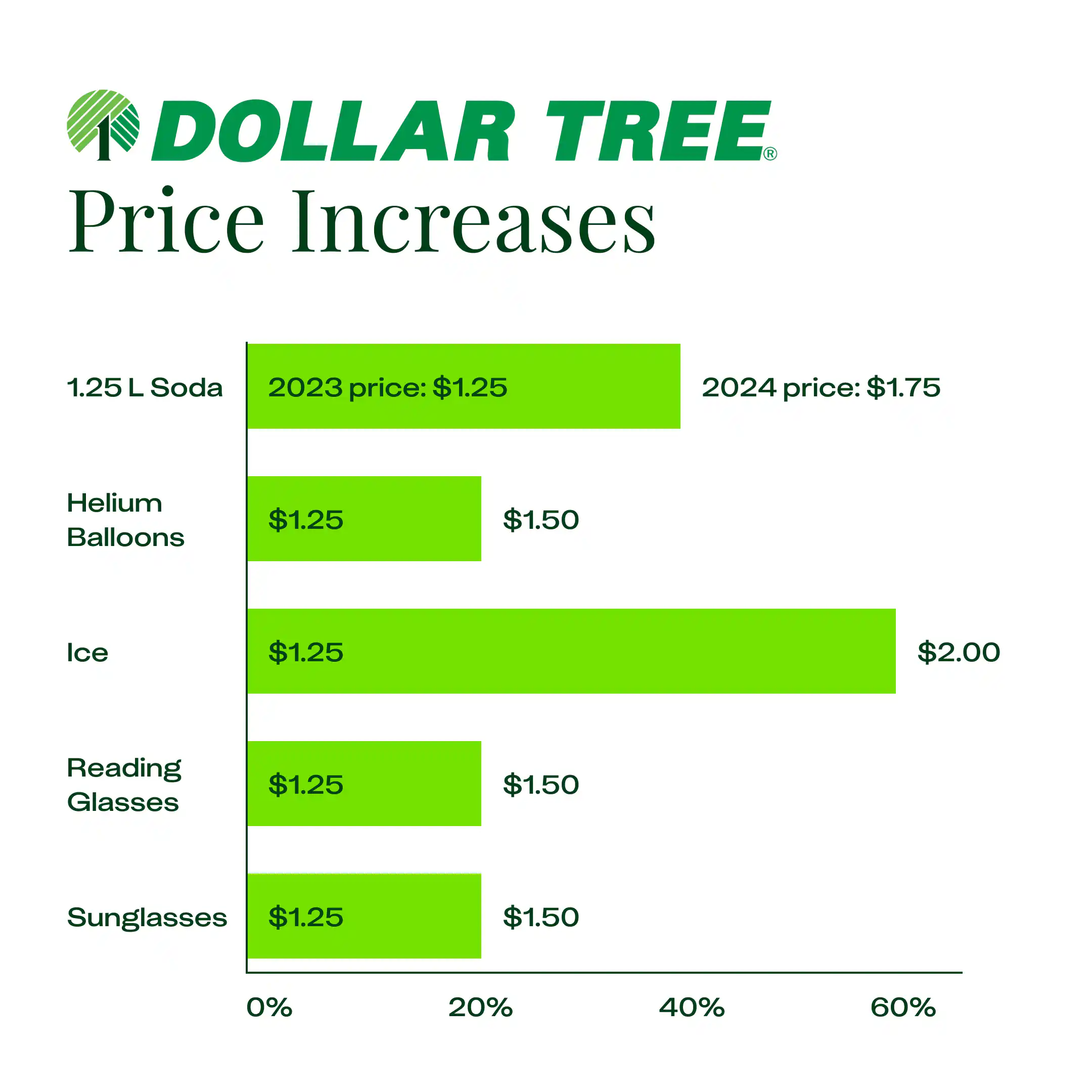
The journey toward higher price points began in earnest in late 2021 when Dollar Tree moved its base price from $1.00 to $1.25. While that 25% increase was significant, it was only the precursor to the "More Choices" initiative. By 2024, the company had begun integrating items priced at $3, $5, and even $7 into thousands of stores. In 2026, this multi-price architecture is the standard operating procedure.
This evolution matters because it allowed Dollar Tree to break free from the "unit bias" that restricted its inventory. Under the strict $1.00 limit, the company was forced to either reduce product sizes (shrinkflation) or stop carrying certain essentials altogether as wholesale costs rose. By raising prices, the retailer has regained the ability to stock frozen foods, household electronics, and larger sizes of name-brand consumables that were previously impossible to sell at a profit.
Why the $7 Cap Changed the Game
The introduction of the $7 ceiling allowed Dollar Tree to compete directly with "five-below" models and big-box retailers like Walmart. In 2026, shoppers can find items such as protein shakes, pet supplies, and automotive care products that simply cannot be manufactured or shipped for $1.25. This expansion transforms the store from a "treasure hunt" for trinkets into a legitimate grocery and household destination.
The Macroeconomic Drivers Behind the Increase
To understand why these price hikes matter, one must look at the underlying economic forces that made them inevitable. Retailers do not alienate their core customer base—many of whom are on fixed incomes—without significant pressure.
- Supply Chain Permanence: The logistics disruptions of the early 2020s did not fully revert to pre-pandemic costs. While shipping rates stabilized, the "last mile" of delivery and warehousing remains significantly more expensive due to energy costs and land value.
- Labor Cost Adjustments: In 2026, the competitive labor market requires higher starting wages to maintain staffing levels. For a high-volume, low-margin business like Dollar Tree, labor is one of the largest controllable expenses. Raising prices is often the only way to offset a rising wage bill without cutting store hours or maintenance.
- Raw Material Inflation: The cost of plastic, paper, and food commodities has seen a cumulative increase that far outpaces the 25-cent hike of 2021. For example, a pack of paper plates that cost $0.80 to manufacture in 2019 might cost $1.30 today, making the $1.25 price point a net loss for the retailer.
The Impact on the Core Consumer
The primary reason this shift matters so deeply is its impact on the "ALICE" population (Asset Limited, Income Constrained, Employed). For many families, Dollar Tree is not a convenience; it is a necessity.
The Erosion of the Safety Net
For a shopper with $20 in their pocket, the move from $1.00 to $1.25 meant they could buy 16 items instead of 20. As more items move toward the $3 to $5 range in 2026, that $20 buys even less. This "inflation of the basics" hits the hardest because these consumers cannot simply switch to a cheaper alternative—they are already at the bottom of the price ladder.
The Quality vs. Quantity Trade-off
Conversely, some consumers benefit from the higher price points. By offering a $5 multi-pack of high-quality detergent rather than a $1.25 small bottle of a generic brand, Dollar Tree is providing better long-term value. For those who can afford the higher upfront cost, the price-per-ounce often drops. However, the challenge remains for those living paycheck to paycheck who cannot afford the $5 "value" option and are forced to buy the less efficient $1.25 version.
Comparison of Retail Models in 2026
The following table illustrates how Dollar Tree’s pricing structure has shifted compared to its primary competitors as of 2026.
| Feature | Traditional Dollar Store (Pre-2021) | Dollar Tree (2026 Model) | Five Below / Discount Rivals |
|---|---|---|---|
| Base Price Point | $1.00 | $1.25 | $1.00 - $5.00+ |
| Maximum Price Cap | $1.00 | $7.00 | $25.00+ (Five Beyond) |
| Inventory Focus | Party supplies, snacks, trinkets | Groceries, pet care, electronics | Teens, tech, home decor |
| Target Margin | Fixed / Low | Variable / Flexible | High Volume / Trend-based |
| Customer Intent | Supplementing / Impulse | Primary Grocery / Household | Gift / Entertainment |
The Psychological Death of the "Dollar" Brand
There is a profound psychological shift when a brand known for a single price point breaks its promise. For decades, Dollar Tree was one of the few places where a child could walk in with a single bill and buy anything in the store. That simplicity created a level of trust and accessibility.
In 2026, the need to "check the tag" at Dollar Tree has changed the shopping experience. It introduces friction into the process. For low-income shoppers, this friction is synonymous with anxiety—the fear of reaching the register and not having enough to cover the total. While the company has implemented clearer signage and "Multi-Price" aisles, the loss of the universal $1 price point marks the end of an era in retail simplicity.
Strategic Positioning and Investor Relations
From a business perspective, the price increases are viewed as a success. According to Dollar Tree’s 2024 Annual Report, the "More Choices" rollout led to significant increases in average basket size. Investors have generally supported the move, as it protects the company’s gross margins against the volatility of the consumer price index (CPI).
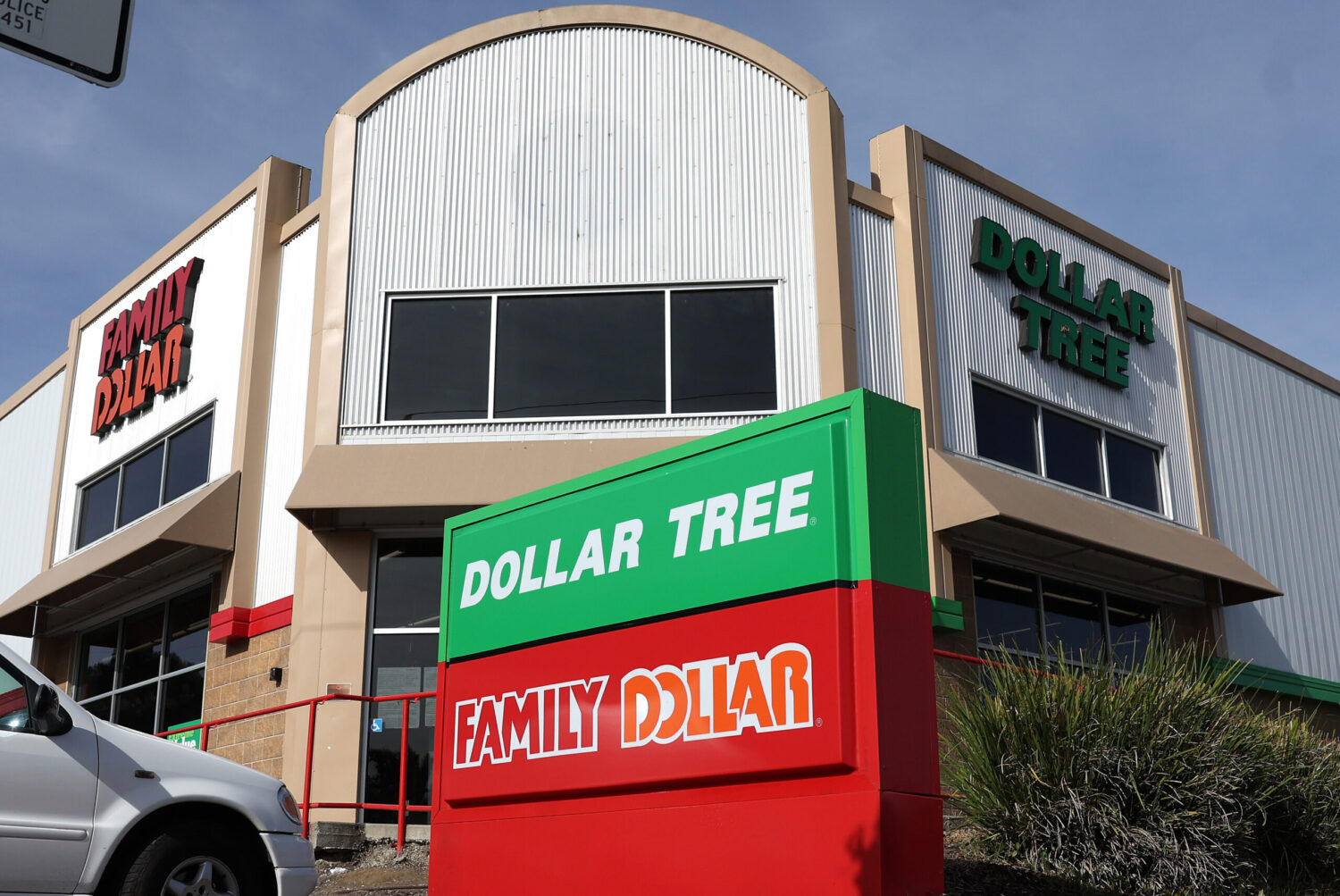
By 2026, the company has also integrated its Family Dollar and Dollar Tree supply chains more effectively. The price hikes at Dollar Tree allow for a more cohesive merchandising strategy across both brands. Instead of two different companies with two different pricing philosophies, they now operate as a tiered discount ecosystem.
Common Pitfalls and Operational Challenges
The transition hasn't been without its hurdles. Several factors continue to complicate the "Raising Prices" narrative in 2026:
- Merchandising Confusion: In some older store formats, mixing $1.25 and $5 items has led to customer frustration at checkout.
- Inventory Management: Managing a wider variety of price points requires more sophisticated point-of-sale (POS) systems and back-end logistics, which increases operational complexity.
- The "Temu" Factor: The rise of ultra-cheap direct-from-manufacturer apps has pressured Dollar Tree to keep its $1.25 "opening price points" competitive, even if they serve as loss leaders.
Frequently Asked Questions
Why can't Dollar Tree just keep things at $1.00?
Maintaining a $1.00 price point in 2026 is mathematically impossible for most manufactured goods. When you factor in the cost of raw materials, overseas shipping (primarily from Asia), domestic trucking, and store labor, the "landed cost" of many items exceeds $1.00 before they even hit the shelf. Staying at $1.00 would mean selling empty boxes or incredibly low-quality goods.
Will prices ever go back down to $1.00?
It is highly unlikely. Retail history shows that once a price floor is raised, it rarely retreats. Deflation is uncommon in the consumer goods sector; instead, retailers focus on "price stability" rather than price reduction. The $1.25 base is likely the permanent floor for the foreseeable future.
Does raising prices mean the items are higher quality?
In many cases, yes. The move to $3, $5, and $7 allows Dollar Tree to source name-brand products (like Dove, Libman, or Fisher-Price) that were previously excluded from the store. While the $1.25 items remain similar in quality to the old $1.00 items, the higher-priced tiers offer better durability and volume.
How do these price hikes affect food deserts?
In many rural and urban areas, Dollar Tree is the only accessible "grocery" store. When these stores raise prices, it directly increases the cost of living for residents in food deserts. This makes the price hikes a matter of public health and food security, not just retail strategy.
Is Dollar Tree becoming the same as Walmart?
While they are moving closer in price points, they remain different in scale. Dollar Tree focuses on smaller "fill-in" shopping trips and neighborhood convenience, whereas Walmart relies on massive scale and a "one-stop-shop" model. However, the $7 price cap does put Dollar Tree in direct competition with Walmart's Great Value brand.
Summary of Next Actions for Consumers
As Dollar Tree continues to solidify its multi-price model throughout 2026, consumers should adapt their shopping habits to maximize value. First, always check unit prices; sometimes the $5 "large" version is cheaper per ounce than the $1.25 "small" version, but not always. Second, utilize the Dollar Tree mobile app to track store-specific inventory and "Multi-Price" rollouts before heading to the store. Finally, be aware that the most significant savings are now found in the $3-$5 range for household essentials, which often provide better longevity than the cheapest opening-price-point items.
Image Gallery