Why "Long Live Iran" Matters: History, Human Rights, and Global Impact
The phrase "Long Live Iran" (Zandebad Iran) serves as a enduring patriotic sentiment and rallying cry for national sovereignty, human rights, and cultural continuity. Understanding why this declaration matters illuminates the Iranian p...
The phrase "Long Live Iran" (Zandebad Iran) serves as a enduring patriotic sentiment and rallying cry for national sovereignty, human rights, and cultural continuity. Understanding why this declaration matters illuminates the Iranian people's prolonged struggle for democratic civil society, gender equality, regional stability, and the preservation of a millennia-old civilization distinct from authoritarian state control.
Contents
The Historical and Cultural Origins of Iranian Patriotic Slogans
To understand why expressions of Iranian national longevity resonate so deeply today, one must examine how civic identity (Iraniyat) evolved independently of ruling political regimes. Throughout the twentieth and twenty-first centuries, patriotic phrases in Iran emerged not as mere state propaganda, but as grassroots assertions of self-determination against internal tyranny and foreign domination.
During the Iranian Constitutional Revolution of 1905–1911, intellectuals and citizens adopted unifying national slogans to demand the establishment of a parliament (Majles) and a constitutional government subject to the rule of law. Decades later, during the 1951 nationalization of Iran's oil industry under Prime Minister Mohammad Mosaddegh, national slogans again served as popular declarations of national sovereignty over domestic natural resources.
Constitutional Revolution (1905–1911) ➔ Oil Nationalization (1951) ➔ Composition of "Ey Iran" (1944) ➔ Modern Civil Movements (2022–Present)
A crucial cultural touchstone for this sentiment is the popular anthem "Ey Iran" ("O Iran"), written in 1944 by poet Hossein Gol-e-Golab with music composed by Ruhollah Khaleghi. Created during the Allied occupation of Iran during World War II, the anthem intentionally avoided political personalities or royalist praise, focusing exclusively on the land, heritage, and people of Iran. Over time, "Ey Iran" became an unofficial national anthem embraced across political divides because it emphasized a shared cultural heritage rather than allegiance to any specific government.
This distinction between the Iranian nation—defined by its rich literary, historical, and pluralistic civil identity—and its transient political rulers remains central to understanding why patriotic expressions persist among both domestic populations and the global diaspora.
Socio-Political Significance in Contemporary Human Rights Movements
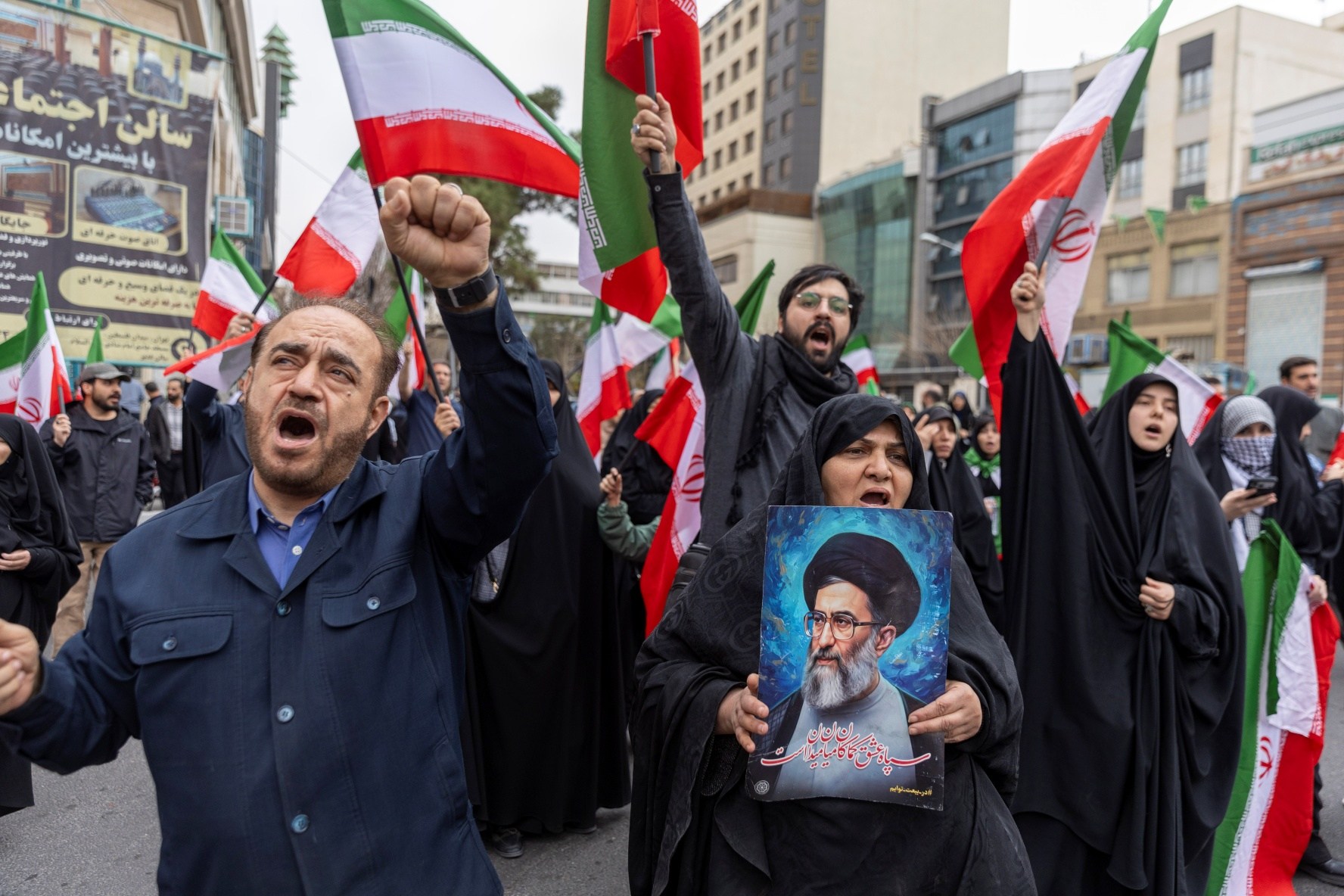
In recent years, declarations affirming the vitality and future of Iran have taken on heightened urgency amidst widespread civic unrest and state repression. The protest movements that erupted across Iran—most notably the "Woman, Life, Freedom" (Zan, Zendegi, Azadi) movement sparked in late 2022—redefined popular resistance by placing civil liberties, women's rights, and bodily autonomy at the core of national liberation.
Human rights advocates and international institutions, including the United Nations Office of the High Commissioner for Human Rights, have documented severe restrictions on freedom of expression, peaceful assembly, and judicial fairness in Iran. In this context, calling for a free and enduring Iran represents a direct rejection of authoritarian governance. It asserts that the nation's true strength lies in its citizens rather than in oppressive state machinery.
Demands for Basic Rights ➔ Peaceful Public Protests ➔ State Censorship & Blackouts ➔ Global Advocacy & Solidarity
Key dimensions of this contemporary struggle include:
- Gender Equality and Civil Rights: The push to repeal discriminatory laws affecting women in public life, higher education, employment, and personal status.
- Freedom of Expression and Press: Demands for an end to state censorship, arbitrary arrests of journalists, and internet blackouts designed to suppress dissent.
- Judicial Reform and Due Process: Advocacy against execution without fair trials, forced confessions, and systemic legal abuse within the revolutionary courts.
- Ethnic and Religious Inclusivity: Recognizing the rights of Iran's diverse ethnic populations—including Kurds, Baluch, Azerbaijanis, and Arabs—alongside religious minorities such as Baha'is and Christian converts.
By framing their demands around the long-term well-being of the entire nation, Iranian reform activists and human rights defenders demonstrate that true patriotism requires institutional accountability, civil freedoms, and respect for fundamental human dignity.
Geopolitical and Strategic Implications for the International Community
The future trajectory of Iran extends far beyond its domestic borders, directly impacting regional security, global trade, energy supply chains, and international diplomacy. Understanding why a free, stable, and prosperous Iran matters globally requires assessing its strategic positioning in the broader Middle East.
Geographically situated at the crossroads of Eurasia and controlling the northern shoreline of the Strait of Hormuz—a crucial transit choke point for international oil shipments—Iran occupies a pivotal geopolitical location. Persistent domestic instability, aggressive regional posture, and non-proliferation concerns have long complicated global diplomatic relations.
Persian Gulf Security ➔ Strait of Hormuz Shipping Lanes ➔ Global Energy Supply Stability ➔ International Nuclear Diplomacy
International monitoring organizations such as Freedom House highlight how authoritarian governance in key regional states undermines global democratic stability and international legal norms. Conversely, a democratic and stable Iran that respects international law would fundamentally reshape Middle Eastern diplomacy by:
- Enhancing Regional Stability: Reducing state-sponsored regional conflicts, proxy engagements, and regional arms races.
- Securing Energy and Maritime Trade: Ensuring unimpeded transit through critical Persian Gulf waterways, stabilizing global energy markets.
- Strengthening Non-Proliferation Norms: Re-engaging meaningfully with international oversight mechanisms such as the International Atomic Energy Agency (IAEA).
- Fostering Economic Cooperation: Unlocking the economic potential of a highly educated population of over 85 million people, creating opportunities for international trade and technological collaboration.
Consequently, international interest in Iranian civic movements reflects both a moral commitment to universal human rights and a pragmatic recognition of Iran's decisive influence on global security.
Comparative Analysis: Cultural Identity, State Governance, and Civic Aspirations
To clearly distinguish between state structures and civic identity in Iran, the following matrix compares the core characteristics of Iranian national identity, the current political system, domestic civil aspirations, and global strategic interests.
| Dimension | Iranian National Identity (Iraniyat) | Current Political Governance | Civil Society Aspirations | International Strategic Context |
|---|---|---|---|---|
| Core Foundation | Millennia of history, Persian literature, multi-ethnic heritage | Theocratic constitutional model based on Velayat-e Faqih | Constitutional democracy, secular rule of law, civil liberties | Non-proliferation, regional stability, human rights monitoring |
| Primary Focus | Cultural preservation, language, arts, and national unity | State survival, ideological orthodoxy, regime security | Gender equality, economic opportunity, personal freedoms | Maritime security, counter-terrorism, diplomatic stabilization |
| View of Sovereignty | Belongs to the Iranian people and their historical heritage | Concentrated in state religious authorities and security organs | Vested in free democratic elections and popular consent | Respect for international treaties and sovereign non-aggression |
| Global Role | Cultural bridge connecting Central Asia, the Middle East, and the West | Regional proxy networks and confrontational foreign policy | Integration into the global economy and international community | Responsible regional power ensuring trade flow and peaceful conflict resolution |
This comparative framework demonstrates why international observers and policy experts emphasize supporting the Iranian people and their civil rights, rather than conflating the nation's rich history with the policies of its government.
How International Observers and Advocates Can Engage Responsibly
Supporting the rights and aspirations of the Iranian people requires careful, constructive, and evidence-based engagement. Policymakers, civil society organizations, and concerned citizens globally can take specific actions to support human rights and civil liberties in Iran without perpetuating misinformation or political manipulation.
Supporting Verified Human Rights Organizations
Primary documentation of civil rights violations, legal proceedings, and state actions is essential for maintaining global awareness and political accountability. Engaging with credible international organizations—such as Amnesty International—ensures that reporting remains accurate, balanced, and grounded in international humanitarian standards.
Documentation of Violations ➔ Verification by Neutral Experts ➔ UN & NGO Reporting ➔ Target Accountability & Sanctions
Promoting Digital Freedom and Access to Information
The Iranian state frequently deploys internet shutdowns, bandwidth throttling, and content blocking to restrict communication during periods of civil unrest. Global technical initiatives that preserve digital access play a pivotal role in enabling citizens to communicate internally and share evidence with international observers. Effective digital advocacy focuses on:
- Funding and developing open-source censorship-circumvention tools and virtual private networks (VPNs).
- Supporting satellite internet infrastructure and hardware access.
- Advocating against corporate compliance with state-mandated digital surveillance measures.
Preserving Cultural Heritage and Educational Exchange
Cultural preservation serves as a vital tool against state ideological monopoly. Academic institutions, museums, and historical archives preserve Iran's pre-modern and modern heritage, ensuring that historical narratives remain accessible to future generations. For example, archival programs at institutions like the Smithsonian Institution maintain recordings of traditional Iranian music, literature, and art, safeguarding cultural memory across global diaspora communities.
Archival Preservation ➔ Academic Research ➔ International Exhibition ➔ Cultural Continuity
Frequently Asked Questions
What is the historical origin of the song "Ey Iran"?
"Ey Iran" was composed in 1944 during the Allied occupation of Iran during World War II. The lyrics were written by Hossein Gol-e-Golab and set to music by Ruhollah Khaleghi. The anthem intentionally avoids mentioning specific political figures or regimes, focusing instead on national unity, geography, and cultural heritage.
How do modern civic slogans differ from official state slogans in Iran?
Official state slogans in Iran typically emphasize regime ideology, religious orthodoxy, and anti-Western rhetoric. In contrast, modern civil slogans—such as "Woman, Life, Freedom" or patriotic assertions of national longevity—focus on individual rights, democratic governance, gender equality, and national unity independent of state ideology.
What role does the Iranian diaspora play in global advocacy?
The Iranian diaspora plays a central role by raising awareness of human rights violations, lobbying international governments for targeted sanctions against human rights abusers, providing financial and technical support for digital access, and preserving Iranian arts, literature, and history abroad.
Why is internet access considered a critical human rights issue in Iran?
Internet access is critical because state authorities frequently implement network blackouts during protests to prevent citizens from coordinating peacefully and to conceal human rights abuses from the international community. Providing anti-censorship tools helps maintain transparency and protects civil society.
How do human rights violations in Iran affect broader international policy?
Human rights violations undermine regional stability, create refugee flows, and complicate diplomatic negotiations regarding energy, trade, and non-proliferation. International policy increasingly ties diplomatic engagement to verifiable improvements in domestic human rights and compliance with international law.
Key Takeaways and Practical Recommendations
Understanding why "Long Live Iran" matters requires recognizing it as a declaration of resilience, civil rights, and cultural endurance. For researchers, policy analysts, and human rights advocates seeking to support positive outcomes for Iranian civil society, the following actions offer a constructive framework:
- Prioritize Fact-Based Reporting: Rely on verified accounts from recognized human rights monitors and independent journalists rather than unverified social media claims.
- Separate People from Regime Policies: Maintain a clear analytical distinction between the Iranian population's aspirations and the official actions of the state governance structure.
- Advocate for Internet Freedom: Support policy and technological initiatives that expand unrestricted digital access and anti-censorship software for Iranian citizens.
- Promote Cultural and Academic Exchange: Engage with diaspora educational platforms, cultural preservation projects, and artistic initiatives that highlight Iran's diverse national heritage.
By focusing on institutional accountability, human rights advocacy, and cultural preservation, the international community can meaningfully support the Iranian people's vision for a free, stable, and prosperous nation.
Image Gallery