How to Start a Family Trust: A Step-by-Step Estate Planning Guide
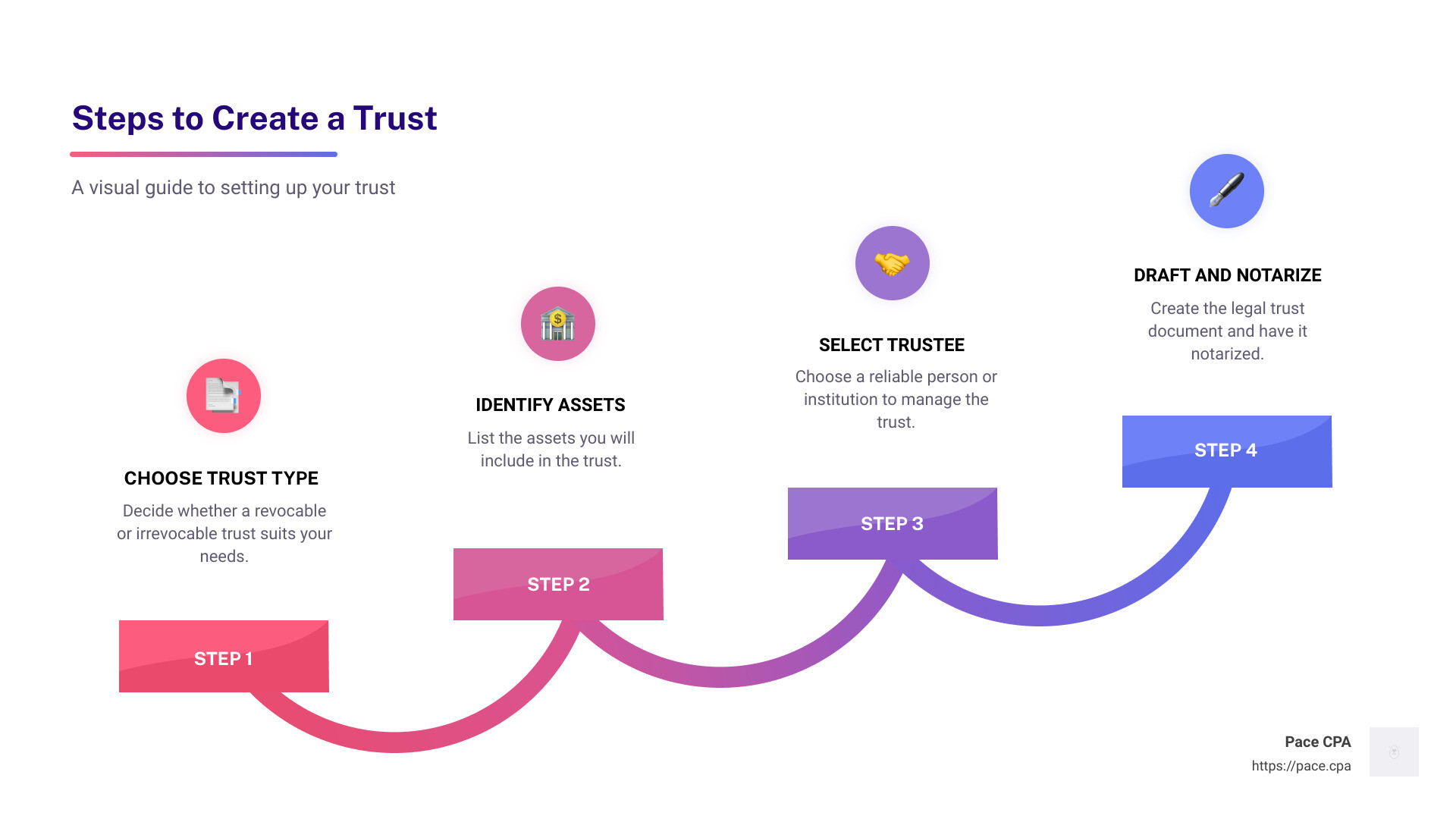
To start a family trust, define your estate planning objectives, select between a revocable or irrevocable structure, and designate key roles including the grantor, trustee, and beneficiaries. You must then draft a legally binding trus...
To start a family trust, define your estate planning objectives, select between a revocable or irrevocable structure, and designate key roles including the grantor, trustee, and beneficiaries. You must then draft a legally binding trust agreement, execute it before a notary public, and formally fund the trust by re-titling assets into the name of the trust.
Contents
Creating a family trust is one of the most effective strategies for managing wealth, avoiding the costly and public probate process, protecting assets, and ensuring a seamless transfer of property to your heirs. However, establishing a trust requires careful attention to statutory legal requirements, financial planning, and proper administrative setup.
Understanding the Legal Structure of a Family Trust
A family trust is a legal relationship in which one party (the grantor or trustor) gives another party (the trustee) the right to hold title to assets for the benefit of a third party (the beneficiaries). Because a trust functions as a separate legal entity for property ownership, assets held within it are managed according to the precise terms outlined in the trust document rather than passing through standard probate court proceedings upon the grantor's death.
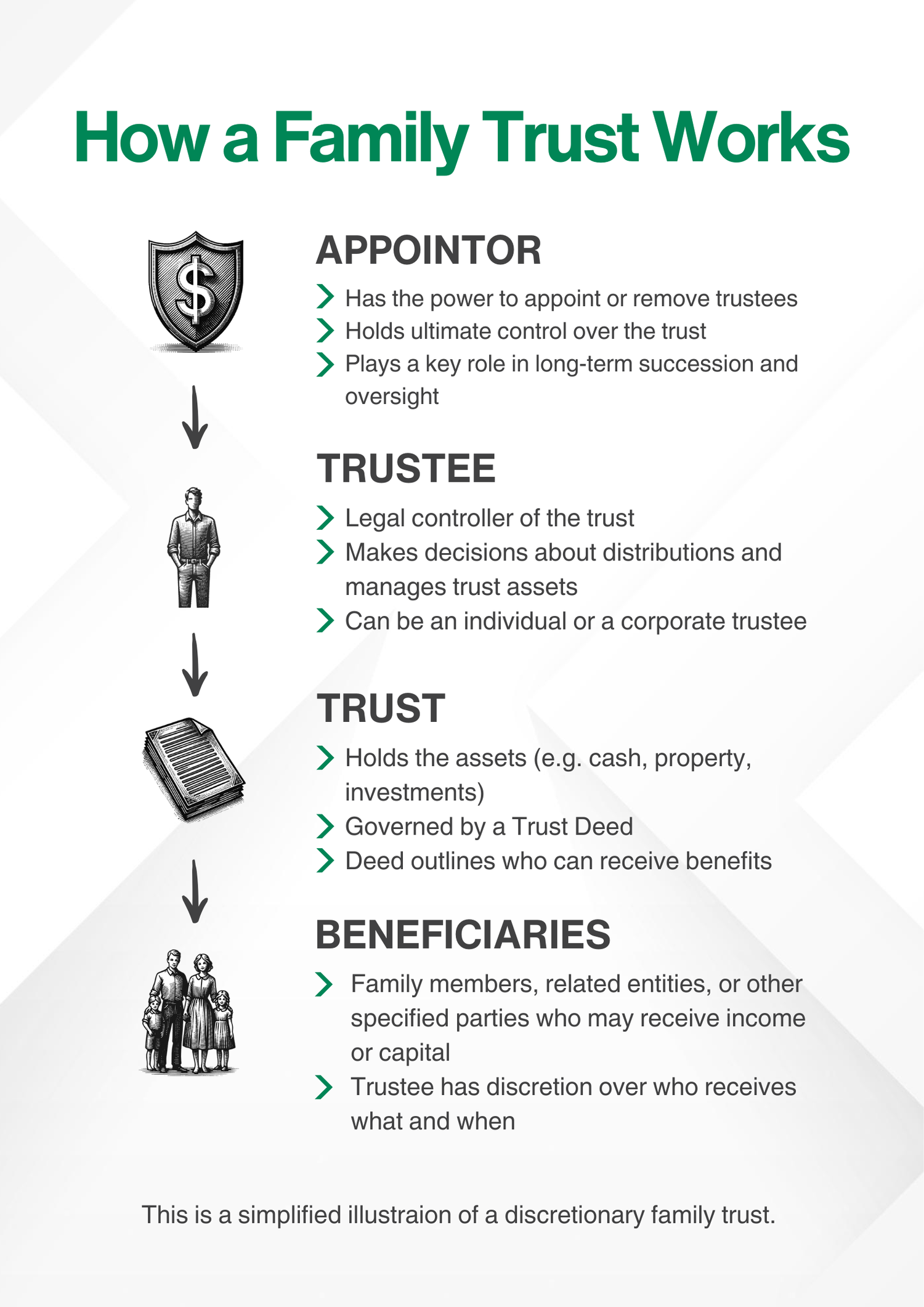
Every family trust relies on three primary legal roles, though one person may fulfill multiple roles during their lifetime depending on how the trust is structured:
- The Grantor (or Trustor/Settlor): The individual or couple who creates the trust, defines its rules, and transfers their personal assets into it.
- The Trustee: The individual, group of individuals, or corporate institution (such as a bank or trust company) appointed to hold legal title to the assets and manage them according to the trust instructions. The grantor often serves as the initial trustee during their lifetime in revocable trusts.
- The Beneficiaries: The family members, individuals, or organizations designated to receive income, principal distributions, or usage rights from the trust's assets. Beneficiaries can be primary (first in line) or contingent (receiving assets only if primary beneficiaries are deceased).
The foundational concept governing trusts is fiduciary duty. Trustees are legally obligated to manage the trust's assets strictly in the best interests of the beneficiaries, following both the explicit terms of the trust agreement and state law principles outlined in the Cornell Law School Legal Information Institute guide on trust law.
Step 1: Define Your Objectives and Inventory Assets
Before drafting any legal paperwork, you must clarify what you hope to accomplish with your family trust and conduct a thorough accounting of your estate.
Clarifying Estate Planning Objectives
Different family dynamics and financial profiles require different trust structures. Common objectives include:
- Probate Avoidance: Bypassing court-supervised distribution of real estate and personal property, saving your heirs time, legal fees, and administrative burden.
- Privacy Protection: Unlike a last will and testament, which becomes a matter of public record when admitted to probate court, a family trust remains a private document.
- Control Over Asset Distribution: Setting specific guidelines for when and how heirs receive inheritances (e.g., reaching a certain age, graduating from college, or achieving specific milestones).
- Special Needs Planning: Providing financial support for family members with disabilities without disqualifying them from government assistance programs like Supplemental Security Income (SSI) or Medicaid.
- Asset Protection: Shielding family assets from future creditors, lawsuit judgments, or potential divorces of beneficiaries.
Inventorying Estate Assets
Compile a detailed list of assets you plan to transfer into the trust. Gather ownership documents, account numbers, property legal descriptions, and estimated valuations for:
- Real Estate: Primary residences, vacation homes, rental properties, and commercial land.
- Financial Accounts: Non-retirement brokerage accounts, mutual funds, certificates of deposit (CDs), and standard checking and savings accounts.
- Business Interests: Ownership stakes in limited liability companies (LLCs), closely held corporations, or partnerships.
- Tangible Personal Property: Valuable artwork, collectibles, jewelry, vehicles, and heirlooms.
- Intellectual Property and Digital Assets: Patents, trademarks, royalties, and digital holdings.
Note: Tax-deferred retirement accounts, such as traditional IRAs, 401(k)s, and Roth IRAs, are generally not directly transferred into a trust while you are alive because doing so triggers immediate tax consequences. Instead, the trust may be named as a primary or contingent beneficiary depending on your tax and estate strategy.
Step 2: Choose the Right Type of Family Trust
The structure of your trust determines your level of control, tax treatment, and asset protection. Family trusts generally fall into two broad legal classifications: revocable living trusts and irrevocable trusts.
Revocable Living Trust
A revocable living trust is the most common foundation for family estate planning. As the grantor, you maintain full control over the trust during your lifetime. You can amend, modify, or completely revoke the trust at any time, and you can add or remove assets at your discretion.
Under a revocable trust, you typically act as your own trustee while you are alive and mentally competent. Because you retain complete control over the property, the Internal Revenue Service (IRS) treats trust assets as your personal property for tax purposes. Income generated by the trust is reported directly on your personal Form 1040 tax return using your Social Security number.
Irrevocable Trust
An irrevocable trust cannot be easily modified, amended, or canceled once it is executed. When you transfer property into an irrevocable trust, you permanently surrender ownership and control of those assets to the trust entity and the named trustee.
Because the grantor gives up control, assets in an irrevocable trust are generally removed from the grantor's taxable estate, offering potential protection from creditors, lawsuits, and federal estate taxes. Irrevocable trusts require a separate Employer Identification Number (EIN) from the IRS and must file independent income tax returns (Form 1041) for any income retained by the trust.
Step 3: Select Key Appointees (Trustees and Beneficiaries)
Appointing responsible individuals to fill core trust roles is critical to long-term management and preventing family disputes.
- GRANTOR (Creates trust & transfers assets)
- TRUSTEE (Manages trust assets according to trust terms)
- BENEFICIARY (Receives distributions & income benefits)
Naming Trustees and Successor Trustees
If you set up a revocable living trust, you will likely serve as the initial trustee. However, you must designate a successor trustee who will step in to manage and distribute trust assets if you become incapacitated or pass away.
When evaluating potential successor trustees, consider:
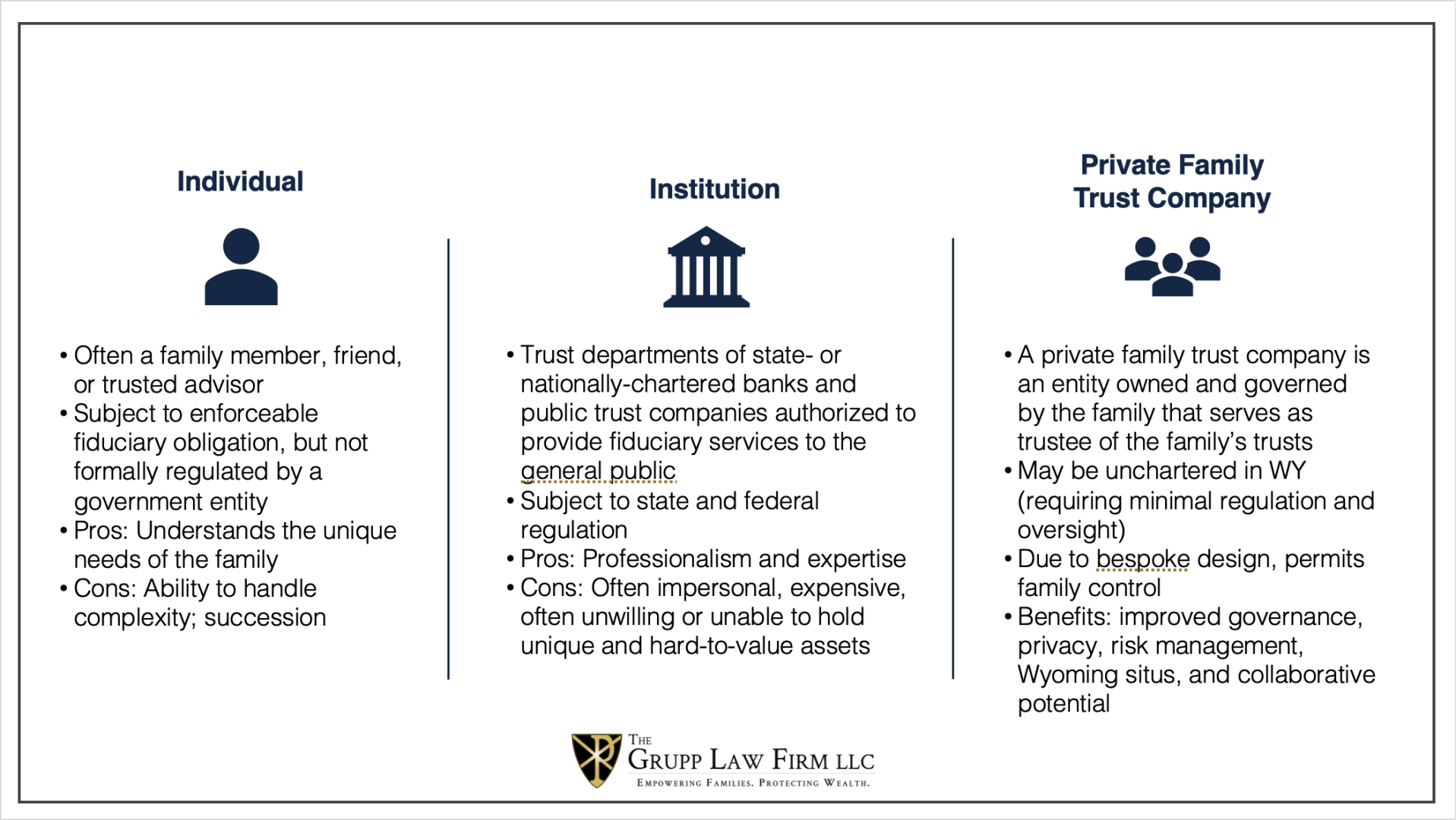
- Individual vs. Corporate Trustee: An individual (such as an adult child or trusted relative) may not charge heavy management fees, but they may lack financial expertise or face emotional conflicts of interest. A corporate trustee (a professional bank or trust institution) provides professional asset management and impartiality but charges ongoing administration fees.
- Co-Trustees: You can appoint two or more co-trustees to share responsibility. However, ensure the trust agreement specifies whether decisions must be unanimous or by majority vote to prevent administrative stalemates.
Designating Beneficiaries and Terms
Explicitly identify primary beneficiaries (e.g., your spouse and immediate children) and contingent beneficiaries (e.g., grandchildren, extended family, or charitable organizations). Define exact distribution rules within the trust agreement:
- Outright Distributions: Beneficiaries receive their full inheritance immediately upon the grantor's death.
- Staggered Distributions: Beneficiaries receive portions of the principal at specified age thresholds (e.g., 25%, 30%, and 35).
- Discretionary Distributions: The trustee has full authority to distribute funds for specific needs, such as health, education, maintenance, and support (often referred to as the standard HEMS clause).
Step 4: Draft and Formally Execute the Trust Agreement
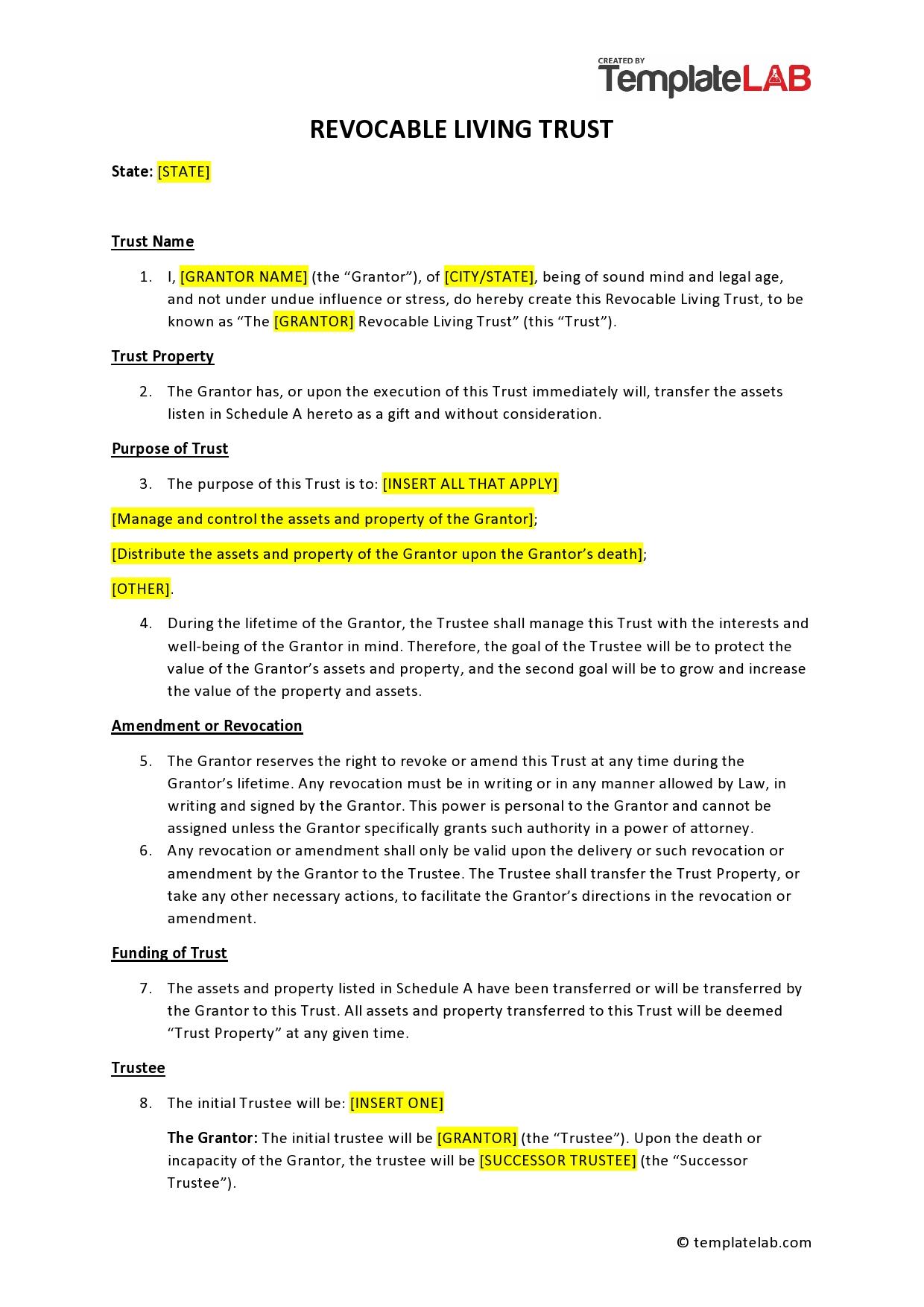
The trust agreement (also called a declaration of trust or trust indenture) is the formal legal document that creates the trust. It establishes the rules for managing assets, appointing trustees, and making distributions.
Drafting Options
While self-service online forms exist, estate planning laws vary significantly by state and local jurisdiction. Working with an experienced estate planning attorney ensures that your trust document complies with local statutes, handles complex tax implications, and reflects your exact intent.
Key elements that must be included in the document are:
- Formal legal name of the trust (e.g., "The Smith Family Trust").
- Identification of the grantor, trustee, successor trustee, and beneficiaries.
- Administrative powers granted to the trustee (investment strategies, borrowing authority, real estate sales).
- Incapacity provisions determining how trustee duty shifts if the grantor becomes unable to manage their affairs.
- Distribution instructions for lifetime operations and post-death asset settlement.
Execution and Notarization
To make the trust document legally binding, it must be signed by the grantor and trustee according to state execution standards. Most jurisdictions require the document to be signed in the physical presence of a notary public. Some states also mandate that two independent witnesses observe the signing and affix their signatures to the document.
Step 5: Fund the Trust (Re-Titling Assets)
Creating and signing the trust document creates the legal vehicle, but the trust remains empty until assets are legally transferred into it. An unfunded or underfunded trust fails to prevent probate for assets left outside of its legal ownership.
- GRANTOR ASSETS (Real Estate, Bank Accounts, Stocks)
- Re-titling & Ownership Transfer
- THE FAMILY TRUST (Legal Owner: "Jane Smith, Trustee of the Smith Family Trust")
- REAL ESTATE (Deed recorded with County Registrar)
- FINANCIAL ACCOUNTS (Re-titled with bank or brokerage firm)
How to Re-Title Specific Asset Types
- Real Estate: You must execute a new deed (typically a quitclaim deed or special warranty deed) transferring ownership from your personal name to the trust (e.g., "Jane Smith, Trustee of the Smith Family Trust dated January 15, 2026"). The deed must be formally recorded in the land records office of the county where the property is located.
- Bank and Brokerage Accounts: Contact your bank or investment firm and present a Certificate of Trust (a concise legal document proving the trust exists without revealing confidential beneficiary details). Complete the institution's change-of-ownership forms to re-title the accounts.
- Physical Property and Business Interests: Transfer ownership shares of LLCs or corporations by amending operating agreements and reissuing stock certificates to the trust. For un-titled tangible personal property, execute a general assignment of personal property to assign ownership to the trust.
- Beneficiary Designations: For assets like life insurance policies, re-file beneficiary designation forms with the insurer to name the family trust as the primary or secondary beneficiary according to your overall estate plan.
Step 6: Handle Post-Execution Administration and Taxes
Once the trust is executed and funded, ongoing management and legal administrative compliance are required.
Obtaining an EIN and Opening a Trust Bank Account
For a standard revocable living trust while the grantor is alive, a separate tax ID is usually unnecessary; your Social Security number acts as the trust identification.
However, an irrevocable trust—or a revocable trust after the grantor dies—is treated as a distinct legal entity by the IRS. You must obtain a federal Employer Identification Number (EIN) online via the IRS EIN application portal.
Once you have the trust agreement, Certificate of Trust, and EIN, the trustee must open a designated trust checking account to handle property management fees, mortgage payments, or distributions.
- Obtain EIN from IRS.gov
- Present Certificate of Trust & EIN to Financial Institution
- Open Dedicated Trust Account (For management fees & transfers)
Revocable vs. Irrevocable Family Trust Comparison
Choosing between a revocable living trust and an irrevocable trust involves balancing control against tax efficiency and asset protection:
| Feature / Dimension | Revocable Living Trust | Irrevocable Family Trust |
|---|---|---|
| Control by Grantor | Full control; can amend, change, or terminate at any time. | Limited to no control; modifications require court or beneficiary consent. |
| Probate Avoidance | Yes; assets pass directly to beneficiaries outside probate court. | Yes; assets pass directly to beneficiaries outside probate court. |
| Asset Protection | Minimal; creditors can reach assets because grantor controls them. | Strong; assets are legally isolated from grantor's personal debts/judgments. |
| Tax Identification | Grantor's Social Security Number (during grantor's lifetime). | Separate IRS Employer Identification Number (EIN) required. |
| Estate Tax Reduction | No reduction; included in grantor's gross estate calculation. | Potential reduction; assets are removed from grantor's taxable estate. |
| Income Tax Filing | Reported on Grantor's personal Form 1040. | Separate Form 1041 fiduciary income tax return filed by the trust. |
| Primary Use Case | Estate planning, privacy, continuous management during incapacity. | Wealth transfer, estate tax reduction, Medicaid planning, creditor protection. |
Costs and Maintenance of a Family Trust
Setting up a family trust involves both upfront execution fees and periodic ongoing costs:
- Legal Setup Costs: Attorney fees for drafting a simple revocable living trust package (which usually includes a pour-over will, durable power of attorney, and healthcare proxy) generally range between $1,500 and $3,500. Complex irrevocable trusts, multi-state real property holdings, or estate tax minimization planning can cost between $4,000 and $10,000+.
- Filing and Conveyance Fees: Re-titling real property involves county deed recording fees and transfer filings, typically running $50 to $300 per deed.
- Ongoing Administration Costs: Professional corporate trustees generally charge an annual management fee ranging from 0.5% to 1.5% of the total trust assets under management. If an individual family member acts as trustee, these asset management fees may be waived, though standard legal and accounting expenses still apply.
Common Family Trust Mistakes to Avoid
Even well-intentioned family estate plans can fail if common execution mistakes occur:
- Failing to Fund the Trust: The most frequent error in trust administration is drafting legal trust documents but failing to re-title deeds, bank accounts, and investments into the name of the trust. Unfunded assets remain in your personal estate and will be forced through probate court.
- Neglecting a Pour-Over Will: A family trust should always be accompanied by a pour-over will. This legal backup instrument directs that any forgotten or newly acquired assets held in your personal name at the time of death automatically "pour over" into your existing trust.
- Selecting an Inappropriate Trustee: Naming a family member who lacks administrative skills or who has existing conflicts of interest with beneficiaries can result in mismanagement, litigation, or family discord.
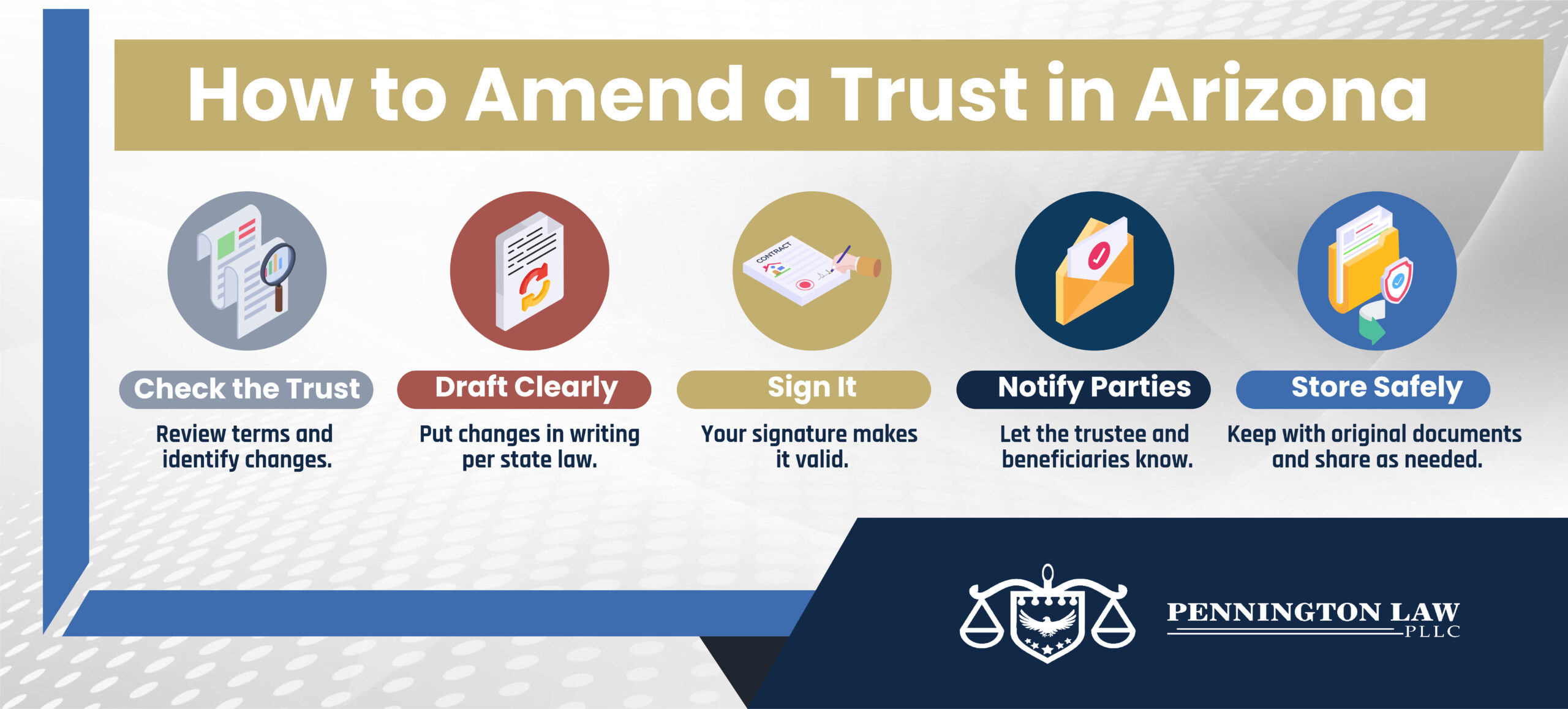
- Forgetting to Update the Trust: Life changes—such as marriages, divorces, births, deaths, or major shifts in tax law—require periodic legal reviews of your trust documents. Review your trust every three to five years or after any major life event.
For further regulatory details on fiduciary trust responsibilities, consult the American Bar Association guide to estate planning.
Frequently Asked Questions
Can I set up a family trust without hiring an attorney?
Yes, you can legally draft a trust document using online estate planning software or statutory self-help forms. However, if your estate includes real property, complex financial portfolios, blended family dynamics, or special needs beneficiaries, working with a licensed estate attorney helps ensure the trust document complies with state law and functions as intended.
How much money do I need to start a family trust?
There is no statutory minimum asset value required to establish a family trust. While trusts were historically associated with wealthy estates, middle-income households frequently use revocable living trusts primarily to avoid probate court costs and maintain privacy, particularly if they own real estate.
Does a revocable living trust protect my assets from creditors?
No. Because the grantor retains total control over a revocable living trust and can withdraw assets or dissolve the trust at any time, courts and judgment creditors treat those assets as your personal property. To gain asset protection from lawsuits or creditors, you must use an properly structured irrevocable trust.
What is a Certificate of Trust, and why do I need one?
A Certificate of Trust (or Abstract of Trust) is a shortened, notarized legal document that certifies the existence of the trust, identifies the trustees, and outlines their legal powers. Banks, brokerages, and title companies accept this summary document to verify your legal authority to transfer assets without requiring you to disclose private financial terms or beneficiary names.
What happens to a family trust when the grantor dies?
Upon the grantor's death, a revocable living trust automatically becomes irrevocable. The designated successor trustee takes over administration of the trust, pays any outstanding legal debts or final taxes, manages assets according to the trust instructions, and ultimately distributes the remaining assets to the beneficiaries without court intervention.
Next Steps for Setting Up Your Trust
Setting up a family trust provides long-term control over how your assets are managed and distributed. To begin establishing your family trust:
- Assemble Your Estate Records: Organize property deeds, account statements, tax returns, and current asset valuations.
- Select Key Fiduciaries: Decide who will act as successor trustee and establish clear contingency plans.
- Consult Estate Professionals: Schedule a consultation with an estate planning attorney and a financial advisor to select the right trust vehicle for your state and financial goals.
- Execute and Fund: Once the legal agreement is signed and notarized, immediately begin transferring titles and updating financial institution ownership records to fund your trust completely.
Disclaimer: Estate planning, tax, and property laws vary significantly based on state and national jurisdictions. The information provided in this guide is for educational purposes only and does not constitute formal legal, tax, or financial advice. Consult a qualified attorney or certified financial planner to address your specific estate planning needs.
Image Gallery