Arkansas State Record Fish: Official Standings and Certification Guide
Arkansas is home to some of the most legendary freshwater catches in North America, boasting several world-record-class specimens within its diverse river systems and highland reservoirs. Managed by the Arkansas Game and Fish Commissio...
Arkansas is home to some of the most legendary freshwater catches in North America, boasting several world-record-class specimens within its diverse river systems and highland reservoirs. Managed by the Arkansas Game and Fish Commission (AGFC), state records are categorized by species and tackle type, providing a rigorous framework for recognizing the achievements of anglers. As of 2026, the pursuit of these records continues to drive significant interest in the state's legendary fisheries, from the trout-rich White River to the expansive depths of Lake Ouachita.
Contents
The Heritage of Arkansas Angling Records
The Natural State has long been a destination for trophy hunters, primarily due to its unique geography. The intersection of the Ozark and Ouachita Mountains with the Mississippi Alluvial Plain creates a variety of habitats ranging from cold-water tailwaters to massive lowland rivers. This diversity allows Arkansas to support record-breaking populations of both cool-water species like walleye and trout, and warm-water giants like blue catfish and alligator gar.
Historically, Arkansas records have not just been local milestones; they have often set the global standard. For decades, the state held the world record for both walleye and brown trout, cementing its reputation as a premier destination for serious anglers. While some of these records have stood for over 40 years, the introduction of improved genetics—such as Florida-strain largemouth bass—and sophisticated habitat management ensure that new records remain a constant possibility for those who know where to look.
Official Certification: How to Register a State Record in 2026
If you believe you have caught a fish that surpasses the current Arkansas state record, the verification process is precise and unforgiving. The Arkansas Game and Fish Commission maintains strict protocols to ensure the integrity of the record book. In 2026, the requirements remain focused on third-party verification and physical evidence.
Prerequisites for Eligibility
- Legal Catch: The fish must be caught using legal sporting tackle in accordance with all AGFC fishing regulations. If the fish is caught in "Unrestricted Tackle" categories (such as trotlines, limblines, or bowfishing), it will be entered into a separate classification from "Rod and Reel" records.
- Species Identification: The fish must be identified by a professional fisheries biologist from the AGFC. Some species, particularly hybrids like the hybrid striped bass or various sunfish, require expert examination to distinguish them from their parent species.
- Certified Scales: The fish must be weighed on a scale that has been certified for trade by the Arkansas Bureau of Standards. These are typically found at grocery stores, post offices, or feed stores. A simple hand scale or a non-certified scale at a marina is insufficient for an official state record.
The Weigh-In Procedure
The fish should be weighed as soon as possible after the catch. Significant weight loss occurs due to dehydration and regurgitation if the fish is kept in a livewell or on ice for an extended period. During the weighing, at least two witnesses must be present to observe the scale reading. It is highly recommended to take high-resolution photographs from multiple angles, including one of the fish on the scale and one of the fish next to a measuring tape showing both total length and girth.
The "Big Three" of Arkansas Records: Bass, Walleye, and Trout
While Arkansas maintains records for dozens of species, three categories command the most attention from the angling community: the Largemouth Bass, the Walleye, and the Brown Trout. These records represent the pinnacle of freshwater achievement in the state.
Largemouth Bass (Centrarchidae)
The standing record for Largemouth Bass was set by Aaron Mardis on March 2, 1976, at Mallard Lake. The fish weighed 16 pounds, 4 ounces. This record is one of the most coveted and difficult to break. In recent years, the AGFC has aggressively stocked Florida-strain largemouth bass into various reservoirs like Lake Ouachita and Lake DeGray. These genetics allow bass to grow larger and live longer than the native northern strain, leading many experts to believe that a new record may eventually come from one of these managed southern reservoirs.
Walleye (Percidae)
Arkansas holds a special place in walleye history. On March 14, 1982, Al Nelson caught a 22-pound, 11-ounce walleye in Greers Ferry Lake. For many years, this was recognized as the world record. Greers Ferry remains a top-tier destination for walleye, particularly during the early spring spawning runs in the tributary rivers like the Upper Little Red. The cold, oxygen-rich depths of these highland lakes provide the perfect environment for walleye to reach sizes rarely seen in their northern native range.
Trout (Salmonidae)
The Arkansas trout records are globally famous. The state record for Brown Trout is held by Rip Collins, who landed a 40-pound, 4-ounce monster on the Little Red River in May 1992. At the time, this was a world record. Arkansas's "tailwater" fisheries—the sections of river immediately downstream from major dams—stay cold year-round, allowing trout to grow at an accelerated rate. The White River, North Fork River, and Little Red River are the primary locations where these behemoths are found.
Summary of Key Arkansas State Records
The following table highlights the standing records for some of the most popular game fish species in Arkansas as of 2026.
| Species | Weight | Waterbody | Date Caught |
|---|---|---|---|
| Largemouth Bass | 16 lbs 4 oz | Mallard Lake | March 1976 |
| Walleye | 22 lbs 11 oz | Greers Ferry Lake | March 1982 |
| Brown Trout | 40 lbs 4 oz | Little Red River | May 1992 |
| Striped Bass | 64 lbs 8 oz | Beaver Lake | April 2000 |
| Blue Catfish | 116 lbs 12 oz | Mississippi River | August 2001 |
| Flathead Catfish | 80 lbs 0 oz | Arkansas River | October 1989 |
| Alligator Gar | 241 lbs 0 oz | White River | July 2023 |
| Rainbow Trout | 19 lbs 1 oz | White River | March 1981 |
| White Bass | 5 lbs 6 oz | Mississippi River | March 2024 |
Monster Catfish and Primitive Giants
Beyond the traditional game fish, Arkansas is a powerhouse for "rough" fish and massive catfish. The Mississippi, Arkansas, and White Rivers serve as highways for some of the largest freshwater fish in the United States.
Blue and Flathead Catfish
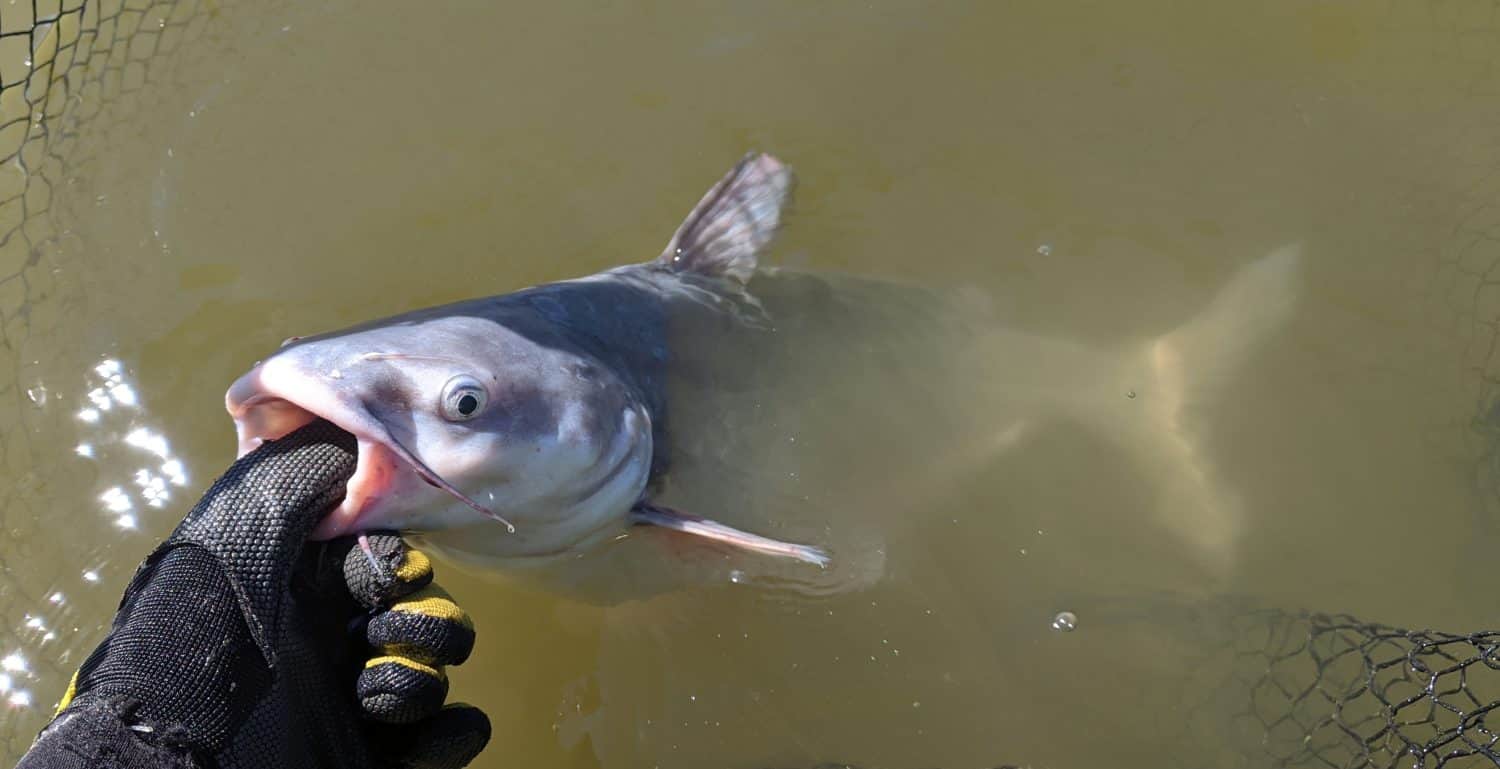
The record for Blue Catfish (116 lbs 12 oz) was taken from the Mississippi River, a body of water known for its massive current and deep holes. Flathead catfish, which prefer structure and live bait, also reach immense sizes in the Arkansas River system. Catching these fish requires heavy-duty tackle, often including 80-to-100-pound test lines and specialized circle hooks to handle the immense torque these fish generate.
Alligator Gar
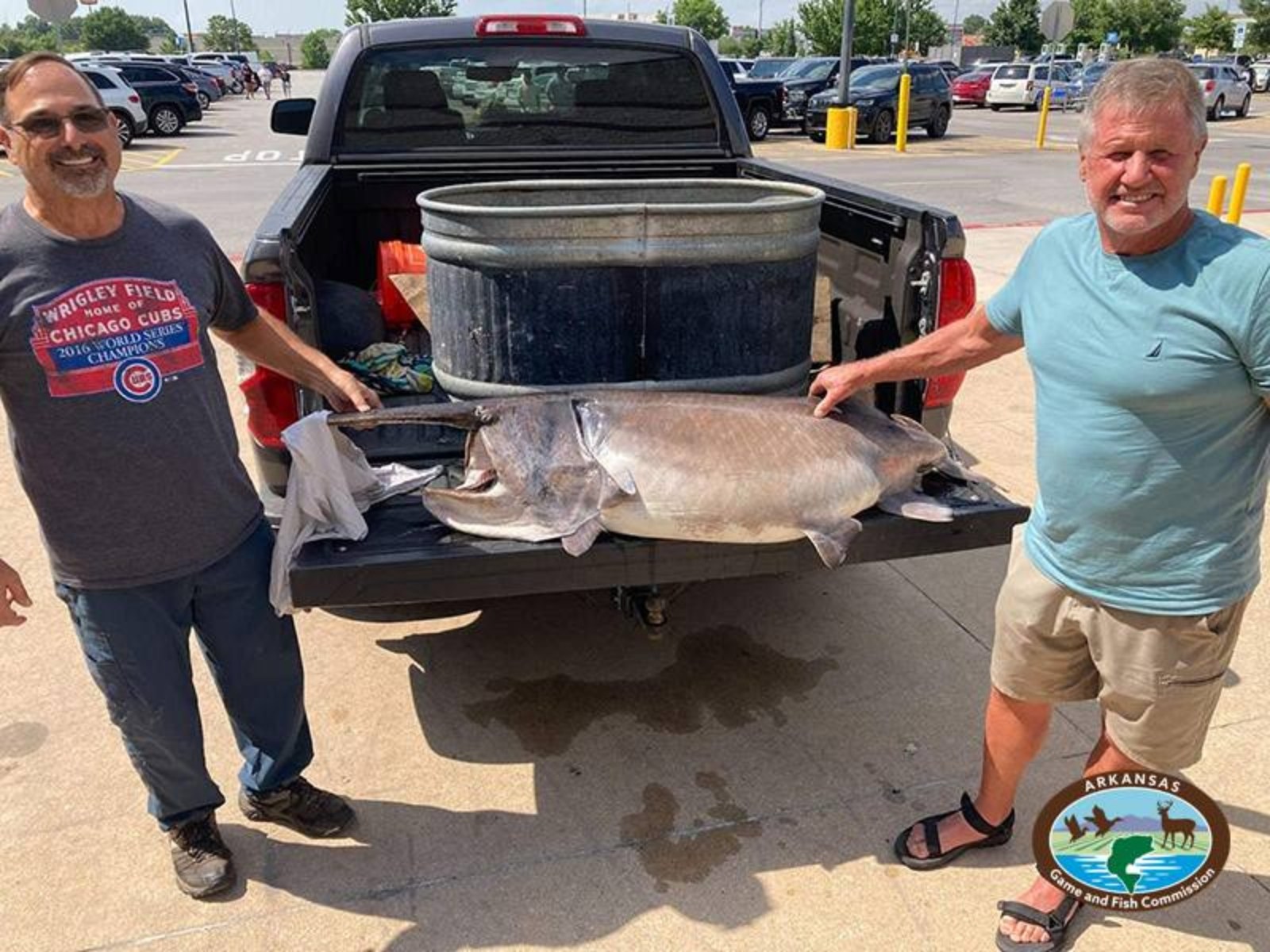
The Alligator Gar is the largest fish found in Arkansas. In 2023, Jayson Weaver set a massive record with a 241-pound specimen from the White River. These primitive fish are often targeted by bowfishers (in the unrestricted category), but rod-and-reel catches are increasingly popular among trophy hunters seeking a prehistoric challenge. Because alligator gar are slow-growing and long-lived, the AGFC closely monitors their populations to ensure that record-breaking individuals are not over-harvested.
Common Pitfalls in Record Verification
Many potential records are disqualified every year due to simple procedural errors. If you are targeting a state record in 2026, avoid these common mistakes:
- Waiting too long to weigh: A fish can lose several ounces of water weight within just a few hours.
- Incorrect Scale Calibration: Using a "deer scale" or a spring-loaded scale that hasn't been certified by the state will result in an automatic rejection.
- Frozen Fish: The AGFC generally will not certify a fish that has been frozen before being weighed by an official, as freezing can alter the weight and tissue composition.
- Mutilation: The fish must be intact. If the fish has been gutted or significantly damaged, its weight cannot be officially recorded as a "whole" specimen.
The Future of Arkansas Records: Conservation and Management
The AGFC’s Fisheries Division utilizes various tools to maintain the quality of these record-breaking waters. In 2026, habitat restoration projects—such as the placement of large-scale brush piles and rock structures in older reservoirs—are critical. Additionally, the use of "minimum length limits" and "slot limits" ensures that fish stay in the water long enough to reach trophy proportions.
Genetic testing has also become a standard part of record verification. As hybrid species become more common due to stocking programs, the use of DNA sampling allows biologists to confirm whether a fish is a pure strain or a hybrid, ensuring that records are categorized correctly.
Frequently Asked Questions
Where can I find a certified scale in Arkansas?
Certified scales are most commonly found at commercial businesses regulated by the Arkansas Bureau of Standards. This includes most retail grocery stores (meat departments), shipping centers, and certified grain elevators. Many bait shops near major lakes like Bull Shoals or Lake Ouachita also maintain certified scales specifically for tournament and record weighing.
Can I catch a state record on private pond?
Yes. Arkansas state records are not limited to public waters. However, the fish must still be a naturally occurring or legally stocked species, and all other verification rules (certified scales and biologist identification) apply.
What is the difference between "Rod and Reel" and "Unrestricted Tackle"?
The "Rod and Reel" category is for fish caught using standard sporting tackle held in the hand. The "Unrestricted Tackle" category includes fish caught by other legal means, such as trotlines, limb lines, jugs, spears, or bowfishing. A fish caught on a trotline cannot break a "Rod and Reel" record, even if it weighs more.
Does Arkansas recognize "Catch and Release" records?
While some states have moved toward "length-only" records for catch and release, Arkansas's official state records are primarily based on weight. However, the AGFC encourages the Master Angler Program, which recognizes anglers for catching and releasing fish that meet specific length requirements for various species.
Is the 1976 Largemouth Bass record still considered beatable?
Most biologists believe it is, but it will likely require a Florida-strain bass in its absolute prime. With the increased focus on habitat management and the stocking of "Tiger" bass (a specific cross-strain), the potential for a 17-pounder in Arkansas remains a reality for 2026 and beyond.
Recommendation for Trophy Anglers
To maximize your chances of landing a state record, focus your efforts on "trophy-managed" waters during the peak spawning months (typically March through May for most species). Always carry a digital camera and keep the contact information for the nearest AGFC regional office saved in your phone. If you land a potential record, keep the fish alive in a large, aerated livewell or on ice (but not frozen) until you can reach a certified scale and an AGFC biologist.
Image Gallery