Why the Minecraft Movie Director Response Matters
The response from director Jared Hess regarding the initial backlash to A Minecraft Movie matters because it represents a critical shift in how major film studios navigate the "Sonic the Hedgehog" precedent. By acknowledging fan concer...
The response from director Jared Hess regarding the initial backlash to A Minecraft Movie matters because it represents a critical shift in how major film studios navigate the "Sonic the Hedgehog" precedent. By acknowledging fan concerns over the film’s hyper-realistic visual style and the "uncanny valley" effect, the production team attempted to bridge the gap between creative ambition and the rigid aesthetic expectations of one of the world's largest gaming communities.
Contents
The Context of the 2024/2025 Controversy
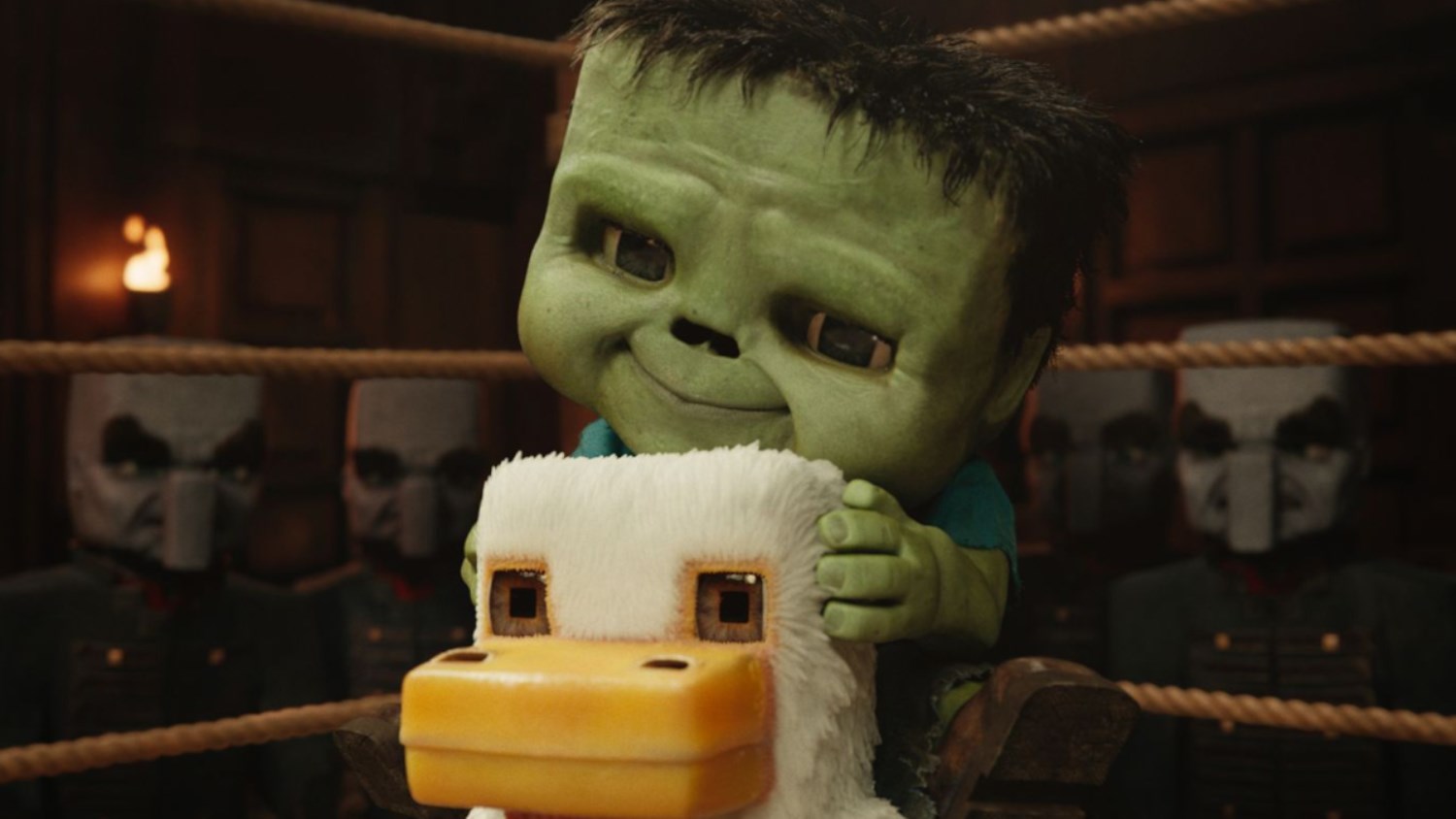
When the first teaser for A Minecraft Movie debuted in late 2024, the reaction from the global community was immediate and largely critical. As we look back from 2026, it is clear that the primary friction point was the decision to blend live-action actors—including Jack Black and Jason Momoa—with a world that utilized high-fidelity, photorealistic textures for its blocky landscapes and creatures. This "realistic" approach to a game defined by its low-resolution, 8-bit charm created a visual dissonance that many fans found unsettling.
Director Jared Hess, known for his work on cult classics like Napoleon Dynamite and Nacho Libre, found himself at the center of a firestorm. Unlike previous video game adaptations that were largely ignored by their core fanbases, A Minecraft Movie carried the weight of over 300 million units sold and a player base that spans generations. The director’s response was not just a PR move; it was a necessary survival strategy for a high-budget tentpole film.
The stakes were uniquely high. For many fans, Minecraft is more than a game; it is a creative platform and a foundational part of their childhood or parenting experience. When the "Pink Sheep" and "Creepers" appeared on screen with realistic fur and skin textures, the community viewed it as a misunderstanding of the source material's soul. Hess’s subsequent interviews and the studio's pivots were designed to reassure a skeptical audience that the "vibe" of the game remained intact.
The "Sonic Precedent" and Director Accountability
One of the most significant reasons the director’s response mattered was his direct acknowledgment of the "Sonic the Hedgehog" situation from 2019. In that instance, Paramount Pictures famously delayed their film to redesign the title character after online backlash. Hess explicitly mentioned his awareness of this phenomenon, stating in early press cycles that he wanted to avoid a similar "internet's wrath" scenario.
This acknowledgement was a watershed moment for Hollywood. It signaled that directors of major intellectual properties (IP) are no longer working in a vacuum. The feedback loop between social media and the editing bay has become shorter than ever. By referencing Sonic, Hess validated the fan community's power, essentially telling them, "I see you, and I am listening." This transparency helped mitigate some of the initial toxicity, shifting the conversation from "the movie looks terrible" to "will they fix it like they did with Sonic?"
Furthermore, the director's response highlighted the tension between a filmmaker’s "creative vision" and the "brand guidelines" of a massive IP owned by Microsoft and Mojang Studios. In 2026, we see this as a turning point where directors of gaming movies began to act more as stewards of a community rather than independent auteurs.
The Aesthetic Disconnect: Why Fans Reacted So Strongly
The technical depth of the controversy lies in the concept of "stylistic cohesion." Minecraft’s original appeal is its simplicity. By introducing high-definition lighting, complex shadows, and realistic hair physics to a world made of cubes, the production team inadvertently entered the "uncanny valley." This is a psychological state where something looks almost human or real, but just "off" enough to cause a sense of revulsion or unease.
The director’s response addressed this by explaining the "why" behind the live-action choice. He argued that a purely animated film would have been compared unfavorably to the high-quality fan animations already available on YouTube for free. To justify a theatrical release in 2025, the studio felt they needed to offer something the community couldn't get elsewhere: a "real-world" immersion into the Overworld.
Technical Elements of the Visual Criticism
- Texture Mapping: The use of realistic wool on sheep and grit on stone blocks felt incongruous with the geometric simplicity of the game.
- Character Integration: Placing live-action actors against a CGI background requires perfect "compositing" to avoid looking like a low-budget green-screen production.
- Proportions: The scale of the blocks relative to human actors created a sense of vertigo for players who are used to the 1-meter-cubed perspective of the game.
The Business Implications of the Response
From a business perspective, the director's response was vital for protecting the film's "long tail" revenue. In 2026, we know that the success of a film like A Minecraft Movie is not just measured in ticket sales, but in merchandise, DLC for the game, and potential sequels. If the director had remained silent or dismissive of fan feedback, the "toxic" label could have permanently damaged the Minecraft brand.
By engaging with the criticism, Hess and the team at Mojang Studios were able to pivot their marketing strategy. They began releasing more "behind-the-scenes" content that focused on the craft of the practical sets and the passion the crew had for the game. This humanized the production and redirected the narrative from "corporate greed" to "ambitious experiment."
Comparison of Fan Feedback Loops in Gaming Movies
| Movie Title | Initial Fan Reaction | Director/Studio Response | Outcome |
|---|---|---|---|
| Sonic the Hedgehog | Extremely Negative (Design) | Immediate redesign and delay | Massive box office success |
| The Super Mario Bros. | Mixed (Chris Pratt Casting) | Defensive / "Wait and see" | Billion-dollar success |
| A Minecraft Movie | Polarized (Visual Style) | Acknowledged "Sonic effect" | High engagement, debated legacy |
| Uncharted | Negative (Casting Age) | Dismissive | Moderate success, low fan favor |
Lessons for Future Gaming Adaptations
The Minecraft movie's development cycle has provided a blueprint for how to—and how not to—handle the adaptation of "abstract" games. Unlike The Last of Us or Fallout, which have clear narrative structures and realistic art styles to emulate, Minecraft is a "sandbox." It has no fixed story and a very specific, non-realistic look.
The director’s response mattered because it forced the industry to ask: Is literalism the enemy of adaptation? Forcing a blocky world to look "real" may have been a technical achievement, but it was a tonal risk. The response from Hess proved that even with the backing of a trillion-dollar company like Microsoft, the "sovereignty of the player" remains the most powerful force in the ecosystem.
Key Takeaways for 2026
- Community Sovereignty: Fans feel a sense of ownership over digital spaces they have spent years building in.
- Visual Language: Translating a 2D or low-poly aesthetic to 3D live-action requires more than just high-resolution textures; it requires "soul."
- The Transparency Mandate: Modern directors must be prepared to engage with the internet in real-time or risk their project being "memed" into failure.
Unresolved Issues in the Director-Fan Relationship
Despite the director's efforts to address the backlash, some issues remained unresolved as the film entered the 2025-2026 awards and home-media cycle. A significant portion of the audience still felt that a 2D-animated approach, similar to Spider-Man: Into the Spider-Verse, would have been more appropriate.
Hess’s response did not necessarily change the film's visual DNA—much of which was already "baked in" due to long production timelines—but it changed the reception of those visuals. It moved the goalposts from "this is a mistake" to "this is a specific, albeit weird, artistic choice." This distinction is subtle but crucial for a film's critical survival.
FAQ
Who directed the Minecraft movie and what is his background?
Jared Hess directed A Minecraft Movie. He is best known for his unique comedic voice in films like Napoleon Dynamite and Nacho Libre. His background in "quirky" and visually distinct filmmaking was likely why he was chosen to helm a project that needed to feel different from standard Hollywood blockbusters, though this same quirkiness contributed to the film's polarizing aesthetic.
What was the "Sonic the Hedgehog" situation the director mentioned?
In 2019, the first trailer for the Sonic the Hedgehog movie showed a version of Sonic with human-like teeth and small eyes, which caused massive online outcry. The studio, Paramount, responded by delaying the film by several months and spending millions of dollars to redesign the character to look more like his video game counterpart. Jared Hess referenced this to show he was aware of how much power the internet has over a film's success.
Why did fans hate the look of the Minecraft movie?
The primary criticism was the "uncanny valley" effect. By giving iconic creatures like Creepers and Sheep realistic fur, skin, and eyes, the movie moved away from the charming "blocky" nature of the game. Fans felt that the realistic textures looked "gross" or "creepy" rather than adventurous or fun.
Did the director actually change the movie after the backlash?
While there were no massive delays for a total redesign like the Sonic movie, the production team did emphasize color grading and lighting adjustments in later trailers to make the world feel more vibrant and less "drab." The director's response served more to manage expectations and explain the creative intent behind the live-action/CGI hybrid style.
Is the Minecraft movie considered a success in 2026?
Success is subjective. Financially, the film benefited from the massive global recognition of the IP. However, it remains a "culturally divided" film. It is often cited in film schools and industry panels as a primary example of the difficulties in adapting non-linear, stylized games for a general audience.
Final Recommendation for Viewers and Creators
When examining why the Minecraft movie director response matters, it is clear that the "era of the untouchable director" is over. For fans, the takeaway is that your collective voice has a documented impact on the multi-million dollar decisions of film studios. For creators, the lesson is that when adapting a beloved IP, the aesthetic "rules" of that world are not just suggestions—they are the foundation of the audience's trust. If you plan to break those rules, you must be prepared to explain why, early and often, just as Jared Hess did during the tumultuous production of 2025.
Image Gallery