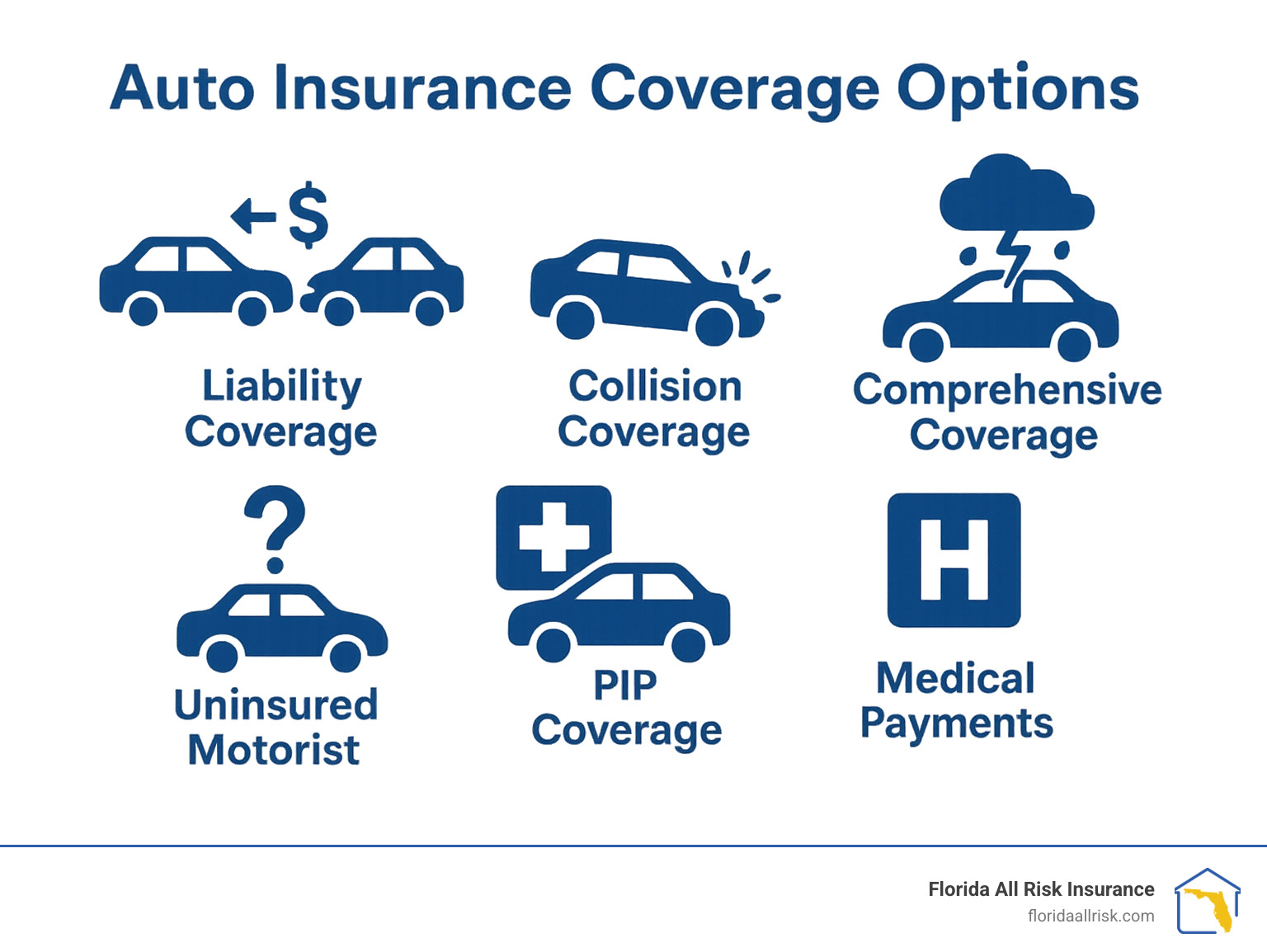
Understanding BC Optional Auto Insurance Options: Coverage, Costs, and Provider Choices
In British Columbia, auto insurance is divided into two distinct components: mandatory basic coverage provided exclusively by the Insurance Corporation of British Columbia (ICBC), and optional coverage that protects against physical da...
In British Columbia, auto insurance is divided into two distinct components: mandatory basic coverage provided exclusively by the Insurance Corporation of British Columbia (ICBC), and optional coverage that protects against physical damage, extended legal liabilities, and financial loss. Drivers can purchase optional policies through ICBC or private insurance carriers to customize their protection.
Contents
Basic Autoplan vs. Optional Auto Insurance: How the BC System Works
Navigating vehicle insurance in British Columbia requires understanding the distinction between statutory basic coverage and voluntary optional add-ons. Under BC law, every registered motor vehicle must carry ICBC Basic Autoplan coverage. This compulsory foundation includes Basic Third-Party Liability (capped at $200,000), Enhanced Care medical and rehabilitation benefits, Inverse Liability coverage, and baseline Uninsured Motorist Protection (UMP) up to $200,000 per person.
While Basic Autoplan satisfies the legal mandate to operate a vehicle on public roads, it leaves significant financial exposure. It does not cover repair costs for your own vehicle if you are at fault in an accident, nor does it compensate for perils like theft, vandalism, windshield cracking, or hit-and-run property damage. Furthermore, a $200,000 third-party liability limit provides minimal protection if your vehicle damages out-of-province property, expensive infrastructure, or commercial cargo.
This is where optional auto insurance applies. Optional coverage allows vehicle owners to extend financial limits, protect their vehicle investment, and secure emergency transportation assistance. Unlike the government monopoly on Basic Autoplan, British Columbia permits a competitive marketplace for optional insurance. Drivers can purchase optional policies directly through ICBC or from private insurance companies such as BCAA, Family Insurance Solutions, Belairdirect, and Coast Capital.
Total Auto Insurance Coverage:
- Basic Autoplan (ICBC Exclusive)
- $200k Liability
- Enhanced Care
- Inverse Liability
- Basic UMP ($200k)
- Optional Coverage (ICBC or Private)
- Extended Liability
- Collision
- Comprehensive
- Loss of Use / New
Key Types of Optional Auto Insurance in British Columbia
To construct a balanced insurance policy, drivers must evaluate individual optional products based on risk exposure, vehicle value, driving habits, and financial capacity.
Extended Third-Party Liability
Although ICBC's Enhanced Care model (introduced in May 2021) significantly reduced personal injury lawsuits within British Columbia by transitioning to a care-based care structure, third-party liability coverage remains critical. Extended Liability protects you if your vehicle causes property damage, or if you are involved in an out-of-province accident in jurisdictions like the United States or other Canadian provinces where litigation for bodily injury remains common.
Optional Extended Liability increases your protection beyond the baseline $200,000 to policy limits of $1 million, $2 million, $3 million, or $5 million. Most insurance advisors recommend a minimum of $2 million to $3 million in coverage, particularly for policyholders who travel outside British Columbia or transport non-family passengers.
Collision Coverage
Collision coverage pays for physical damage to your vehicle resulting from an impact with another vehicle, an object (such as a tree, guardrail, or building), or a rollover. This coverage applies regardless of who is at fault for the accident.
If you are involved in a collision in BC and found non-fault under ICBC's rules, vehicle repair costs are generally covered under Basic Autoplan's Basic Vehicle Damage Coverage (up to a limit of $200,000). However, if you are fully or partially at fault, or if the responsible party cannot be identified, repair costs fall entirely under your Collision coverage. If you decline Collision coverage and cause an accident, you must pay for all repairs or total-loss replacements out of pocket.
Comprehensive vs. Specified Perils Coverage
Comprehensive and Specified Perils protect your vehicle against physical damage caused by events other than collisions or rollovers.
- Comprehensive Coverage: Offers broad protection against non-collision hazards, including windshield and window glass breakage, theft, vandalism, fire, earthquake, explosion, windstorm, hail, falling objects, and collisions with domestic or wild animals.
- Specified Perils Coverage: A lower-cost, narrower alternative that covers only specific risks named explicitly in the policy—typically fire, theft or attempted theft, lightning, earthquake, explosion, and rising water. Specified Perils explicitly excludes windshield damage, vandalism, and animal strikes.
For newer vehicles or cars financed through a lease or lender, Comprehensive coverage is almost universally required by financial institutions.
Loss of Use (Rental & Transportation Coverage)
If your vehicle is damaged in an insured incident (such as a collision, fire, or theft) and requires shop repairs or is written off, Loss of Use coverage pays for temporary replacement transportation. Depending on the elected policy tier, Loss of Use reimburses expenses for rental vehicles, taxi fares, public transit passes, or ride-share services while your primary car is unserviceable.
New Vehicle Protection & Replacement Cost Coverage
Standard auto insurance pays out based on actual cash value (ACV)—the depreciated market value of your vehicle at the time of loss. Because new vehicles depreciate rapidly during their first three years, standard ACV settlement can leave a substantial financial gap between your loan balance and insurance payout.
Optional replacement protection addresses this shortfall:
- Replacement Cost Coverage: Available for brand-new vehicles. If the vehicle is written off due to a covered claim within a specified period (typically 3 to 4 years), the insurer replaces it with a new vehicle of the current model year with similar equipment, or pays out the original purchase price without deducting depreciation.
- Limited Depreciation Coverage: Usually offered for high-quality used vehicles up to a certain age. It protects against depreciation by locking in the vehicle's initial value for a set policy timeframe.
Excess Uninsured Motorist Protection (UMP)
Basic Autoplan includes baseline UMP, which covers medical expenses, loss of income, and disability benefits up to $200,000 if you or household family members are injured by an uninsured or unidentified (hit-and-run) driver. However, severe injuries resulting in long-term disability or loss of earning capacity can quickly exceed $200,000. Optional Excess UMP increases this limit up to $2 million, $3 million, or $5 million per insured person.
Private Insurers vs. ICBC Optional Coverage: A Comparison
British Columbia vehicle owners are not required to buy optional coverage from ICBC. While Basic Autoplan must be purchased through an authorized ICBC broker, drivers are free to shop around and buy optional policy components from private auto insurance companies.
Provider Architecture in BC:
- Vehicle Owner
- Mandatory Basic Autoplan: ICBC (Government Monopoly)
- Optional Coverages:
- ICBC Optional Coverage
- Private Carriers (BCAA, Family, Belairdirect, Stratum, etc.)
Pricing Structure and Underwriting
Private insurance carriers use proprietary risk-assessment algorithms that differ from ICBC’s driver risk rating system. Private insurers often target low-risk demographics—such as experienced drivers with clean driving records, low annual mileage, and mature policyholders—by offering lower rates on Collision, Comprehensive, and Extended Liability than ICBC. Conversely, high-risk drivers or those with recent driving infractions may find ICBC’s optional rates more competitive or private options unavailable.
Bundled Perks and Policy Add-ons
Private insurers frequently bundle unique add-ons into their optional physical damage packages to differentiate themselves from ICBC's standard optional products. These advantages may include:
- Lower Deductibles for Glass: Private policies often offer reduced or zero-deductible windshield repairs and replacements, or dedicated chip-repair programs without affecting claims records.
- Locking Deductibles: Some private plans lower your deductible over time for every year you maintain a claim-free record.
- Worldwide Rental Car Protection: Private optional packages frequently include rental car collision and liability protection across Canada and the United States automatically, eliminating the need to buy standalone rental insurance when traveling.
- Emergency Roadside Assistance: Private policies may bundle towing, battery jump-starts, fuel delivery, and lockout services into the primary policy fee.
Comparing Core BC Optional Auto Coverages
The following table summarizes the primary optional coverages available in British Columbia, detailing their core protections, typical deductibles, and recommended use cases:
| Coverage Type | Primary Benefit & Scope | Standard Deductibles / Limits | Recommended For |
|---|---|---|---|
| Extended Third-Party Liability | Increases legal protection beyond $200k for property damage and out-of-province bodily injury claims. | Limits from $1M to $5M ($2M–$3M is industry standard). | All drivers, especially those driving in the US or transporting passengers. |
| Collision | Pays for physical repairs or market-value settlement when your vehicle strikes an object/car or rolls over. | $300, $500, $1,000, or $2,500 per claim. | Vehicles valued over $5,000, financed or leased vehicles. |
| Comprehensive | Covers non-collision damage: theft, fire, vandalism, falling objects, windshield glass, and animal strikes. | $300, $500, or $1,000 (often lower for glass-only claims). | Essential for late-model cars, street-parked vehicles, high-theft models. |
| Specified Perils | Budget alternative covering only explicitly listed perils (fire, theft, explosion, lightning). | $300 to $1,000 per event. | Lower-value vehicles where full Comprehensive is cost-prohibitive. |
| Loss of Use | Reimburses rental car, taxi, or public transit costs while your car is undergoing insured repairs. | Daily/Total limits (e.g., $75/day up to $2,250 total). | Drivers without access to alternative household vehicles during repairs. |
| Replacement Cost Protection | Waives market depreciation on write-offs for new vehicles, securing full purchase/replacement price. | Tied to underlying Collision/Comprehensive deductible. | Brand-new or 1–3 year-old vehicles with high initial depreciation rates. |
| Excess UMP | Extends injury and wage-loss compensation if struck by an uninsured or hit-and-run driver. | Coverage limits up to $2M or $5M. | All drivers seeking long-term financial security against catastrophic injuries. |
Factors Affecting BC Optional Auto Insurance Premiums
Insurance companies assess multiple variables when calculating premiums for optional auto coverage. Understanding these factors allows vehicle owners to structure their policies effectively.
Premium Determination Factors:
Driver Risk Profile
- Experience
- History
- Listed drivers
Vehicle Use & Territory
- Commute
- Mileage
- Region/postal
Vehicle Type & Value
- Repair cost
- Theft risk
- Safety features
Policy Terms & Deductibles
- Selected deductible
- Coverage limit
Driver Risk Profile and History: Under ICBC’s driver-based model, optional premiums rely heavily on the driving experience and conviction history of the primary driver and listed secondary drivers. A clean driving record without at-fault accidents or traffic violations keeps premiums low. Conversely, adding high-risk or inexperienced drivers to the policy increases premiums across all optional physical damage coverages.
Vehicle Use Category: How you use your vehicle directly impacts its risk exposure. Standard rating categories include Pleasure (no commuting), Commute (driving to work or school within specific distance thresholds), Business Use, and Delivery/Rideshare Use. Misrepresenting vehicle use to secure lower rates can invalidate optional coverage during a claim.
Geographic Location (Territory): Vehicle density, theft statistics, severe weather frequency, and traffic collision rates vary by postal code across British Columbia. Vehicles registered in urban centers like Vancouver, Surrey, or Brampton-equivalent metro hubs face higher optional Comprehensive and Collision rates than vehicles in rural interiors.
Vehicle Make, Model, and Repair Complexity: Modern vehicles equipped with Advanced Driver Assistance Systems (ADAS)—such as lane-departure sensors, radar sensors embedded in bumpers, and heated acoustic windshields—are significantly more expensive to repair after minor impacts. Insurers price Collision and Comprehensive rates based on historical repair costs, safety ratings, and theft susceptibility.
Selected Deductible Levels: The deductible is the out-of-pocket amount you pay before the insurer covers the remaining repair costs. Choosing a higher deductible (e.g., $1,000 instead of $300) lowers your annual optional premium, but increases your personal financial responsibility when filing a claim.
Common Pitfalls and Coverage Gaps to Avoid
Navigating BC auto insurance policies requires careful attention to detail. Policyholders frequently encounter avoidable coverage gaps:
- Relying Exclusively on Statutory $200k Liability: Many drivers assume basic insurance offers full legal protection. If your vehicle damages high-value commercial property or causes a multi-vehicle accident in the US, damages can easily exceed $200,000, exposing your personal assets to enforcement or wage garnishment.
- Failing to List Household Drivers: ICBC and private insurers require all household members and frequent operators of the vehicle to be listed on the policy. Unlisted drivers who cause an accident in your vehicle may trigger Unlisted Driver Protection (UDP) financial penalties or result in a complete denial of optional coverage claims.
- Misunderstanding Glass Coverage Provisions: Windshield replacement costs have surged due to integrated ADAS sensor calibration requirements. Some standard Comprehensive policies carry high deductibles ($500+) that make filing a glass claim impractical. Ensure your optional policy includes a dedicated glass option or low glass deductible.
- Ignoring Storage and Lay-Up Rules: Seasonal vehicles like convertibles, sports cars, or RVs do not require year-round Collision or Commute coverage. Dropping road coverage down to a specialized Storage Policy (Comprehensive-only) during winter months saves money while maintaining protection against theft, fire, and garage damage.
- Assuming Rental Car Coverage Applies Automatically: Standard Collision and Comprehensive coverages apply only to the vehicle described on your policy document. Unless you carry explicit Loss of Use coverage or dedicated Rental Car Protection (such as ICBC’s Roadstar/Roadside Plus or a private equivalent), you will be personally liable for rental fees and rental-company loss-of-use claims after an accident.
Frequently Asked Questions
Can I buy Basic Autoplan from a private insurer in BC?
No. Under British Columbia law, mandatory Basic Autoplan insurance must be purchased through ICBC via an licensed insurance broker. Private insurers in BC are legally restricted to offering optional auto coverages, such as Extended Liability, Collision, Comprehensive, and Loss of Use.
How does ICBC's Enhanced Care model affect my optional coverage needs?
Enhanced Care provides high-limit, no-fault medical and rehabilitation care for injuries sustained in BC accidents, regardless of fault. However, optional coverage remains essential: Extended Liability protects you against property damage claims and out-of-province lawsuits, while Collision and Comprehensive cover repair or replacement costs for your own vehicle.
Is it cheaper to buy optional insurance from ICBC or a private insurer?
Pricing varies based on your driving profile. Private insurers often offer lower premiums and broader perk packages (e.g., lower glass deductibles or bundled rental coverage) for experienced drivers with clean driving records. However, ICBC optional coverage may be more competitive or accessible for younger drivers, higher-risk operators, or specialized commercial vehicles. Comparing quotes from an independent broker is the best way to evaluate cost.
What is the difference between Comprehensive and Specified Perils coverage?
Comprehensive coverage covers all non-collision hazards—including windshield/glass damage, vandalism, theft, falling objects, and animal strikes—except for specific exclusions listed in the policy. Specified Perils covers only named events, typically restricted to fire, theft, explosion, and lightning. Specified Perils is cheaper but excludes glass breakage and vandalism.
What happens if an unlisted driver has an accident in my car?
If an unlisted driver causes an accident using your vehicle, ICBC or your private insurer may assess an Unlisted Driver Penalty fee if that driver should have been listed. If the unlisted driver is an unpermitted operator or explicitly excluded, physical damage coverage under your optional policy may be voided entirely.
Strategic Recommendations for Building Your Coverage
Structuring an effective, cost-efficient auto insurance policy in British Columbia requires a balanced, risk-based approach:
- Establish Adequate Liability Baseline: Maintain an Extended Third-Party Liability limit of at least $2 million ($3 million to $5 million if you regularly drive across the US border). The marginal cost of increasing liability limits from $1 million to $2 million or $3 million is minimal relative to the financial protection it affords.
- Evaluate Vehicle Depreciation vs. Premium Cost: If your vehicle’s market value drops below $3,000–$4,000, carrying optional Collision coverage may no longer be cost-effective, as annual premiums and your selected deductible can easily exceed the vehicle's net payout in a total-loss event. However, retaining Comprehensive coverage remains advisable to protect against theft and fire.
- Cross-Shop ICBC and Private Optional Rates: When renewing your policy, ask an independent insurance agent to provide comparison quotes for optional physical damage and liability coverage from both ICBC and private insurance companies like BCAA or Family Insurance. Ensure you compare matching deductibles and coverage limits.
- Audit Your Listed Driver List Annually: Ensure all household members with a valid driver’s license, as well as any employees or regular operators, are accurately documented on your policy to avoid unlisted driver penalties or claim denials.
For official regulatory frameworks, policy terms, and driver rating details, reference the Insurance Corporation of British Columbia (ICBC) and the Financial Institutions Commission of BC / BC Financial Services Authority (BCFSA).
Image Gallery