What Suits to Wear to a Wedding: A Complete Dress Code & Style Guide
Selecting the right suit for a wedding depends primarily on the event's stated dress code, venue, and season. For formal or black-tie optional events, a dark navy or charcoal suit is ideal. Semi-formal and cocktail weddings allow for m...
Selecting the right suit for a wedding depends primarily on the event's stated dress code, venue, and season. For formal or black-tie optional events, a dark navy or charcoal suit is ideal. Semi-formal and cocktail weddings allow for medium blues, lighter grays, or subtle patterns, while warm-weather or outdoor events suit lightweight linen or cotton blends in beige or light blue.
Contents
Decoding Wedding Dress Codes
Understanding the invitation's dress code is the most critical step when deciding what suit to wear to a wedding. The host sets the tone of the event, and adhering to their requested attire shows respect for the occasion while ensuring you feel comfortable and appropriately dressed among other guests.
Black Tie and White Tie
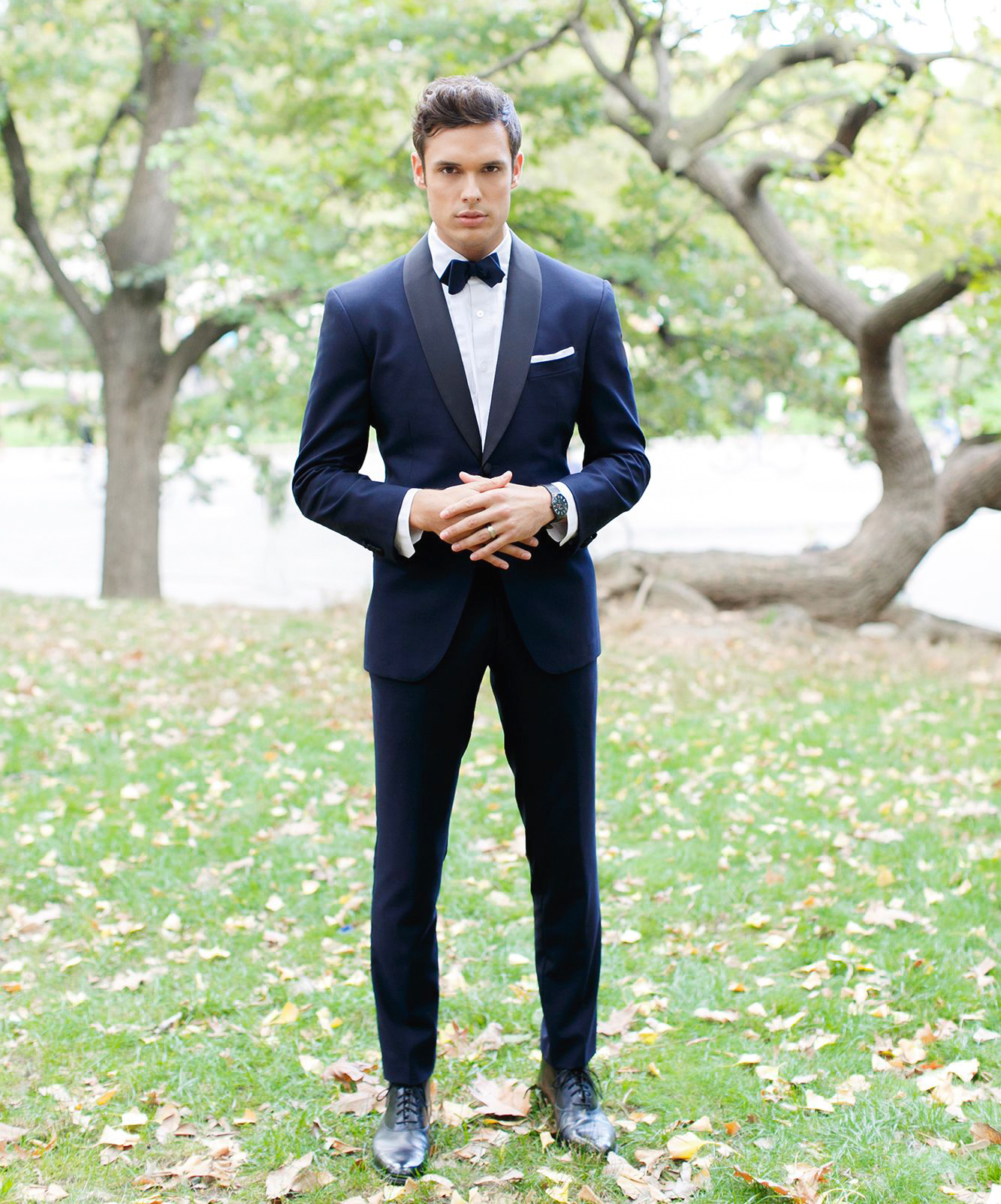
While traditional White Tie demands a tailcoat and Black Tie strictly requires a tuxedo (a dinner jacket with satin or grosgrain lapels and matching trousers with a satin side stripe), these represent the highest tier of formal attire. Unless the invitation explicitly states Black Tie or White Tie, a standard business suit is not appropriate for these events. If you do not own a tuxedo for a Black Tie wedding, renting or purchasing a classic black or midnight-blue tuxedo with a black bow tie, white Marcella shirt, and patent leather shoes is necessary.
Black Tie Optional and Formal Attire
Black Tie Optional signals that while tuxedoes are encouraged, a dark, highly formal suit is entirely acceptable. If you opt for a suit under this dress code, choose a conservative charcoal gray or midnight-blue wool suit. Pair it with a crisp white dress shirt, a dark silk necktie (black, deep navy, or dark charcoal), and polished black leather Oxford shoes.
Formal Attire (sometimes labeled as "Formal Preferred") operates similarly: tuxedos are welcome, but a crisp, dark, well-tailored suit with dark dress shoes is standard for most male guests.
Cocktail Attire and Semi-Formal
Cocktail Attire and Semi-Formal are the most common dress codes for contemporary weddings. These guidelines offer flexibility while maintaining a polished appearance.
- Jacket: A two-piece suit in dark navy, charcoal, or medium gray works best. Depending on the venue, subtle patterns like windowpane check or glen plaid in wool or wool blends are acceptable.
- Shirt: A tailored white or light blue dress shirt with a spread collar.
- Accessories: A silk necktie in a refined pattern or solid jewel tone, paired with a folded white pocket square.
- Footwear: Dark brown or black leather Oxfords, Derby shoes, or double monk straps.
Smart Casual, Dressy Casual, and Beach Formal
Casual dress codes do not mean denim or graphic tees; rather, they indicate a relaxed interpretation of tailored clothing.
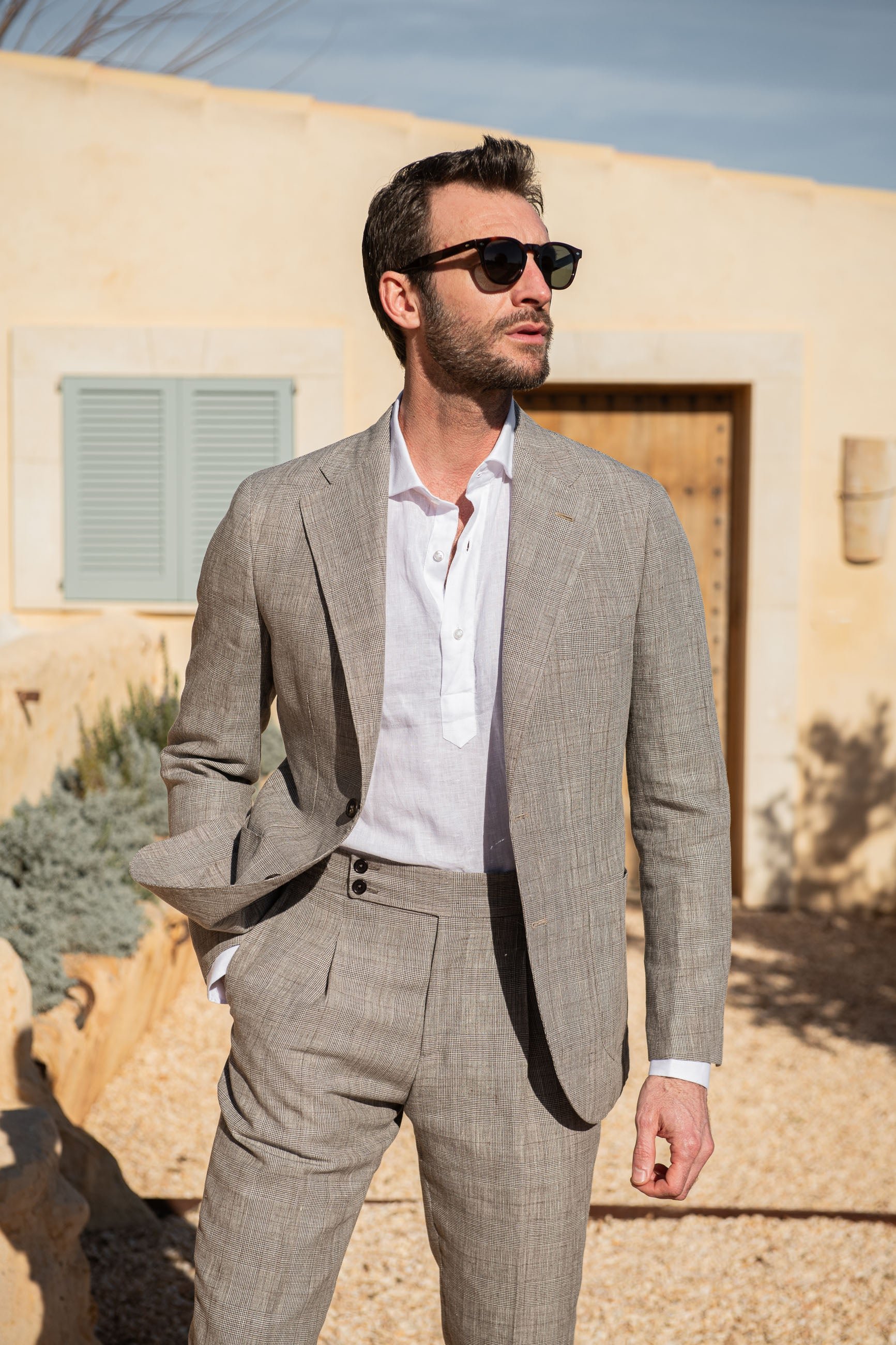
- Beach Formal / Destination: Opt for unstructured suits made from breathable natural fibers like linen, cotton, or lightweight wool-linen blends. Shades of tan, beige, light gray, soft blue, or sage green fit daytime coastal settings seamlessly. Ties are often optional.
- Dressy Casual / Casual: You can opt for a lightweight suit in light gray or tan without a tie, or pair a tailored sport coat with complementary dress trousers (such as a navy blazer paired with tailored cream or gray trousers).
Selecting Suit Fabrics and Colors by Season and Venue
The time of year and physical environment dictate not only how comfortable your suit will feel, but also which fabric weaves and color palettes look natural in photos and venue lighting.
Spring and Summer Weddings
Warm-weather weddings call for fabrics that promote airflow and moisture management while maintaining structural integrity.
- Tropical Wool: Highly breathable with a loose weave, tropical wool keeps you cool while resisting wrinkles far better than pure linen.
- Linen Blends: Pure linen creates a charmingly relaxed look, but it wrinkles rapidly. Wool-linen or cotton-linen blends provide the breathability of linen with added drape and wrinkle resistance.
- Cotton Twill & Seersucker: Excellent options for daytime outdoor, garden, or vineyard weddings.
- Color Palette: Light gray, soft navy, sky blue, beige, stone, olive green, and pastel tones.
Fall and Winter Weddings
Colder seasons require heavier fabric weights that insulate against the cold and hold sharp tailored lines throughout the event.
- Worsted Wool: High-twist worsted wool in mid-to-heavy weights (280g to 340g) provides warmth and a clean silhouette.
- Wool Flannel: Soft to the touch with a subtle brushed nap, flannel offers classic elegance for late-fall and winter evenings.
- Tweed & Houndstooth: Ideal for rustic, mountain, or rural estate settings in autumn.
- Color Palette: Deep navy, dark charcoal, chocolate brown, forest green, rich burgundy, and plum.
Tailoring and Fit Checklist for Wedding Suit Guests
Even an expensive designer suit will look underwhelming if it fits poorly. Proper tailoring transforms off-the-rack garments into sharp, flattering attire. Ensure your suit meets these fundamental fit criteria before attending the ceremony:
- The Shoulders: The jacket shoulder pads must end right at the natural edge of your shoulders. If the fabric bulges past your shoulder line or creates dimples, the jacket is too large or too small across the chest.
- The Chest and Lapels: When you button the top button of a two-button suit jacket, the lapels should lie flat against your chest without bowing outwards (which means it is too tight) or gaping open (too loose).
- Sleeve Length: The jacket sleeve should expose approximately 1/4 inch to 1/2 inch of your dress shirt cuff when your arms hang naturally at your sides.
- Jacket Length: The bottom hem of the jacket should cover your seat completely, ending around the mid-thumb joint when your hands rest at your sides.
- Trouser Waist and Rise: Trousers should sit comfortably at your natural waist without requiring a belt to stay up.
- Trouser Break: Aim for a "slight break" or "no break" at the ankle. A slight break means the trouser hem lightly touches the top of your shoe, creating a minor indentation in the fabric crease without pooling around your footwear.
Wedding Suit Selection Matrix
The following matrix compares common wedding dress codes, recommending the optimal suit configuration, fabric, color, and footwear pairings:
| Dress Code | Suit Type / Style | Recommended Fabrics | Color Palette | Footwear Pairings |
|---|---|---|---|---|
| Black Tie | Classic Tuxedo | Wool-Barathea, Silk Lapels | Black, Midnight Blue | Black Patent Leather Oxfords |
| Black Tie Optional | Formal Dark Suit or Tuxedo | High-Twist Worsted Wool | Midnight Blue, Dark Charcoal | Black Calfskin Leather Oxfords |
| Formal / Traditional | Two-Piece or Three-Piece Suit | Fine Worsted Wool | Navy, Dark Gray, Charcoal | Black or Dark Brown Oxfords |
| Cocktail / Semi-Formal | Tailored Two-Piece Suit | Wool Blend, Flannel, Light Wool | Medium Navy, Slate Gray, Olive | Derby Shoes, Monk Straps, Brogues |
| Beach / Destination | Unstructured Suit | Linen Blend, Tropical Wool | Tan, Beige, Light Blue, Sage | Suede Loafers, Leather Drivers |
| Casual / Garden | Suit (No Tie) or Blazer & Trousers | Cotton Twill, Seersucker, Tweed | Cream, Light Gray, Soft Green | Leather Penny Loafers, Chukka Boots |
Essential Accessories and Footwear Pairing Rules
Accessories allow you to introduce personality into your suit without breaking formal wedding etiquette.
Suit Color
- Dark Suit (Navy/Charcoal)
- Black/Dark Brown (Oxfords/Derbies)
- Light Suit (Beige/Light Gray)
- Light Brown/Tan/Suede (Loafers/Brogues)
- Dark Suit (Navy/Charcoal)
Shirt: White is universally correct for all dress codes. Light blue is appropriate for semi-formal, daytime, or outdoor weddings. Ensure the shirt collar is crisp and fits comfortably around the neck.
Neckties and Bow Ties: Reserve black silk bow ties for tuxedos. For standard suits, select high-quality silk or grenadine ties. Avoid overly bright neon shades, novelty patterns, or colors that match the bridesmaids' dresses exactly (matching is typically reserved for the groomsmen).
Pocket Squares: A simple white linen or cotton pocket square folded in a flat "TV fold" works with every suit. For semi-formal events, a silk patterned square that complements (rather than directly matches) your tie adds a stylish touch.
Footwear:
- Black Oxfords: Required for tuxedos and black-tie optional suits; ideal for dark charcoal.
- Brown Leather Shoes: Dark brown, espresso, or oxblood shoes pair seamlessly with navy, medium blue, and gray suits.
- Loafers: Penny loafers or tassel loafers in suede or burnished leather work exceptionally well for casual, beach, or summer outdoor weddings.
Belts and Metals: Match your belt leather to your shoe leather (e.g., black belt with black shoes, brown belt with brown shoes). Similarly, match watch metals and belt buckles where possible.
Critical Etiquette Mistakes to Avoid
- Outshining the Groom: Never wear a tuxedo to a semi-formal wedding, and avoid wearing extraordinarily bold colors or flashy accessories that draw attention away from the wedding party.
- Wearing White or Off-White Suits: Solid white, ivory, or cream suits should be avoided by guests unless the couple explicitly requests an all-white dress code. White attire is reserved for the couple in many cultural traditions.
- Ignoring the Venue and Climate: Wearing a heavy wool flannel suit to an outdoor summer wedding in Florida will cause discomfort, just as wearing a lightweight linen suit to an indoor winter ballroom event will look out of place.
- Removing Your Jacket Prematurely: Etiquette dictates keeping your suit jacket on during the ceremony and formal speeches. You may remove your jacket once the formal reception dinner concludes and dancing begins.
- Forgetting Tailoring: Wearing an un-tailored suit with trousers dragging under your heels or jacket sleeves covering your knuckles detracts from your overall appearance.
Frequently Asked Questions
Can I wear a navy suit to a black-tie optional wedding?
Yes. A dark navy or midnight-blue suit made of fine wool is an acceptable alternative to a tuxedo for a Black Tie Optional wedding. Pair it with a crisp white dress shirt, a dark silk tie, a white pocket square, and highly polished black leather Oxford shoes.
Is it acceptable to attend a wedding without a suit jacket?
Generally, no. Even for casual or outdoor summer weddings, you should wear a suit jacket or tailored blazer to the ceremony. If the event is extremely casual, you may eventually remove the jacket, but arriving in just a dress shirt and trousers is typically considered underdressed.
Should my tie match the bridesmaids' dresses?
No. Matching your tie exactly to the bridesmaids' dresses is a convention reserved for the groom and groomsmen. As a wedding guest, choose a tie color and pattern that complements your own suit and personal style without coordinating directly with the wedding party's chosen color scheme.
What suit colors should wedding guests avoid?
Guests should avoid solid white, off-white, and ivory suits, as well as overly loud neon colors. Unless specified by a specific dress code (such as a themed party), neon ties, distracting novelty prints, and all-white tailoring are inappropriate.
Can I wear loafers with a suit to a wedding?
Yes, but only for specific dress codes. Leather or suede loafers (penny loafers, tassel loafers, or bit loafers) are appropriate for cocktail, semi-formal, beach, or casual outdoor weddings. However, for formal, black-tie, or black-tie optional weddings, stick to traditional lace-up Oxford shoes.
Next Steps for Securing Your Suit
To ensure you look sharp and feel prepared on the wedding day, follow this preparation timeline:
- Check the Invitation (4–6 Weeks Ahead): Confirm the dress code, venue, time of day, and expected weather conditions.
- Inspect Your Wardrobe (3–4 Weeks Ahead): Try on your intended suit. Check for stains, fabric wear, and changes in fit.
- Visit a Tailor (2–3 Weeks Ahead): Bring your suit, dress shirt, and intended footwear to a tailor for any needed adjustments to sleeve length, trouser hem, or jacket waist.
- Clean and Polish (1 Week Ahead): Dry clean your suit if needed, steam out wrinkles, and polish your dress shoes.
- Final Assembly (Day Before): Lay out all elements—suit, pressed shirt, tie, pocket square, dress socks, leather belt, and shoes—to ensure a stress-free start on the wedding day.
Image Gallery