How Augmented Reality is a Disruptive Technology: The Shift to Spatial Computing
Augmented reality (AR) disrupts traditional industries by merging digital data with the physical environment, effectively removing the interface friction between information and action. By 2026, AR has evolved from a mobile novelty int...
Augmented reality (AR) disrupts traditional industries by merging digital data with the physical environment, effectively removing the interface friction between information and action. By 2026, AR has evolved from a mobile novelty into a fundamental spatial computing layer, fundamentally altering workflows in healthcare, manufacturing, and retail by providing real-time, context-aware intelligence directly within the user's field of vision.
Contents
Defining the Disruptive Nature of Augmented Reality
To understand why augmented reality is classified as a disruptive technology, one must look at the framework of "disruptive innovation." Traditionally, disruption occurs when a new technology significantly alters the way a market or industry functions, often by making a product or service more accessible, efficient, or affordable. AR achieves this by transitioning the digital world from two-dimensional screens into three-dimensional space.
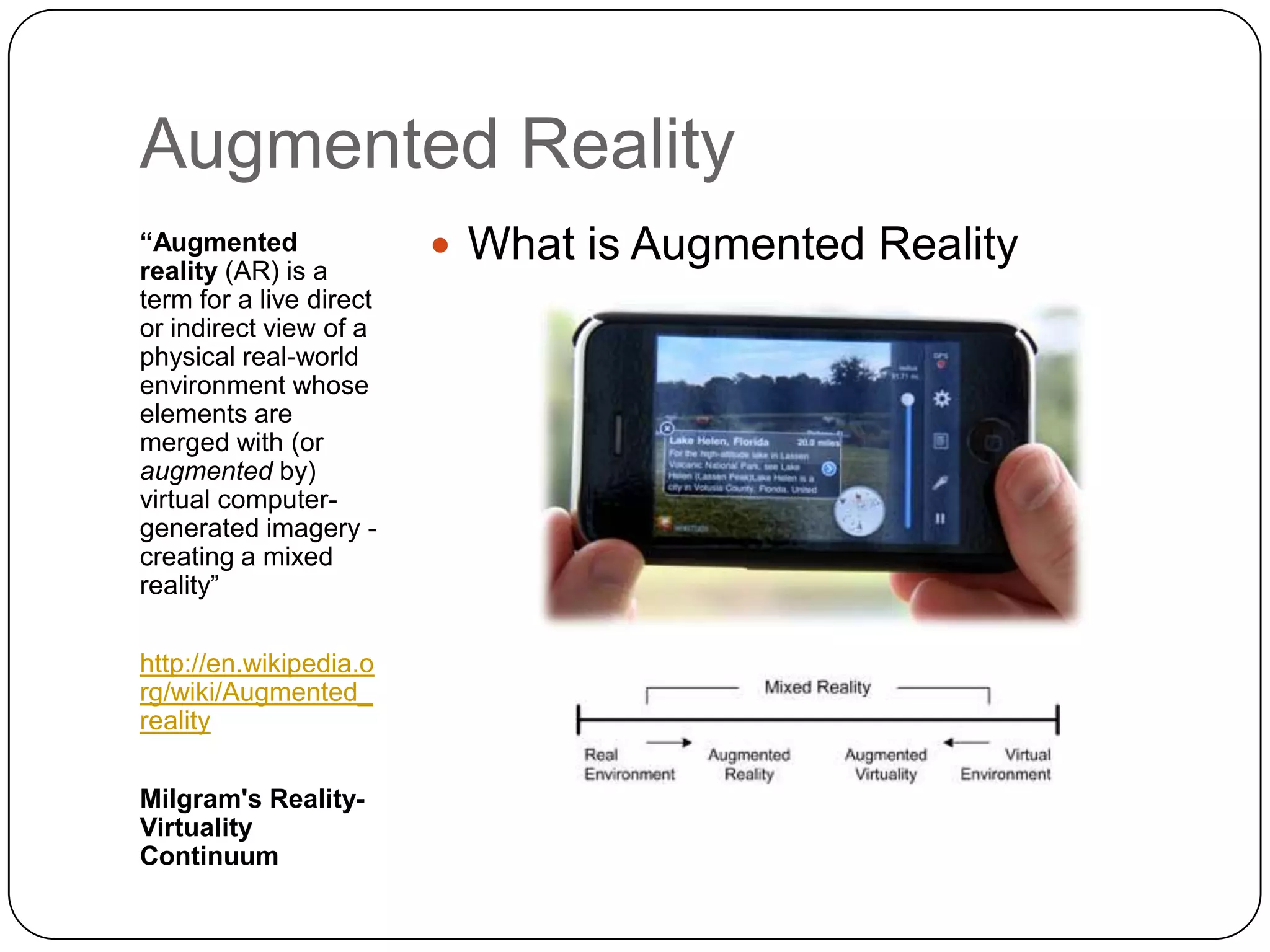
Unlike virtual reality (VR), which creates a fully synthetic environment, AR enhances the existing world. This distinction is critical for disruption because it allows users to remain present and productive in their physical surroundings. The disruption lies in the elimination of the "cognitive load" associated with switching focus between a manual task and a digital manual or screen. When data is anchored to the physical object a person is working on, the speed of information processing increases exponentially.
In the current 2026 landscape, the maturation of hardware—specifically lightweight, high-FOV (Field of View) glasses and advanced SLAM (Simultaneous Localization and Mapping) algorithms—has pushed AR past the "early adopter" phase. It is no longer just an experimental tool; it is a replacement for monitors, paper manuals, and even physical prototypes.
Disruption in Manufacturing and Industrial Maintenance
The industrial sector has seen the most immediate and profound disruption. In 2026, "Frontline Workers" utilize AR to execute complex tasks that previously required years of specialized training or constant supervision.
The Rise of the "Connected Worker"
Before AR, a technician repairing a turbine would need to consult a laptop or tablet, look at a 2D schematic, and then translate that mental image to the 3D machine. AR disrupts this by overlaying digital "digital twins" directly onto the machinery. Sensors on the equipment feed real-time data to the AR headset, highlighting specific bolts to turn, showing internal pressure levels through heat maps, and providing step-by-step visual cues.
Remote Assistance and Knowledge Transfer
AR has disrupted the logistics of expert consultation. In the past, if a critical machine failed in a remote location, a specialist had to be flown in, causing days of downtime. With AR-enabled remote assistance, an on-site generalist wears a headset that streams their exact view to an expert anywhere in the world. The expert can "draw" in the generalist’s field of view, circling parts or placing 3D arrows that stay anchored to the machine regardless of how the wearer moves. This has reduced mean-time-to-repair (MTTR) across the manufacturing industry by estimated margins of 30% to 50%.
The Retail Revolution: From Showrooms to Spatial Commerce
Retail has faced a structural disruption through AR by solving the "uncertainty gap" in online shopping. Historically, the primary advantage of physical retail was the ability to see, touch, and measure a product. AR brings the "see and measure" components to the consumer's home.
Virtual Try-On and Spatial Fitting
By 2026, the retail industry has largely integrated high-fidelity AR for "virtual try-ons." Using the advanced depth-sensing cameras (Lidar) now standard on mobile devices and wearables, consumers can see how clothing drapes on their actual body or how a specific shade of cosmetics reacts to their skin tone under different lighting conditions.
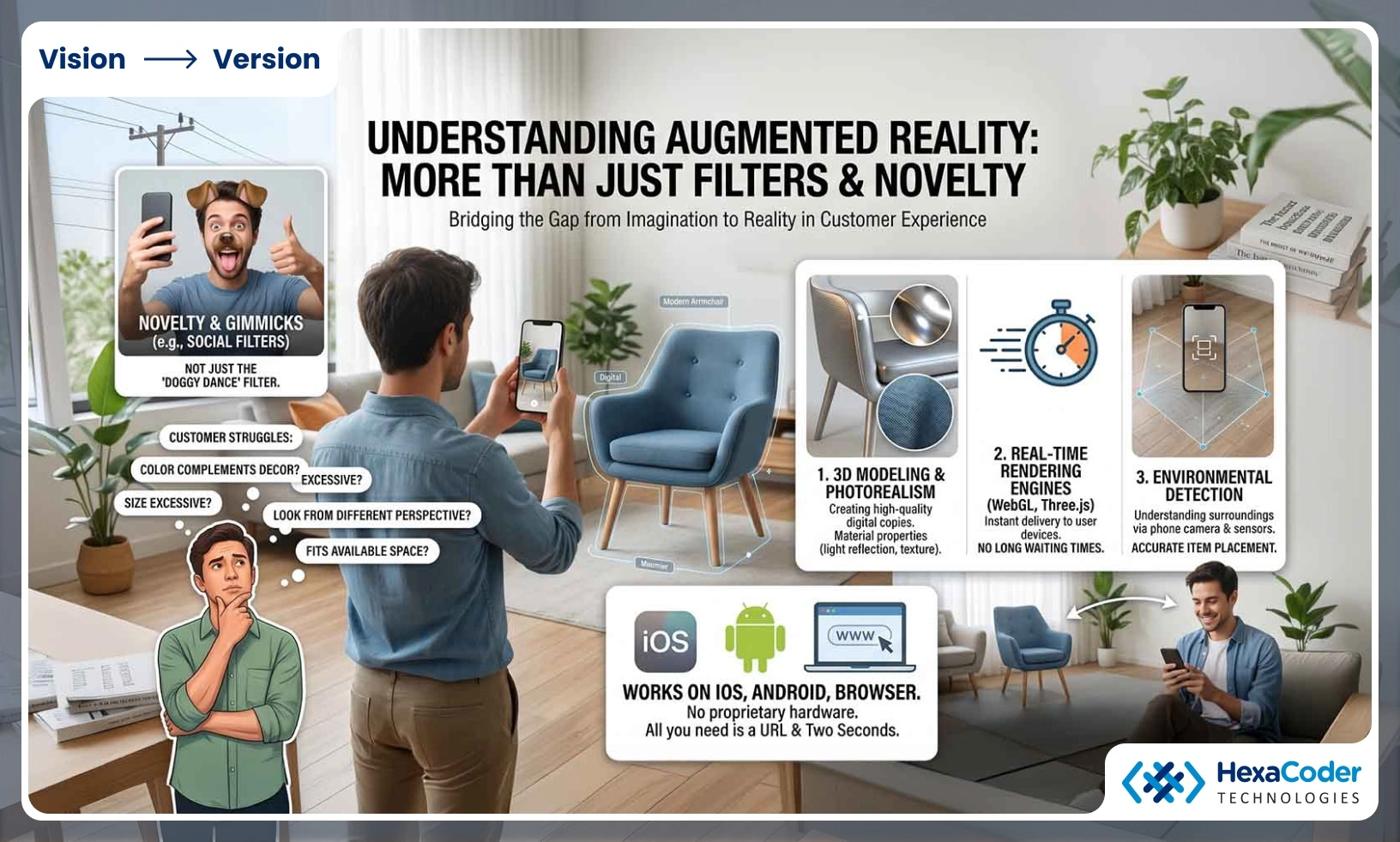
This is disruptive because it directly impacts the bottom line of e-commerce: returns. Before AR, return rates for online apparel often exceeded 30%. With spatial fitting, that number has plummeted. Furthermore, furniture retailers have moved away from massive physical showrooms. Instead, they provide AR apps that allow customers to place true-to-scale, photorealistic furniture in their living rooms, ensuring the piece fits both the dimensions and the aesthetic of the space before a purchase is made.
Healthcare: Precision and Visualization
In medicine, AR is not just a tool for convenience; it is a life-saving disruption. It has fundamentally changed how surgeons prepare for and execute complex procedures.
Intraoperative Navigation
Surgeons now use AR to achieve "X-ray vision." By registered 3D scans (CT or MRI) onto the patient’s body during surgery, AR systems allow doctors to see the exact location of tumors, blood vessels, or bone fractures beneath the skin. This level of precision reduces the need for large incisions, leading to the rise of more minimally invasive surgeries.
Medical Education and Training
The traditional "see one, do one, teach one" model of medical education is being disrupted by AR simulations. Students can practice complex procedures on virtual cadavers that respond to their movements in real-time, providing haptic and visual feedback. This democratizes high-level medical training, allowing students in lower-resource areas to access the same quality of anatomical visualization as those at top-tier institutions.
Technical Foundations of AR Disruption
The reason AR is finally reaching its disruptive potential in 2026 is due to the convergence of several key technologies. Without these, AR remains a gimmick; with them, it becomes a utility.
- Spatial Mapping and SLAM: Simultaneous Localization and Mapping allows the device to understand the geometry of the room. This ensures that a virtual object placed on a table stays on that table, even if the user walks away and returns.
- Low-Latency Connectivity: The rollout of 6G and advanced 5G networks allows the heavy computational work (rendering complex 3D models) to be done in the cloud and streamed to the headset with sub-10ms latency.
- Computer Vision and AI: Artificial Intelligence allows AR devices to recognize objects. If a headset knows it is looking at a "2024 Ford F-150 Engine," it can automatically pull up the relevant repair data without user input.
- Waveguide Optics: Modern AR glasses use waveguide technology to project light into the eye, allowing for a form factor that looks like standard eyewear rather than a bulky helmet.
Comparison of Workflow Efficiency: Traditional vs. AR-Enhanced
| Industry Segment | Traditional Method | AR-Disrupted Method | Primary Benefit |
|---|---|---|---|
| Manufacturing | Paper manuals & 2D schematics | 3D overlays on physical parts | 40% reduction in assembly errors |
| Logistics | Handheld scanners & paper lists | "Pick-by-vision" visual paths | 25% faster warehouse throughput |
| Education | Textbook illustrations | Interactive 3D models | Improved spatial retention |
| Real Estate | Physical staging of homes | Virtual furniture & layout staging | 80% reduction in staging costs |
| Field Service | Multi-day travel for experts | AR Remote guidance | Near-instant troubleshooting |
Challenges and Barriers to Adoption
While the disruption is undeniable, it is not without friction. For AR to fully replace legacy systems, several hurdles remain:
- Privacy and Ethics: AR devices are essentially "always-on" cameras. Navigating the legalities of recording in public spaces or private workplaces remains a point of contention in 2026.
- Battery Life and Thermal Management: Powering high-resolution displays and multiple sensors in a small frame generates heat. Most enterprise-grade AR glasses currently require an external battery pack or "puck" to manage a full 8-hour shift.
- Social Acceptance: While industrial use is accepted, the "glass" form factor still faces social hurdles in casual environments, though 2026 designs have become significantly more discreet.
Frequently Asked Questions
Is augmented reality different from mixed reality?
Yes, though the terms are often used interchangeably. Augmented reality typically refers to any digital overlay on the real world (like a heads-up display). Mixed Reality (MR) is a more advanced subset of AR where digital objects not only appear in the real world but can also interact with it (e.g., a virtual ball bouncing off a real physical chair). In 2026, most disruptive industrial tools are technically MR.
How does AR disrupt the education sector specifically?
AR disrupts education by shifting learning from rote memorization to experiential interaction. Instead of reading about the solar system, students can walk through a scaled 3D model of it in their classroom. This "active learning" has been shown to increase long-term information retention by up to 70% compared to traditional lecture-based methods.
What are the hardware requirements for AR in 2026?
For enterprise disruption, the requirements include a device with specialized depth sensors (like Lidar or Time-of-Flight cameras), a high-refresh-rate display (to prevent motion sickness), and a processor capable of handling real-time computer vision tasks. Most high-end smartphones and dedicated AR glasses now meet these criteria.
Can AR work without an internet connection?
While many AR features rely on the cloud for data retrieval, "Edge AR" allows for local processing of spatial maps and basic overlays. However, for the most disruptive features—like real-time collaboration or accessing massive databases of technical manuals—a high-speed connection is generally required.
Is AR only for large corporations?
No. In 2026, the cost of AR software-as-a-service (SaaS) has dropped significantly. Small businesses use AR for everything from interior design consultations to specialized automotive repair, allowing them to compete with larger entities by increasing their operational efficiency.
Practical Recommendations for Businesses
To leverage AR as a disruptive force, organizations should move beyond "pilot purgatory." Start by identifying a high-cost, high-error-rate process—such as complex assembly or remote field maintenance. Implementing AR in a targeted "high-value" area provides a measurable ROI through reduced errors and travel costs. Businesses should prioritize hardware that offers an open software ecosystem to ensure long-term compatibility as the spatial computing field continues to mature through the late 2020s.
Image Gallery