Engaging Your Employees: A Strategic Framework for Workplace Retention and Performance
Engaging your employees requires a structured strategy centered on empathetic leadership, clear growth pathways, meaningful recognition, and transparent communication. By aligning individual duties with organizational objectives and ac...
Engaging your employees requires a structured strategy centered on empathetic leadership, clear growth pathways, meaningful recognition, and transparent communication. By aligning individual duties with organizational objectives and acting consistently on employee feedback, organizations foster discretionary effort, reduce costly turnover, and sustain higher operational productivity across remote, hybrid, and on-site workforce models.
Contents
The Core Principles of Employee Engagement
Employee engagement describes the emotional and psychological commitment an employee has toward their organization and its strategic goals. It is distinct from employee satisfaction or basic job happiness. While a satisfied employee may arrive on time and complete assigned tasks without complaint, an engaged employee expends discretionary effort—investing energy, creativity, and initiative to drive measurable business outcomes.
Psychological research into workplace motivation frequently relies on Self-Determination Theory, established by Edward L. Deci and Richard M. Ryan. This framework posits that human motivation relies on fulfilling three fundamental psychological needs:
- Autonomy: The desire to exercise agency and ownership over one's work processes and decisions.
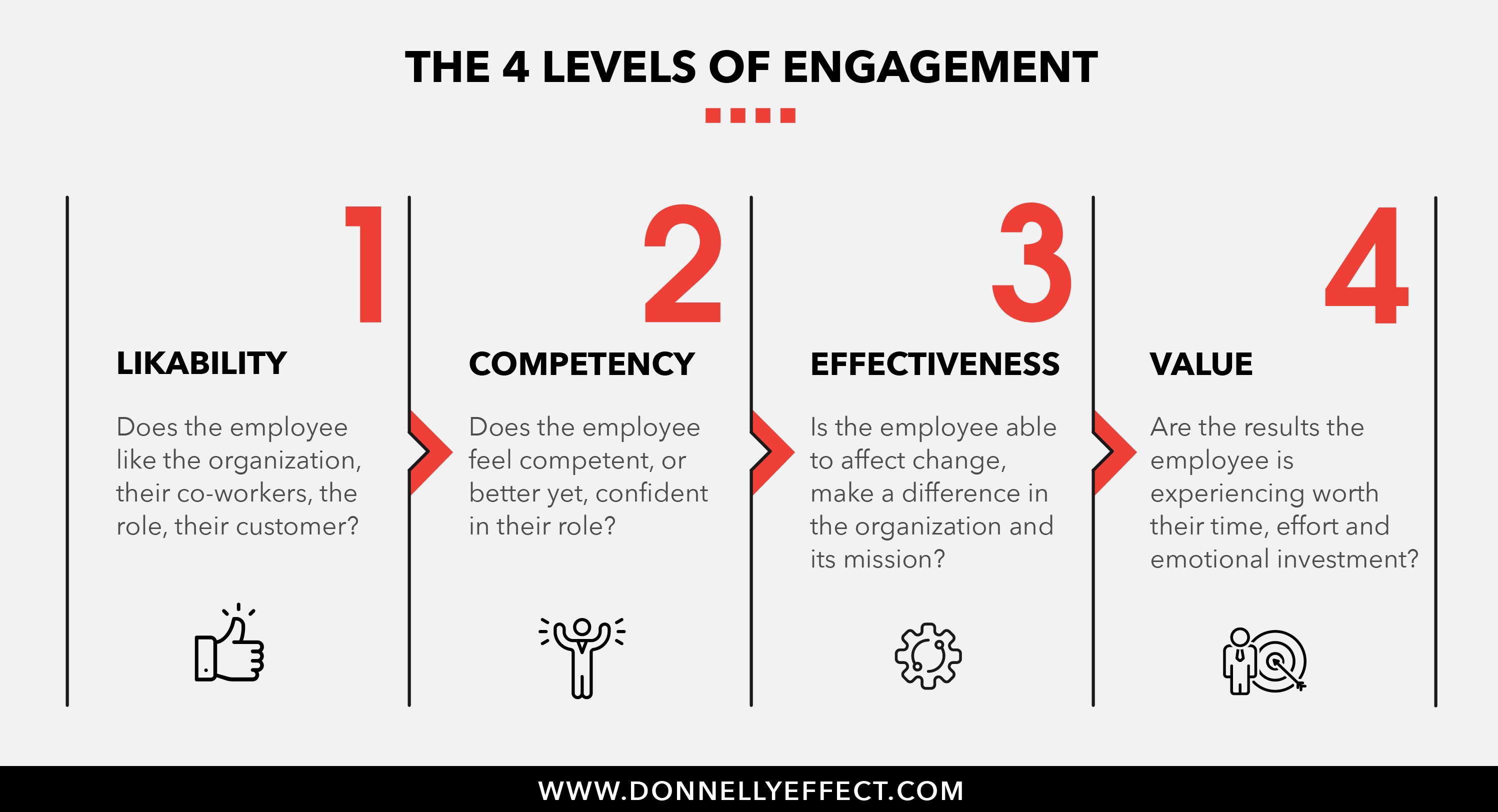
- Competence: The need to feel effective, master relevant skills, and experience growth within a role.
- Relatedness: The sense of connection, belonging, and mutual support among colleagues and leadership.
Organizations that structure their management practices around these three pillars build resilient cultures capable of weathering market shifts and organizational changes. Furthermore, Frederick Herzberg’s Two-Factor Theory highlights that while "hygiene factors" (such as base salary, basic working conditions, and company policies) prevent dissatisfaction, true motivation stems from intrinsic factors like accomplishment, recognition, responsibility, and personal advancement.
The Business Impact of an Engaged Workforce
Engaging your employees is an operational and financial imperative. According to research from organizational behavioral studies and enterprise analytics providers, high levels of employee engagement correlate directly with improvements across critical enterprise metrics.
- Discretionary Effort
- Strategic Business Impacts
- Lower Turnover & Costs
- Enhanced Productivity
- Stronger Customer Loyalty
- Reduced Safety Incidents
- Strategic Business Impacts
1. Reduced Turnover and Recruitment Costs
Replacing a skilled employee incurs substantial direct and indirect costs, typically ranging from 50% to 200% of the employee’s annual salary when accounting for recruiting, onboarding, lost productivity, and team disruption. Highly engaged organizations experience significantly lower voluntary turnover rates, protecting institutional knowledge and reducing hiring overhead.
2. Operational Productivity and Quality Output
Engaged teams consistently outperform disengaged cohorts in output quality, accuracy, and efficiency. Employees who understand how their individual work contributes to organizational performance take greater pride in craftsmanship, leading to lower error rates, fewer customer support escalations, and higher operational velocity.
3. Customer Satisfaction and Loyalty
The internal employee experience directly influences the external customer experience—a dynamic often called the service-profit chain. Frontline staff who feel valued and supported display higher empathy, problem-solving capability, and responsiveness when interacting with client accounts.
Key Drivers of Employee Engagement
To build an effective strategy for engaging your employees, executive leaders and Human Resources (HR) teams must address the primary operational drivers that influence employee sentiment.
Direct Manager Quality and Leadership Style
Frontline managers account for up to 70% of the variance in team engagement levels. Managers serve as the primary link between senior executive vision and daily tactical execution. Managers who practice active listening, conduct regular one-on-one check-ins, and provide constructive, forward-looking feedback create micro-environments where staff feel secure and supported. Conversely, micromanagement, inconsistent enforcement of policies, and lack of clear direction rapidly erode employee morale.
Career Mobility and Continuous Learning
High-performing employees leave organizations when they encounter career stagnation. Engaging employees requires transparent, well-defined career ladders coupled with meaningful Professional Development resources. Establishing corporate learning budgets, mentorship programs, internal job shadow opportunities, and cross-functional project assignments signals that the enterprise is invested in the long-term career trajectory of its workforce.
Autonomy and Work Flexibility
Modern work environments require flexibility regarding where, when, and how work is accomplished. Providing employees with autonomy over their execution methods builds professional trust. Whether through hybrid work schedules, flexible core working hours, or asynchronous workflows, granting structural autonomy reduces burnout and helps employees balance professional responsibilities with personal commitments.
Recognition and Total Rewards Alignment
While competitive base compensation and health benefits establish the baseline standard, continuous recognition fuels ongoing engagement. Effective recognition programs combine formal compensation mechanisms (merit raises, performance bonuses) with informal, frequent validation (peer-to-peer shoutouts, leadership commendations, and milestone celebrations). To be effective, recognition must be specific, timely, and directly tied to verifiable outcomes or corporate values.
Psychological Safety and Inclusion
Psychological safety—a concept popularized by Harvard Business School professor Amy Edmondson—refers to a shared belief that a team is safe for interpersonal risk-taking. In a psychologically safe environment, employees feel comfortable proposing innovative ideas, admitting errors, asking questions, and challenging the status quo without fear of embarrassment or retribution.
Structural Comparison of Engagement Drivers
The following table evaluates key engagement drivers, their operational implementation mechanisms, relative execution complexity, and primary tracking metrics.
| Engagement Driver | Implementation Mechanism | Execution Complexity | Primary Success Metric |
|---|---|---|---|
| Manager Coaching & 1-on-1s | Mandatory bi-weekly structured one-on-ones, empathetic leadership training | Low to Medium | Manager Effectiveness Score, Retention Rate |
| Career Progression Pathways | Published competency frameworks, internal job postings, upskilling stipends | High | Internal Mobility Rate, Average Tenure |
| Workplace Flexibility | Asynchronous communication standards, hybrid schedule policies | Medium | Employee NPS (eNPS), Burnout Reduction |
| Recognition & Appreciation | Peer recognition software, spot bonuses, formal quarterly achievement awards | Low | Employee Satisfaction (eSAT), Recognition Frequency |
| Psychological Safety | Blameless post-mortems, transparent town halls, open-door policy enforcement | High | Innovation Output, Psychological Safety Index |
| Compensation Transparency | Market-benchmarked salary bands, transparent bonus criteria | High | Pay Equity Perception, Voluntary Turnover Rate |
Step-by-Step Action Plan to Increase Employee Engagement
Implementing a sustainable employee engagement strategy requires moving beyond isolated corporate events or sporadic surveys. Organizations must establish an iterative execution process.
- Diagnostic Phase: Data Collection & Baseline Metrics
- Manager Empowerment: Leadership & Coaching Training
- Action Planning: Cross-Functional Workstream Design
- Implementation & Public "Listen-Act-Report" Loops
Step 1: Conduct a Comprehensive Diagnostic Assessment
Before launching new initiatives, gather baseline data using multi-channel feedback mechanisms:
- Annual Engagement Surveys: Deep-dive quantitative surveys examining organizational culture, leadership confidence, and resource availability.
- Pulse Surveys: Short, quarterly or monthly surveys tracking eNPS (Employee Net Promoter Score) and immediate workplace sentiment.
- Exit and Stay Interviews: Structured interviews identifying common departure causes or factors retaining top talent.
Step 2: Equip Managers with Leadership Tools
Provide department heads and team leads with actionable coaching rather than administrative oversight demands. Train managers to:
- Conduct non-punitive, supportive 1-on-1 meetings focused on long-term career goals rather than daily task updates.
- Deliver real-time, actionable feedback using structured models like the SBI Framework (Situation-Behavior-Impact).
- Recognize early indicators of employee fatigue, distress, or disengagement.
Step 3: Develop Targeted Action Plans
Avoid attempting to resolve all organizational vulnerabilities simultaneously. Prioritize one to three focus areas based on survey findings. For instance, if data indicates low scores in career pathing, establish clear competency matrices for key roles within 90 days. Assign executive sponsors to each workstream to ensure accountability.
Step 4: Execute Transparency and Feedback Loops
The fastest way to diminish employee morale is to collect feedback through surveys and take no visible action. Close the loop by publishing survey results transparently and utilizing a simple "You Said, We Did" communication matrix:
- You Said: "Cross-departmental communication is siloed, causing project delays."
- We Did: "Implemented central project management software and established monthly inter-departmental roadmap reviews."
Overcoming Common Engagement Challenges
1. Survey Fatigue and Failure to Act
When employees complete surveys without seeing tangible operational adjustments, response rates fall and cynicism increases. Mitigate survey fatigue by keeping pulse surveys short (under five minutes) and ensuring every survey cycle produces at least one visible organizational improvement.
2. Managing Distributed and Hybrid Workforces
Engaging remote or hybrid employees requires deliberate effort to prevent isolation. Establish clear digital communication norms to prevent constant after-hours messaging. Utilize asynchronous collaboration tools, schedule intentional virtual social connections, and ensure remote workers receive equal consideration for promotions and high-profile assignments.
3. Disconnect Between Senior Executives and Frontline Reality
Senior leadership team members often hold a more optimistic view of organizational culture than frontline staff. Bridge this divide by establishing regular executive skip-level meetings, informal roundtables, and departmental shadowing sessions where executive leaders directly observe everyday operational workflows.
Frequently Asked Questions
What is the difference between employee engagement and employee satisfaction?
Employee satisfaction measures how content employees are with their basic working conditions, compensation, and benefits. Employee engagement measures their emotional and psychological commitment to the organization’s mission, driving discretionary effort, proactive problem-solving, and continuous performance improvement.
How often should an organization measure employee engagement?
Organizations should employ a hybrid measurement model. Conduct a comprehensive engagement survey once per year to evaluate long-term trends and broader organizational health, supplemented by short pulse surveys quarterly or monthly to track real-time sentiment and the impact of recent workplace initiatives.
What is Employee Net Promoter Score (eNPS) and how is it calculated?
eNPS is a metric derived from a single survey question: "On a scale of 0 to 10, how likely are you to recommend this organization as a place to work?" Respondents are categorized as Promoters (scores 9–10), Passives (scores 7–8), or Detractors (scores 0–6). eNPS is calculated by subtracting the percentage of Detractors from the percentage of Promoters.
How can managers improve engagement without increasing financial budgets?
Managers can significantly impact engagement by increasing regular, specific recognition, clarifying career mobility paths, offering schedule flexibility, maintaining structured weekly check-ins, and fostering psychological safety through open dialogue and empathetic leadership.
What are the earliest indicators of employee disengagement?
Early warning signs of disengagement include reduced participation in team meetings, declining work quality, withdrawal from discretionary team activities, increased unplanned absenteeism, missed deadlines, and an abrupt shift from proactive problem-solving to passive compliance.
Next Steps for Organizational Leaders
To begin engaging your employees more effectively, take immediate action on these foundational steps:
- Review Existing Metrics: Audit your team's current retention rates, exit interview data, and operational productivity trends to identify high-priority operational bottlenecks.
- Schedule Skip-Level Check-Ins: Conduct informal listening sessions with team members across departments to gather qualitative context behind recent survey data.
- Formalize 1-on-1 Frameworks: Standardize regular, non-punitive manager-employee coaching check-ins across the enterprise, prioritizing professional growth, resource needs, and workload balance.
EDITORIAL CATEGORY METADATA:
Image Gallery