Countability Definition in International Trade Law: A Guide to Quantification and Compliance
In international trade law, countability refers to the legal and technical methodology used to quantify goods for the purposes of customs valuation, tariff application, and trade remedy assessments. It establishes the standards for ide...
In international trade law, countability refers to the legal and technical methodology used to quantify goods for the purposes of customs valuation, tariff application, and trade remedy assessments. It establishes the standards for identifying discrete units, weight, or volume to ensure that duties, quotas, and regulatory requirements are applied accurately and consistently across different jurisdictions and product classifications.
Contents
The Foundations of Countability in Global Trade
Countability is not merely the physical act of tallying items; it is a foundational legal concept that bridges the gap between physical logistics and fiscal obligations. In the landscape of 2026, where global supply chains are increasingly automated, the legal definition of how a product is "counted" dictates the financial liability of importers and the protectionist measures available to domestic industries.
At its core, countability relies on the Harmonized System (HS) maintained by the World Customs Organization (WCO). The HS code assigned to a product determines its "unit of quantity." For some goods, countability is determined by weight (kilograms or tonnes); for others, it is by volume (liters), area (square meters), or individual units (pieces). The legal definition of countability ensures that when a treaty mentions "1,000 units," both the exporting and importing nations agree on what constitutes a single unit.
This precision is vital for the application of Specific Duties, which are taxes levied as a fixed charge per unit of a good. Unlike ad valorem duties, which are based on the value of the transaction, specific duties are entirely dependent on the "count." Therefore, any ambiguity in the definition of countability can lead to significant legal disputes, customs delays, and financial penalties.
Countability in Customs Valuation and Tariff Application
The primary application of countability occurs during the customs entry process. Under the General Agreement on Tariffs and Trade (GATT) Article VII, customs valuation must be based on the actual value of the goods. However, the "quantity" or "count" acts as the multiplier for many fiscal calculations.
Specific vs. Compound Duties
In 2026, many jurisdictions still utilize specific duties for agricultural products, textiles, and raw materials. For example, a tariff might be set at $2.00 per kilogram. The "countability" here involves the legal standards for weighing: does it include the immediate packaging? Is it "net-net" weight (the product only) or "gross" weight (product plus packaging)? International trade law, specifically through the WCO’s General Rules for the Interpretation of the Harmonized System, provides the framework to resolve these questions.
Quota Management
Countability is also the mechanism for enforcing Tariff-Rate Quotas (TRQs). When a government allows a specific quantity of a product to enter at a lower duty rate, the "count" determines when that threshold is met. Legal disputes often arise when the "count" at the port of departure differs from the "count" at the port of entry due to evaporation, leakage, or administrative errors. The law must provide a standard for which "count" prevails—usually the verified count at the time of entry into the customs territory.
The Role of Countability in Trade Remedies
Trade remedies, such as antidumping and countervailing duties, rely heavily on the precise countability of imports to determine "injury" to domestic markets.
Volume Analysis in Antidumping Investigations
When a domestic industry claims it is being harmed by dumped imports, the investigating authorities (such as the U.S. International Trade Commission or the EU’s DG Trade) must analyze the volume of imports. Countability becomes the legal metric for this analysis. Authorities must decide how to aggregate different versions of a product. If "counted" incorrectly—for instance, by counting a multi-pack as a single unit—the perceived volume of dumped goods might be understated, leading to a failure to prove injury.
The "Like Product" Delineation
Countability is inextricably linked to the definition of a "like product." In legal terms, to count imports effectively for a trade remedy case, the goods must be sufficiently similar. If a customs authority changes the countability standard—for example, switching from counting weight to counting individual components—it can fundamentally alter the outcome of a trade dispute.
Evidentiary Standards and Contractual Countability (CISG)
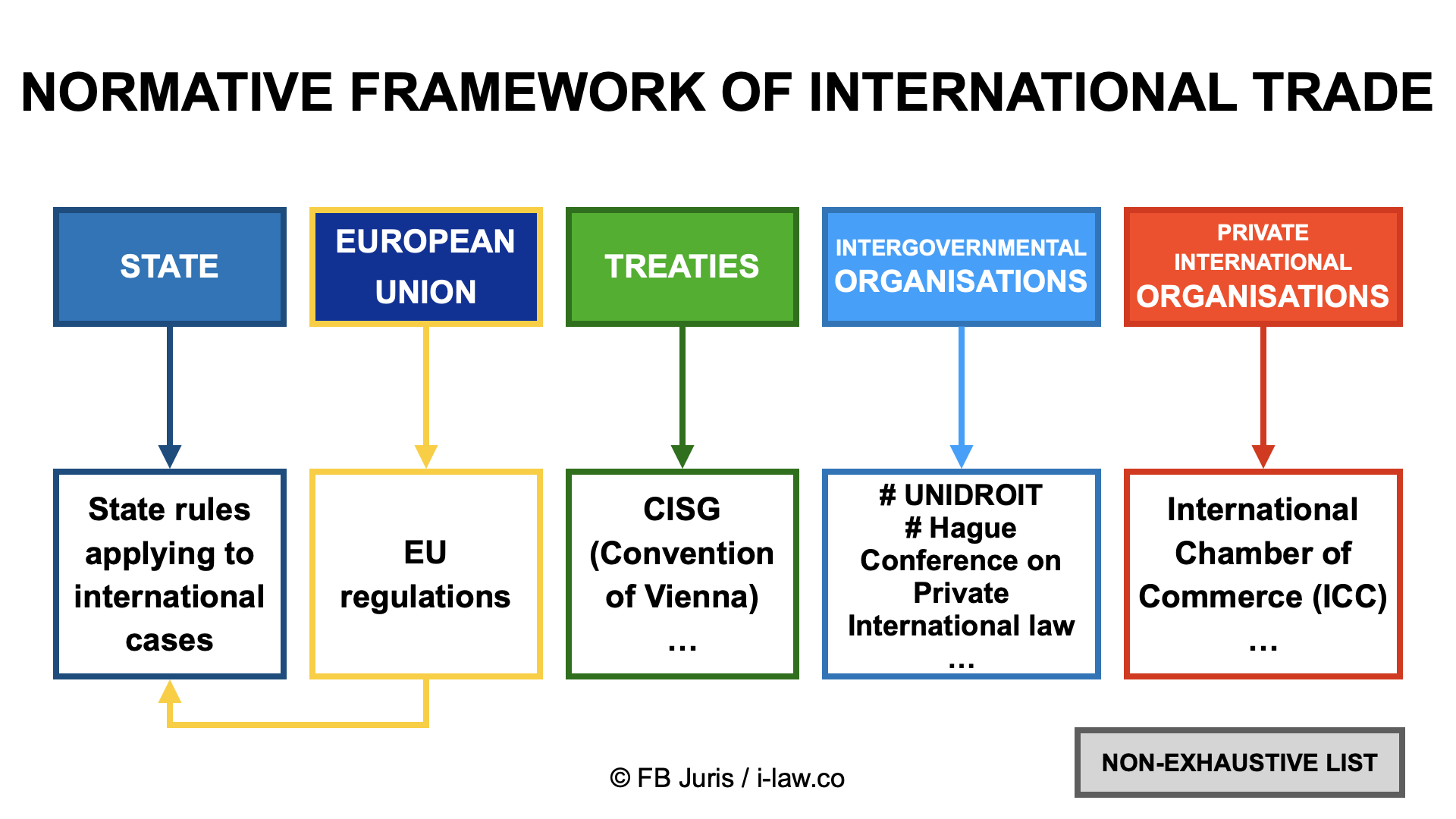
Outside of government regulations, countability is a critical element of private international commercial law, primarily governed by the United Nations Convention on Contracts for the International Sale of Goods (CISG).
Under CISG Article 35, the seller must deliver goods that are of the "quantity, quality, and description" required by the contract. Countability here refers to the evidentiary standard required to prove a breach of contract regarding quantity.
- Tally Sheets and Bills of Lading: These documents serve as the primary legal evidence of the "count."
- Shortages and Overages: If the count delivered does not match the count contracted, the buyer may have the right to reject the excess or claim damages for the deficit.
The legal definition of countability in these contracts often incorporates Incoterms® 2020, which define where the risk passes and whose "count" is legally binding at the point of shipment versus the point of delivery.
Comparison of Counting Methodologies in Trade Law
The following table illustrates how countability varies across different categories of goods and the legal implications of those differences.
| Metric Type | Typical Goods | Primary Legal Concern | Regulatory Framework |
|---|---|---|---|
| Unit Count | Electronics, Vehicles, Machinery | Identification of "sets" vs. individual parts. | HS General Interpretative Rule 3 |
| Net Weight | Chemicals, Grains, Ores | Accuracy of weighing equipment; moisture content. | WCO Customs Valuation Compendium |
| Volume | Oil, Gas, Beverages | Temperature fluctuations and expansion/contraction. | Energy Charter Treaty / National Standards |
| Embedded Metrics | Carbon (CBAM), Digital Assets | Quantification of non-physical attributes. | WTO TBT Agreement / EU CBAM |
The Impact of 2026 Digitalization on Countability
As of 2026, the definition of countability has expanded to include digital verification. The adoption of blockchain-enabled "Smart Bills of Lading" and IoT (Internet of Things) sensors in shipping containers has changed how the law views "verified counts."
In the past, the "Tally Clerk's" signature was the gold standard for countability. Today, automated systems provide a real-time, immutable record of the count. International trade law is currently adapting to recognize these digital counts as "prima facie" evidence in customs disputes. This reduces human error but introduces new legal questions regarding the certification of the software used to perform the count.
Furthermore, with the full implementation of the Carbon Border Adjustment Mechanism (CBAM) and similar environmental trade laws, countability now extends to the "count" of carbon emissions per ton of product. This represents a shift from counting the physical good to counting the "embedded" environmental cost, requiring a whole new set of international standards and legal definitions for "emissions countability."
Common Pitfalls in Defining Countability
Legal disputes regarding countability often stem from three main areas:
- Metric Conversions: Differences between the imperial and metric systems can lead to "rounding errors" that, on a multi-million dollar shipment, result in significant duty discrepancies.
- Tolerance Levels: International trade law generally recognizes that a 100% accurate count is not always possible for bulk goods. Contracts and regulations must define the "legal tolerance"—the percentage of deviation (e.g., +/- 5%) allowed before a breach is declared.
- Aggregation Rules: When parts are shipped unassembled, should they be "counted" as the finished product (GIR 2a) or as individual components? This classification choice changes the duty rate and the countability methodology.
Frequently Asked Questions
How does "net weight" differ from "gross weight" in trade law countability? Net weight refers to the weight of the goods themselves, while gross weight includes all packaging and containers. In international trade law, the distinction is vital because most specific duties are calculated based on net weight. However, some jurisdictions may apply "legal weight," which includes the immediate packaging (like a bottle of perfume) but excludes the shipping crate.
What happens if the customs count differs from the commercial invoice? If a customs inspection reveals a discrepancy between the physical count and the count declared on the invoice, the importer may face "red channel" delays, fines, or seizure of goods. Legally, the customs authority’s physical count at the port of entry usually takes precedence over the commercial documents for duty assessment purposes.
Can "countability" apply to digital goods? Yes, but the definition is different. For digital goods, countability often refers to the number of licenses, the volume of data (gigabytes), or the number of permitted users. As of 2026, WTO moratoriums on electronic transmissions complicate this, but for internal tax and regulatory compliance, digital countability is a growing legal field.
What is a "Tally Trade Dispute"? This is a legal conflict where the buyer and seller disagree on the quantity of goods delivered. These are usually resolved by examining the "Master’s Receipt" or the "Tally Sheet" signed at the point of loading. If these documents are inconsistent, the dispute moves to arbitration under rules like those of the International Chamber of Commerce (ICC).
How do Rules of Origin affect countability? Rules of Origin require a "count" of the value added or the percentage of components sourced from a specific country. Here, countability is used to determine if a product has undergone "substantial transformation." If a certain "count" of the product's value (usually 40-60%) is local, it qualifies for preferential tariffs.
Recommendation for Practitioners
When drafting international sales contracts or preparing customs declarations, never rely on a generic "count." Always specify the Unit of Measure (UOM) using international standards (ISO), define the tolerance level for bulk shipments, and clearly state which party's count (at loading or discharge) shall be the legally binding record. For businesses operating in 2026, ensuring that your digital tracking systems are compliant with the importing country's "Authorized Economic Operator" (AEO) standards will significantly reduce countability-related friction.
Disclaimer: This article provides general information regarding international trade law and does not constitute legal advice. Jurisdictional rules and treaty interpretations may vary; consult with a trade attorney for specific compliance requirements.
Image Gallery