Nursing Home Neglect: Identifying Warning Signs, Resident Rights, and Legal Recourse
Nursing home neglect occurs when a long-term care facility fails to provide the necessary medical, physical, or emotional care required to maintain a resident’s health, safety, and overall well-being. Unlike active abuse, neglect typic...
Nursing home neglect occurs when a long-term care facility fails to provide the necessary medical, physical, or emotional care required to maintain a resident’s health, safety, and overall well-being. Unlike active abuse, neglect typically involves a breach of duty through omission or breach of standard care protocols. Recognizing early warning signs enables families to intervene promptly, file regulatory complaints, and secure legal remedies.
Contents
Disclaimer: The information provided in this guide is for educational purposes only and does not constitute formal legal or medical advice. Consult a licensed attorney or medical professional for guidance specific to your state and situation.
Understanding Nursing Home Neglect vs. Active Abuse
To address harm in a long-term care facility effectively, families must distinguish between nursing home neglect and nursing home abuse. While both result in physical or psychological harm to residents, their legal definitions, intent, and underlying causes differ significantly under state elder protection laws and federal regulations.
Nursing home abuse involves intentional actions designed to cause physical pain, injury, emotional trauma, or financial harm. Examples include physical assault, sexual abuse, verbal degradation, or unauthorized financial transactions.
Nursing home neglect, by contrast, is characterized by a failure to act. It occurs when facility staff, administrators, or medical personnel fail to fulfill their professional duty of care, leading to the physical or emotional deterioration of a resident. Neglect often stems from systemic issues within the facility—such as chronic understaffing, inadequate staff training, or corporate cost-cutting—rather than individual malice. Under civil law, nursing home neglect constitutes a form of medical malpractice or personal injury liability when the failure to provide adequate care breaches established standards and directly causes injury or harm.
The Four Primary Types of Nursing Home Neglect
Neglect in long-term care facilities manifests across multiple areas of care. Understanding these distinct categories helps advocates and family members spot subtle indicators of declining care quality before catastrophic injuries occur.
1. Medical Neglect
Medical neglect occurs when facility personnel fail to provide appropriate medical care, administer treatments properly, or respond promptly to changes in a resident’s health status.
- Medication Errors: Administering incorrect dosages, skipping scheduled doses, or failing to reconcile prescriptions upon admission.
- Failure to Treat Conditions: Ignoring early indicators of infection, such as urinary tract infections (UTIs), pneumonia, or localized skin breakdown.
- Inadequate Management of Chronic Illnesses: Failing to regularly monitor blood glucose levels in diabetic residents or failing to record vital signs for cardiovascular patients.
- Delayed Emergency Response: Failing to contact an attending physician or emergency medical services (EMS) when a resident exhibits acute medical distress.
2. Neglect of Basic Human Needs
Every licensed long-term care facility is obligated to meet the foundational physical needs of its residents. Basic needs neglect involves a failure to maintain essential physical life support.
- Malnutrition and Dehydration: Failing to provide adequate nutritional intake, specialized diets, or accessible fluids, often leading to rapid weight loss, electrolyte imbalances, and organ dysfunction.
- Environmental Hazards: Failing to maintain a safe, clean, and temperature-controlled environment, exposing residents to extreme cold, excessive heat, or slip-and-fall hazards.
- Failure to Assist with Mobility: Leaving mobility-impaired residents unassisted, forcing them to attempt transfers independently, which significantly increases the risk of severe falls.
3. Personal Hygiene Neglect
Personal hygiene neglect compromises a resident's dignity and creates significant medical hazards, particularly regarding secondary bacterial infections.
- Incontinence Care Failures: Leaving residents in soiled clothing, adult diapers, or wet bed linens for extended periods, causing severe skin breakdown and moisture-associated skin damage.
- Inadequate Bathing and Grooming: Infrequent bathing, unwashed hair, long unclipped fingernails that gather bacteria, and failure to perform daily oral care.
- Pressure Ulcer Prevention Failures: Failing to execute mandatory turning and repositioning schedules (typically every two hours) for bedbound or chair-bound residents, directly causing pressure ulcers (bedsores).
4. Emotional and Social Neglect
Emotional neglect occurs when staff fail to address a resident’s psychological and social needs, leading to cognitive decline, profound isolation, and emotional distress.
- Social Isolation: Leaving residents confined to their rooms for extended periods without access to social activities, common areas, or peer interaction.
- Ignoring Assistance Requests: Consistently failing to answer call lights or ignoring verbal requests for assistance, leaving residents feeling abandoned and vulnerable.
- Lack of Compassionate Interaction: Treating residents with indifference, harsh dismissiveness, or failing to provide basic cognitive stimulation.
Key Warning Signs and Physical Symptoms
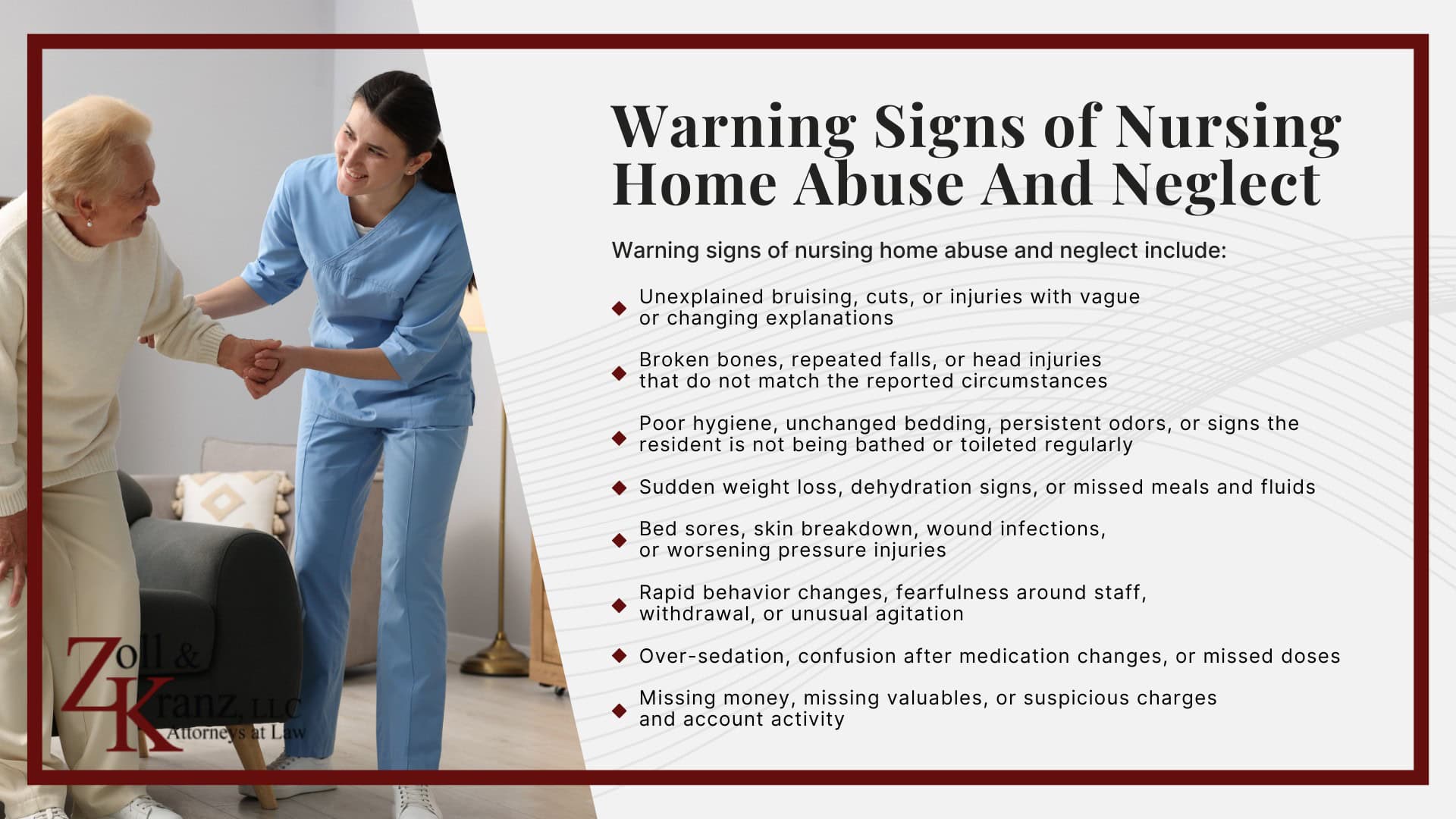
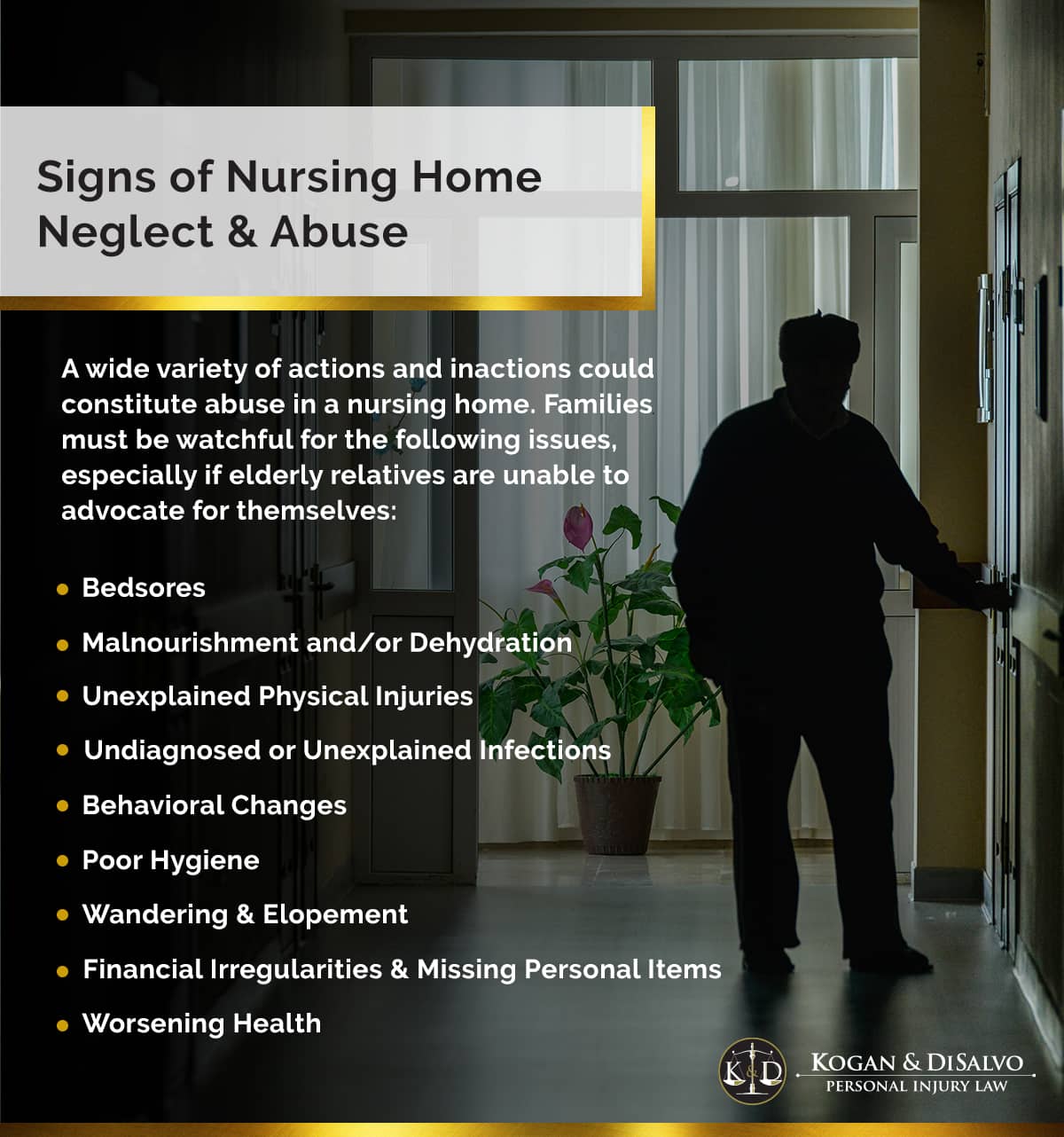
Detecting neglect requires vigilance during visits and routine communication. Because residents may be hesitant or unable to speak up due to cognitive impairment or fear of retaliation, family members must monitor for visible warning indicators.
Suspected Nursing Home Neglect Identification:
- Physical Signs
- Stage 1-4 Bedsores
- Unexplained Weight Loss
- Poor Hygiene/Dirty Clothes
- Behavioral Signs
- Sudden apathy or withdrawal
- Fear of specific staff members
- Agitation or unusual anxiety
- Environmental
- Strong urine/fecal odors
- Unanswered call lights
- Dirty linens & cluttered room
Physical Manifestations
- Pressure Ulcers (Bedsores): Ranging from Stage 1 (reddened skin) to Stage 4 (deep tissue destruction exposing bone or muscle). Bedsores are largely preventable with proper turn-schedules and wound management.
- Frequent Falls and Unexplained Injuries: Recurring falls, unexplained bruising, sprains, or bone fractures often indicate inadequate staff supervision or improper transfer techniques.
- Signs of Dehydration: Dry mouth, cracked lips, sunken eyes, dark or concentrated urine, and confusion.
- Unexplained Weight Loss: Ill-fitting clothing, loose dental dentures, and visible loss of muscle mass over short periods.
Behavioral and Psychological Indicators
- Emotional Withdrawal: A sudden reluctance to communicate, loss of interest in social activities, or profound apathy.
- Apprehension Around Caregivers: Displays of fear, nervousness, or sudden silence when specific staff members enter the resident’s room.
- Cognitive Regression: Accelerated confusion or delirium caused by untreated medical conditions (such as advanced UTIs) or improper medication management.
Environmental Indicators
- Persistent foul odors of urine or feces in private rooms or public hallways.
- Soiled or missing bed linens, stained mattresses, and unwashed clothing accumulated in hampers.
- Call lights left ringing unanswered for extended periods (exceeding 10 to 15 minutes).
- Lack of basic medical supplies, mobility equipment, or functioning safety devices (such as bed rails or wheelchair brakes).
Root Causes of Nursing Home Neglect
While individual staff members carry out direct care, nursing home neglect is primarily driven by administrative and operational structures.
Root Causes of Neglect:
- Understaffing & Overwork
- High Turnover & Burnout
- Corporate Profit Prioritization
- Insufficient Staff Training
- Chronic Understaffing: Facilities frequently operate with minimal nurse-to-resident ratios to reduce operating costs. When a single Certified Nursing Assistant (CNA) is assigned to 15 or 20 residents during a shift, basic care tasks—such as repositioning, hygiene maintenance, and feeding—are inevitably missed.
- High Staff Turnover and Burnout: Overworked care personnel face physical fatigue and emotional burnout, leading to high turnover rates, low morale, and reduced quality of care.
- Inadequate Training: Facilities may hire unqualified personnel or fail to provide mandatory training in fall prevention, infection control, dementia care, and proper lifting techniques.
- Corporate Profit Prioritization: Many long-term care facilities operate as for-profit private equity ventures. Budget allocations may prioritize administrative profits over direct care staffing, medical supplies, and facility upkeep.
Step-by-Step Action Plan: How to Respond to Suspected Neglect
If you suspect a family member is suffering from neglect in a nursing home, taking methodical, structured steps is essential to protect their health and build a strong record for regulatory or legal review.
Step-by-Step Action Plan for Families:
- Step 1: Ensure Immediate Medical Safety & Care
- Step 2: Document Evidence Methodically (Photos, Records, Notes)
- Step 3: File Formal Internal Escalations (DON / Administrator)
- Step 4: Report to External Oversight (State Health Dept / LTC)
- Step 5: Seek Legal Consultation & Case Evaluation
Step 1: Ensure Immediate Safety
If your relative is in immediate physical danger, exhibiting severe medical symptoms (such as unresponsiveness, high fever, or severe breathing difficulties), or has an untreated Stage 3 or 4 pressure ulcer, call 911 immediately or demand an emergency transfer to a hospital. Do not wait for facility staff to act if they have consistently ignored symptoms.
Step 2: Document Everything Thoroughly
Comprehensive evidence is vital when addressing neglect internally, reporting to regulatory bodies, or taking legal action.
- Photograph Injuries and Conditions: Take clear, high-resolution photographs of bedsores, bruises, dirty rooms, unwashed linens, and unanswered call lights. Include date and time stamps on all digital media.
- Maintain a Detailed Journal: Record specific dates, times, staff names, and details of every incident or conversation. Note response times for call lights and missed meals.
- Request Complete Medical Records: Obtain copies of the resident’s full medical file, including care plans, daily nursing flow sheets, medication administration records (MAR), and physician notes.
Step 3: File Internal Complaints
Initiate formal communications with facility leadership to establish a written record of notifications:
- Schedule a formal meeting with the Director of Nursing (DON) and the Facility Administrator.
- Clearly state your concerns, presenting documented evidence.
- Demand a formal update to the resident’s Individualized Care Plan.
- Submit all complaints in writing via certified mail or email, keeping copies for your records.
Step 4: Report to External Oversight Bodies
When internal reports fail to resolve the issue, report the facility to governmental regulatory agencies:
- State Department of Health / Licensing Board: Every state maintains an agency responsible for licensing and inspecting long-term care facilities. Filing a formal complaint triggers an unannounced state inspection.
- Long-Term Care Ombudsman Program: Authorized under the federal Older Americans Act, Ombudsman advocates investigate resident complaints independently and assist in resolving care issues without cost to the family.
- Adult Protective Services (APS): Local APS agencies investigate allegations of vulnerable adult abuse, neglect, and exploitation.
Step 5: Consult an Elder Law Attorney
If neglect results in serious injury, hospitalization, or death, consult a legal professional specializing in nursing home abuse and neglect. An attorney can evaluate whether the facility breached its legal duty of care, assist in securing sub-poenaed records, and pursue financial compensation for medical bills, pain and suffering, and transfer expenses.
Comparative Matrix: Categories, Warning Indicators, and Required Actions
The table below outlines common categories of nursing home neglect, key warning indicators, and recommended response steps.
| Neglect Category | Primary Warning Indicators | Potential Physical Consequences | Recommended Action |
|---|---|---|---|
| Medical Neglect | • Skipped medication doses• Ignored lab test results• Unchecked surgical wounds | • Sepsis and systemic infections• Medication toxicity• Disease progression | Request immediate physician evaluation; demand medical record audit; contact State Health Dept. |
| Basic Needs Neglect | • Rapid weight loss• Dry mouth and skin• Leaving food trays out of reach | • Severe dehydration• Malnutrition• Electrolyte imbalance | Demand speech/swallow therapy audit; mandate daily fluid intake monitoring; alert Ombudsman. |
| Hygiene & Pressure Care | • Unchecked bedsores• Soiled clothes/diapers• Strong urine odor in room | • Stage 1–4 Pressure Injuries• Cellulitis and skin rot• Severe UTIs | Request strict 2-hour turn log; demand specialized wound care nurse evaluation; photograph injuries. |
| Environmental & Safety | • Broken call lights• Lack of bed alarms• Slippery, cluttered floors | • Traumatic brain injuries• Bone fractures from falls• Wandering/elopement | File written grievance to Facility Administrator; request immediate room inspection; notify APS. |
Regulatory Framework and Resident Rights
In the United States, nursing homes receiving federal funding through Medicare or Medicaid must comply with federal care standards established by the Centers for Medicare & Medicaid Services (CMS) under Title 42 of the Code of Federal Regulations ( specifically 42 CFR Part 483).
Key Resident Rights Under Federal Law
- Right to Quality of Life: Facilities must care for residents in a manner that promotes maintenance or enhancement of each resident’s quality of life.
- Right to an Individualized Care Plan: Facilities must prepare and update a comprehensive care plan tailored to the specific medical, physical, and emotional needs of the resident.
- Right to Freedom from Neglect and Abuse: Residents have an absolute right to be free from verbal, sexual, physical, and mental abuse, as well as involuntary seclusion and neglect.
- Right to Information and Participation: Residents and legal representatives have the right to review medical records, participate in care plan meetings, and be informed of changes in health status or treatment.
Federal Regulatory Compliance: F-Tags
During inspections, state survey agencies evaluate facilities using standardized criteria called F-Tags. Deficiencies in care receive specific citations:
- F-684 (Quality of Care): Cited when a facility fails to provide necessary care to maintain high well-being.
- F-686 (Treatment/Services to Prevent Bedsores): Cited when a facility fails to prevent or properly treat pressure ulcers.
- F-689 (Free of Accident Hazards/Supervision): Cited when a facility fails to prevent avoidable falls and injuries.
Frequently Asked Questions
What is the legal difference between nursing home neglect and nursing home abuse?
Nursing home abuse involves intentional, malicious actions designed to inflict physical harm, emotional distress, or financial loss on a resident. Nursing home neglect refers to a failure to provide essential care, supervision, or medical treatment due to carelessness, understaffing, or breach of professional standards, resulting in unintended harm or health decline.
How can I prove my family member is experiencing neglect?
Establishing legal proof requires documenting evidence that links the facility's failure to care directly to the resident's injuries. Key evidence includes dated photographs of injuries or living conditions, medical records (such as weight logs and wound care reports), detailed daily journals of care gaps, witness statements, and reports from state regulatory inspections.
Who investigates reports of nursing home neglect?
Neglect reports are investigated by multiple oversight agencies based on jurisdiction. State Departments of Health handle regulatory compliance inspections and enforce state/federal standards. Local Adult Protective Services (APS) agencies investigate elder abuse and vulnerability claims, while the State Long-Term Care Ombudsman investigates and mediates individual resident complaints.
Can a nursing home discharge or retaliate against a resident for reporting neglect?
Federal regulations under 42 CFR § 483.10 explicitly prohibit nursing homes from retaliating against residents or family members who file complaints, voice grievances, or participate in surveys. Unlawful retaliation includes threats of eviction, reduction in care quality, or verbal harassment. Unfair discharge can be formally appealed through the state regulatory agency.
How long do families have to file a nursing home neglect lawsuit?
The timeframe to file a legal claim is governed by your state's statute of limitations for personal injury or medical malpractice. Deadlines typically range from 1 to 3 years from the date the neglect occurred or was discovered. Because legal timelines vary by state, consulting an attorney as soon as neglect is identified helps preserve your right to recovery.
Recommended Next Actions for Families
If you suspect your loved one is facing neglect in a long-term care facility, take action promptly:
- Prioritize Immediate Physical Safety: Ensure your relative receives urgent medical evaluation from an independent doctor or emergency room if severe symptoms are present.
- Build an Evidence Folder: Consolidate photos, medical records, visitor logs, written communication, and personal notes into a secure record.
- Notify Federal and State Regulators: File formal reports with your state’s Nursing Home Complaint Division and connect with your local Long-Term Care Ombudsman.
- Evaluate Care Alternatives: Explore transferring the resident to an accredited facility with high staffing ratings on Medicare’s Care Compare platform.
- Seek Expert Legal Advice: Schedule a case evaluation with a qualified legal practice specializing in elder law to understand your rights and options for legal recourse.
Image Gallery