Understanding Lightning Hazards for Hunters in Colorado: Safety, Risks, and Prevention
Colorado’s mountainous terrain creates severe lightning hazards for big-game and backcountry hunters, who face elevated risks due to afternoon monsoonal thunderstorms, high-altitude positioning, and carrying metal gear. Mitigating thes...
Colorado’s mountainous terrain creates severe lightning hazards for big-game and backcountry hunters, who face elevated risks due to afternoon monsoonal thunderstorms, high-altitude positioning, and carrying metal gear. Mitigating these dangers requires understanding atmospheric physics, monitoring real-time weather patterns, selecting appropriate campsite and field locations, and following emergency medical protocols if a strike occurs.
Contents
The Geography and Climatology of Colorado Lightning
Colorado consistently ranks among the top states in the United States for cloud-to-ground lightning strikes per square mile, particularly along the Continental Divide and the high-altitude ranges of the Rocky Mountains. For hunters pursuing elk, mule deer, or bighorn sheep during the late summer and autumn seasons, this environment presents distinct meteorological challenges.
Why High-Altitude Hunting Amplifies Risk
During the peak of archery hunting season in late August and September, convective weather patterns routinely build over the mountains. Warm air rising from valleys interacts with cooler high-altitude air masses, rapidly forming cumulonimbus clouds.
- Elevation Exposure: As altitude increases, the distance lightning must travel through the atmosphere decreases. Furthermore, high-altitude ridges, peaks, and open subalpine parks offer the least amount of shielding, making elevated humans the tallest conductive paths in the immediate area.
- Proximity to Storm Generation: Mountain ranges act as physical barriers that force moisture-laden air upward, initiating rapid thunderstorm development directly over prime hunting zones like timberline ecotones and high parks.
- The Monsoonal Influence: Western Colorado frequently experiences the North American Monsoon, bringing predictable afternoon storm cycles that test the decision-making of backcountry travelers who may be miles from a secure shelter.
Common Vulnerabilities Faced by Hunters
Hunters are disproportionately vulnerable to lightning strikes compared to casual hikers or day-trippers because of the specific behaviors, equipment, and locations associated with the sport.
Equipment and Gear Conundrums
Modern hunting gear incorporates numerous metallic and electronic components that can increase the risk of side-flashes or attract electrical currents, though the human body's posture and height remain the primary targets.
- Firearms and Bows: Carrying a rifle with a steel barrel, a compound bow with aluminum or carbon-composite components, or trekking poles creates elevated metallic profiles. While metal does not "attract" lightning from miles away, it can provide a localized conductive path if a strike occurs nearby.
- Electronic Devices: Two-way radios, GPS units, smartphones, and electronic rangefinders carried in pockets or chest harnesses can suffer catastrophic electromagnetic pulse (EMP) damage during a nearby strike and can transfer currents to the user.
- Packframes: External metal frame backpacks worn during retrieval or scouting trips increase the wearer's effective height profile on open ridgelines.
Behavioral Risk Factors
Hunters are often driven by objectives—such as reaching a bugling bull elk at first light or tracking a wounded animal across timberline basins—that encourage them to ignore worsening weather conditions.
| Risk Factor | Behavioral Context | Mitigation Strategy |
|---|---|---|
| Early Morning Departures | Moving through open meadows or timberline before sunrise, often returning late in the afternoon storm window. | Plan routes to cross high, exposed areas before noon and schedule timberline exits by 1:00 PM. |
| Eavesdropping and Calling | Standing motionless in open timber or forest edges while bugling or cow-calling, reducing situational awareness. | Continuously scan the horizon for developing thunderheads while working game. |
| Camp Location | Pitching lightweight three-season tents on high ridges or under isolated tall trees for scenic views. | Camp in lower timber stands, avoiding tall, solitary trees and depression areas that may pool water. |
Physiological Effects of Lightning Strikes on the Human Body
A lightning strike involves extreme electrical current—often ranging from 10,000 to over 200,000 amperes—delivered in milliseconds. When a hunter is struck directly, or affected by a side-flash, ground current, or step potential, the physiological impact can be devastating.
Mechanism of Injury
Unlike standard electrical shocks from household wiring, lightning delivers a direct-current (DC) pulse of immense voltage. This energy interacts with the body through several distinct pathways:
- Direct Strike: The current passes directly through the body, frequently resulting in internal organ damage, cardiac arrest, and massive neurological disruption.
- Contact Injury: Occurs when the individual is touching a conductive object (such as a metal tree stand, rifle, or tent pole) that is struck.
- Side-Flash: Lightning strikes a nearby object (such as a pine tree) and arcs through the air to reach the victim.
- Ground Current: Lightning strikes the earth and radiates outward along the surface, entering the body through the lower extremities and exiting through the ground. This is a primary cause of wildlife and group livestock mortalities in the backcountry.
Clinical Manifestations
Survivors of lightning strikes often exhibit specific clinical presentations that require specialized backcountry triage:
- Cardiopulmonary Arrest: The immediate cause of death in lightning fatalities is typically simultaneous respiratory and cardiac arrest due to the depolarization of the myocardial cells and the paralysis of the brain's respiratory center.
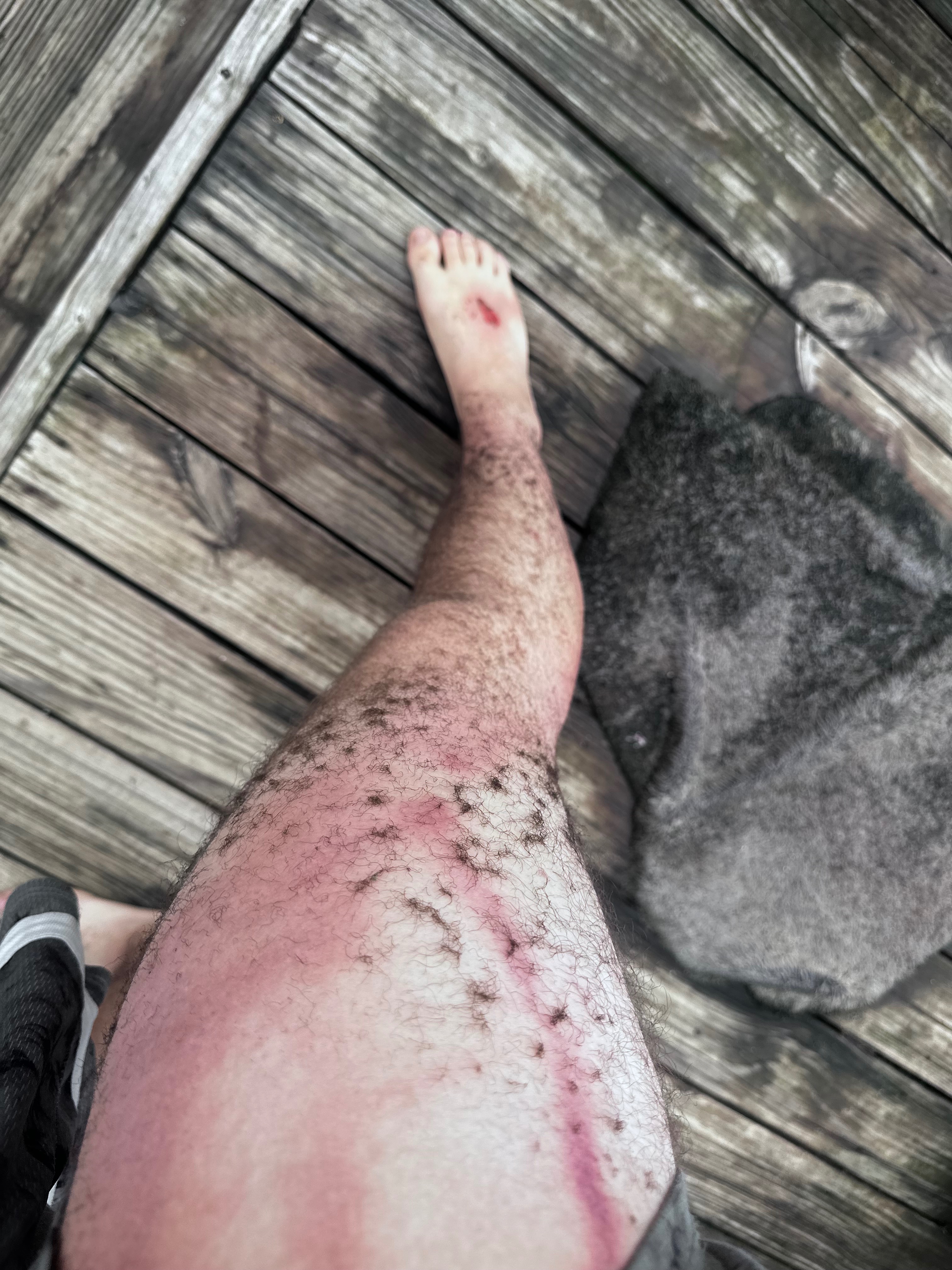
- Lichtenberg Figures: Unique, fern-like branching patterns on the skin caused by superficial capillary damage and red blood cells leaking into the dermis. These are not burns, but they serve as a distinct diagnostic indicator of a lightning strike.
- Neurological Sequelae: Temporary or permanent memory loss, confusion, peripheral nerve damage, insomnia, and chronic pain syndromes, commonly referred to as "keraunoparalysis" (temporary paralysis of the limbs accompanied by blue, cold skin).
- Sensory Impairment: Ruptured tympanic membranes (eardrums) due to the extreme acoustic shockwave of the thunderclap, along with flash burns to the eyes.
Prevention and Backcountry Safety Protocols
The only foolproof defense against lightning is avoidance and timely retreat to a safe location. Because weather in the Colorado Rockies can shift within minutes, hunters must maintain proactive safety habits.
Recognizing Environmental Precursors
Backcountry travelers should look for early warning signs of atmospheric instability long before thunder is heard.
- Towering Cumulus Clouds: The rapid vertical growth of puffy white clouds into anvil-shaped thunderheads (cumulonimbus) indicates severe updrafts and impending electrical activity.
- Static Electricity: Hair standing on end, a crackling sound in the air, metal objects vibrating or emitting a faint hum (St. Elmo's fire), and a metallic taste in the mouth indicate an immediate, severe electrical charge in the local atmosphere. Drop to your knees immediately if this occurs.
Selecting Safe Shelters
When a thunderstorm develops, hunters must avoid certain hazardous environments and seek out structural or topographical protection.
- Avoid Isolated Tall Trees: Standing under a single large tree is one of the most dangerous places during a storm, as trees act as natural lightning rods and can cause side-flashes.
- Avoid Shallow Caves and Overhangs: While caves offer protection from rain, electrical currents can travel across the rock face and jump the gap inside the mouth of the cave.
- Seek Dense Timber: The safest outdoor location is a deep forest consisting of uniformly medium-sized trees, well away from the tallest trees on the ridge.
- Use Lightning Position If Trapped in the Open: If caught in an exposed area with no timber available, crouch low on the balls of your feet with your heels touching (to minimize ground current paths), put your head down, and cover your ears to protect against acoustic trauma. Do not lie flat on the ground, as this increases your surface area for ground current absorption.
Emergency Response and Triage After a Strike
If a hunting partner or fellow backcountry traveler is struck by lightning, immediate medical intervention can mean the difference between life and death. Unlike standard trauma triage where rescuers prioritize the "quiet" patients, lightning triage reverses the rule.
Reverse Triage Protocols
In mass-casualty lightning incidents, individuals who appear dead (those in cardiac arrest or respiratory arrest) have the highest chance of survival if cardiopulmonary resuscitation (CPR) and automated external defibrillation (AED) are initiated promptly.
- Prioritize the Unresponsive: Those who are breathing spontaneously and talking will likely recover with supportive care, whereas those in cardiac arrest will die rapidly without immediate intervention.
- Initiate CPR Immediately: Because lightning causes the heart to stop, performing chest compressions and rescue breathing can manually circulate oxygenated blood until normal heart rhythm returns. Many victims can be successfully resuscitated if ventilation is supported, as the heart often restarts spontaneously after its electrical system resets, but the respiratory center remains paralyzed.
Evacuation and Communication
Once immediate life-threatening conditions are managed, stabilizing the patient for evacuation is critical.
- Treat Associated Injuries: Splint fractures caused by falls or muscle contractions, treat burns with clean dressings, and monitor for spinal injuries if the victim was thrown by the blast.
- Establish Communication: Use satellite messengers (such as Garmin inReach devices) or cell phones (if service is available) to contact county search and rescue teams or emergency dispatchers. Provide precise GPS coordinates and describe the nature of the trauma.
Frequently Asked Questions
Can lightning strike inside a hunting tent?
Yes. Standard nylon or polyester backcountry tents offer zero protection against lightning. If a tent is pitched in an exposed area, on a ridge, or under an isolated tree, it can be struck directly or experience a ground current surge. Hunters should evacuate to dense timber or lower terrain when storms approach, rather than waiting out a severe electrical storm inside a lightweight tent.
Should I drop my rifle or bow during a thunderstorm?
If you are caught in an open area during an active electrical storm with imminent signs of a strike (such as hair standing on end), immediately drop metal objects like firearms, bows, and trekking poles a safe distance away from your body. While metal does not attract lightning from afar, carrying it increases your localized conductivity if a strike occurs nearby.
What is the 30-30 rule for lightning safety?
The 30-30 rule is a guideline to help determine when to seek shelter and when it is safe to resume outdoor activities. If the time between seeing a flash of lightning and hearing the thunder is 30 seconds or less, the storm is within 6 miles and poses a direct threat, requiring immediate shelter. You should remain in a safe location until 30 minutes have passed after the last observed clap of thunder.
Are carbon-fiber arrows or bow risers safer than metal during a storm?
No. While carbon fiber is not a metal, it is a conductive material that contains carbon fibers and sometimes metal inserts that can conduct electricity. Furthermore, holding any tall object in an open area elevates your body's profile, making the material composition of the gear secondary to your geographic exposure.
Next Actions for Backcountry Hunters
Before heading into Colorado’s high-country hunting units, review regional weather forecasts daily, pack a reliable satellite communication device, and map out emergency escape routes from high timberline basins. Always establish camp in sheltered, low-elevation timber stands, and prioritize summit-free itineraries during peak afternoon storm hours to ensure a safe and successful season.
Image Gallery