The Best Solar Powered Motion Detector Lights for Your Home in 2026
The best solar-powered motion detector lights for your home combine high-efficiency monocrystalline panels with high-capacity LiFePO4 batteries and adjustable Passive Infrared (PIR) sensors. For 2026, premium models provide at least 1,...
The best solar-powered motion detector lights for your home combine high-efficiency monocrystalline panels with high-capacity LiFePO4 batteries and adjustable Passive Infrared (PIR) sensors. For 2026, premium models provide at least 1,000 to 2,500 lumens of brightness, smart-home integration via Matter or Thread protocols, and IP65-rated weatherproofing to ensure reliable outdoor security without wiring.
Contents
Solar motion detector lights have evolved from dim, unreliable garden novelties into essential components of a modern home security ecosystem. As of 2026, advancements in photovoltaic efficiency and battery density have eliminated the "flicker" and "dead-battery" issues that plagued earlier generations. Choosing the right unit requires a technical understanding of how these components interact with your specific environment, from the angle of the sun to the typical path of foot traffic on your property.
Understanding the Core Components of Solar Motion Lighting
To select the best light, you must first understand the three pillars of solar hardware: the photovoltaic panel, the energy storage system, and the sensing mechanism. In 2026, these components have reached a point of maturity where "budget" and "premium" models are distinguished primarily by build quality and software features rather than basic functionality.
Photovoltaic (PV) Panels: Monocrystalline vs. Polycrystalline
The panel is the engine of the light. Most high-performance security lights now utilize monocrystalline silicon panels. These are recognizable by their uniform dark appearance and rounded edges. They offer efficiency rates of 20% to 23%, which is critical during winter months or in northern latitudes where peak sun hours are limited. Polycrystalline panels, while cheaper, hover around 15% to 17% efficiency and often require a larger surface area to produce the same wattage, making them less ideal for compact, wall-mounted fixtures.
Energy Storage: The Shift to LiFePO4
By 2026, the industry has largely transitioned away from standard Lithium-Ion (NMC) batteries in favor of Lithium Iron Phosphate (LiFePO4). These batteries are superior for outdoor applications because they handle extreme temperature fluctuations—both high heat and freezing cold—without the degradation seen in older chemistries. They also boast a significantly higher cycle life, often lasting 2,000 to 3,000 charge cycles, which equates to roughly 5 to 8 years of nightly use before the capacity drops significantly.
Motion Sensing: PIR and mmWave Radar
The "motion" part of the light typically relies on a Passive Infrared (PIR) sensor. This technology detects changes in infrared radiation—essentially heat signatures moving across its field of view. Higher-end 2026 models sometimes incorporate mmWave radar (millimeter-wave), which can "see" through light foliage or rain to reduce false triggers from wind-blown branches while maintaining high sensitivity to human-sized objects.
Technical Specifications to Prioritize
When comparing models, certain metrics dictate the practical utility of the light. A light that is too dim fails as a security measure, while one with a poor sensor range creates "blind spots" on your property.
- Lumens and Brightness: For a standard front door or walkway, 500 to 800 lumens is sufficient. For large driveways or backyard security, look for "floodlight" style units that output 1,500 to 2,500 lumens. Note that solar lights often have a "dim mode" that stays on all night, only jumping to full brightness when motion is detected.
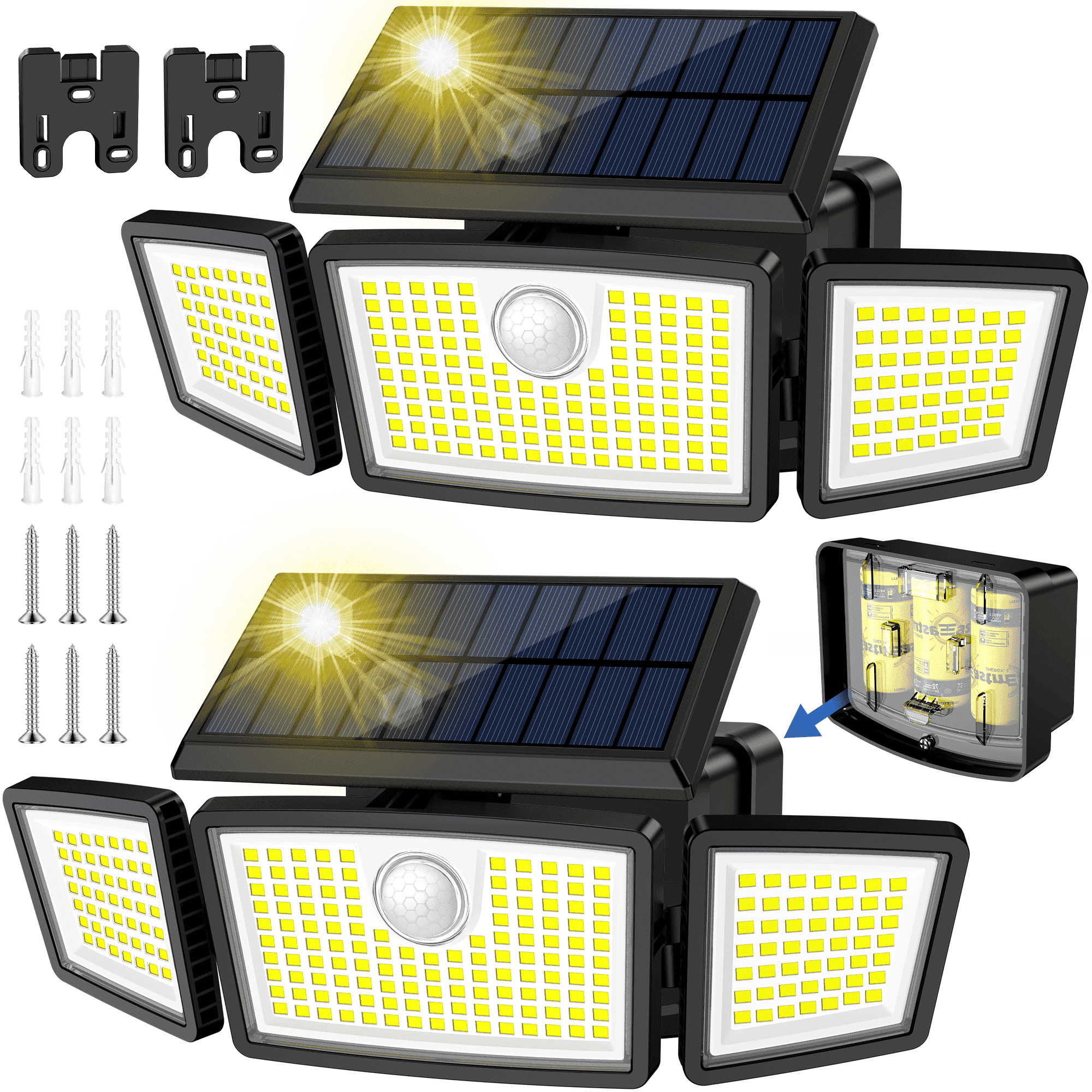
- Detection Angle and Range: A standard sensor covers 120 degrees. However, "triple-head" designs or wrap-around sensors can provide up to 270 degrees of coverage. The range should be at least 25 to 30 feet for most residential applications.
- Color Temperature (Kelvin): Most security lights use "cool white" LEDs (5000K to 6000K) because the blue-white light appears brighter and more startling to intruders. For aesthetic path lighting, "warm white" (2700K to 3000K) is preferred.
- IP Ratings: At a minimum, an outdoor light must be IP65 rated. This indicates the unit is dust-tight and protected against water jets from any angle. In hurricane-prone or heavy-rain regions, an IP67 rating (protection against temporary immersion) provides additional peace of mind.
Comparison of Leading Solar Motion Light Categories
The market in 2026 is divided into three primary categories based on use case. The following table compares the typical specifications you should expect in each category.
| Feature | Integrated All-in-One | Detachable Panel Floodlight | Decorative Path Light |
|---|---|---|---|
| Typical Lumens | 800 – 1,200 | 1,500 – 3,000 | 100 – 300 |
| Battery Capacity | 2,200 – 4,400 mAh | 5,000 – 10,000 mAh | 600 – 1,200 mAh |
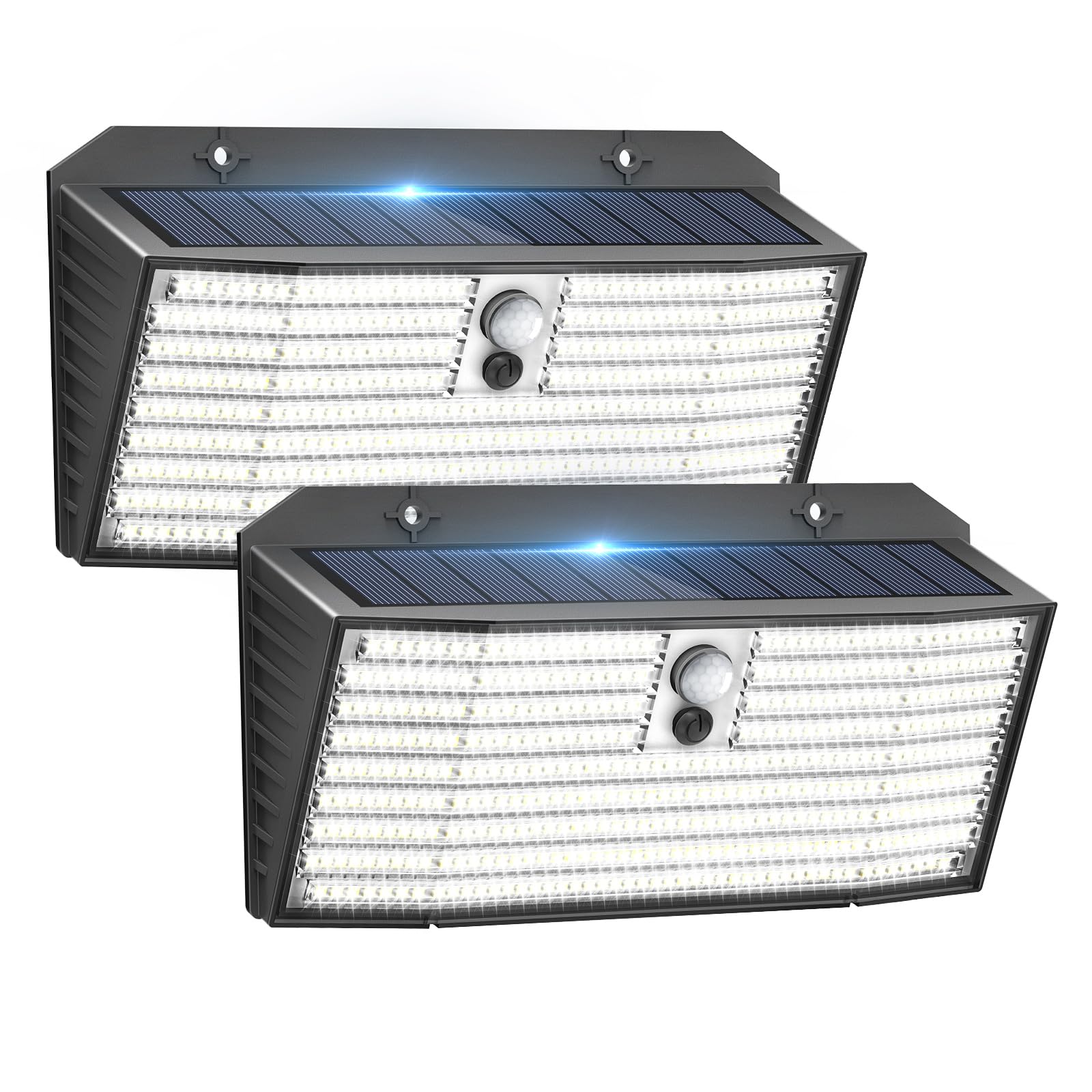
| Best For | Front doors, side alleys | Large driveways, sheds | Walkways, garden beds |
| Installation | Direct wall mount | Split mount (panel + light) | Ground stake or low wall |
| Adjustability | Limited | High (3-head rotation) | None to minimal |
Smart Home Integration and Connectivity
One of the most significant developments in 2026 is the widespread adoption of the Matter over Thread protocol in solar lighting. This allows solar lights to act as triggers for other smart home devices. For example, when your backyard solar light detects motion at 3:00 AM, it can simultaneously:
- Turn on your indoor hallway lights.
- Trigger a recording on your smart doorbell.
- Send a high-priority notification to your smartphone.
This level of connectivity was previously reserved for hardwired systems. In 2026, the best solar lights function as nodes in a mesh network, ensuring that even lights far from the house can communicate reliably with your central hub.
Strategic Placement for Maximum Efficiency
The performance of even the best solar light is heavily dependent on its placement. Unlike hardwired lights, "set it and forget it" only works if the initial "set" is geographically optimized.
Maximizing Solar Harvest
The solar panel must face the equator (South in the Northern Hemisphere) to capture the maximum amount of solar radiation. Avoid placing panels under eaves, large trees, or in the shadow of the house itself. Even "partial shading"—where a small corner of the panel is covered—can reduce power output by as much as 50% because of how the photovoltaic cells are wired in series.
Optimizing Sensor Field of View
PIR sensors are most sensitive to motion that moves across their field of vision rather than directly toward them. For the most responsive experience, mount the light so that an intruder or visitor would walk perpendicular to the sensor. The ideal mounting height is generally between 6.5 and 8 feet; mounting it too high reduces the sensor's sensitivity at ground level, while mounting it too low limits the overall light spread.
Maintenance and Longevity in 2026
While solar lights are low-maintenance, they are not zero-maintenance. To ensure your lights last the full 5 to 8 years expected of 2026 hardware, follow these guidelines:
- Panel Cleaning: Dust, pollen, and bird droppings can accumulate on the PV panel, blocking sunlight. Wipe the panels with a damp cloth every three months to maintain charging efficiency.
- Battery Management: If you live in an area with a dark winter, some lights allow you to switch to a "Power Save" mode that reduces the brightness or duration of the light to preserve battery health when the sun isn't strong enough to provide a full charge.
- Physical Inspection: Check the seals and gaskets once a year. While IP65 ratings are robust, the expansion and contraction caused by seasonal temperature changes can eventually create gaps where moisture might enter.
Frequently Asked Questions
Do solar motion lights work in the winter?
Yes, but with reduced capacity. Modern monocrystalline panels are efficient enough to charge even on overcast days. However, since the "sun-up" time is shorter in winter, the light may not stay on as long if it is set to a "constant-on" mode. In motion-only mode, most high-quality 2026 lights will function normally throughout the winter.
Can I replace the batteries in solar motion lights?
In many 2026 models, the batteries are user-replaceable. Look for units that use standard sized cells (like 18650 or 26650 LiFePO4 cells) housed behind a screwed-on panel. This allows you to refresh the light after several years rather than replacing the entire fixture, making it a more sustainable and cost-effective choice.
How many lumens do I need for a driveway?
For a standard two-car driveway, you should aim for a minimum of 1,500 lumens. This is typically achieved using a "triple-head" solar floodlight, where the center head points down the driveway and the two side heads are angled to illuminate the edges and the garage door.
Will rain or snow damage the lights?
As long as the light has an IP65 rating or higher, it is designed to withstand rain, snow, and sleet. However, heavy snow accumulation on the solar panel will stop the charging process. It is important to clear snow off the panels after a storm to ensure the battery doesn't deep-discharge, which can shorten its lifespan.
Are solar motion lights bright enough for security?
In 2026, yes. Advanced LED drivers and high-density chips allow solar units to match the brightness of 100W to 150W halogen bulbs. While they may not have the "infinite" power of a hardwired system, the 2,000+ lumens provided by top-tier solar models are more than enough to startle an intruder and provide clear footage for security cameras.
Final Recommendation
When shopping for the best solar-powered motion detector lights in 2026, prioritize models featuring LiFePO4 batteries and Matter compatibility for the best long-term value. For general home security, the detachable panel floodlight remains the most versatile choice, as it allows you to mount the light in a shaded area (like under a porch) while placing the solar panel in direct sunlight via an extension cable. Always verify the IP65 rating and look for a manufacturer warranty of at least 24 months to ensure you are protected against the elements.
Image Gallery