Finding the Cheapest Classic Car Insurance: A Strategic Guide for 2026
Securing the most affordable classic car insurance requires a specialized approach that moves beyond standard auto policy underwriting. Because classic vehicles are typically driven less frequently and maintained to higher standards th...
Securing the most affordable classic car insurance requires a specialized approach that moves beyond standard auto policy underwriting. Because classic vehicles are typically driven less frequently and maintained to higher standards than daily commuters, the cheapest premiums are found by leveraging "agreed value" policies through niche insurers rather than seeking low-cost quotes from general-market providers.
Contents
Understanding Classic Car Insurance vs. Standard Auto Insurance
To find the cheapest rates, you must first understand why classic car insurance is fundamentally different from a standard policy. Standard auto insurance is designed for vehicles that depreciate, and premiums are calculated based on the cost to repair or replace the car with a similar model in the current market.
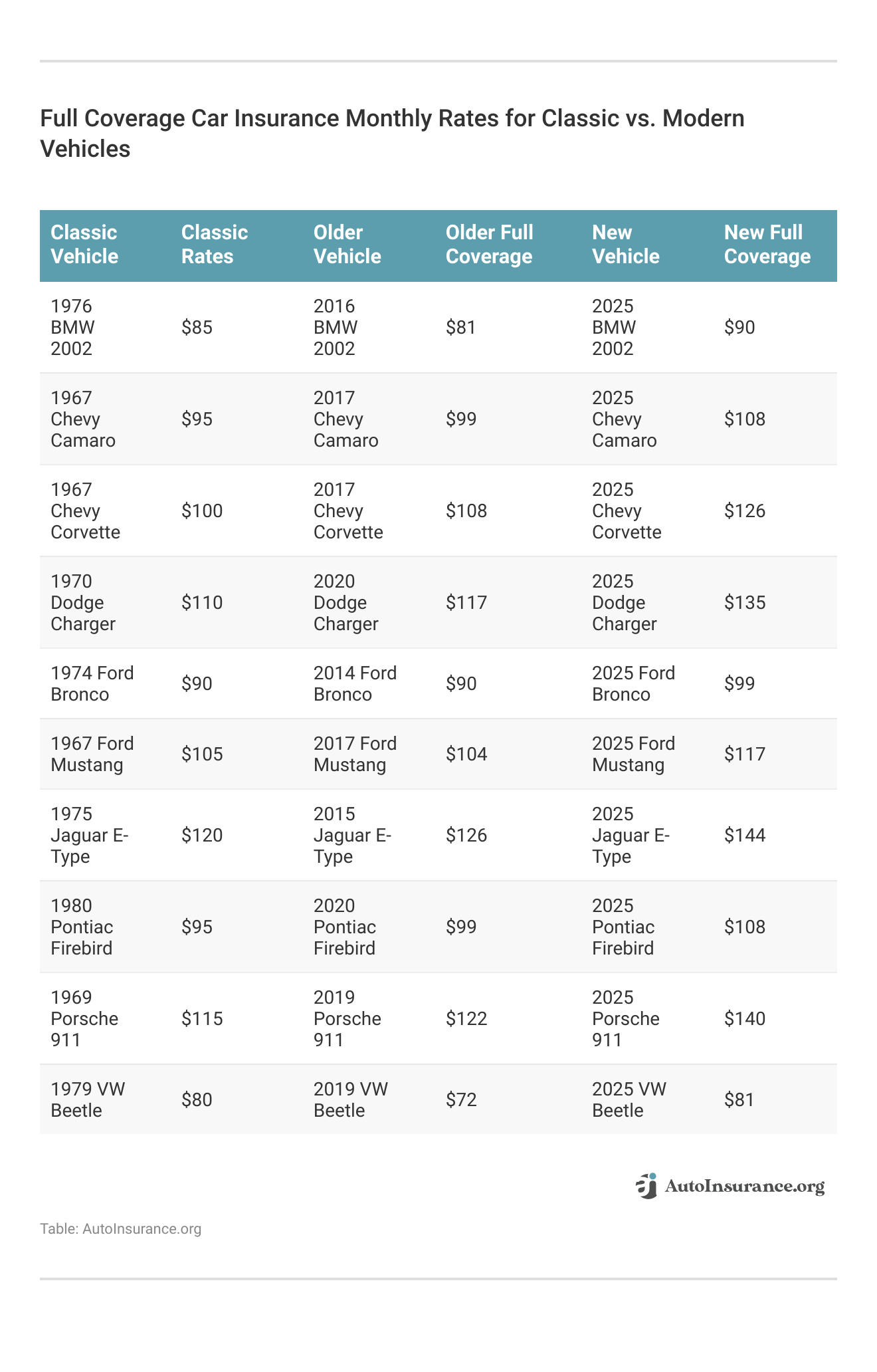
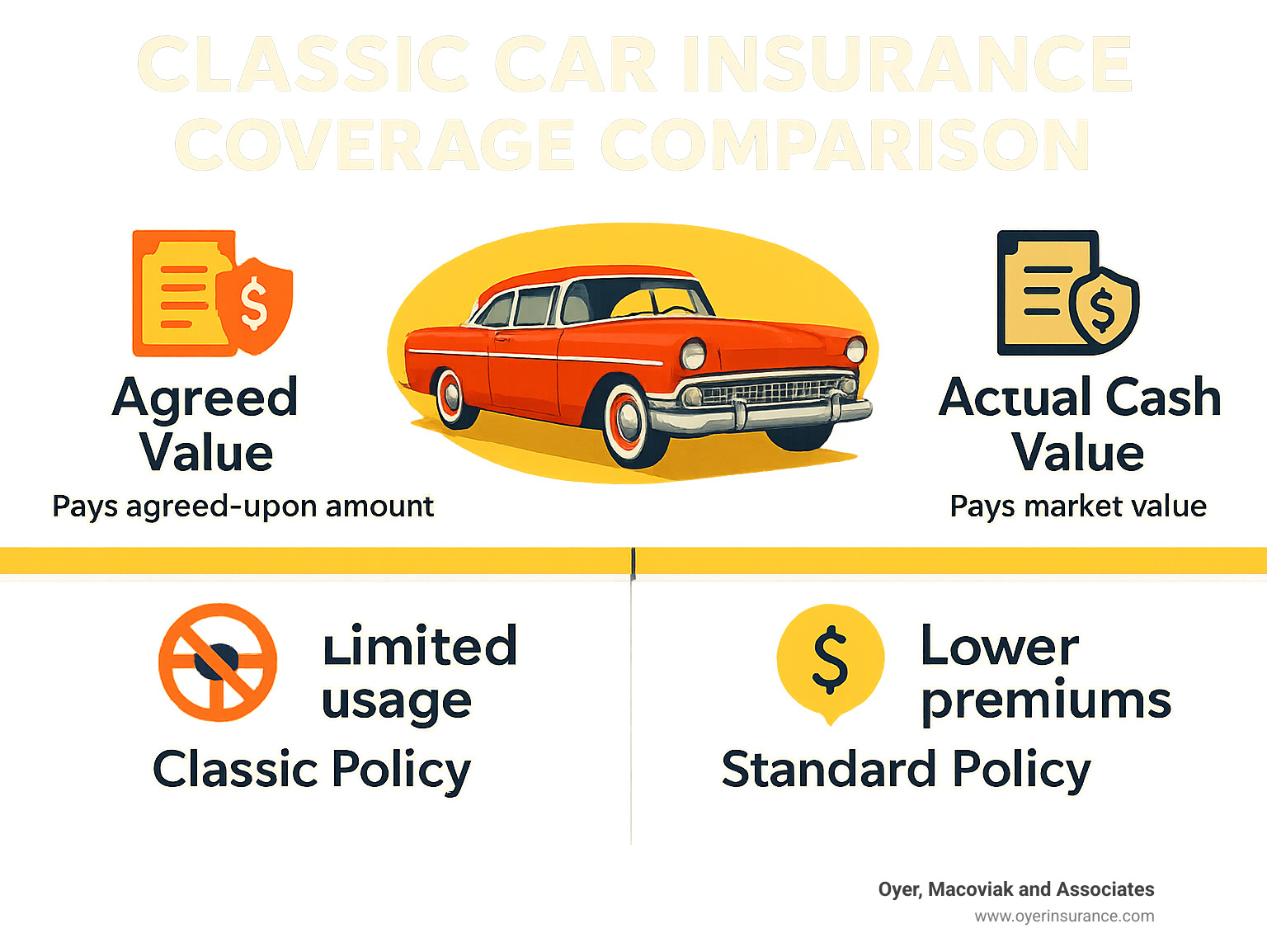
Classic car insurance is built on the concept of "Agreed Value." You and the insurer agree on the total value of your vehicle at the time the policy is written. If you have a total loss, the insurance company pays that amount, minus any deductible, without the depreciation arguments common in standard claims. Because classic cars are often kept in garages, driven for exhibition or limited weekend use, and meticulously maintained, they represent a lower statistical risk to the insurer. This risk profile is the primary driver of lower premiums compared to daily-driver vehicles.
Eligibility Prerequisites for Low-Cost Coverage
Insurance companies providing specialized classic car policies have strict underwriting guidelines. These requirements are not designed to be exclusionary; rather, they ensure that the insured vehicle is truly a "classic" or "collector" car rather than a neglected older vehicle. To qualify for the cheapest rates, your vehicle must usually meet the following criteria:
- Limited Usage: Most insurers strictly limit the annual mileage (often between 2,500 and 5,000 miles). If you plan to use the vehicle as a primary daily commuter, you will likely be disqualified from low-cost collector rates.
- Storage Requirements: You must provide proof of secure, enclosed, and private storage—typically a locked residential garage. Street parking or driveway storage generally disqualifies a vehicle from these specialized policies.
- Owner Profile: Most carriers require the primary driver to have a clean driving record for at least three to five years. Additionally, many insurers require the owner to have a secondary, modern vehicle insured as a daily driver.
- Vehicle Condition: The car must be well-maintained and in good operating condition. While "projects" can be insured, premiums for a car that is not roadworthy are structured differently than those for a pristine weekend cruiser.
How to Calculate and Compare Costs
When shopping for the lowest rate, do not rely on generic price comparison websites. These portals are designed for daily-driver insurance and rarely capture the nuances of collector coverage. Instead, you should request quotes directly from carriers specializing in classic and antique automotive insurance.
To compare effectively, you must normalize your quotes. Ensure every agent is quoting based on the same "Agreed Value" for your vehicle. If one company quotes for $30,000 and another for $20,000, the premiums will not be comparable. Furthermore, check the "liability-only" vs. "full coverage" options, but bear in mind that because the base premium for classic insurance is already low, opting for full coverage (comprehensive and collision) is often remarkably inexpensive.
Comparison Framework for Collector Policies
| Feature | Standard Auto Policy | Specialized Classic Policy |
|---|---|---|
| Valuation | Actual Cash Value (Depreciated) | Agreed Value (Fixed) |
| Mileage | Unlimited | Strictly Limited |
| Premium Cost | Higher (High Risk) | Lower (Low Risk) |
| Storage | Anywhere | Enclosed Garage Required |
| Repair Parts | Aftermarket/Used Permitted | Original/OEM Preference |
Strategies for Reducing Premiums
If you are looking to trim costs even further, consider the following tactical adjustments:
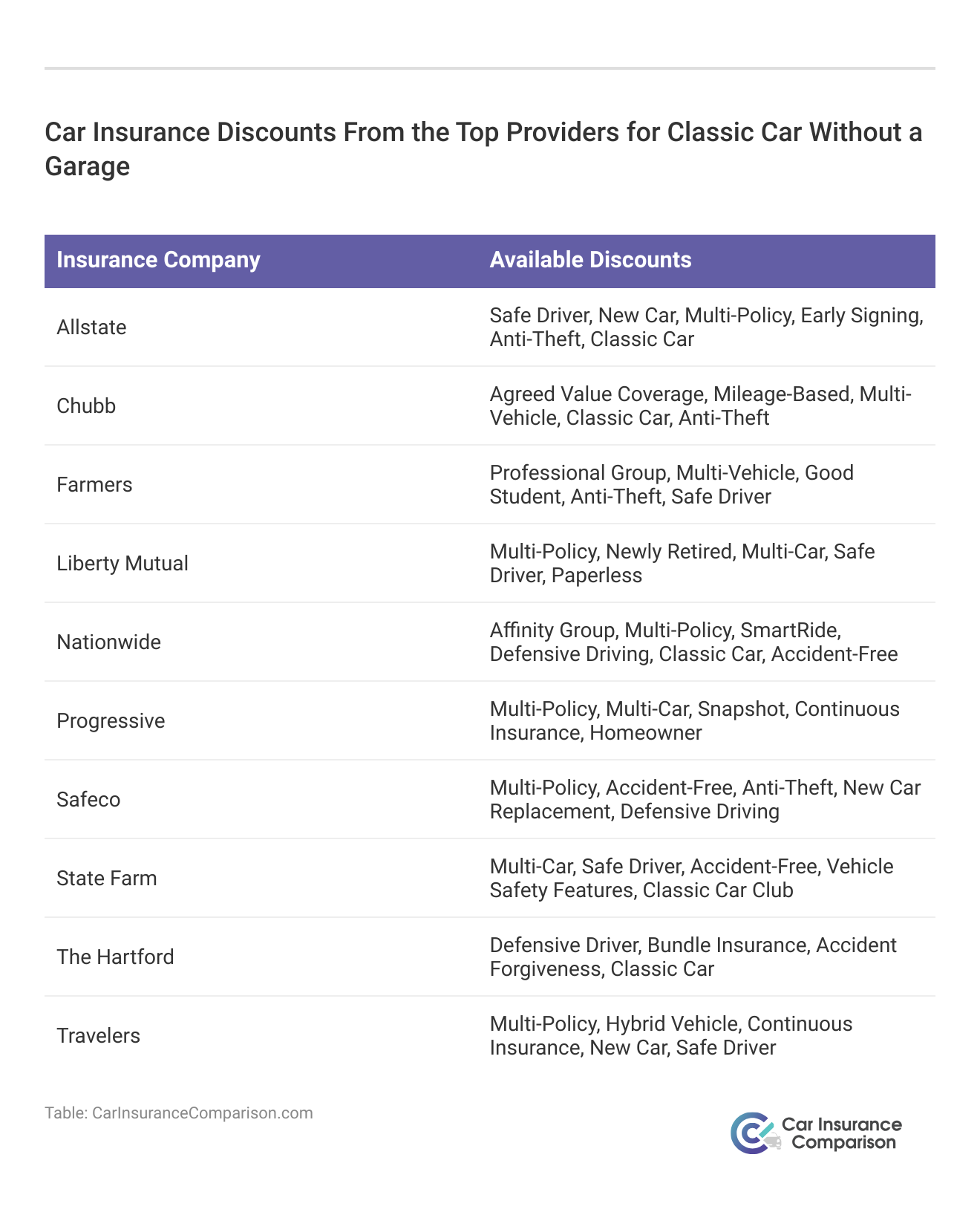
- Multi-Vehicle Discounts: If you own a collection, insuring multiple cars under one provider often results in significant "bundle" savings. Some companies offer specific "collector collection" policies that cover an entire stable of vehicles under one premium structure.
- Safety Upgrades: While classic cars lack modern safety features, many insurers offer discounts for verified anti-theft devices, such as kill switches, GPS trackers, or fire suppression systems stored in the garage.
- Club Membership: Several insurers provide discounts if you are a member of a nationally recognized car club (e.g., the Antique Automobile Club of America). Membership signals to the underwriter that you are a responsible enthusiast who actively maintains the vehicle.
- Higher Deductibles: If you are confident in your storage security and driving habits, opting for a higher deductible can lower your annual premium. However, exercise caution: ensure the deductible is not so high that it creates a financial hardship in the event of a covered loss.
Common Mistakes to Avoid
The most common error is misrepresenting the vehicle’s intended use. If an insurer discovers that a car insured for "exhibition/pleasure" was actually being used for daily commuting or occasional track racing, they may deny a claim or cancel the policy entirely.
Another mistake is failing to update your "Agreed Value" periodically. As the classic car market fluctuates, a vehicle that was worth $20,000 in 2023 might be worth $30,000 in 2026. If you have an accident and your policy value is lower than the actual market value, you lose money. If your value is too high, you are paying for insurance on equity you do not possess. Review your valuation annually with your agent.
Navigating the Claims Process
The "cheapest" policy is only valuable if it provides reliable protection when needed. Before committing to the lowest quote, review the insurer's reputation regarding claims. A low-cost policy that features poor customer service or uses substandard repair shops may cost you more in the long run.
Verify whether the policy includes "Original Parts" coverage. Many cheap policies attempt to use aftermarket or salvage yard parts during repairs. A high-quality classic policy should stipulate that the insurer will prioritize original equipment manufacturer (OEM) or period-correct parts to maintain the vehicle's provenance and value.
Frequently Asked Questions
Is classic car insurance cheaper than a daily driver policy? Yes, it is almost always significantly cheaper. Insurers view classic cars as low-risk assets that are protected from the hazards of daily commuting, which results in much lower premiums for the same levels of liability and physical damage protection.
Can I use my classic car for work? Generally, no. Most policies explicitly prohibit commercial use or commuting. If you drive the car to work, even occasionally, you may invalidate your coverage. Check your specific policy wording regarding "occasional pleasure use" versus "commuting."
Does the age of the car determine the price? Age is a factor, but condition and rarity are more critical. A 20-year-old vehicle in pristine, collectible condition may cost less to insure than a 60-year-old vehicle that is in poor mechanical shape, due to the different risk profiles involved in their potential repair costs.
What happens if the market value of my car rises? With an "Agreed Value" policy, the value is locked until you and the insurer agree to change it. You should contact your agent every 12 to 24 months to discuss whether your coverage limit should be adjusted upward to reflect the current market appreciation of your specific make and model.
Are there hidden fees in the cheapest policies? Sometimes, policies that advertise the absolute lowest premiums may lack essential features like "trip interruption coverage" or "spare parts coverage." Always review the "declarations page" of the policy to see exactly what is included before signing.
Final Recommendation
To secure the most competitive rate in 2026, begin by gathering all documentation regarding your vehicle’s condition, a recent appraisal, and proof of your daily driver. Contact at least three specialized collector car insurers. Do not focus solely on the dollar amount of the premium; focus on the total cost of ownership, including the "Agreed Value" limit and the company’s reputation for honoring claims without forcing the use of non-original parts. Prioritize companies that provide clear, written documentation regarding their mileage and usage restrictions so you can ensure your driving habits remain within the scope of your coverage.
Image Gallery