5 Emerging Trends in 3D Printed Orthopedic Implants
The evolution of 3D printed orthopedic implants is shifting medical manufacturing from mass production to patient-specific engineering, combining advanced lattice structures, smart sensor integration, biodegradable materials, AI-driven...
The evolution of 3D printed orthopedic implants is shifting medical manufacturing from mass production to patient-specific engineering, combining advanced lattice structures, smart sensor integration, biodegradable materials, AI-driven surgical planning, and decentralised hospital point-of-care production.
Contents
The medical device sector has undergone a profound transformation over the past decade, moving steadily away from off-the-shelf, one-size-fits-all hardware toward highly customized solutions. Orthopedic surgery, in particular, relies heavily on precision, anatomical alignment, and biomechanical stability. Traditional manufacturing methods, such as CNC milling and conventional casting, impose strict geometric limitations that often make it difficult to replicate complex bone contours or achieve optimal load transfer.
The advent of additive manufacturing—commonly known as 3D printing—has dismantled these barriers. By building components layer by layer using medical-grade titanium alloys, polyetheretherketone (PEEK), and bioactive ceramics, engineers can fabricate devices that match a patient's exact anatomical profile. However, the technology has moved well past basic custom geometry. Current advancements focus on cellular integration, real-time physiological monitoring, and streamlined clinical workflows. Evaluating these developments requires examining both the technical specifications driving innovation and the operational challenges healthcare providers face during clinical adoption.
1. Advanced Biomimetic Lattice Structures for Enhanced Osseointegration
One of the most significant shifts in orthopedic implant design is the widespread adoption of biomimetic lattice structures. Traditional solid metal implants often suffer from a phenomenon known as "stress shielding." Because solid metals like cobalt-chrome or dense titanium possess a much higher stiffness (elastic modulus) than human cortical and cancellous bone, the implant bears the vast majority of the mechanical load. Consequently, the surrounding bone tissue experiences reduced mechanical stimulation, leading to localized resorption, bone atrophy, and long-term implant loosening.
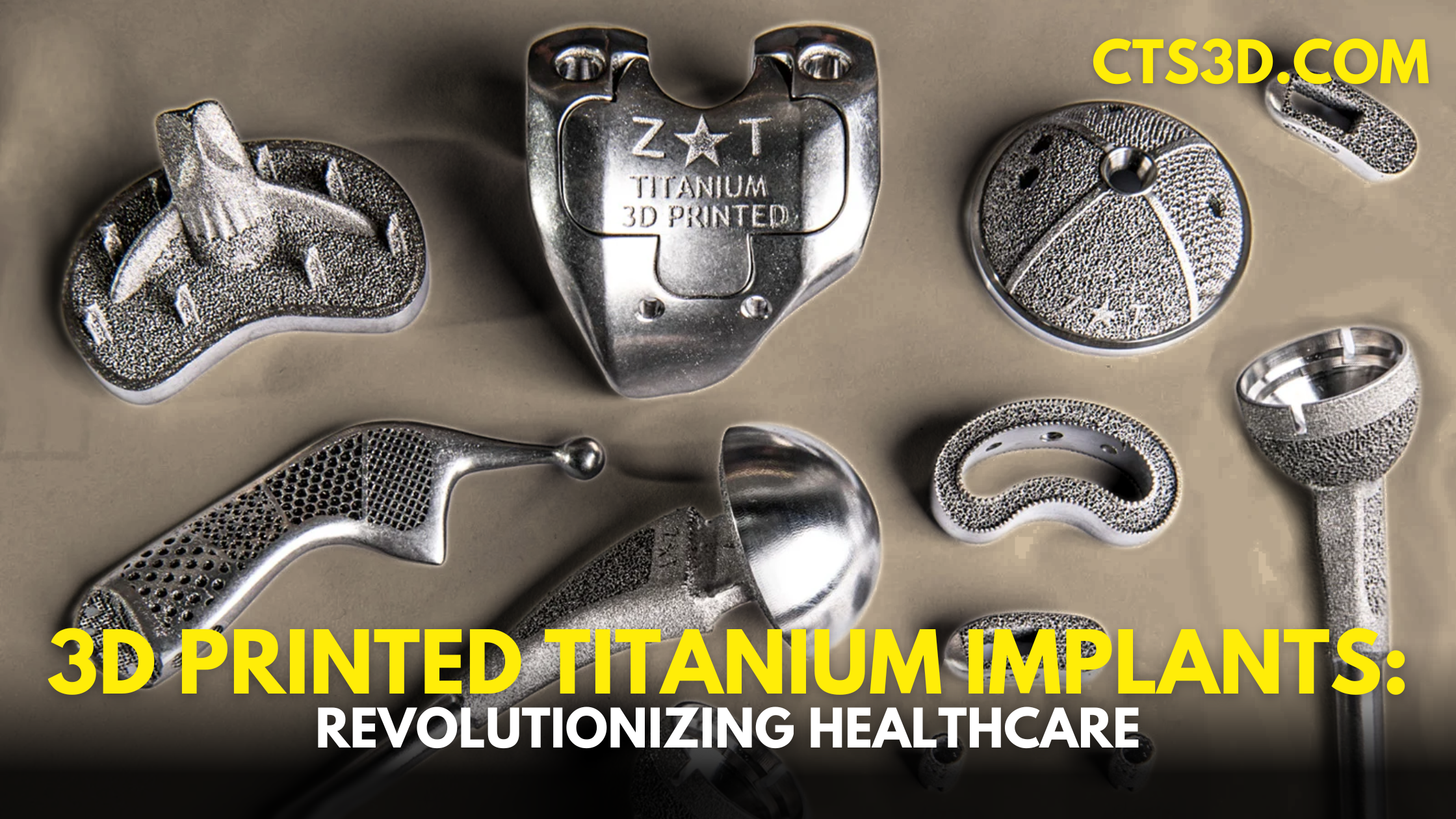
3D printing solves this challenge by enabling the fabrication of complex, porous interior architectures that mimic the porosity and mechanical properties of trabecular bone.
- Controlled Porosity: Engineers can adjust pore sizes, typically ranging from 300 to 800 micrometers, which clinical studies show provides the optimal environment for osteoblast migration and capillary ingrowth.
- Elastic Modulus Matching: By altering the unit-cell geometry of the lattice, manufacturers can lower the bulk stiffness of the implant, ensuring that mechanical loads are shared more evenly between the device and the host bone.
- Frictional Cohesion: High surface roughness combined with interconnected pore networks increases initial primary stability, reducing micromotion during the critical post-operative healing window.
Regulatory bodies such as the U.S. Food and Drug Administration (FDA) evaluate these complex geometries through rigorous fatigue testing, wear debris analysis, and computerized tomography (CT)-based finite element analysis to ensure long-term structural integrity under physiological cyclic loading.
2. Integration of Smart Sensors for Post-Operative Monitoring
Implant failure is frequently difficult to diagnose in its early stages, often requiring invasive exploratory procedures or inconclusive imaging. To address this, researchers and device manufacturers are embedding micro-sensors and telemetry systems directly into 3D printed orthopedic implants. These "smart" implants are designed to track real-time physiological data, providing clinicians with objective metrics regarding recovery progress and structural health.
The manufacturing process for smart implants requires close collaboration between mechanical engineers and electronics specialists. Pockets and micro-channels are intentionally designed into the titanium or PEEK structure during the 3D printing process to house piezoelectric sensors, strain gauges, and tiny radio-frequency identification (RFID) tags without compromising the load-bearing capacity of the device.
Smart Implant Architecture
- [3D Printed Lattice Structure] (Load-Bearing Titanium/PEEK)
- [Embedded Piezoelectric Sensor] (Strain & Force Measurement)
- [Micro-Telemetry Unit] (Wireless Data Transmission)
- [External Clinician Dashboard] (Real-Time Recovery Tracking)
- [Micro-Telemetry Unit] (Wireless Data Transmission)
- [Embedded Piezoelectric Sensor] (Strain & Force Measurement)
Clinical Value and Data Collection
These embedded sensors measure continuous in vivo parameters, including:
- Load Sharing: Quantifying the exact weight-bearing distribution across the joint replacement over time.
- Micro-Motion Detection: Identifying abnormal movement at the bone-implant interface that might indicate early-stage aseptic loosening.
- Local Temperature Tracking: Monitoring for early signs of post-operative deep-pauciarticular infections before systemic inflammatory markers appear.
While the clinical utility is substantial, challenges remain regarding power supply longevity (often solved via inductive charging or energy harvesting from human movement) and data security compliance under healthcare regulations like HIPAA.
3. Bioresorbable and Degradable Polymer Composites
While permanent metallic implants remain the standard for major joint replacements, a substantial subset of orthopedic procedures—such as pediatric reconstructions, cranial defect repairs, and small bone fracture fixations—benefit greatly from materials that gradually degrade as natural bone heals. The third major trend involves the advancement of 3D printable bioresorbable polymers and composite biomaterials.
Materials such as polycaprolactone (PCL), polylactic acid (PLA), and tricalcium phosphate (TCP) composites can be processed via fused deposition modeling (FDM) or selective laser sintering (SLS). These materials undergo hydrolysis within the body, breaking down into harmless metabolic byproducts that are naturally excreted, eliminating the need for secondary removal surgeries.
| Material | Primary Application | Degradation Timeline | Key Advantage |
|---|---|---|---|
| Titanium Alloys (Ti6Al4V) | Joint Replacements, Spinal Cages | Permanent (Non-degradable) | Exceptional fatigue strength and biocompatibility |
| PEEK (Polyetheretherketone) | Spinal Fusion, Craniomaxillofacial | Permanent (Non-degradable) | Radiolucent, modulus close to human bone |
| PCL-TCP Composites | Bone Graft Substitutes, Scaffolds | 12 to 24 Months | Bioactive resorption; promotes natural bone remodeling |
| Magnesium Alloys | Pediatric Bone Plates, Screws | 6 to 18 Months | Provides mechanical support, then safely dissolves |
The primary engineering hurdle in bioresorbable 3D printing is maintaining structural integrity during the initial high-load phases of bone healing while ensuring the degradation rate matches the patient's osteogenesis speed. Accelerated degradation can lead to premature loss of mechanical support, while delayed degradation can trigger chronic foreign-body inflammatory responses.
4. AI-Driven Patient-Specific Surgical Planning and Automated Design
Designing a custom 3D printed implant is a data-intensive process that traditionally requires extensive manual segmentation of medical imaging scans by biomedical engineers. This workflow can introduce bottlenecks, delaying surgery by several days or weeks. The integration of Artificial Intelligence (AI) and machine learning algorithms into the design pipeline has revolutionized this workflow, enabling near-instantaneous segmentation and generative design optimization.
Automated Digital Workflows
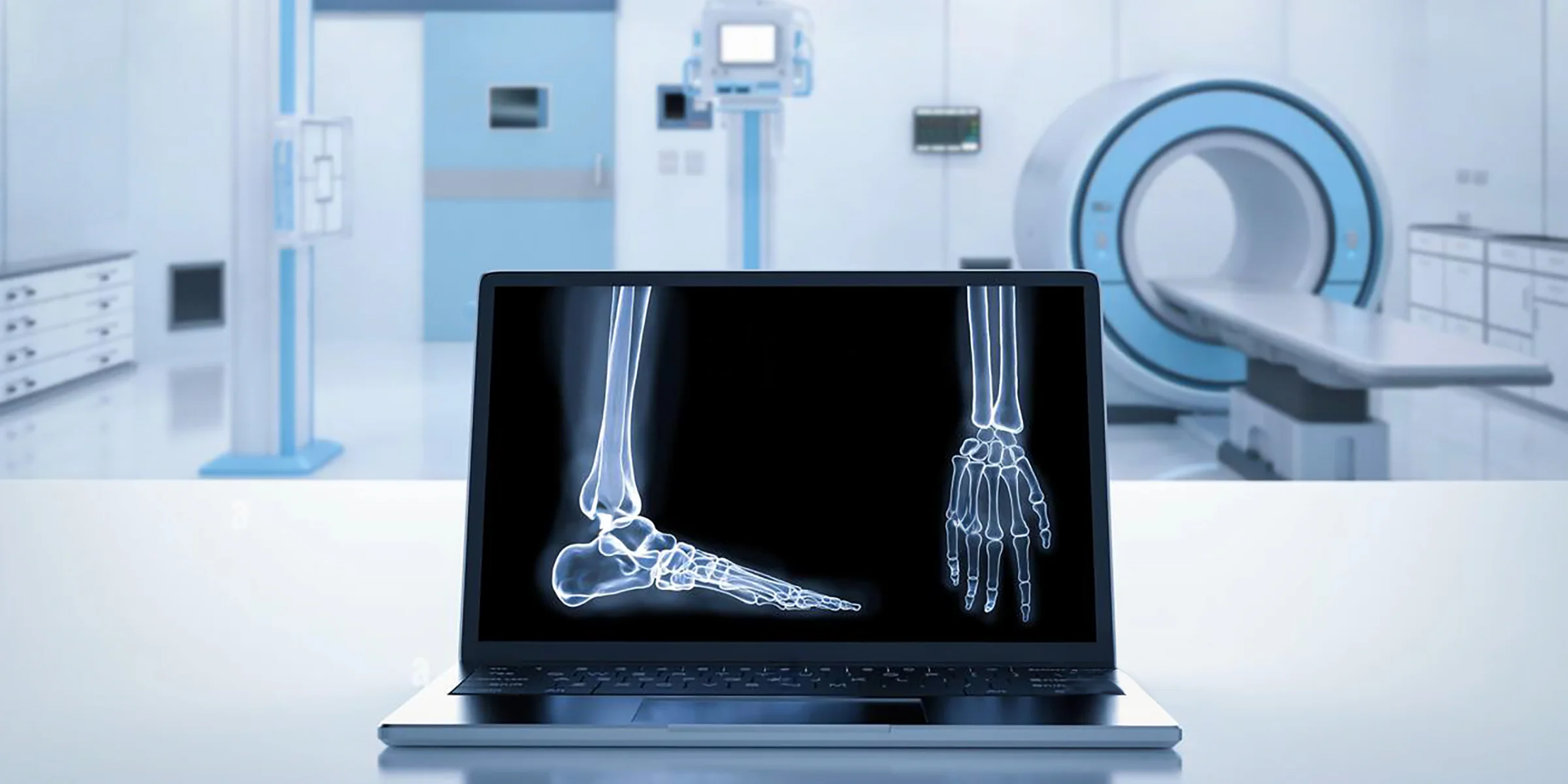
- Image Segmentation: Convolutional neural networks (CNNs) process raw DICOM (Digital Imaging and Communications in Medicine) files from CT or MRI scans, automatically isolating bone, cartilage, and vascular structures in seconds.
- Generative Design: AI software applies topological optimization algorithms to generate implant shapes based on boundary conditions, such as expected physiological forces, range of motion, and patient-specific bone density maps.
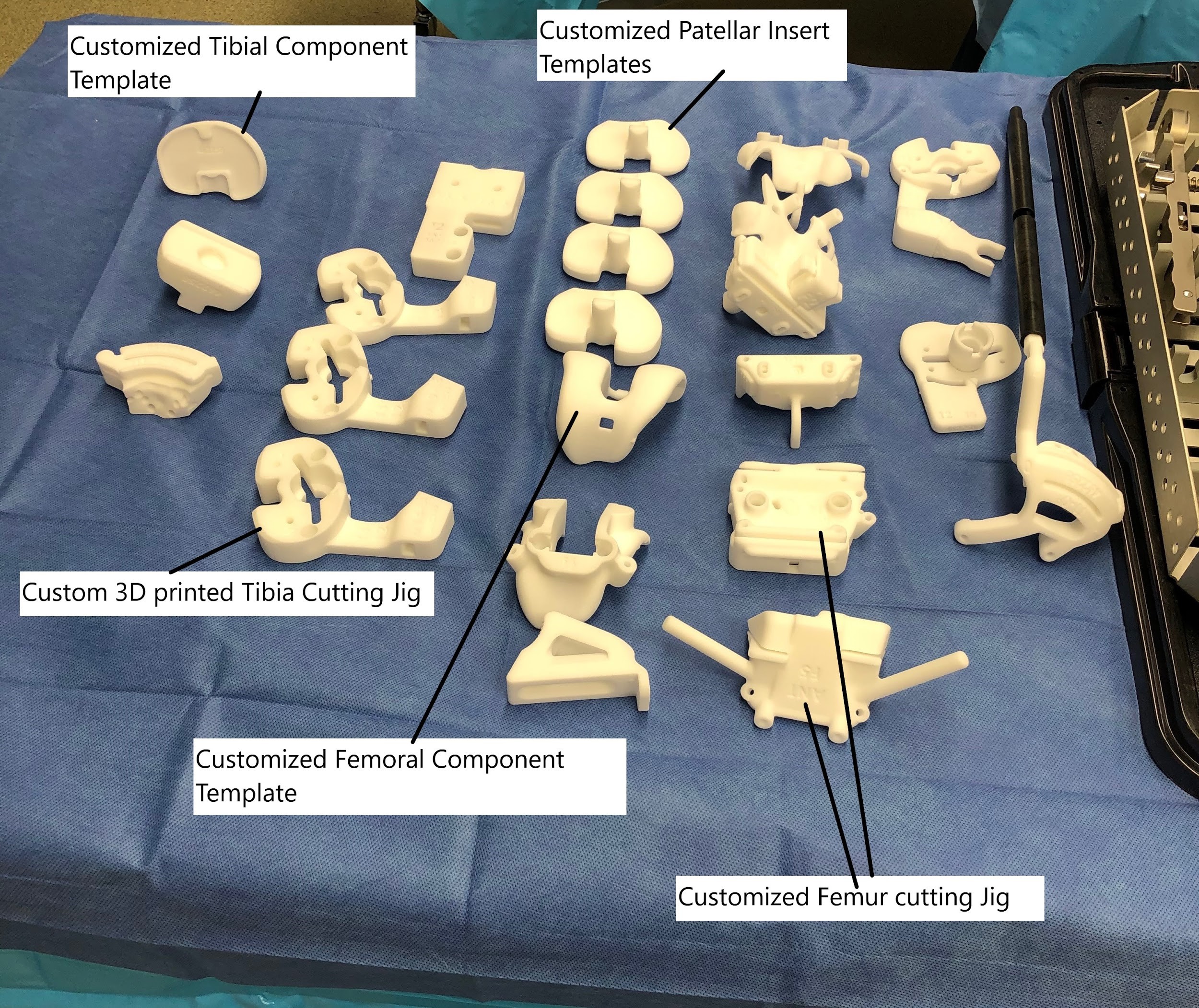
- Patient-Specific Instrumentation (PSI): Beyond the implant itself, AI automates the design of custom surgical cutting guides that fit the exact topography of the patient's bone, ensuring precise intraoperative execution.
This automation significantly reduces turnaround times, lowers manufacturing overhead costs, and broadens access to personalized surgical care for patients with rare pathologies or complex revision surgeries.
5. Decentralized Point-of-Care Manufacturing in Hospitals
Historically, medical device manufacturing was centralized in large-scale industrial facilities, requiring significant shipping logistics and prolonged lead times. The final emerging trend is the establishment of certified, hospital-integrated 3D printing laboratories. Leading academic medical centers and large healthcare networks are installing clinical-grade 3D printers directly within their facilities to enable point-of-care (PoC) manufacturing.
Decentralized Point-of-Care Workflow
- Patient Imaging Acquired (CT / MRI Scan)
- In-House AI Segmentation & Design Verification
- Local Printing & Sterilization within Hospital Lab
- Direct Delivery to Operating Suite (Same-Day Turnaround)
- Local Printing & Sterilization within Hospital Lab
- In-House AI Segmentation & Design Verification
Operational Considerations and Regulatory Oversight
Operating a 3D printing lab inside a clinical environment introduces unique governance requirements. Hospitals must establish rigorous quality management systems (QMS) aligned with standards such as ISO 13485.
- Validation of Equipment: Every printer, powder recycling station, and post-processing furnace must be validated for repeatability and material purity.
- Sterilization Protocols: Implantable devices require strict sterilization validation (e.g., steam autoclaving or gamma irradiation) to prevent surgical site infections.
- Legal Liability: Shifting manufacturing from traditional medical device companies to healthcare providers blurs lines of regulatory accountability, requiring clear institutional frameworks and liability insurance policies.
Frequently Asked Questions
What are the main materials used in 3D printed orthopedic implants?
The most common materials include medical-grade titanium alloys (Ti-6Al-4V) for high-load structural joints, polyetheretherketone (PEEK) for spinal and craniomaxillofacial applications due to its radiolucency, and bioresorbable polymers like polycaprolactone (PCL) combined with tricalcium phosphate for bone scaffolds.
How do 3D printed implants prevent stress shielding?
Traditional solid metal implants are much stiffer than human bone, causing the implant to bear all the load and leading to bone loss around it. 3D printing allows engineers to create porous lattice structures that match the elasticity of human bone, ensuring normal mechanical load sharing and healthy bone remodeling.
Can 3D printed implants be sterilized in standard hospital autoclaves?
Many 3D printed polymer and titanium implants can undergo standard hospital sterilization procedures, such as autoclaving, provided they have been validated for cleanroom packaging and thermal stability. However, complex smart implants containing sensitive microelectronics require specialized low-temperature sterilization methods like ethylene oxide (EtO) or hydrogen peroxide gas plasma.
How long does it take to manufacture a patient-specific orthopedic implant?
With traditional centralized manufacturing, lead times can range from two to four weeks. However, with the integration of AI-driven design software and decentralized hospital point-of-care 3D printing laboratories, turnaround times can be reduced to anywhere from 24 to 72 hours for urgent trauma or oncological cases.
Are 3D printed orthopedic implants covered by medical insurance?
Insurance coverage varies widely depending on the geographic jurisdiction, the specific clinical indication, and whether the implant is classified as standard-of-care or investigational. Standard patient-specific reconstruction plates and hip/knee replacements are frequently reimbursed when medically necessary, whereas experimental smart implants may require prior authorization or participation in clinical registries.
Conclusion and Next Steps
The integration of advanced biomimetic lattices, smart sensors, bioresorbable composites, AI-driven workflows, and decentralized hospital production marks a permanent shift in orthopedic surgery. Healthcare providers, biomedical engineers, and hospital administrators looking to adopt these technologies should begin by conducting a comprehensive infrastructure audit, establishing certified quality management workflows, and partnering with regulatory compliance experts to navigate local device clearance requirements.
Image Gallery