5 Ways 3D Giza Is Changing Visitor Experience
The integration of 3D scanning and photogrammetry at the Giza Plateau has fundamentally transformed how visitors engage with ancient history. By enabling hyper-realistic digital reconstructions, interactive site mapping, and remote acc...
The integration of 3D scanning and photogrammetry at the Giza Plateau has fundamentally transformed how visitors engage with ancient history. By enabling hyper-realistic digital reconstructions, interactive site mapping, and remote accessibility, these technologies allow tourists to explore restricted chambers, visualize architectural evolution, and preserve heritage data with unprecedented precision for 2026.
Contents
The Technological Evolution of Giza Tourism
For decades, the visitor experience at the Giza Necropolis was limited to physical sightlines and the information provided by physical signage or tour guides. The advent of high-resolution 3D digitization—spearheaded by projects like the Giza Project at Harvard University and various photogrammetry initiatives—has shifted the paradigm. 3D Giza refers to the collection of high-fidelity digital models and environments created from laser scanning and terrestrial photogrammetry.
As of 2026, these digital assets are no longer just for researchers; they are actively shaping the tourist journey. Whether through augmented reality (AR) overlays on-site or high-fidelity simulations for those unable to make the trip, 3D technology serves as a bridge between the eroded physical reality of the pyramids and the architectural brilliance of the Old Kingdom.
1. Facilitating Access to Restricted Areas
One of the most significant constraints of visiting Giza is the physical inaccessibility of certain locations due to conservation requirements or structural instability. 3D scanning technology has successfully bypassed these barriers by creating virtual clones of restricted zones.
Visitors can now engage with 3D models of the interiors of the Great Pyramid, the Sphinx’s maintenance pits, or the subterranean tombs that remain closed to the public to prevent degradation from humidity and carbon dioxide. Through kiosks located at the Grand Egyptian Museum (GEM) or via mobile-integrated portals, a visitor can "walk" through a digital model, observing hieroglyphs and structural joints that are physically hidden from them, ensuring that the depth of the site is not lost to preservation efforts.
2. Time-Travel Through Architectural Visualization
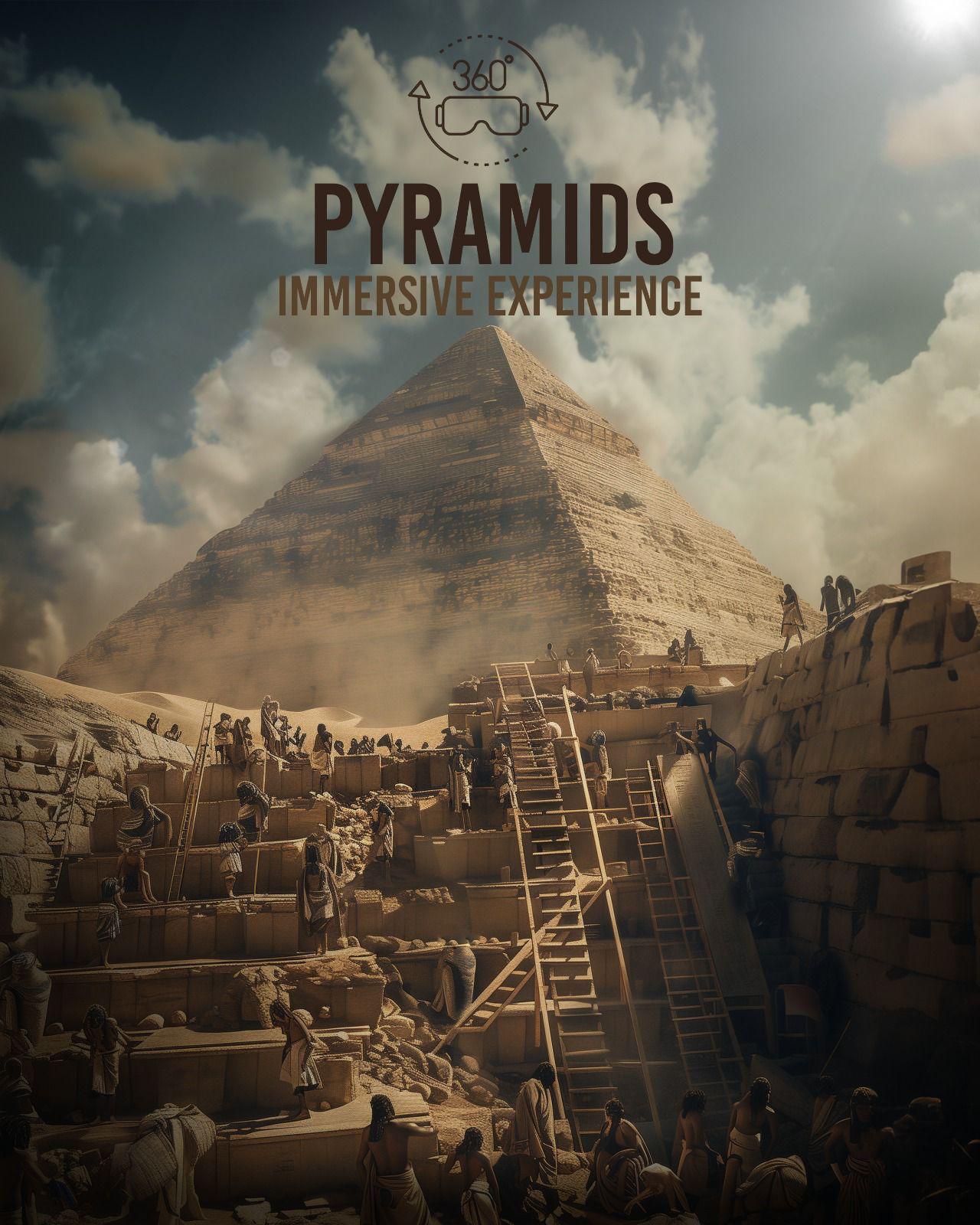
A major challenge for the average visitor at Giza is visualizing the structures as they looked 4,500 years ago. Today's 3D Giza models provide a "Time-Slider" effect. Using AR headsets or tablet interfaces, visitors standing at the base of the Pyramid of Khufu can see the white Tura limestone casing stones restored digitally to their original, polished state.
This visual reconstruction helps guests understand the scale and the engineering intent behind the monuments. By rendering the surrounding funeral complexes and causeways in their complete, pristine form, 3D technology gives historical context to the weathered, blocky ruins that dominate the landscape today. It transforms the experience from viewing static stones to understanding a functional, vibrant funerary city.
3. Enhancing Educational Context and Engagement
The depth of historical information provided by a guide is often limited by time and the crowd density on the plateau. 3D-integrated interfaces allow visitors to tap into a rich database of archaeological metadata. If a tourist points their device at a specific section of the Sphinx, the 3D overlay can highlight areas of previous repairs, identify the specific strata of limestone, or provide a breakdown of the masonry techniques used in that quadrant.
This adds a layer of technical depth previously reserved for archaeologists. By allowing the visitor to control the flow of information—choosing to dive deeper into structural data or historical lore—the experience becomes highly personalized, catering to both casual tourists and history enthusiasts.
4. Improving Site Navigation and Flow
Managing millions of visitors annually is a massive logistical challenge. 3D digital twins of the Giza Plateau are now used to optimize crowd flow. While this is primarily an operational tool, it impacts the visitor experience by reducing bottlenecks and wait times.
Sophisticated 3D mapping allows site administrators to simulate peak-traffic hours, adjusting entry points and walkway layouts to prevent overcrowding. For the visitor, this results in a smoother, less congested experience where the focus remains on the artifacts rather than the navigation of narrow corridors. These 3D spatial models are also being integrated into interactive maps that guide tourists through the complex, ensuring they find key landmarks efficiently while respecting conservation boundaries.
5. Preserving Heritage for Future Generations
While the visitor experience is often focused on the present, the use of 3D scanning is a forward-looking strategy. The "digital twin" of the Giza plateau acts as a permanent, high-fidelity archive. Should the physical site suffer from environmental degradation or natural disasters, the 3D models provide an exact replica that can be used for restoration planning.
For the modern traveler, knowing that the site is being documented with millimeter-level precision adds an intangible value to the visit. It provides a sense of security that the history being witnessed is being saved for posterity. This documentation ethos encourages a more respectful interaction with the site, as visitors understand that they are moving through a space that is being monitored and protected by state-of-the-art digital preservation.
Comparative Impact of 3D Integration
| Feature | Pre-3D Implementation | Current 3D-Enhanced Experience |
|---|---|---|
| Access | Limited to public-open chambers | Virtual access to restricted zones |
| Context | Dependent on plaques/guides | AR-overlay and detailed metadata |
| Navigation | Static paper maps | Real-time digital spatial guidance |
| Preservation | Physical monitoring only | Millimeter-accurate digital archiving |
| Visualization | Requires significant imagination | Real-time "original state" reconstruction |
Frequently Asked Questions
Does the use of 3D technology replace the need for an in-person tour? No. While 3D Giza offers unparalleled depth and access, the emotional impact of the scale of the pyramids and the sensory experience of the desert environment cannot be replicated digitally. 3D tools are intended to complement and enrich the physical journey, not replace it.
Are these 3D experiences available for all visitors, or is it a paid extra? Access varies by platform. Many of the 3D visualization tools integrated into on-site infrastructure are included with general entry or specific museum passes, while high-end AR experiences may carry a supplemental cost depending on the vendor operating the technology at the site.
How accurate are the 3D reconstructions? These models are created using laser scanning and photogrammetry, which achieve sub-centimeter accuracy. They are built from official archaeological data and represent the most accurate digital records of the monuments available as of 2026.
Can I view these 3D models if I am not at the Giza Plateau? Yes. Several institutions, including the Giza Project, maintain web-based portals that allow users to explore parts of the plateau from anywhere. While on-site experiences are more immersive due to the context of the physical location, the digital assets are largely accessible to the public.
Does 3D technology damage the monuments during the scanning process? No. The scanning process is entirely non-invasive. Techniques like terrestrial laser scanning (TLS) and close-range photogrammetry involve zero physical contact with the stone, making them the safest possible way to record the site.
Next Steps for Visitors
For the best experience in 2026, start by downloading the official site-authorized mobile apps before you arrive at the Giza Plateau. Ensure your device is fully charged, as the GPS and AR features can be power-intensive. If you are planning a trip, visit the official website of the Ministry of Tourism and Antiquities to check for specific exhibition dates where new 3D, high-immersion displays may be featured, particularly at the Grand Egyptian Museum, which serves as the primary hub for this digital infrastructure.
Image Gallery