Understanding How DTE Works in a Car
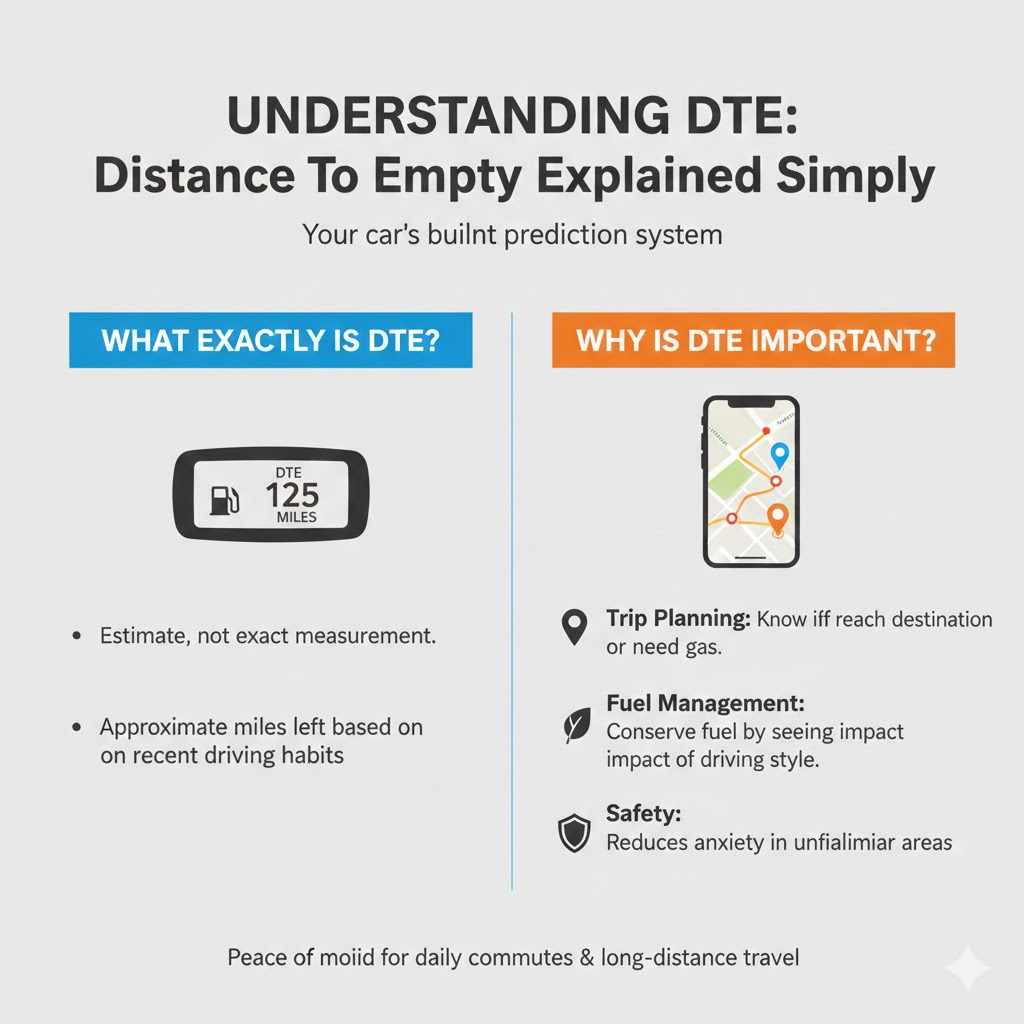
Distance to Empty (DTE) is a dynamic calculation performed by your vehicle’s computer system to estimate how many miles or kilometers you can drive before running out of fuel. By combining real-time fuel tank levels, instantaneous fuel...
Distance to Empty (DTE) is a dynamic calculation performed by your vehicle’s computer system to estimate how many miles or kilometers you can drive before running out of fuel. By combining real-time fuel tank levels, instantaneous fuel consumption data, and historical driving patterns, modern automotive dashboards provide this critical metric to help drivers plan refuel stops and prevent unexpected roadside stalls.
Contents
The Foundation of Distance to Empty: Sensors and Senders
At the core of the DTE calculation is the fuel level sensor, traditionally known as the fuel sending unit. Positioned inside the fuel tank, this component typically consists of a float attached to a small pivoting arm. As fuel is consumed and the liquid level drops, the float sinks, altering the electrical resistance of a variable resistor or potentiometer. This resistance signal is continuously transmitted to the engine control unit (ECU) or the instrument cluster, translating the physical volume of fuel into a digital data point.
Older analog gauges relied entirely on this direct resistance measurement, often causing the needle to fluctuate dramatically when turning corners, accelerating, or driving up steep hills. Modern DTE systems, however, process this raw sensor data through sophisticated dampening algorithms. These software filters prevent the distance to empty readout from bouncing wildly as fuel sloshes around inside the tank during dynamic driving conditions.
The Mathematical Algorithm: How Computers Calculate Range
Once the vehicle's computer knows the approximate volume of fuel remaining, it must determine how efficiently that fuel will be burned. This is where the calculation shifts from a simple volume measurement to an algorithmic projection. The fundamental formula behind DTE involves multiplying the remaining fuel volume by the vehicle’s current fuel economy, expressed in miles per gallon (MPG) or liters per 100 kilometers (L/100km).
Remaining Fuel Volume × Current Fuel Economy = Distance to Empty (DTE)
However, keeping a static calculation based strictly on the immediate second of driving would result in an erratic readout. If you floor the accelerator to pass a slow-moving truck, your instantaneous fuel economy drops drastically. If the DTE system reacted instantly, your estimated range would plummet by dozens of miles within seconds, causing unnecessary driver panic. To prevent this, automotive engineers design algorithms that use a rolling average of fuel consumption over a specific window of time or distance—often the last 15 to 30 minutes of driving.
Short-Term vs. Long-Term Fuel Economy Tracking
Different automotive manufacturers program their DTE algorithms with varying weightings for short-term and long-term driving habits. Understanding these differences explains why your range estimate can fluctuate unpredictably depending on your environment.
- Short-Term Adaptive Driving: In city traffic or heavy congestion, the computer heavily weights recent idling and stop-and-go driving. Because urban driving yields lower fuel efficiency, the DTE drops rapidly.
- Long-Term Highway Cruising: When transitioning from city streets to an open interstate highway, your fuel efficiency increases significantly. The algorithm gradually incorporates this higher MPG into the calculation, causing your DTE to stabilize or, in some cases, actually increase during a road trip as efficiency improves.
- Reset Cycles: Many vehicles automatically recalculate fuel economy averages every time the engine is turned off and restarted, or when the fuel tank is refilled past a certain threshold.
| Driving Condition | Impact on Fuel Economy (MPG) | Effect on DTE Readout | Algorithm Weighting |
|---|---|---|---|
| City Stop-and-Go | Low | Rapid decrease | High (immediate feedback) |
| Highway Cruising | High | Stable or increasing | Moderate (rolling average) |
| Idle / Heavy Traffic | Very Low | Steady decline | High |
| Towing / Heavy Load | Significantly Lower | Accelerated drop | Dynamic adaptation |
The Safety Margin: Why DTE Reads Zero Before You Run Dry
One of the most common questions motorists ask is whether their car will stop moving the exact moment the DTE readout hits zero. In almost all modern passenger vehicles, the answer is no. Manufacturers intentionally program a safety buffer into the fuel reserve system.
When the DTE display reads "0 miles" or "0 km," a hidden reserve of fuel—typically ranging from 1 to 2 gallons (or roughly 4 to 8 liters)—remains in the bottom of the tank. This reserve serves several vital engineering purposes:
- Fuel Pump Protection: Modern in-tank electric fuel pumps rely on the surrounding gasoline or diesel for cooling and lubrication. Running a tank completely dry can cause the pump to overheat, draw air, and suffer permanent mechanical failure.
- Sediment Avoidance: Over years of operation, microscopic debris and condensation can accumulate at the bottom of the fuel tank. Having a reserve prevents the pump from drawing this sludge directly into the fuel injectors.
- Driver Safety Margin: Human error is inevitable. By building in a 20-to-40-mile buffer after the display reaches zero, automakers give drivers a crucial safety window to safely pull over, exit the highway, or reach the nearest service station.
Common Factors That Cause Inaccurate DTE Readouts
While computerized DTE systems are remarkably sophisticated, they are not infallible. Several real-world driving scenarios and mechanical anomalies can cause the distance to empty calculation to lose accuracy.
Sloped Terrain and Parking Angles
Because the fuel level float relies on physical buoyancy, parking or driving on steep inclines alters the angle of the fuel relative to the sensor. If you park facing uphill on a steep driveway, fuel pools at the back of the tank, making the float read artificially high. Upon starting the car, the DTE may initially show a high range, only to plummet rapidly once the vehicle levels out and the fuel redistributes.
Fuel Quality Variations
Switching between standard gasoline and high-ethanol blends (such as E85) changes the energy density of the fuel. Ethanol contains less chemical energy per gallon than pure gasoline, resulting in lower overall fuel economy. If the engine management system takes time to recalibrate to a new fuel blend, the DTE calculation may temporarily overestimate your remaining range.
Mechanical and Sensor Wear
Over extended mileage, the electrical contacts on the fuel sending unit can wear down, or sulfur buildup can coat the resistor tracks. This results in intermittent electrical signals that cause the fuel gauge and DTE readout to stick, jump erratically, or fail to register a full tank after refueling.
How to Handle Low Fuel Warnings and Range Anxiety
Relying entirely on your DTE display as an absolute guarantee can occasionally leave you stranded if driving conditions suddenly deteriorate, such as encountering severe headwinds, heavy mountain grades, or unexpected traffic gridlock.
If your low fuel light illuminates and your DTE drops below 30 miles (50 kilometers), consider taking immediate steps to conserve fuel. Reduce your cruising speed, turn off unnecessary high-draw electrical accessories like cabin heaters or rear defrosters, and accelerate gently to maintain momentum without triggering high fuel injector duty cycles. Whenever possible, plan refueling stops before your vehicle enters its hidden safety reserve.
Frequently Asked Questions
Does filling my car with the engine running mess up the DTE calculation?
Yes, keeping the engine running while refueling can confuse the ECU and fuel level sensor. The system expects a stable, powered-down state to register a sudden influx of fuel volume. Refueling while running often causes the DTE and fuel gauge to update very slowly or display incorrect range figures until the next complete ignition cycle.
Why did my DTE go up after I started driving on the highway?
Your DTE is calculated using recent fuel economy averages. When you transition from slow city streets to a steady highway speed, your vehicle's MPG increases. The computer recalculates the projected range based on this improved efficiency, which can cause the estimated distance to empty to rise even though fuel is being consumed.
Can an aftermarket fuel pump or gauge affect my DTE accuracy?
Yes. Installing non-OEM (Original Equipment Manufacturer) fuel senders or pumps can introduce resistance values that differ from factory specifications. If the electrical resistance curve does not match the vehicle computer's programming, the DTE readout will consistently display incorrect range values.
Is it bad for my car to regularly drive until DTE reaches zero?
Consistently driving until the DTE reaches zero—or running out of fuel entirely—risks damaging the electric fuel pump. These pumps generate significant heat and depend on immersion in fuel to stay cool. Operating on fumes allows the pump to ingest air, leading to accelerated wear, internal component damage, and costly premature failure.
Why does my DTE drop much faster when towing a trailer?
Towing adds significant aerodynamic drag and rolling resistance, forcing the engine to work harder and consume more fuel per mile. Because the vehicle's instantaneous fuel economy drops drastically under load, the DTE algorithm adjusts downward to reflect the heavily reduced operating range.
Next Steps
To ensure your vehicle's distance to empty system remains as accurate as possible, make a habit of refueling before your tank drops below the one-quarter mark. If you notice persistent discrepancies between your calculated mileage and the DTE readout—such as the gauge failing to read full after a fill-up—consult a certified mechanic to inspect the fuel sending unit and verify that the instrument cluster software is running the latest manufacturer calibration.
Image Gallery