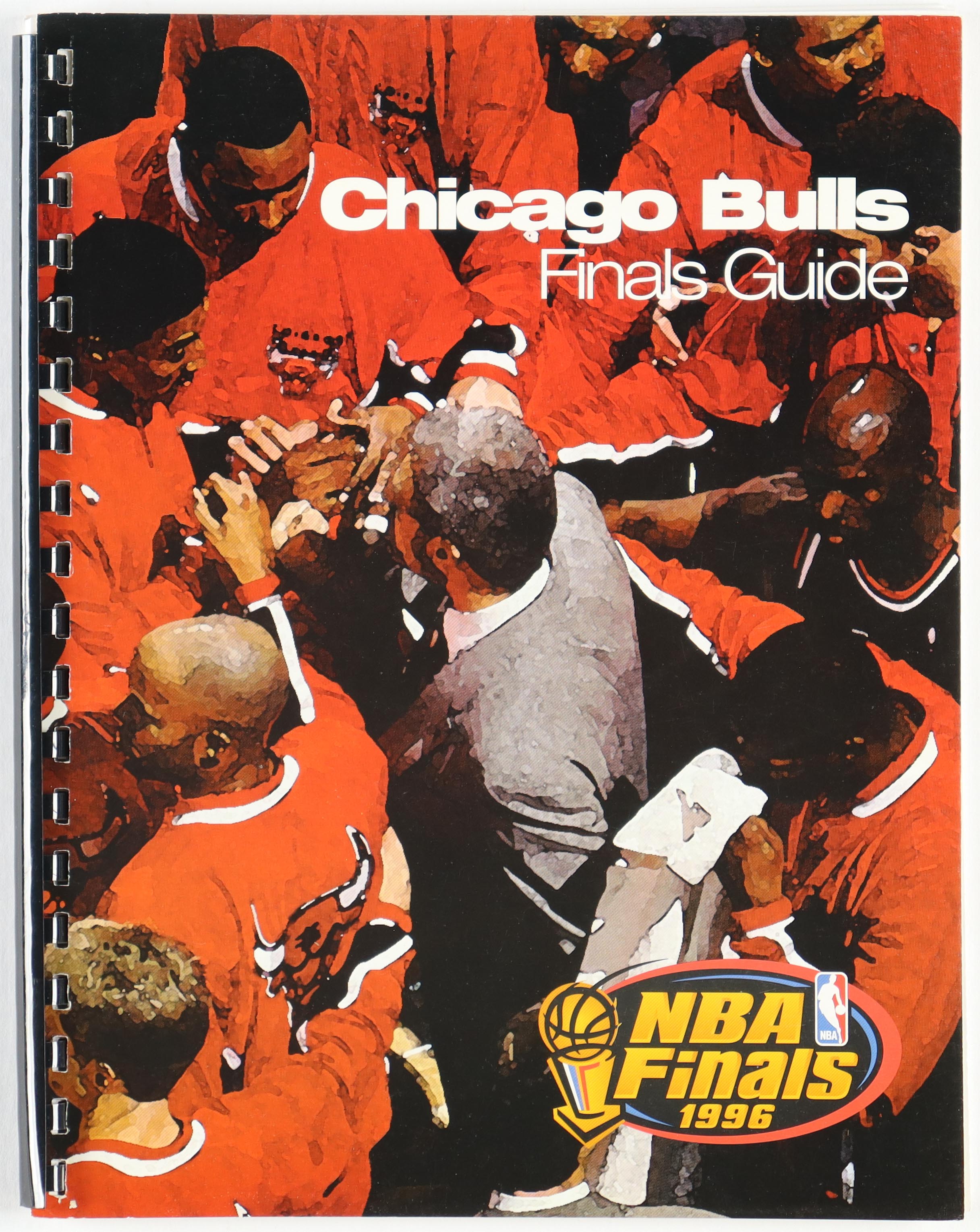
Why the 1996 Chicago Bulls Still Matter
The 1996 Chicago Bulls remain the definitive benchmark for team dominance in professional basketball, representing the pinnacle of roster construction, tactical adaptability, and sustained competitive excellence. By achieving a then-re...
The 1996 Chicago Bulls remain the definitive benchmark for team dominance in professional basketball, representing the pinnacle of roster construction, tactical adaptability, and sustained competitive excellence. By achieving a then-record 72-10 regular-season finish and a dominant championship run, they fundamentally transformed the expectations for what a cohesive, star-driven professional sports franchise could accomplish.
Contents
The Statistical Anomaly of the 1996 Season
The 1995-1996 Chicago Bulls season was not merely a string of victories; it was a masterclass in efficiency and professional consistency. The team finished with a 72-10 record, a mark that shattered the previous NBA record of 69 wins set by the 1971-1972 Los Angeles Lakers. This record stood for two decades until the 2015-2016 Golden State Warriors eventually surpassed it with 73 wins, yet the Bulls’ version is often viewed by analysts as more "complete" due to their defensive intensity and lack of reliance on extreme high-volume three-point shooting.
The mathematical brilliance of the 1996 squad lay in their net rating. They outscored opponents by an average of 12.2 points per game, a metric that remains among the highest in league history. This dominance was built on the synergy between Michael Jordan—returning for his first full season after his 1995 baseball hiatus—and Scottie Pippen, arguably the greatest defensive small forward in history. When the team added Dennis Rodman to handle rebounding and psychological disruption, the Bulls created a defensive structure that prevented opponents from finding any rhythm, regardless of the competition’s style of play.
Roster Architecture and Tactical Versatility
The 1996 Bulls are frequently studied for their unique blend of personnel. Unlike modern teams that often rely on a "plug-and-play" model for rotation players, the 1996 roster was curated to serve a specific, rigid philosophy: the Triangle Offense. Developed by Tex Winter and implemented by head coach Phil Jackson, the system required high basketball IQ rather than just pure athleticism.
| Player Role | Contribution to Team Identity |
|---|---|
| Michael Jordan | Scoring engine, perimeter defense, psychological pressure |
| Scottie Pippen | Secondary playmaker, perimeter lockdown, versatility |
| Dennis Rodman | Rebounding dominance, interior defense, emotional agitator |
| Toni Kukoč | Offensive flexibility, sixth man, high-IQ spacing |
| Ron Harper | Veteran leadership, defensive stabilization, transition flow |
This roster architecture allowed the team to solve problems in real-time. If an opponent attempted to collapse on Jordan in the post, the Triangle created immediate passing lanes to Kukoč or Steve Kerr for high-percentage shots. The inclusion of Rodman allowed Jordan and Pippen to focus their energy on creating turnovers, leading to the transition scoring that defined the era.
The Cultural Impact on Modern Sports Management
Beyond the box scores, the 1996 Bulls set the standard for the "Superteam" era. They demonstrated that individual brilliance must be tempered by role definition. In the current sports landscape, where player movement is fluid and salary cap constraints often force teams to choose between depth and star power, the 1996 Bulls remain the gold standard for how to integrate polarizing personalities into a singular unit.
The team also became a global marketing force. The 1996 season solidified the NBA’s expansion into international markets, as the visibility of Jordan, Pippen, and Rodman transcended the sport. Their influence on team culture—a commitment to "practice intensity" that bordered on adversarial—is still cited by coaches as the gold standard for maintaining a championship mindset over an 82-game schedule.
Examining the Defensive Philosophy
While history often focuses on the scoring prowess of the 1996 team, their lasting legacy is their defense. The NBA in the mid-90s was a physical, slowed-down game compared to the pace-and-space era of 2026. However, the Bulls were uniquely equipped to dominate both. By utilizing a "switch-everything" approach before it became common, they neutralized opposing point guards and big men alike.
Their defensive success relied on:
- Perimeter Pressure: Ron Harper and Jordan forced ball handlers to work for every inch of court space, often causing turnovers before an opponent’s set offense could even begin.
- Defensive Rebounding: Rodman’s relentless pursuit of the ball ensured that opposing teams were limited to one shot per possession.
- Help Defense Awareness: Because Pippen was essentially a center-sized player with point-guard instincts, he could recover to shooters while simultaneously blocking shots at the rim.
Evolution of the "72-10" Benchmark
When discussing why this team still matters, one must account for the shift in the game's mechanics. The 1996 Bulls played in an era of hand-checking and more physical interior defense. Critics often ask how they would fare in the modern 2026 NBA, which prioritizes three-point shooting and high-screen-roll volume.
The consensus among analysts is that the 1996 Bulls were a "chameleon" team. Their ability to adapt their pace to the opponent, their superior defensive fundamentals, and their elite late-game execution would likely translate to any era. Unlike teams built solely on shooting streaks, the 1996 Bulls were built on the fundamental principles of basketball: defense, rebounding, and taking the highest-percentage shot available.
Frequently Asked Questions
What made the 1996 Bulls better than other championship teams? They combined a historic offensive engine with a top-tier defense. While many championship teams are lopsided, the 1996 Bulls possessed depth, elite defensive specialists, and a singular, shared goal that minimized ego-driven conflict during the regular season.
How did the addition of Dennis Rodman change the team's dynamics? Before Rodman, the Bulls struggled against physically imposing interior teams. Rodman provided a rebounding dominance that allowed the team to control the glass, while his unpredictable personality provided a tactical "edge" that forced opponents to focus on him rather than the game plan.
Did the 1996 Bulls benefit from a weak league expansion era? While the NBA did undergo expansion in the mid-90s, which theoretically diluted talent, the Bulls' record was achieved through consistent dominance against elite teams, not just the weaker ones. Their net rating and playoff performance against top-seeded opponents suggest their dominance was absolute, regardless of the broader league competitive landscape.
Why is the 1996 team often cited in modern coaching circles? Coaches study this team for their offensive structure (The Triangle) and their practice habits. Phil Jackson’s ability to manage high-maintenance superstars while maintaining a rigorous, high-intensity training regimen is the blueprint for modern executive and coaching staff leadership.
Can a modern team reach the 72-10 standard again? While the 2016 Warriors proved it is possible to reach 73 wins, repeating the sustained "championship or bust" pressure of the 1996 season is exceptionally difficult. Modern teams face greater physical toll, increased travel, and a more analytical approach to "load management," which often prevents starters from playing enough games to reach the 70-win threshold.
Strategic Lessons for the Future
The 1996 Chicago Bulls serve as a reminder that consistency is a byproduct of preparation and role clarity. Whether in sports or organizational leadership, their success proves that the highest levels of achievement are reached when individual contributors subordinate their personal statistics to the functional requirements of the collective system. As we observe the game in 2026, the blueprint established by this team remains the baseline by which all "greatness" is measured. Organizations looking to build sustainable success should prioritize the integration of complementary skill sets over the mere accumulation of talent.
Image Gallery