How Tattoo Removal Changes Over Time: The Full Clinical and Physiological Timeline
Tattoo removal is a multi-stage biological process where laser energy fragments ink particles, allowing the body’s immune system to clear them over several months or years. While the laser provides the catalyst, the actual removal occu...
Tattoo removal is a multi-stage biological process where laser energy fragments ink particles, allowing the body’s immune system to clear them over several months or years. While the laser provides the catalyst, the actual removal occurs through the lymphatic system, causing the tattoo to fade gradually between sessions as the skin heals and macrophages transport the ink away.
Contents
Understanding how tattoo removal changes over time requires looking past the laser appointment itself. It is a physiological journey that transforms the appearance of the skin in distinct phases, from the immediate "frosting" seen seconds after treatment to the cellular clearance that continues for months after the final pulse. As of 2026, advancements in picosecond technology and regenerative aftercare have refined this timeline, yet the fundamental reliance on the body’s internal waste-management system remains the same.
The Science of Ink Dispersal: Why the Process Is Gradual
To understand the timeline, one must first understand what the laser actually does. Tattoos are permanent because ink particles are too large for white blood cells (macrophages) to consume and carry away. Modern laser systems, particularly picosecond and Q-switched lasers, use photothermal and photoacoustic pressure to shatter these large pigment clusters into microscopic dust.
Once the ink is fragmented, the "removal" phase begins. This is not an external extraction but an internal one. The body’s immune system recognizes these smaller particles as foreign debris. Macrophages engulf the particles and transport them to the lymphatic system, where they are eventually filtered through the liver and excreted. Because the immune system can only process a certain amount of particulate matter at once without being overwhelmed, the change over time is incremental. This is why practitioners in 2026 typically recommend spacing treatments at least 8 to 12 weeks apart; shorter intervals do not allow the lymphatic system sufficient time to maximize ink clearance.
Immediate Changes: The First 24 Hours
The most dramatic visual change occurs within seconds of the laser hitting the skin. This is known as "frosting."
The Frosting Phenomenon
When the laser reacts with the ink, it creates a rapid rise in temperature that releases carbon dioxide from the skin. This appears as a white, chalky residue on the surface of the tattoo. While it looks like a burn, it is actually a sign that the laser has successfully interacted with the pigment. This frosting usually subsides within 15 to 30 minutes, leaving the tattoo looking slightly darker or more "raised" than before.
The Inflammatory Response
Within the first few hours, the body initiates an acute inflammatory response. The treated area will likely experience erythema (redness) and edema (swelling). This is a necessary part of the healing process, as blood flow increases to the area to bring in the immune cells required for ink removal. Patients often describe the sensation as similar to a severe sunburn.
The Healing Phase: Days 2 to 14
During the first two weeks, the skin focuses on structural repair rather than ink clearance. This is the period where the most visible surface changes occur, often requiring diligent aftercare to prevent scarring.
- Blistering: It is common for small vesicles or larger blisters to form, especially with darker inks or more aggressive settings. These are filled with water and ink and should never be popped, as they act as a natural sterile bandage for the underlying dermis.
- Scabbing and Crusting: As blisters dry, a thin crust may form over the tattoo. This stage is critical; the "change" here is the skin regenerating its protective barrier.
- Itching: As the nerves in the skin recover and the tissue dehydrates during healing, intense itching is common. This is often a sign that the inflammatory phase is transitioning into the proliferative phase of wound healing.
By the end of the second week, the surface of the skin usually looks healed, but the "new" skin may appear shiny or slightly pink. This is known as re-epithelialization, and it is important to protect this delicate tissue from UV exposure, which can lead to permanent pigment changes.
The Fading Phase: Weeks 2 to 12
This is the period where the most significant changes to the tattoo’s appearance happen. While the skin looks "healed" on the surface by day 14, the internal work is just reaching its peak.
During weeks 2 through 12, the macrophages are actively transporting the shattered ink particles. You may notice the edges of the tattoo beginning to blur or the "density" of the ink looking less saturated. Some areas of the tattoo may fade faster than others, particularly the edges where blood flow is most robust.
In 2026, clinical guidelines emphasize that more fading often occurs between weeks 8 and 12 than between weeks 2 and 4. This is because the lymphatic drainage is a slow, mechanical process. Patients who wait longer between sessions often require fewer total treatments because they allow the body to finish the work of the previous session entirely before adding more fragmented ink to the "queue."
Long-Term Progress: The Multiple Session Journey
Tattoo removal is rarely a single-event process. Most tattoos require 5 to 10 sessions, and the way the tattoo changes over these sessions follows a predictable curve.
The Kirby-Desai Scale and Predictors of Change
To estimate how a tattoo will change over time, clinicians use the Kirby-Desai Scale, which assigns numerical values to various factors:
- Skin Type: Lighter skin types (Fitzpatrick I-II) generally see faster changes because higher laser fluences can be used safely.
- Location: Tattoos closer to the heart (chest, neck) fade faster than those on extremities (ankles, fingers) due to superior vascular and lymphatic circulation.
- Ink Color: Black ink is the easiest to break down, while greens, blues, and "vibrant" 2020s-era inks may require specialized wavelengths and more time.
- Amount of Ink: Professional tattoos have a higher ink density and deeper placement than "street" or amateur tattoos, lengthening the timeline.
- Scarring/Tissue Change: If the original tattooing process caused scarring, the ink trapped in that scar tissue will be harder to remove.
Cumulative Fading
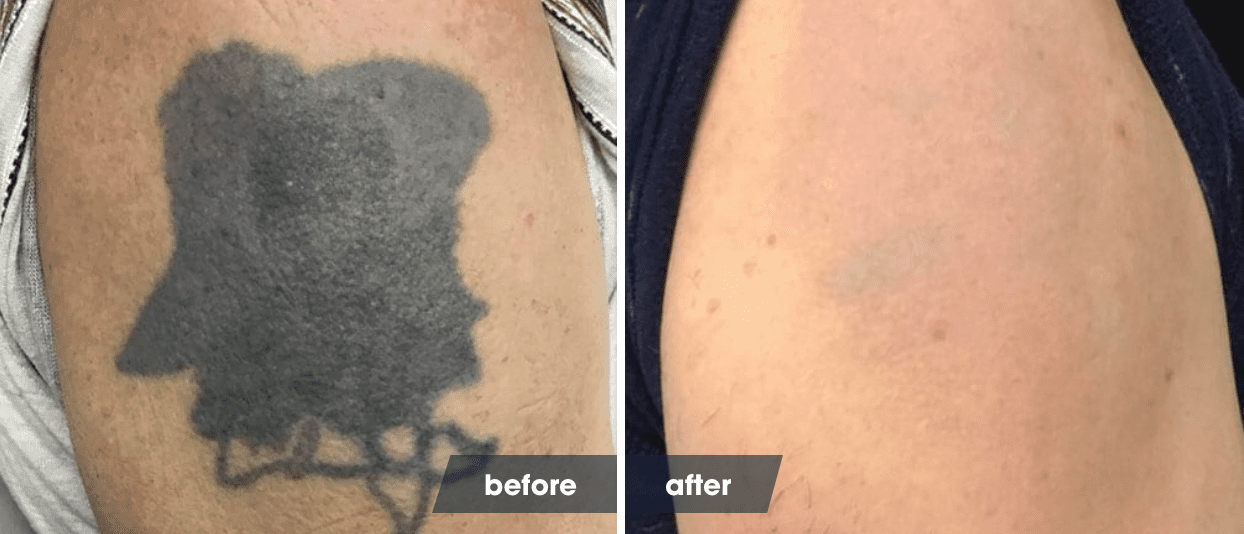
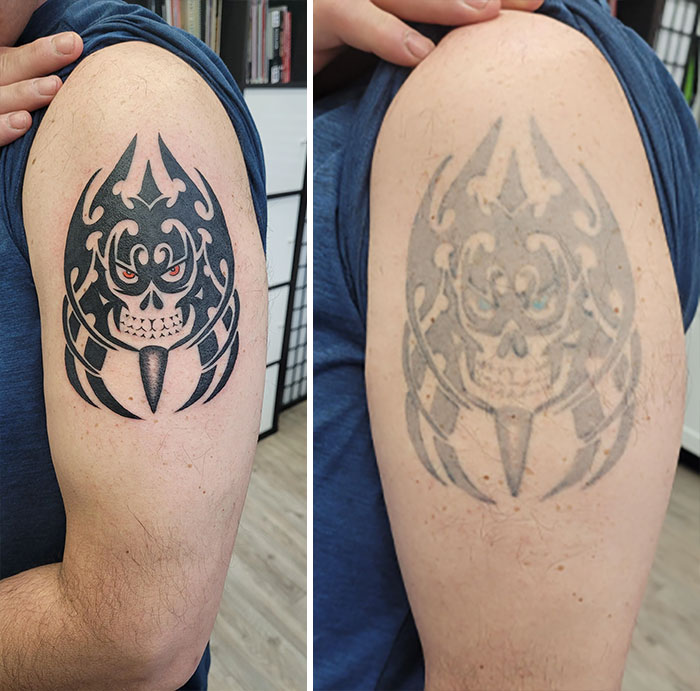
After the third or fourth session, the tattoo may look "patchy." This is a normal part of the progression. The laser targets the heaviest concentrations of ink first. As those layers are removed, the laser can reach deeper or more stubborn pigments in subsequent passes.
Comparison of Removal Technologies (2026 Standards)
The type of technology used significantly impacts the rate of change. Below is a comparison of current standard-of-care technologies.
| Feature | Q-Switched Laser (Nanosecond) | Picosecond Laser (Standard) | Multi-Pass (R20/R0) Protocol |
|---|---|---|---|
| Mechanism | Photothermal (Heat-based) | Photoacoustic (Pressure-based) | Rapid successive passes |
| Primary Change Speed | Moderate; best for black ink | Fast; breaks ink into smaller dust | Accelerated initial fading |
| Risk of Heat Damage | Higher; requires longer cooling | Minimal; very targeted | Higher; requires expert monitoring |
| Standard Session Gap | 6–8 Weeks | 8–12 Weeks | 8–12 Weeks |
| Effectiveness on Color | Limited on blues/greens | High effectiveness on all colors | Dependent on laser head |
Potential Long-Term Skin Changes
As the ink disappears, the skin itself may undergo changes. The goal is a return to "normal" skin, but several outcomes are possible over the months following the final treatment:
- Ghosting: This is a faint, skin-colored silhouette where the tattoo used to be. It occurs when the laser has removed the ink but the skin’s natural texture or pigment has been slightly altered.
- Hypopigmentation: The skin may appear lighter than the surrounding area. This often resolves itself over 6 to 12 months as melanocytes (pigment-producing cells) migrate back into the treated area.
- Hyperpigmentation: The skin may appear darker. This is common in darker skin types and is usually a temporary reaction to the laser's heat, often treatable with topical agents or simply time.
- Texture Recovery: If the laser caused any "pinpoint bleeding" or significant crusting, the skin might feel slightly different for a few months. Modern 2026 aftercare protocols, including silicone gels and fractional CO2 "bridging" treatments, are often used to smooth the texture as the ink clears.
Factors That Slow or Accelerate the Timeline
Not every patient sees the same rate of change. Lifestyle choices play a massive role in how efficiently the body clears ink.
- Smoking: Research has shown that smoking can reduce the success of tattoo removal by nearly 70% over a fixed period. Smoking constricts blood vessels and impairs the immune response, directly slowing the removal of ink particles.
- Hydration and Exercise: Since the lymphatic system relies on muscle movement and hydration to transport waste, active and well-hydrated patients often see faster fading.
- Sun Exposure: UV rays increase melanin production in the skin. If you are tan, the laser cannot be used at optimal settings because it will "mistake" your tan for tattoo ink, risking burns. Keeping the area covered speeds up the timeline by allowing for more effective laser settings.
Professional Advice Limitation
Note: Tattoo removal is a medical procedure involving high-intensity light and potential skin trauma. The information provided here is for educational purposes. Results vary based on individual health, ink chemistry, and laser technology. Always consult with a board-certified dermatologist or a licensed laser technician in your specific jurisdiction to receive a personalized treatment plan and safety assessment.
Frequently Asked Questions
Why does my tattoo look darker immediately after the first session?
It is common for tattoos to appear darker or more defined shortly after the first treatment. This happens because the laser breaks up deep ink clusters and brings them closer to the surface. Additionally, the initial inflammatory response and "frosting" transition can temporarily increase the visual contrast of the ink before the immune system begins the clearance process.
Is it normal for no changes to be visible for the first few weeks?
Yes. Because the removal is a biological process, the "work" is happening at a cellular level. It often takes 4 to 6 weeks for the macrophages to transport enough ink to make a visible difference to the naked eye. In many cases, the most significant fading isn't noticed until after the second or third session.
Can I speed up the process by having sessions every two weeks?
No. In fact, having sessions too close together can slow the process and cause permanent damage. The skin needs time to heal to avoid scarring, and the lymphatic system needs time to clear the fragmented ink. Treating the area again too soon can cause "over-stacking" of heat, leading to burns and skin texture changes without increasing the rate of ink removal.
Does the age of the tattoo affect how it changes?
Generally, older tattoos change and fade faster than new ones. Over time, the body has already begun to naturally break down some of the ink, and the pigment has often settled or migrated slightly. New tattoos (less than a year old) have very high ink density, which requires more sessions to fragment effectively.
Will the tattoo ever be 100% gone?
With modern 2026 picosecond technology, "complete" removal is possible for many, but clinicians usually aim for 90-95% clearance. Some residual "ghosting" or tiny amounts of pigment may remain, especially if the tattoo was very deep or used certain stubborn chemical pigments.
Practical Recommendation
If you are starting the tattoo removal process, the most effective way to manage the change over time is to document the progress with consistent photography. Take a photo in the same lighting every four weeks. You will likely not notice the day-to-day changes, but comparing a photo from "Month 1" to "Month 4" will reveal the significant work your immune system is doing. Prioritize cardiovascular health and hydration, and strictly follow aftercare protocols to ensure the skin remains healthy enough for the next session.
Image Gallery