What is a Canon EF Lens? The Complete Technical and Compatibility Guide
A Canon EF lens is an interchangeable camera lens designed for Canon’s Electro-Optical System (EOS) camera ecosystem, utilizing the EF (Electronic Focus) mount. Introduced in 1987, EF lenses feature a fully electronic interface with de...
A Canon EF lens is an interchangeable camera lens designed for Canon’s Electro-Optical System (EOS) camera ecosystem, utilizing the EF (Electronic Focus) mount. Introduced in 1987, EF lenses feature a fully electronic interface with dedicated internal autofocus motors and electromagnetic aperture control, eliminating all mechanical drive levers between the camera body and the lens optics.
Contents
Understanding the Canon EF Mount: History and Architecture
When Canon introduced the EF mount in March 1987 alongside the EOS 650 35mm film SLR camera, it represented a clean break from the legacy Canon FD manual-focus mount. While competing camera manufacturers chose to maintain backward compatibility by adding mechanical focus couplers and aperture levers to existing mounts, Canon engineered an entirely electronic connection system.
- Canon EOS Camera Body
- Fully Electronic Communication Interface
- 8 to 10 Gold-Plated Spring Pins
- Canon EF Lens Assembly
- Internal Autofocus Motor (USM/STM)
- Electromagnetic Diaphragm (EMD)
The EF mount features a 54 mm throat diameter and a 44 mm flange focal distance (the distance from the mount flange to the film or image sensor plane). This physical design accommodated large-aperture elements, such as the legendary Canon EF 50mm f/1.0L USM.
Core Architectural Features of the EF Mount
- All-Electronic Signal Interface: Communication occurs via gold-plated spring pins. The camera body transmits power and control signals to the lens, which returns focal length, aperture limits, distance information, and status data back to the body.
- Internal Drive Motors: Every EF lens houses its own internal autofocus motor. This design eliminated the noisy "screw-drive" systems used by legacy competitors, allowing autofocus drive mechanisms to be tailored specifically to individual lens elements.
- Electromagnetic Diaphragm (EMD): Aperture blades are driven by a precise stepping motor built directly into the lens. This architecture delivers rapid, repeatable aperture control during high-speed continuous shooting and silent operation for video recording.
The Canon Lens Family: EF vs. EF-S, EF-M, and RF Mounts
Over the decades, Canon expanded its lens lineup to accommodate different sensor sizes and mirrorless camera designs. Understanding the distinctions between these mounts is critical for avoiding compatibility mistakes.
- Canon EF Lens Mount (Full-Frame 35mm & APS-C Compatible)
- EF-S Lenses (APS-C DSLRs)
- EF-M Lenses (APS-C Mirrorless EOS M)
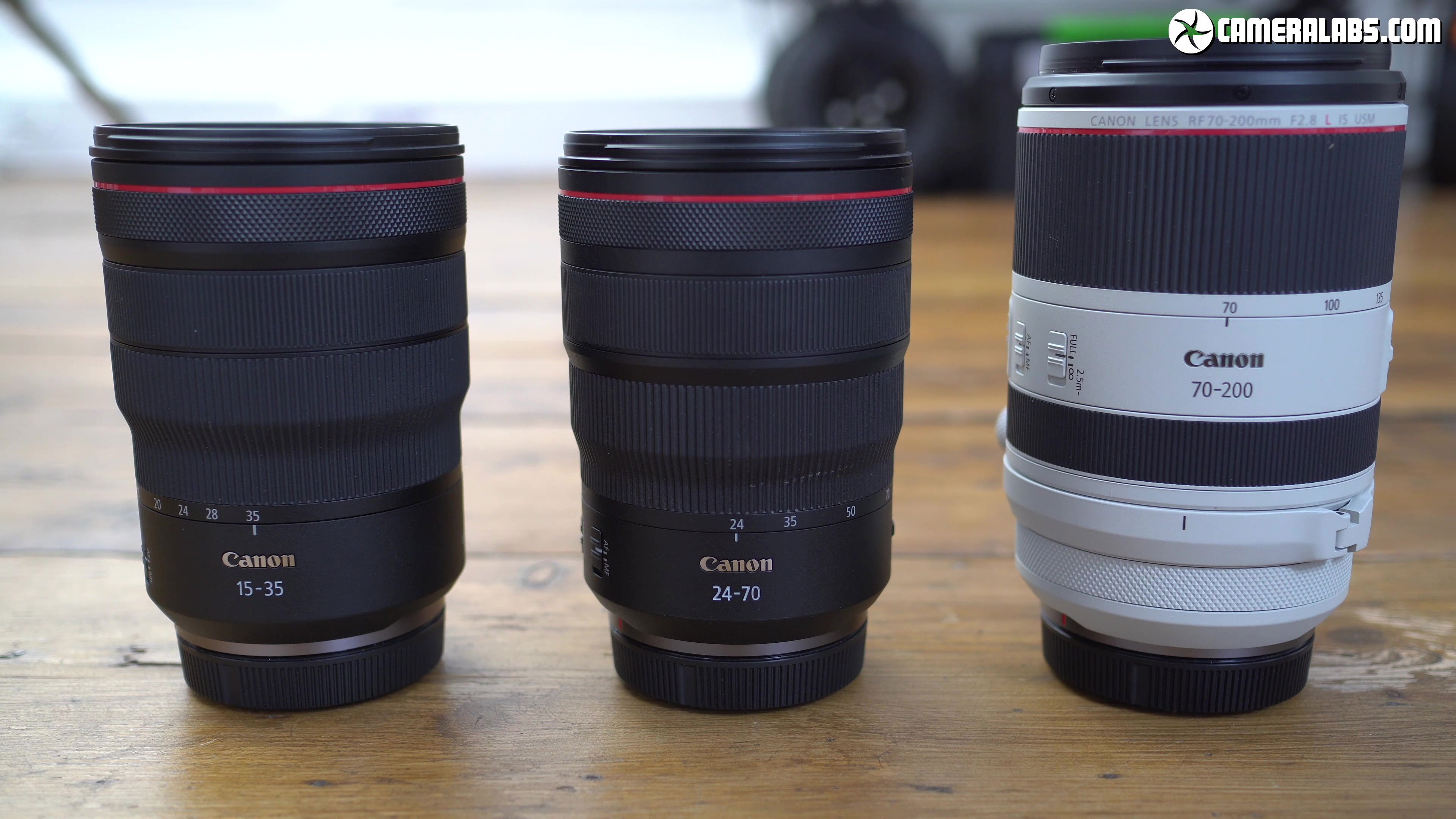
- RF Lenses (Full-Frame & APS-C Mirrorless)
1. EF Lenses (Full-Frame Standard)
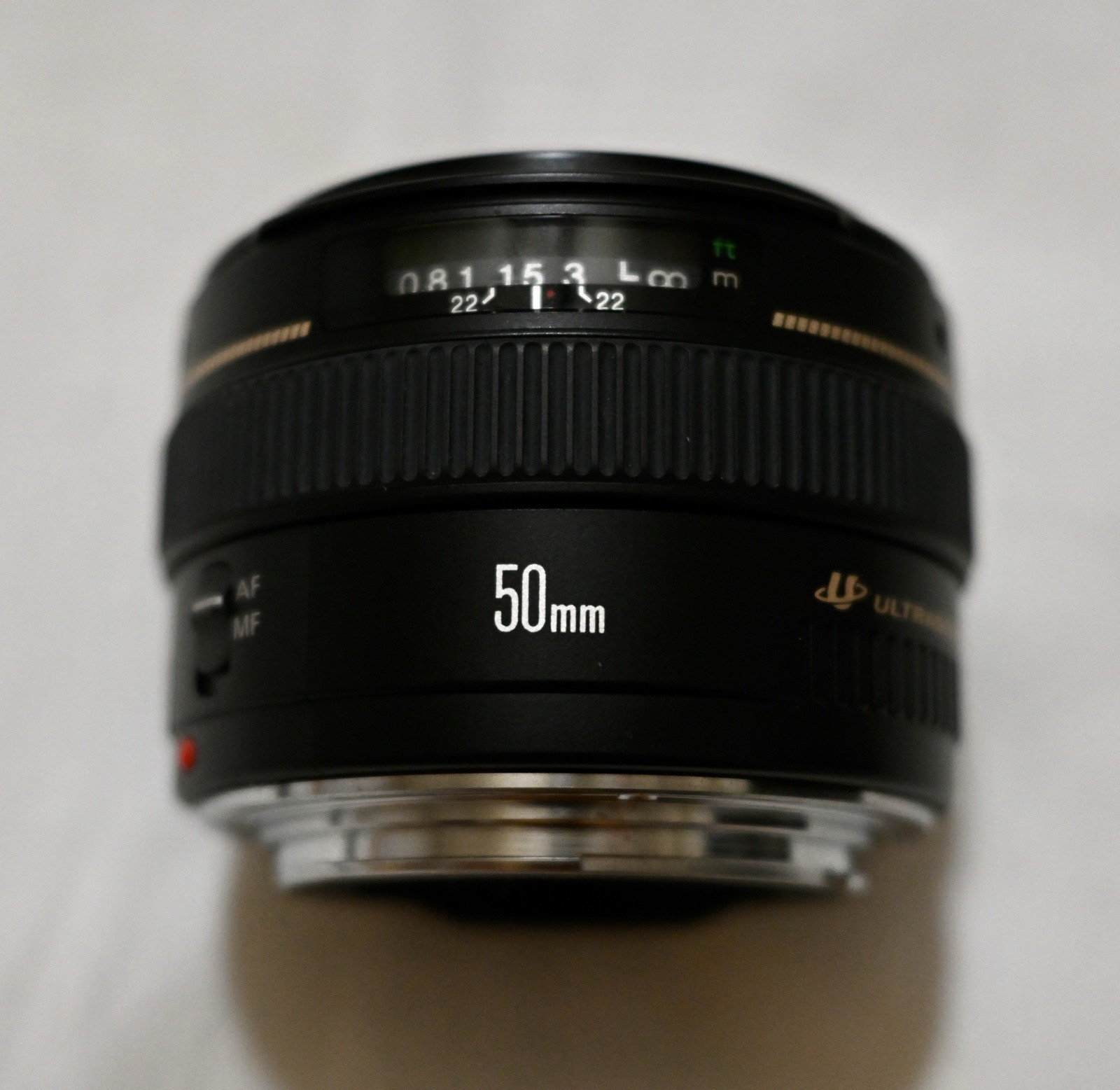
Designed for 35mm film and full-frame (36 × 24 mm) digital sensors, EF lenses cover the largest image circle in Canon's DSLR lineup. They can be mounted natively on every Canon EOS film SLR and DSLR camera ever produced, including full-frame models (such as the EOS 5D and 1D series) and APS-C crop-sensor models (such as the EOS Rebel series, 80D, and 90D). When mounted on an APS-C camera, an EF lens experiences a 1.6x focal length crop factor (e.g., a 50mm EF lens provides a 80mm equivalent field of view).
2. EF-S Lenses (APS-C DSLR Exclusive)
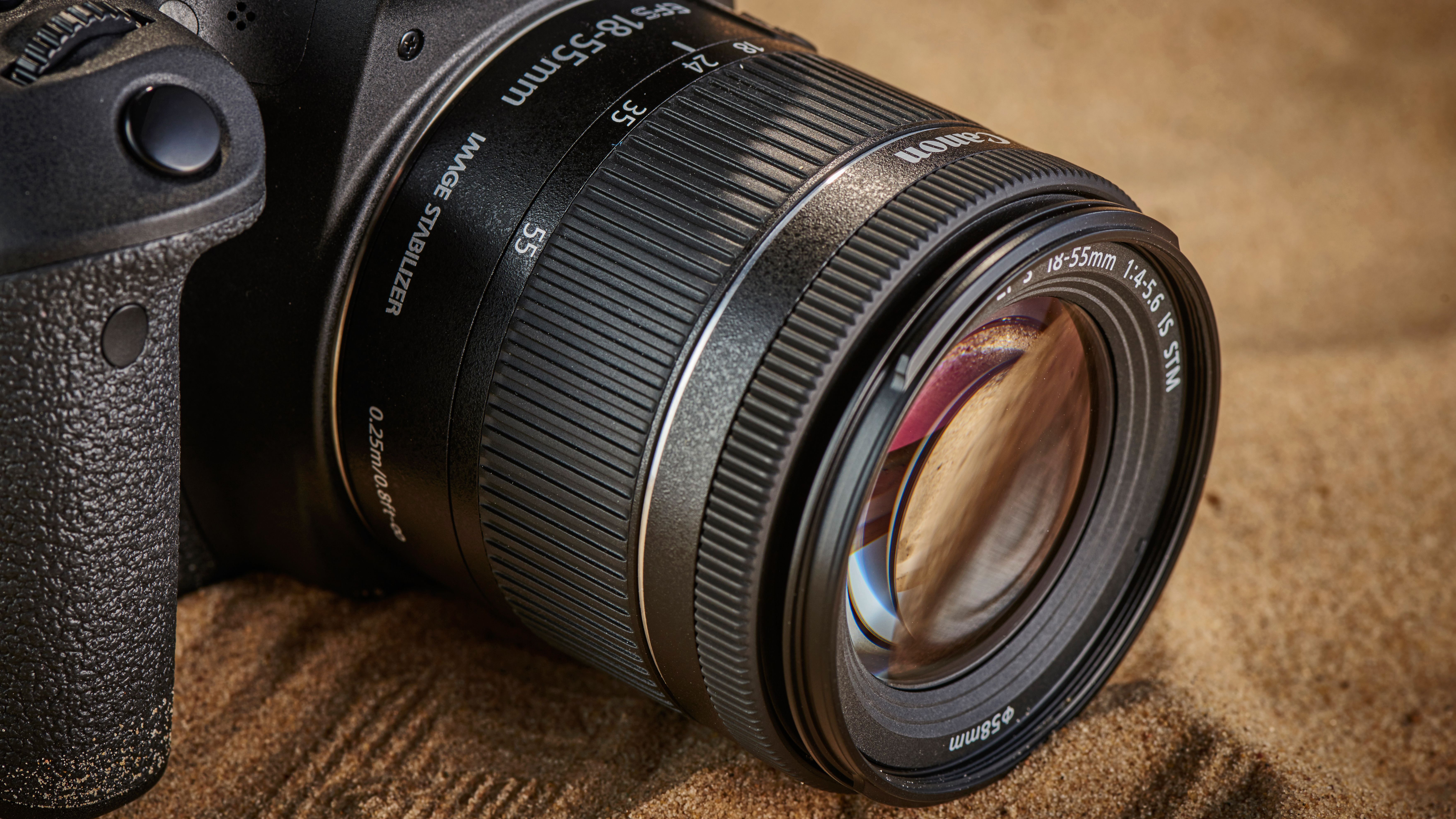
Introduced in 2003 with the EOS 300D (Digital Rebel), the EF-S format was tailored specifically for Canon DSLRs with APS-C sensors (~22.3 × 14.9 mm). The "S" stands for "Short back focus," meaning the rear optical element sits closer to the sensor mirror box. EF-S lenses feature a protective rubber ring and a physical tab that prevents them from mounting on full-frame EF bodies, where the physical mirror strike would damage the rear glass element.
3. EF-M Lenses (EOS M Mirrorless)
Launched in 2012 for the compact EOS M mirrorless system, EF-M lenses feature a significantly shorter flange focal distance (18 mm) and a smaller throat diameter (47 mm). EF-M lenses cannot be mounted on EF DSLRs, nor can they be adapted to modern full-frame RF mirrorless cameras.
4. RF Lenses (Modern Mirrorless System)
Introduced in 2018 alongside the EOS R full-frame mirrorless system, the RF mount retains the 54 mm throat diameter of the EF mount but drastically shortens the flange focal distance to 20 mm. RF lenses feature an upgraded 12-pin electronic connection for faster communication data rates. While native RF lenses cannot be mounted on older EF DSLRs, EF lenses can be adapted to RF-mount mirrorless cameras without any optical degradation or loss of autofocus control.
Internal Technologies: Autofocus, Optics, and Stabilization
The longevity and professional adoption of Canon EF lenses stem from key proprietary technologies developed across the line's history.
Autofocus Motor Technologies
Canon deployed three primary motor technologies across the EF lens catalog, each tailored to different shooting requirements:
- Ultrasonic Motor (USM):
- Ring USM: The standard for professional telephoto and zoom lenses. Uses piezoelectric ceramic rings that oscillate at ultrasonic frequencies to drive focus elements silently and rapidly. Includes Full-Time Manual (FTM) focus override.
- Micro USM: A smaller, lower-cost ultrasonic motor used in mid-tier consumer lenses.
- Nano USM: Combines the high-speed capability of Ring USM with the smooth, silent operation of a stepping motor. Ideal for hybrid photo and video shooters.
- Stepper Motor (STM): Introduced primarily for video recording, STM motors use helical or lead-screw gear mechanisms to deliver smooth, virtually silent continuous autofocusing during movie capture and live view.
- Micromotor (DC Motor): Found in budget consumer lenses (such as early iterations of the 50mm f/1.8). Uses conventional electrical gears that produce audible operating noise during focusing.
Canon Autofocus Motor Hierarchy:
- Ultrasonic Motor (USM)
- Ring USM: High Speed / Pro Grade
- Micro USM: Compact / Consumer
- Nano USM: Hybrid Speed & Video
- Stepper Motor (STM)
- Smooth, Silent Focusing for Video
- DC Micromotor
- Entry-Level Mechanical Drive
Optical Quality and "L-Series" Glass
Canon identifies its top-tier professional EF lenses with the designation "L" (Luxury), distinguished by a signature red ring around the front lens barrel. L-series EF lenses feature:
- Synthetic Fluorite and Ultra-Low Dispersion (UD) Elements: Specialized glass formulations designed to eliminate chromatic aberrations and color fringing.
- Aspherical Lens Elements: Molded glass optics engineered to correct spherical aberrations, distortion, and field curvature across large apertures.
- Subwavelength Structure Coating (SWC) and Air Sphere Coating (ASC): Advanced anti-reflective surface coatings designed to minimize internal lens flare and ghosting.
- Weather-Sealing: Rubber gaskets at the mount bayonet, switch panels, and focus rings to protect against moisture and dust ingress.
Optical Image Stabilization (IS)
Canon introduced the world's first interchangeable camera lens with internal optical image stabilization in 1995: the EF 75-300mm f/4-5.6 IS USM. The system uses internal gyro sensors to detect high-frequency camera shake and shifts an internal floating optical group to counteract motion along the pitch and yaw axes. Advanced EF lenses feature multi-mode IS (Mode 1 for general stabilization, Mode 2 for linear panning, and Mode 3 for stabilizing only during exposure capture).
Cross-Compatibility Matrix
Understanding where Canon EF lenses can and cannot be mounted natively or adapted is essential for gear planning across modern systems.
| Mount Type | Native Camera Bodies | EF Lens Compatibility | EF-S Lens Compatibility | Adaptation Mechanism Required |
|---|---|---|---|---|
| Canon EF | 35mm EOS Film SLRs, Full-Frame DSLRs (5D, 6D, 1D X) | Native (Full Functionality) | Not Compatible (Physical Obstruction) | None |
| Canon EF-S | APS-C DSLRs (Rebel Series, 80D, 90D, 7D Series) | Native (Full-Frame 1.6x Crop) | Native (Full Functionality) | None |
| Canon RF | EOS R Mirrorless Bodies (R5, R6, R8, R10, R50) | Fully Compatible (Via Adapter) | Fully Compatible (Automatic Crop Mode) | Mount Adapter EF-EOS R |
| Canon EF-M | EOS M Mirrorless System (M50, M6 Mark II) | Fully Compatible (Via Adapter) | Fully Compatible (Via Adapter) | Mount Adapter EF-EOS M |
| Sony E-Mount | Sony Alpha Series (A7, A6000 Series) | Compatible (With AF Adapter) | Compatible (Crop Mode) | Smart Adapter (e.g., Sigma MC-11) |
Adapting Canon EF Lenses to Modern Mirrorless Systems
Because the Canon EF mount features a generous 44 mm flange focal distance and a 100% electronic protocol, EF lenses adapt easily to modern short-flange mirrorless mounts.
- EF Mount Lens
- EF-EOS R Mount Adapter (24mm Space)
- Standard Adapter
- Control Ring Adapter
- Drop-In Filter Adapter (ND / Polarizer)
- EOS R Camera Body (20mm Flange)
Adapting EF Lenses to Canon EOS R System (RF Mount)
Canon produces official EF-to-RF mount adapters that bridge the 24 mm mechanical gap between the EF mount flange (44 mm) and the RF mount flange (20 mm). Because no optical glass elements are used inside the basic adapter, EF lenses deliver identical or enhanced optical performance on EOS R mirrorless bodies.
Advantages of Adapting EF Lenses to RF Bodies:
- Enhanced Focus Accuracy: Mirrorless Dual Pixel CMOS AF reads focus data directly from the image sensor, eliminating the back-focusing or front-focusing calibration issues common to DSLR phase-detection modules.
- Expanded Autofocus Coverage: EF lenses gain access to mirrorless Eye Detection AF, Animal Tracking, and edge-to-edge frame autofocus point selection.
- In-Body Image Stabilization (IBIS): Non-stabilized prime EF lenses benefit from sensor-shift stabilization when mounted on IBIS-equipped EOS R camera bodies (such as the EOS R5 or R6 series).
- Specialized Adapters: Canon offers adapters with added functional hardware, such as a customizable Control Ring Adapter or a Drop-In Filter Adapter (allowing circular polarizers or variable neutral density filters to be inserted behind the rear lens element).
Pros and Cons of Canon EF Lenses Today
Advantages
- Unmatched Second-Hand Value: Decades of mass production mean high-end professional L-series EF lenses are widely available on the pre-owned market at fractions of their original retail prices.
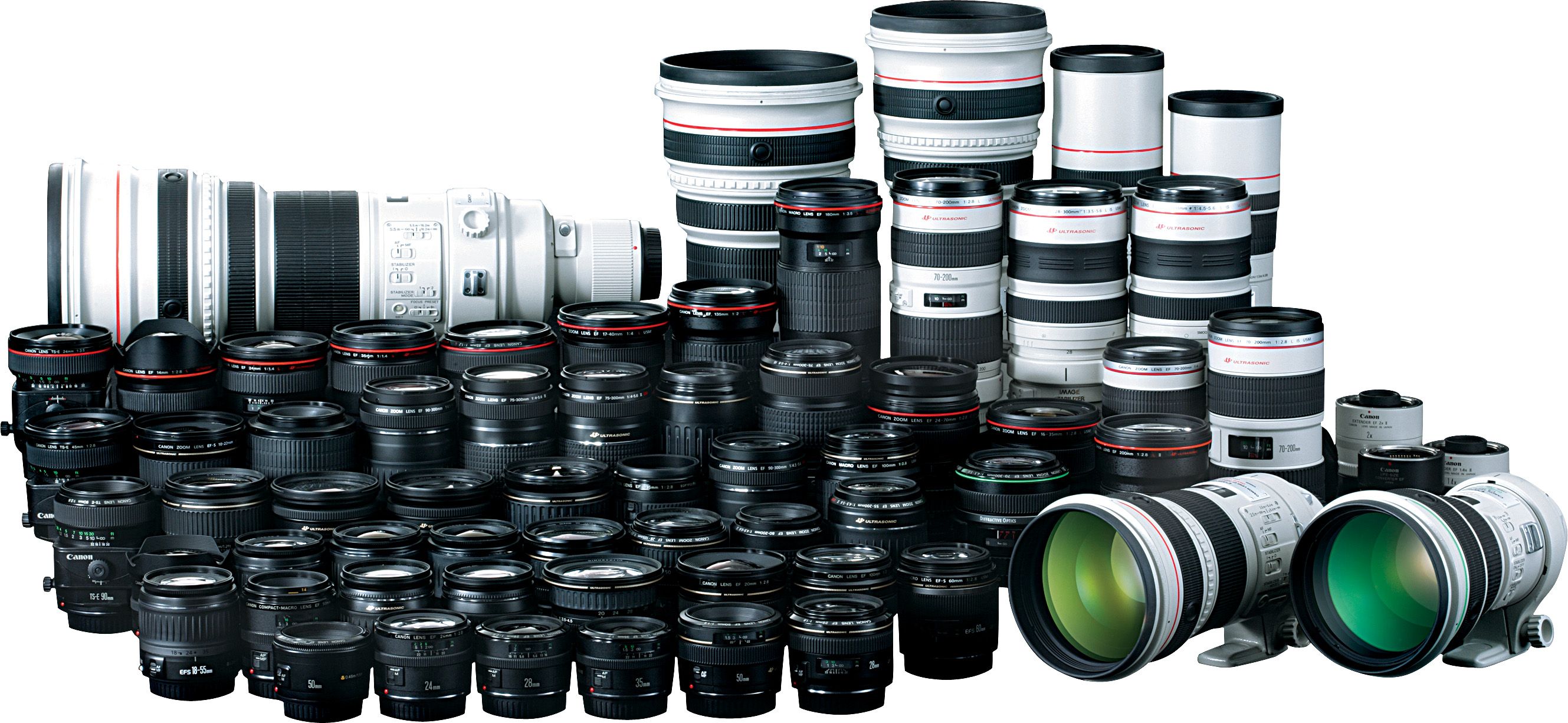
- Vast Optical Selection: With over 150 million EF units manufactured since 1987, the ecosystem offers focal lengths ranging from 8mm fisheye to 1200mm super-telephoto primes.
- Cross-Platform Compatibility: EF lenses adapt reliably to Canon RF, Sony E, Panasonic L, and cinema systems (such as RED or Blackmagic Design cameras).
Limitations
- Physical Size and Weight: Designed for DSLR mirror boxes, EF lenses are generally larger and heavier than equivalent mirrorless RF designs.
- Communication Speed Bottlenecks: Older EF autofocus motors cannot fully match the maximum frame rates (e.g., 30+ fps continuous drive) offered by flagships like the EOS R3 or EOS R1.
- Legacy Support Status: Canon has formally phased out production of the vast majority of EF lens models, shifting all optical manufacturing resources toward the RF mount system.
Frequently Asked Questions
What does "EF" stand for on a Canon lens?
EF stands for Electronic Focus. It indicates that the lens uses a fully electronic interface to communicate with the camera body, containing its own internal autofocus motor and electromagnetic diaphragm mechanism.
Can I use a Canon EF lens on a Canon APS-C camera?
Yes. EF lenses mount natively on all Canon APS-C DSLRs (such as the EOS Rebel series, 80D, or 7D Mark II). Because the APS-C sensor is smaller than a 35mm full-frame sensor, the effective field of view will be subject to a 1.6x crop factor. For example, a 50mm EF lens yields an 80mm equivalent field of view on an APS-C body.
What is the difference between Canon EF and EF-S lenses?
EF lenses are designed for full-frame sensors and work on both full-frame and crop-sensor Canon DSLRs. EF-S lenses are designed exclusively for crop-sensor (APS-C) DSLRs and feature a modified rear mount that physically prevents them from being attached to full-frame DSLR camera bodies.
Do Canon EF lenses work on EOS R mirrorless cameras?
Yes. Using an official Canon Mount Adapter EF-EOS R, EF lenses operate seamlessly on EOS R series mirrorless bodies. Autofocus speed, image stabilization, EXIF data transmission, and aperture control are fully preserved.
Is Canon still manufacturing new EF lenses?
Canon has largely discontinued the development and production of new EF lenses to focus resources on the RF mount ecosystem. However, tens of millions of EF lenses remain active in the photography market, supported by extensive third-party repair networks and vibrant pre-owned sales channels.
Practical Recommendation
For photographers and filmmakers operating on a budget, Canon EF lenses remain one of the most cost-effective entry points to professional-grade glass.
If you shoot with legacy Canon DSLRs, purchasing full-frame EF lenses (rather than EF-S) ensures an upgrade path to mirrorless camera bodies without sacrificing your optics investment. If you have already transitioned to Canon’s RF mirrorless system, utilizing adapted L-series EF glass—such as the EF 70-200mm f/2.8L IS II USM or EF 35mm f/1.4L II USM—delivers image quality comparable to native RF optics at a significantly reduced capital outlay.
Image Gallery