Is Interest on a Life Insurance Loan Deductible for a Home Purchase?
In most cases, the interest paid on a life insurance loan used for a home purchase is not tax-deductible. While the funds are used for a residence, the Internal Revenue Service (IRS) requires the debt to be "secured" by the home itself...
In most cases, the interest paid on a life insurance loan used for a home purchase is not tax-deductible. While the funds are used for a residence, the Internal Revenue Service (IRS) requires the debt to be "secured" by the home itself to qualify as mortgage interest. Because life insurance loans are secured by the policy's cash value, they typically fail this primary requirement for deductibility.
Contents
As we navigate the tax landscape of 2026, the intersection of life insurance and real estate continues to be a popular strategy for "infinite banking" enthusiasts and homeowners looking for alternative financing. However, the tax implications of these maneuvers are often misunderstood. To determine if your specific situation allows for a deduction, you must understand the IRS classification of interest, the "tracing" rules, and the strict definitions of secured debt.
The Mechanics of Life Insurance Loans
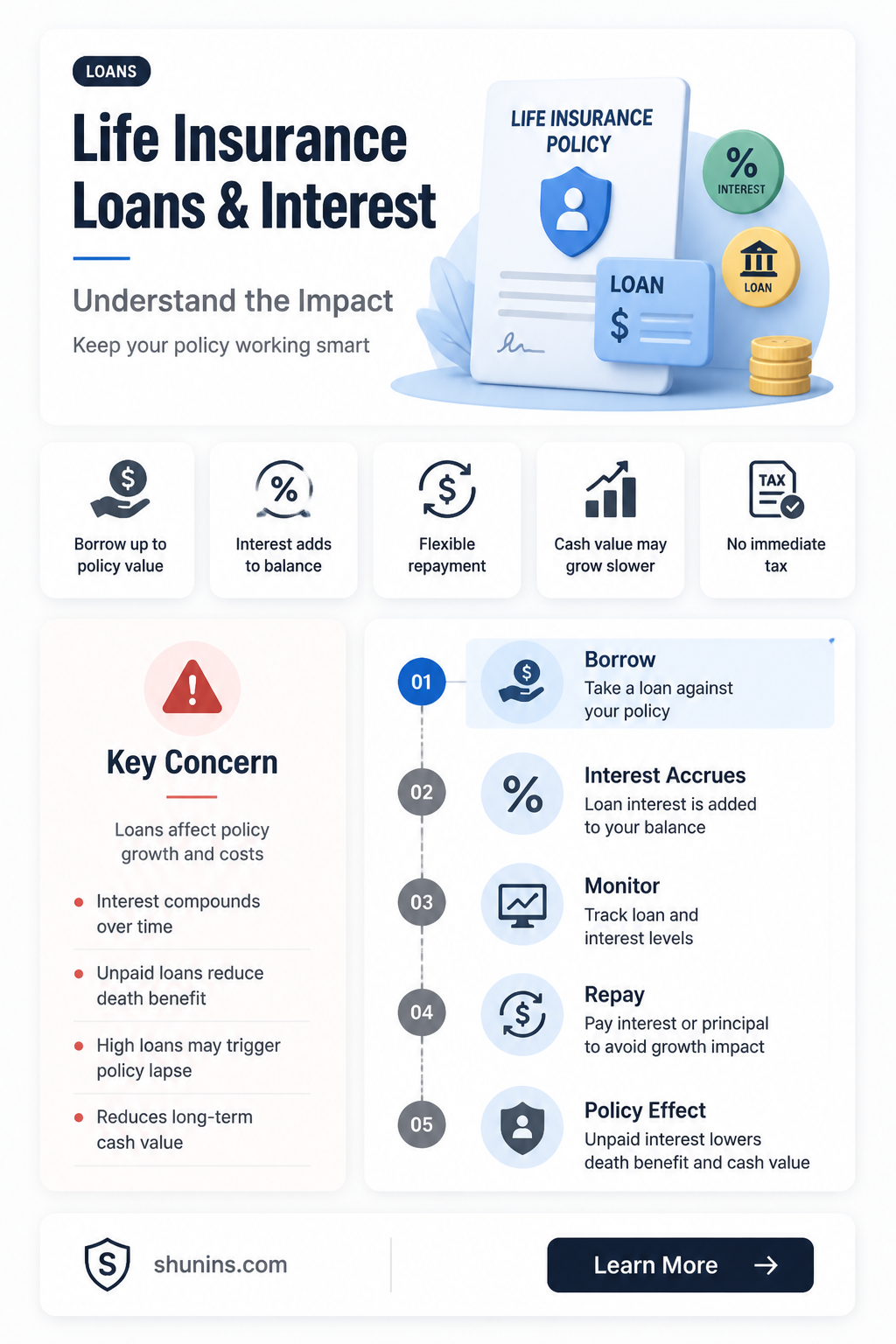
To understand the tax treatment, one must first understand the nature of the loan. When you "borrow" from a permanent life insurance policy—such as whole life or universal life—you are not actually withdrawing your own cash value. Instead, the insurance company grants you a loan from their general fund and uses your policy’s cash value as collateral.
Because the insurance company has a guaranteed claim against your death benefit or cash surrender value, they do not require credit checks or lengthy approval processes. This makes life insurance loans an attractive source of "down payment" or "full purchase" capital for a home. However, the interest the company charges is generally considered personal interest. Under the current tax code in 2026, personal interest (on car loans, credit cards, or policy loans) has been non-deductible for decades.
The "Secured Debt" Requirement for Mortgage Interest
For interest to be deductible as "home mortgage interest," it must meet the criteria set forth in IRS Publication 936. The debt must be "secured debt," meaning:
- A specific legal instrument (such as a mortgage, deed of trust, or land contract) makes your ownership interest in the qualified home security for the payment of the debt.
- The debt is recorded or otherwise perfected under local law.
- In the event of default, the home could be used to satisfy the debt.
A standard life insurance loan fails all three tests. If you default on a life insurance loan, the insurance company does not foreclose on your house; they simply deduct the balance from your policy's cash value or death benefit. Because the home is not the collateral, the interest cannot be classified as "qualified residence interest."
Tracing Rules and the Investment Interest Exception
While the interest is generally not deductible for a primary residence, there is a potential exception if the home is used as an investment property. The IRS uses "interest tracing" rules (found in Temporary Regulations section 1.163-8T) to determine the tax treatment of interest based on how the loan proceeds are used, regardless of what asset secures the loan.
If you take a life insurance loan and use 100% of the proceeds to purchase a rental property, the interest may be classified as investment interest or a passive activity expense.
- Investment Interest: If the property is held for investment (like raw land or a property held for appreciation), the interest is deductible up to your net investment income for the year.
- Business/Passive Expense: If the property is a rental, the interest is deducted against the rental income on Schedule E.
In these specific scenarios, the "secured by the home" rule is bypassed because the interest is no longer being categorized as "mortgage interest," but rather as a cost of generating income.
The 2026 Tax Context: Why This Matters Now
The tax year 2026 is a pivotal moment for homeowners. Following the expiration of several provisions of the Tax Cuts and Jobs Act (TCJA) at the end of 2025, the standard deduction has shifted, and the limits on itemized deductions have reverted to older structures.
Many taxpayers who relied on the high standard deduction between 2018 and 2025 may find themselves itemizing again in 2026. This makes the search for deductible interest more urgent. However, even with the sunset of certain TCJA provisions, the fundamental rule remains: personal interest is non-deductible, and mortgage interest must be secured by the property.
Comparing Financing Options for Home Purchases
When deciding whether to use a life insurance loan versus a traditional mortgage or HELOC, it is essential to compare the "after-tax" cost of the capital.
| Feature | Life Insurance Loan | Traditional Mortgage | HELOC (Home Equity Line) |
|---|---|---|---|
| Collateral | Policy Cash Value | The Home itself | The Home itself |
| Tax Deductibility | Generally No (Personal) | Yes (up to limits) | Yes (if used for improvements) |
| Credit Check | No | Yes | Yes |
| Repayment Terms | Flexible/Optional | Strict Monthly | Variable/Monthly |
| Impact on Assets | Reduces Death Benefit | Creates Lien on Home | Creates Lien on Home |
| Approval Speed | Days | Weeks/Months | Weeks |
Potential Pitfalls: The MEC Warning
If you are considering a life insurance loan for a home purchase, you must ensure your policy is not a Modified Endowment Contract (MEC). A MEC is a policy that has been funded too quickly according to IRS "7-pay" limits.
If your policy is a MEC:
- Loans are treated as distributions on a "Last-In, First-Out" (LIFO) basis.
- You will pay ordinary income tax on any loan amount that represents gain in the policy.
- If you are under age 59½, you may face a 10% federal tax penalty.
In 2026, the IRS continues to monitor these limits strictly. Borrowing from a MEC to buy a home can result in a massive, unexpected tax bill that far outweighs any benefits of the loan's low interest rate.
Strategies for Optimization
While the interest isn't deductible, some advanced tax planners attempt to use a Collateral Assignment. In this scenario, instead of taking a loan from the insurance company, the policyholder takes a loan from a third-party bank and uses the life insurance policy as collateral.
If that bank loan is then further secured by a second mortgage on the home, the taxpayer may attempt to argue that the interest is deductible. However, this is legally complex and requires meticulous documentation. Most tax professionals advise that unless the bank records a lien against the property's title, the IRS will likely disallow the deduction.
Common Mistakes to Avoid
- Assuming Usage Dictates Deductibility: Just because the money went to a house doesn't make it a mortgage. The IRS looks at the security, not just the usage, for residence interest.
- Neglecting the "Direct Answer" from the IRS: IRS Publication 936 explicitly states that for interest to be home mortgage interest, the debt must be "secured by a qualified home."
- Failing to Track Interest Payments: If you do have a valid investment-use case, you must keep impeccable records showing the transfer of funds from the insurance company directly to the escrow agent to prove the "tracing."
Final Considerations for 2026
Using a life insurance loan to purchase a home can be a brilliant liquidity move. It allows you to act as your own banker, avoid the prying eyes of traditional lenders, and keep your credit score out of the equation. However, you must enter the transaction with the realization that the interest you pay back to the insurance company is almost certainly an out-of-pocket, non-deductible expense.
If the goal is purely tax efficiency, a traditional mortgage—even at slightly higher interest rates—may result in a lower "net" cost after the mortgage interest deduction is applied, especially if you are in a high tax bracket in 2026.
Frequently Asked Questions
1. Can I deduct life insurance loan interest if I use the home as a home office?No. While you can deduct a portion of your actual mortgage interest as a home office expense (if you qualify), a life insurance loan does not transform into mortgage interest simply because you work from home. The underlying debt still lacks the required security (the home itself).
2. What if I use the loan to pay off my existing mortgage?The result remains the same. You have replaced a "secured debt" (the mortgage) with an "unsecured debt" (relative to the home). Even though the proceeds "paid for" the home, the new loan is secured by your insurance policy, making the interest non-deductible as mortgage interest.
3. Is the interest I pay back to the policy "taxed" as income to the insurance company?The interest you pay goes to the insurance company to compensate them for the loss of use of those funds. While it isn't taxed to you, it also doesn't provide a tax benefit. In some "participating" whole life policies, the interest you pay may eventually contribute to the dividends you receive, which are generally considered a non-taxable return of premium.
4. Does the interest rate on the loan matter for deductibility?No. Whether the insurance company charges 4% or 8%, the classification of the interest depends entirely on the collateral and the usage of the funds. The rate only affects your personal cash flow, not your tax return.
5. If I sell the home, can I deduct the accrued interest then?No. Accrued interest on a life insurance loan is generally added to the loan balance. It does not increase the "basis" of your home, and it cannot be used to offset capital gains when you sell the property.
Practical Recommendation:If you are planning to use a life insurance loan for a home purchase in 2026, consult with a tax professional to perform a "break-even" analysis. Compare the interest saved by avoiding a traditional lender against the loss of the tax deduction. If you are using the funds for an investment property, ensure you maintain a dedicated bank account for the loan proceeds to satisfy the IRS tracing requirements.
Image Gallery