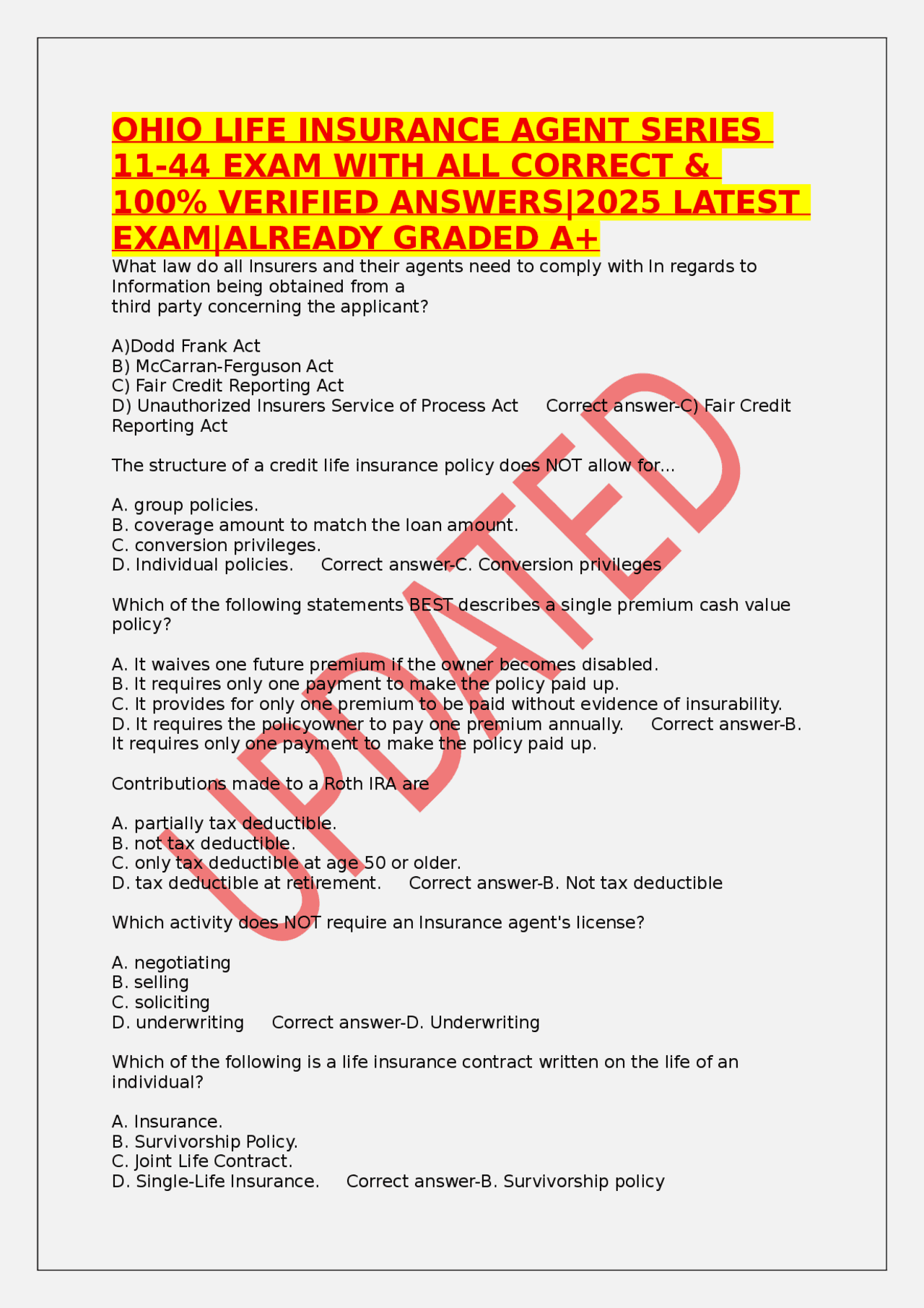
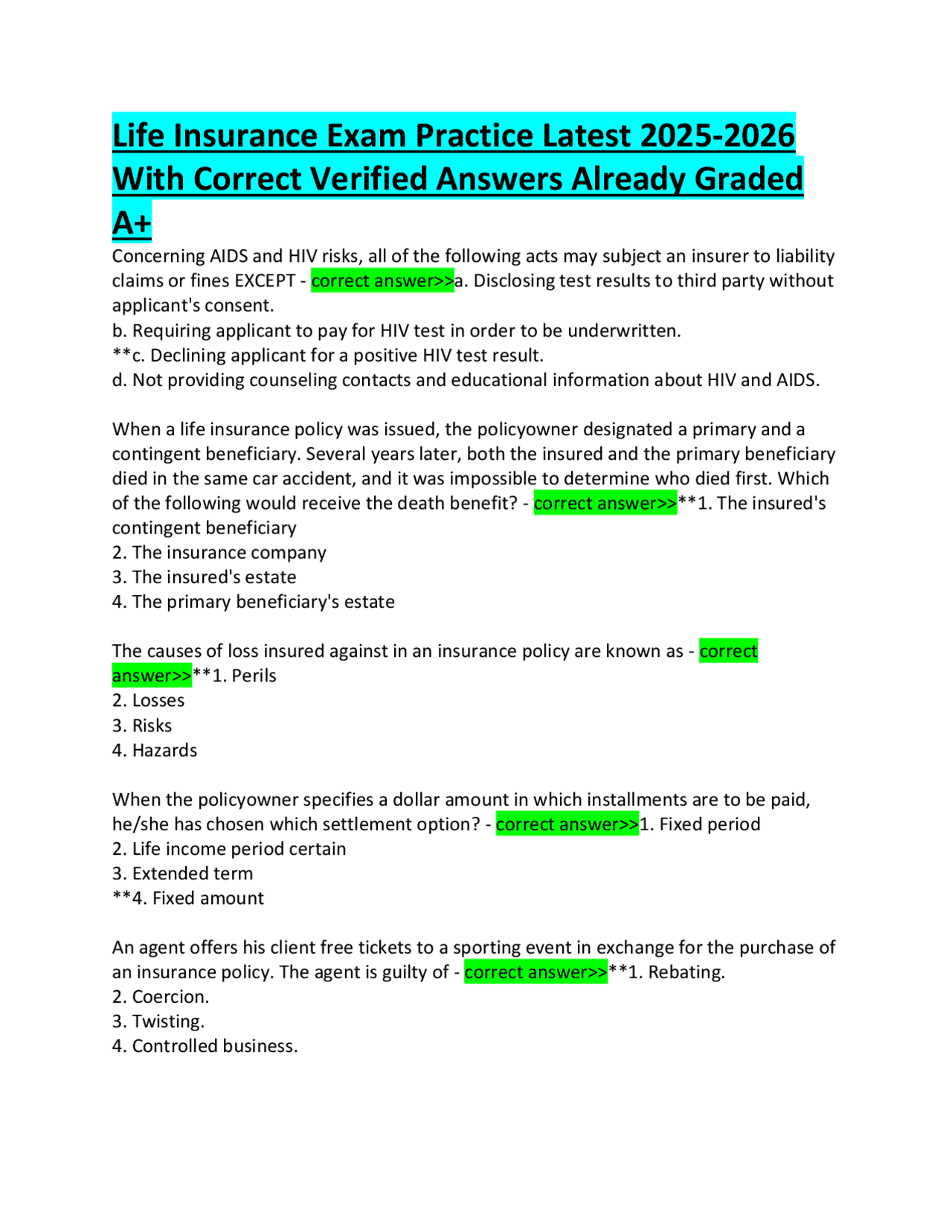
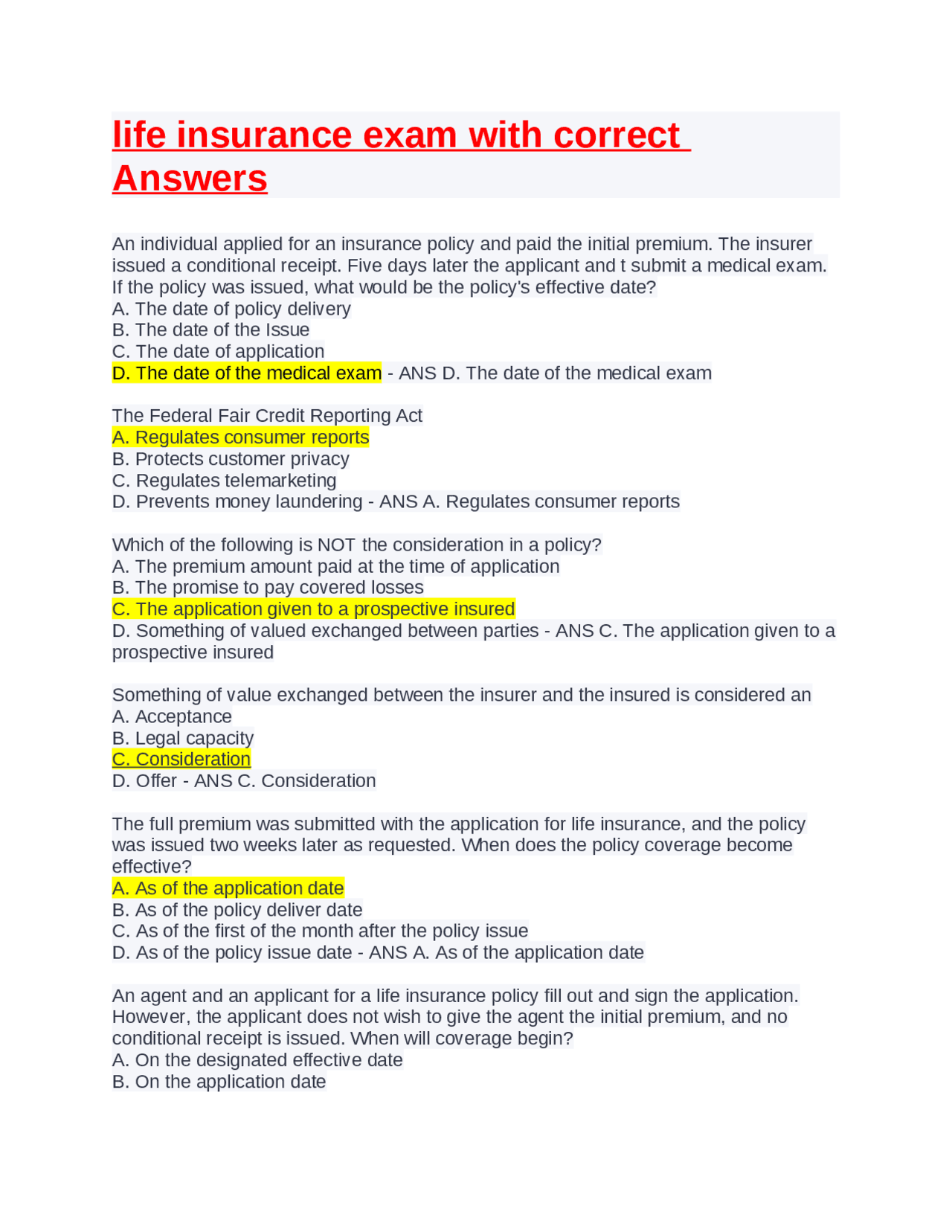
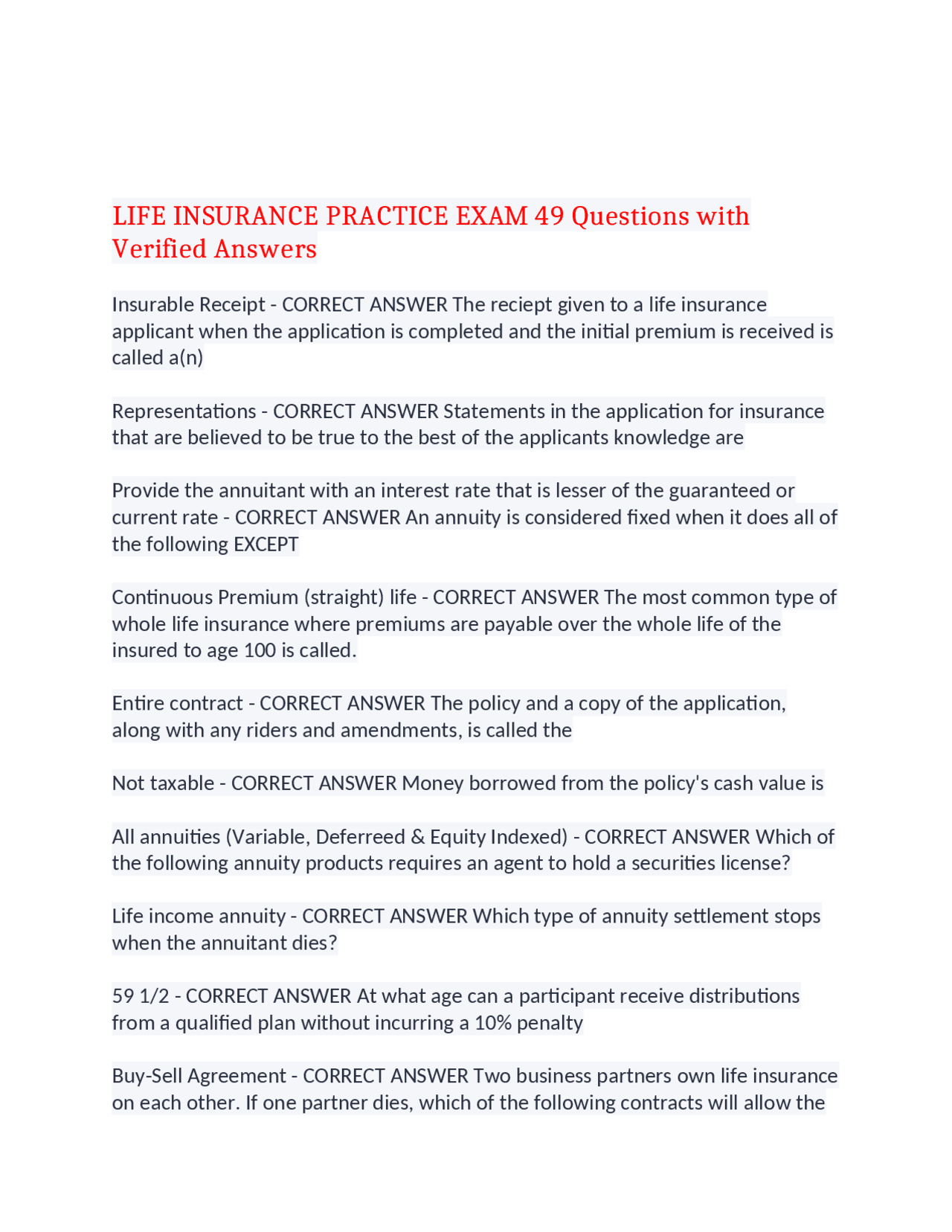
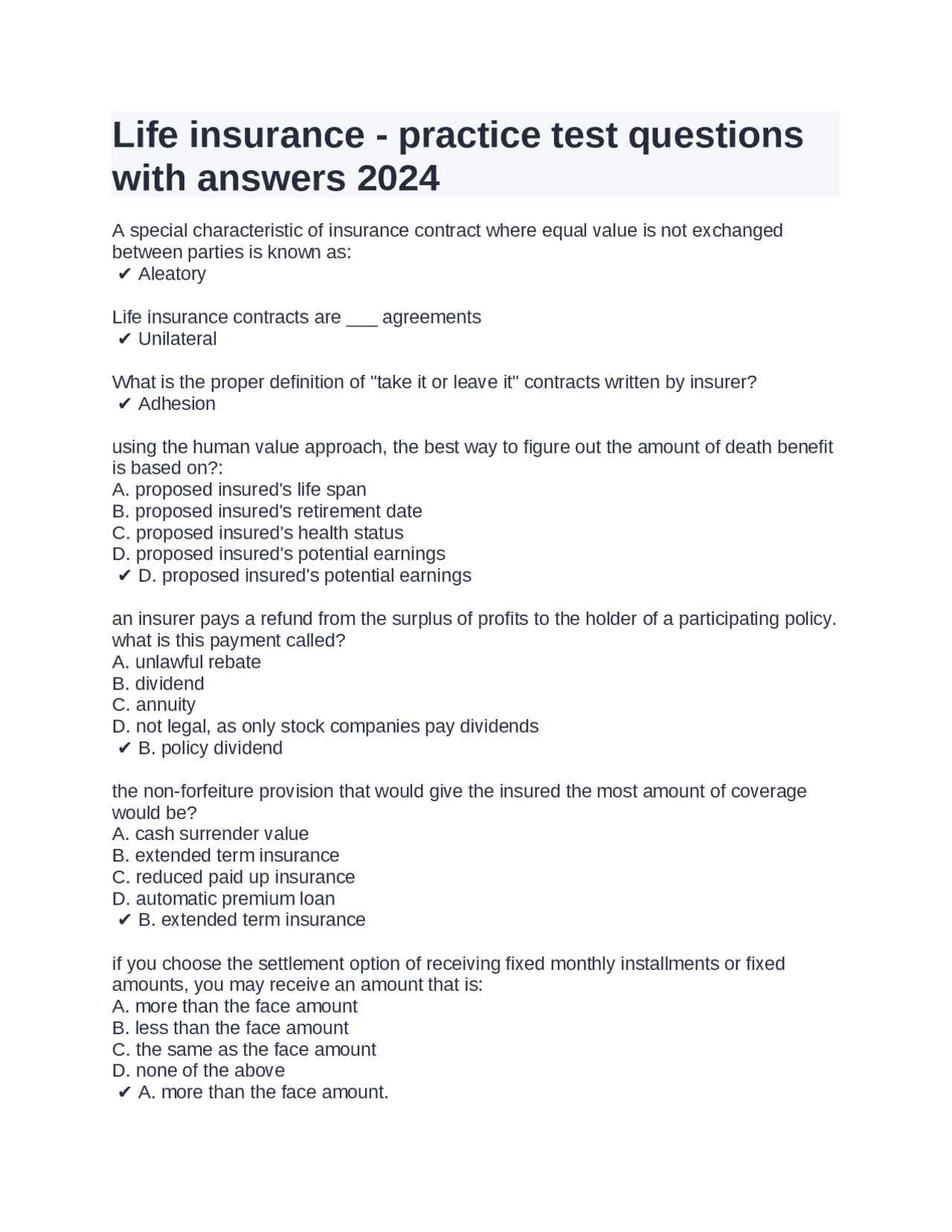
Navigating the Past Exam of Hawaii Life Insurance: What to Expect and How to Prepare
Preparing for a past exam of Hawaii life insurance involves mastering local regulatory frameworks, policy provisions, and state-specific insurance statutes alongside national insurance principles. Because official licensing bodies do n...
Preparing for a past exam of Hawaii life insurance involves mastering local regulatory frameworks, policy provisions, and state-specific insurance statutes alongside national insurance principles. Because official licensing bodies do not typically publish a single definitive copy of every historical test version due to security and question rotation protocols, candidates rely on comprehensive study outlines, practice questions, and content domains established by the Hawaii Insurance Division and administered by testing vendors like Prometric.
Contents
Studying for state insurance exams requires understanding both the general concepts of life insurance and the specific laws governing the jurisdiction of Hawaii. This guide examines how licensing tests are structured, where to find reliable practice materials, key topics to master, and strategic steps to pass the examination on your first attempt.
Understanding the Hawaii Life Insurance Licensing Examination Structure
The Hawaii life insurance exam evaluates a candidate's competency to sell, solicit, and negotiate life insurance products within the state. The test is administered via computer at designated testing centers. It consists of multiple-choice questions divided into two primary sections: state-specific laws and general life insurance concepts.
The general portion covers standard industry practices, policy types, riders, provisions, and legal concepts. The state-specific portion focuses on the Hawaii Revised Statutes (HRS) and Hawaii Administrative Rules (HAR) enforced by the Hawaii Insurance Division, part of the Department of Commerce and Consumer Affairs (DCCA).
HAWAII LIFE INSURANCE EXAM STRUCTURE
- General Insurance Knowledge
- Types of Policies (Term, Whole, Universal Life)
- Riders, Provisions, Options
- Beneficiary Designations
- Underwriting & Premium calc
- Retirement & Annuity concepts
- Federal Tax Considerations
- State-Specific Regulations
- Hawaii Insurance Division Rules & Authority
- Licensing Requirements & Continuing Education (CE)
- Unfair Trade Practices & Ethical Conduct
- State Policy Provisions
Candidates must achieve a passing score—typically 70% or higher depending on the specific exam version and licensing tier—to qualify for a resident producer license. Reviewing diagnostic reports from prior attempts or structured practice exams helps candidates identify weak areas across these distinct domains.
Why "Past Exams" Are Rare and How Practice Tests Work
Official testing organizations, such as Prometric or Pearson VUE, protect their question banks to maintain the validity and integrity of the licensing process. Consequently, you will not find an official, exhaustive PDF of the exact past exam of Hawaii life insurance released for public study.
Instead, test preparation providers construct simulated practice exams based on the official content outline provided by the Hawaii Insurance Division. These practice exams mimic the style, difficulty, and subject-matter distribution of the actual test.
- Content Outlines: The Hawaii Insurance Division publishes detailed content outlines detailing the exact percentage of questions allocated to each topic.
- Simulated Testing Software: Prep providers use algorithmic question generators to pull from pools of hundreds of questions covering identical subtopics.
- Performance Analytics: Quality practice tools provide score breakdowns by chapter, enabling targeted remediation rather than rote memorization of static questions.
Relying solely on memorizing a single leaked or remembered set of past questions is risky. Test banks are dynamic, and questions are regularly updated to reflect legislative changes enacted by the Hawaii state legislature.
Core Content Domains on the Hawaii Life Insurance Test
To succeed on the exam, candidates must master both national and local insurance principles. The curriculum is divided into clearly defined technical sections.
1. General Life Insurance Principles
This segment covers the mechanics of life insurance contracts. Candidates must understand how risk is pooled, how mortality tables affect premium pricing, and the differences between temporary and permanent insurance options. Key products include:
- Term Life Insurance: Level, decreasing, and increasing term policies, convertibility, and renewability.
- Whole Life Insurance: Ordinary whole life, limited-pay life, single-premium life, and nonforfeiture values (cash value, reduced paid-up, extended term).
- Flexible Premium Policies: Universal life, variable life, and variable-universal life insurance, including their separate accounts and securities regulation overlaps.
Policy Provisions, Options, and Riders
Candidates need a thorough grasp of standard clauses that dictate how policies operate. This includes the Entire Contract provision, Grace Period, Reinstatement, Incontestability clause, and Assignment provisions. Furthermore, understanding riders—such as Waiver of Premium, Accidental Death Benefit, Guaranteed Insurability, and Cost of Living Adjustments—is crucial for scenario-based questions.
3. Hawaii State Laws and Regulations
State-specific regulations govern how insurance is marketed and serviced within the islands. Test questions heavily feature Hawaii insurance statutes regarding:
- Producer Licensing: Pre-licensing education requirements, background checks, appointment procedures, and license renewal cycles.
- Unfair Trade Practices: Regulations prohibiting rebating, twisting, defamation, coercion, and misrepresentation.
- Replacement Regulations: Strict disclosure rules and procedures producers must follow when replacing an existing life insurance policy to ensure the client's best interest is protected.
- The Hawaii Guaranty Association: Understanding consumer protection limits in the event an insurance company becomes insolvent.
Comparison of Study Methods for the State Exam
Choosing the right preparation resource significantly impacts first-time pass rates. The table below compares common study modalities used by candidates preparing for the Hawaii life insurance examination.
| Study Method | Pros | Cons | Best Suited For |
|---|---|---|---|
| Provider Practice Exams | Mirrors actual test format; provides detailed answer explanations. | Does not contain exact historical exam questions. | Active recall and identifying knowledge gaps. |
| State Content Outline | 100% aligned with official testing requirements; highlights all testable topics. | Lacks explanatory text or sample questions; must be used with a textbook. | Creating a structured study calendar. |
| Pre-Licensing Textbooks | Comprehensive conceptual coverage; builds foundational industry knowledge. | Can be dense and time-consuming to read cover-to-cover. | Beginners needing deep subject matter understanding. |
| Flashcard Apps | Highly portable; excellent for memorizing definitions, time limits, and dollar amounts. | Limited ability to explain complex scenario-based insurance concepts. | Quick review of terminology and statutory timelines. |
Step-by-Step Guide to Preparing and Sitting for the Exam
Passing the licensing examination requires a methodical, step-by-step approach from initial registration to test day execution.
Step 1: Complete Approved Pre-Licensing Education
Before scheduling your exam, verify whether Hawaii currently requires a specific number of pre-licensing education hours for life insurance producers. Many candidates utilize state-approved online education courses that combine reading modules with chapter quizzes.
Step 2: Register Through the Testing Vendor
Once prepared, visit the official testing vendor website (such as Prometric) to create an account, select the Hawaii Life Insurance Producer examination, pay the required testing fee, and schedule your testing appointment at a local center or via remote proctoring if available.
Step 3: Drill with Practice Tests and Analyze Results
In the final two weeks before the exam, take multiple simulated practice tests under timed conditions. Do not just memorize correct answers; review why incorrect choices were wrong. Pay special attention to Hawaii-specific statutes, as these frequently trip up candidates who rely solely on national study guides.
Step 4: Execute on Exam Day
Arrive at the testing center at least 30 minutes prior to your appointment with the required government-issued identification. Pace yourself during the computer-based exam, flag difficult questions for review, and ensure all questions are answered before submitting your test for immediate scoring.
Frequently Asked Questions
Where can I find official past exam papers for Hawaii life insurance?
Official past exam papers are not published or distributed by the Hawaii Insurance Division or testing vendors to maintain exam security. Instead, candidates must rely on official content outlines and simulated practice exam banks provided by accredited insurance education providers.
How many questions are on the Hawaii life insurance exam?
The exam typically contains a combination of scored general questions and state-specific questions, alongside unscored pretest questions. The exact count varies slightly by exam version, but tests generally range from 100 to 150 total multiple-choice questions with a strict time limit.
What is considered a passing score on the exam?
A scaled score of 70% or higher is generally required to pass the Hawaii life insurance licensing examination. Candidates receive their pass or fail score report immediately upon completing the computer-based test at the testing center.
Can I use study materials from other states for the Hawaii exam?
You can use national study materials for the general life insurance concepts portion, as products and actuarial principles are largely uniform nationwide. However, you must study Hawaii-specific statutes separately, as state laws, replacement rules, and licensing regulations vary significantly by jurisdiction.
What happens if I fail the Hawaii life insurance exam on my first try?
If you fail the exam, the testing vendor provides a score report detailing your performance across various content domains. You can reschedule to retake the exam after paying the applicable re-examination fee and adhering to any mandatory waiting periods enforced by the testing center.
Conclusion and Next Action
Preparing for the Hawaii life insurance licensing examination requires a balanced focus on general insurance principles and Hawaii state statutes. Rather than searching for nonexistent exact past exams, invest your time in structured pre-licensing courses, official content outlines, and high-quality practice question banks. Review your score diagnostics closely during practice sessions to target weak areas, and verify your examination registration details directly through the official state testing vendor today.
Image Gallery