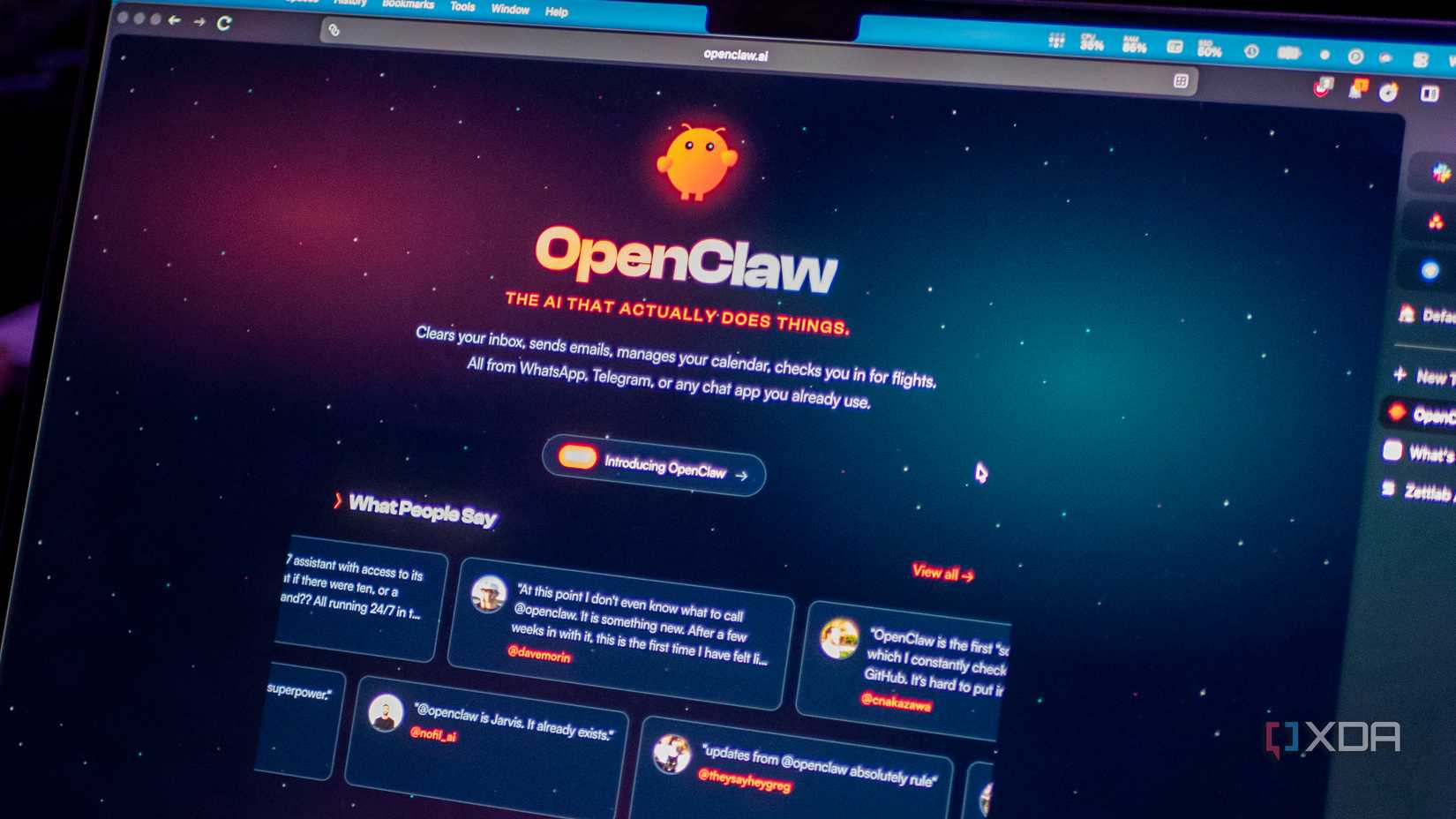
Understanding the OpenClaw AI-Powered Cloud Native Security Scanner
The OpenClaw AI-powered cloud native security scanner serves as a specialized automated solution designed to detect vulnerabilities, misconfigurations, and anomalous behavior within containerized and distributed cloud environments. By...
The OpenClaw AI-powered cloud native security scanner serves as a specialized automated solution designed to detect vulnerabilities, misconfigurations, and anomalous behavior within containerized and distributed cloud environments. By leveraging machine learning models to analyze infrastructure-as-code and runtime activity, it helps security operations teams identify critical threats that traditional static analysis tools often miss in rapidly scaling cloud deployments.
Contents
The Evolution of Cloud Native Security
Modern cloud environments have shifted the security paradigm from perimeter defense to continuous, identity-centric verification. As organizations adopt microservices, Kubernetes clusters, and ephemeral container architectures, the attack surface expands dynamically. Traditional security scanners, which rely heavily on signature-based detection, often struggle to keep pace with the constant deployment cycles inherent in DevOps and DevSecOps workflows.
The OpenClaw AI-powered cloud native security scanner addresses this gap by integrating intelligence into the scanning process. Unlike legacy tools that require manual rule updates for every new vulnerability, OpenClaw employs heuristic analysis to understand the context of the environment. This shift allows for the identification of "zero-day" patterns and complex configuration drifts that do not trigger standard security alerts but represent significant systemic risks.
Core Architecture and Operational Principles
To function effectively, an AI-powered scanner like OpenClaw must interact with multiple layers of the cloud stack. Its architecture is generally divided into three primary functional domains: the control plane, the data plane, and the ingestion engine.
Infrastructure-as-Code (IaC) Scanning
Before a container is even deployed, OpenClaw evaluates the orchestration files—such as Kubernetes manifests, Terraform modules, and Dockerfiles—for security misconfigurations. This proactive approach prevents insecure defaults, such as containers running with root privileges or overly permissive IAM roles, from entering production. The AI component here acts as a policy engine that learns from historical deployment failures, flagging deviations from established secure baselines.
Runtime Security and Behavioral Monitoring
Once assets are live, the scanner shifts to observability. It monitors process execution, system calls, and network communication within the cluster. By establishing a "normal" behavioral profile, the scanner can flag deviations that suggest a compromised container. This is particularly valuable in detecting cryptojacking, unauthorized lateral movement, and data exfiltration attempts.
Threat Intelligence Integration
The scanner does not operate in a vacuum. It continuously pulls updates from global threat feeds to cross-reference identified vulnerabilities against known exploits. The "AI-powered" nature of the tool allows it to prioritize these alerts based on reachability and actual risk rather than just the severity score (CVSS), which reduces "alert fatigue" for busy security teams.
Comparison of Security Scanning Methodologies
The following table provides a high-level comparison between standard legacy scanners and AI-powered solutions like OpenClaw in a cloud-native context.
| Feature | Legacy Signature Scanners | OpenClaw AI-Powered Scanner |
|---|---|---|
| Detection Basis | Known vulnerability databases | Contextual patterns and heuristics |
| False Positive Rate | High (due to lack of context) | Low (due to environment learning) |
| Deployment Speed | Slow, batch-based | Continuous/Real-time |
| Scope | Static files and code | Dynamic runtime and orchestration |
| Remediation Advice | General documentation | Context-specific code fixes |
Prerequisites and Implementation Requirements
Implementing an advanced security scanner requires more than just installing software; it demands a foundational understanding of the environment and strict adherence to security best practices. Before deploying OpenClaw, teams should ensure the following:
- Environment Mapping: Maintain an up-to-date inventory of all container images, registry endpoints, and active cloud nodes.
- Access Control: The scanner must be granted "Least Privilege" access to the orchestration layer (e.g., Kubernetes API). While it needs visibility, it should not have administrative control over the entire cloud infrastructure.
- CI/CD Integration: Ensure the scanner can be triggered during the build phase of the CI/CD pipeline to catch vulnerabilities at the "shift-left" stage.
- Log Retention: Sufficient logging must be enabled across the cloud environment to provide the AI engine with enough historical data to generate accurate behavioral baselines.
Navigating Challenges and Limitations
Despite the advancements offered by AI-powered tools, users must be aware of the inherent limitations of such technology. AI models are susceptible to "data poisoning" if the training environment is already compromised, and they may occasionally struggle with "black box" outcomes where the logic behind a specific alert is not immediately transparent.
Organizations must implement a human-in-the-loop validation process. When OpenClaw flags an anomaly, security analysts should verify the finding before executing automated remediation scripts. Relying solely on automated responses without oversight can lead to service disruptions, particularly if the AI misidentifies a legitimate but unconventional system process as a malicious attack.
Frequently Asked Questions
Does OpenClaw replace the need for penetration testing?
No. While it provides continuous monitoring and automated scanning, it does not replace the nuanced, manual exploration performed by human penetration testers. It should be viewed as a complementary layer in a broader defense-in-depth strategy.
How does the scanner minimize false positives?
It reduces false positives by factoring in the "reachability" of a vulnerability. If a vulnerable library is detected but the code path to that library is never actually called by the application, the system deprioritizes the alert compared to an exploit that is active and accessible.
Can OpenClaw operate in an air-gapped environment?
In many cases, yes, though this typically requires an on-premises deployment of the AI engine. You will lose the benefit of real-time cloud-based threat intelligence unless you configure a local mirror of threat feeds.
What is the impact on performance?
Modern cloud-native scanners are designed to be lightweight. They generally use sidecar patterns in Kubernetes or eBPF (extended Berkeley Packet Filter) technology to monitor system calls with minimal CPU and memory overhead compared to traditional agent-based solutions.
Does it support multi-cloud deployments?
Most advanced cloud-native scanners are built to be cloud-agnostic. Whether your infrastructure resides on AWS, Azure, or GCP, the underlying principles of container orchestration and process monitoring remain consistent, allowing for unified policy enforcement.
Next Steps for Security Teams
To effectively secure your cloud-native footprint, prioritize the integration of the OpenClaw scanner into your existing CI/CD pipelines. Begin with a "monitor-only" mode to understand your baseline behavior without risking production stability. Once the AI has sufficiently profiled your environment, proceed to configure automated alerting for high-confidence threats and finally move to automated remediation for specific, well-understood vulnerability categories. Regularly audit your security policies to ensure they remain aligned with the evolving nature of your infrastructure.
Image Gallery