Sun Life Insurance for Individuals with HIV: An Overview
Securing life insurance coverage for individuals living with HIV has historically presented significant hurdles, but modern underwriting practices have evolved considerably. Sun Life Financial, a major international financial services...
Securing life insurance coverage for individuals living with HIV has historically presented significant hurdles, but modern underwriting practices have evolved considerably. Sun Life Financial, a major international financial services organization, provides life insurance policies that evaluate applicants based on contemporary medical advancements, viral suppression, and sustained treatment adherence. Understanding how major insurers approach HIV underwriting helps applicants navigate policy options, disclose medical histories accurately, and select appropriate coverage levels.
Contents
Evolution of Life Insurance Underwriting for HIV-Positive Applicants
The landscape of life insurance underwriting for individuals diagnosed with human immunodeficiency virus (HIV) has undergone a profound transformation. In the early decades of the epidemic, life insurance policies were largely unavailable to HIV-positive individuals, as the condition was classified as uninsurable due to high mortality rates and limited treatment options.
The introduction and continuous refinement of antiretroviral therapy (ART) changed this dynamic. Modern medical interventions allow individuals with HIV to achieve undetectable viral loads, preserving immune function and extending life expectancy to levels comparable to those of the general population. Recognizing these medical breakthroughs, progressive insurance providers like Sun Life began reassessing their risk models.
Underwriters no longer evaluate HIV applications based solely on the presence of the diagnosis. Instead, modern risk assessment focuses on comprehensive health profiles, treatment consistency, and overall management of the condition. While underwriting guidelines remain rigorous, the availability of term life, whole life, and universal life products has expanded for qualifying individuals who demonstrate stable health management.
Key Medical and Lifestyle Criteria Evaluated by Underwriters
When an individual living with HIV applies for life insurance, the underwriting department reviews specific medical markers and lifestyle factors to determine eligibility and premium pricing. Medical underwriting is data-driven, relying heavily on laboratory results and attending physician statements (APS).
- CD4 Count: This measurement indicates the health of the immune system by counting the number of CD4 T-lymphocytes per cubic millimeter of blood. Higher CD4 counts generally indicate a more robust immune system and are viewed favorably by underwriters.
- Viral Load: This metric measures the amount of HIV RNA in the blood. Achieving and maintaining an undetectable viral load through consistent ART adherence is one of the most critical factors in securing favorable underwriting outcomes.
- Treatment Adherence: Underwriters evaluate the applicant's medical history to confirm consistent use of prescribed antiretroviral medications and regular follow-up appointments with infectious disease specialists or primary care physicians.
- Co-morbidities: The presence of secondary health conditions—such as hepatitis B or C coinfections, cardiovascular disease, diabetes, or a history of specific opportunistic infections—can influence the risk assessment and overall rating.
- Lifestyle Factors: Standard underwriting inquiries regarding tobacco use, alcohol consumption, driving records, and hazardous occupations apply equally to HIV-positive applicants.
Types of Insurance Policies Available
Navigating the market requires understanding which policy structures best fit individual financial goals and long-term security needs. Insurance products generally fall into two primary categories: temporary coverage and permanent protection.
Term Life Insurance
Term life insurance provides coverage for a specified duration, such as 10, 20, or 30 years, offering a high death benefit relative to the premium cost. For qualifying individuals with well-managed HIV, term policies can provide affordable income replacement during peak earning years or while dependents are financially dependent.
Permanent Life Insurance
Permanent life insurance, which includes whole life and universal life policies, provides lifetime coverage and incorporates a cash value component that grows on a tax-deferred basis. These policies are often utilized for estate planning, final expense coverage, or long-term financial accumulation. Securing permanent coverage requires meeting strict medical criteria, but it ensures that the policy remains active regardless of future health changes, provided premiums are paid.
Comparison of Life Insurance Options for Individuals with HIV
| Policy Type | Coverage Duration | Cash Value Component | Primary Underwriting Focus | Suitability |
|---|---|---|---|---|
| Term Life | Fixed period (10–30 years) | None | Current health stability, viral load, CD4 count | Budget-friendly income replacement and debt protection |
| Whole Life | Lifetime | Yes (Guaranteed growth) | Strict medical history, longevity potential | Long-term estate planning and permanent protection |
| Universal Life | Lifetime (flexible premiums) | Yes (Variable growth) | Comprehensive health profile, stability | Flexible premium payments and adjustable death benefits |
The Application and Underwriting Process
Applying for life insurance with an HIV diagnosis involves a structured process designed to gather accurate medical data. Transparency and preparation are vital components that can streamline the evaluation timeline.
- Consultation with an Independent Broker or Agent: Working with an experienced insurance professional who understands high-risk or specialized underwriting can help identify carriers with favorable guidelines for HIV-positive applicants.
- Comprehensive Application Submission: The applicant completes detailed questionnaires regarding their diagnosis date, treatment history, current medications, and general health background.
- Paramedical Examination and Lab Work: Most policies require a paramedical exam, which typically includes collecting blood and urine samples. These samples are tested specifically for viral load, CD4 counts, liver and kidney function, and general metabolic panels.
- Attending Physician Statement (APS) Review: The insurer requests medical records from the applicant’s treating physicians to verify the continuity of care and overall health stability.
- Underwriting Decision: The carrier assesses the complete file, assigning a risk classification that determines the final premium rate.
Common Mistakes to Avoid When Applying
Navigating the life insurance market with a pre-existing medical condition requires careful attention to detail. Avoiding common pitfalls ensures a smoother application process and prevents unnecessary delays or denials.
- Failing to Disclose Medical History: Omitting an HIV diagnosis or related medical treatments on an application constitutes material misrepresentation, which can lead to policy rescission or denial of death benefits later.
- Applying Without Recent Lab Data: Submitting an application without up-to-date CD4 and viral load test results forces underwriters to postpone the decision until current data is provided.
- Limiting Quotes to a Single Carrier: Underwriting guidelines vary significantly between insurance companies. Reviewing options across multiple providers helps identify the most accommodating terms.
- Neglecting Professional Guidance: Attempting to navigate specialized underwriting without expert assistance can result in inappropriate product selection or mishandled disclosures.
Frequently Asked Questions
Can individuals with HIV qualify for standard life insurance rates?
While historically impossible, advancements in medical treatment mean some individuals with well-managed HIV, undetectable viral loads, and strong CD4 counts may qualify for standard or near-standard rates with certain specialized carriers, though substandard or table ratings remain more common depending on overall health profiles.
What documents are required during the life insurance application process?
Applicants typically need to provide detailed personal identification, a comprehensive medical history questionnaire, records from treating physicians, and results from recent laboratory tests such as viral load assays and CD4 counts obtained during routine care.
Does health insurance status affect life insurance eligibility?
Life insurance underwriting evaluates medical stability, treatment adherence, and clinical markers rather than the specific type of health insurance policy an applicant holds, provided they maintain consistent access to medical care and prescribed antiretroviral therapies.
How does viral suppression impact underwriting decisions?
Achieving and sustaining an undetectable viral load is one of the most favorable indicators for underwriters, as it demonstrates effective disease management, reduces the risk of opportunistic complications, and correlates with a near-normal life expectancy.
Are simplified issue or guaranteed issue policies available for HIV-positive individuals?
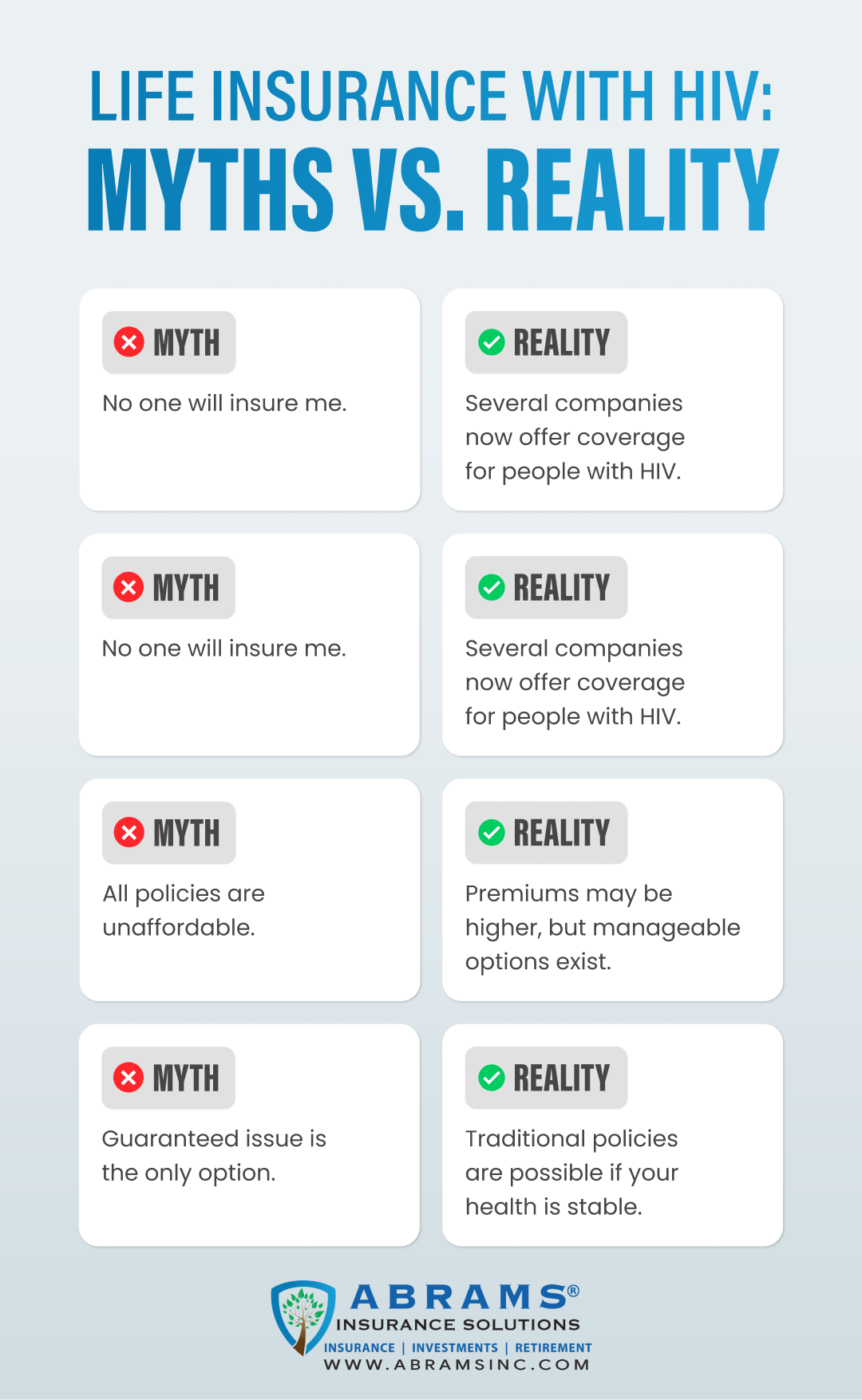
Guaranteed issue policies, which do not require medical exams or health questions, are available through various providers, though they typically feature lower maximum death benefits, higher premiums, and graded death benefit periods where full payouts are restricted during the initial policy years.
Next Actions for Prospective Applicants
Individuals exploring life insurance options should begin by gathering their most recent medical records, including up-to-date lab results confirming viral load and CD4 counts. Consulting with a knowledgeable financial advisor or specialized insurance broker allows for a confidential assessment of available products, ensuring realistic expectations regarding underwriting timelines, policy structures, and premium costs tailored to individual financial circumstances.
Image Gallery