Navigating Workers Compensation Law in S.C. County
Workers compensation law in S.C. County provides a structured, no-fault system designed to ensure that employees who suffer job-related injuries or illnesses receive prompt medical treatment and partial wage replacement. While the foun...
Workers compensation law in S.C. County provides a structured, no-fault system designed to ensure that employees who suffer job-related injuries or illnesses receive prompt medical treatment and partial wage replacement. While the foundational principles of workers compensation are governed at the state level, navigating the specific local administrative procedures, dispute resolution tracks, and employer obligations within S.C. County requires an understanding of both state statutes and local administrative practices. Injured workers and employers alike must adhere to strict filing deadlines, medical provider networks, and statutory compliance mandates to protect their rights and manage liabilities effectively.
Contents
Understanding the Fundamentals of Workers Compensation in South Carolina
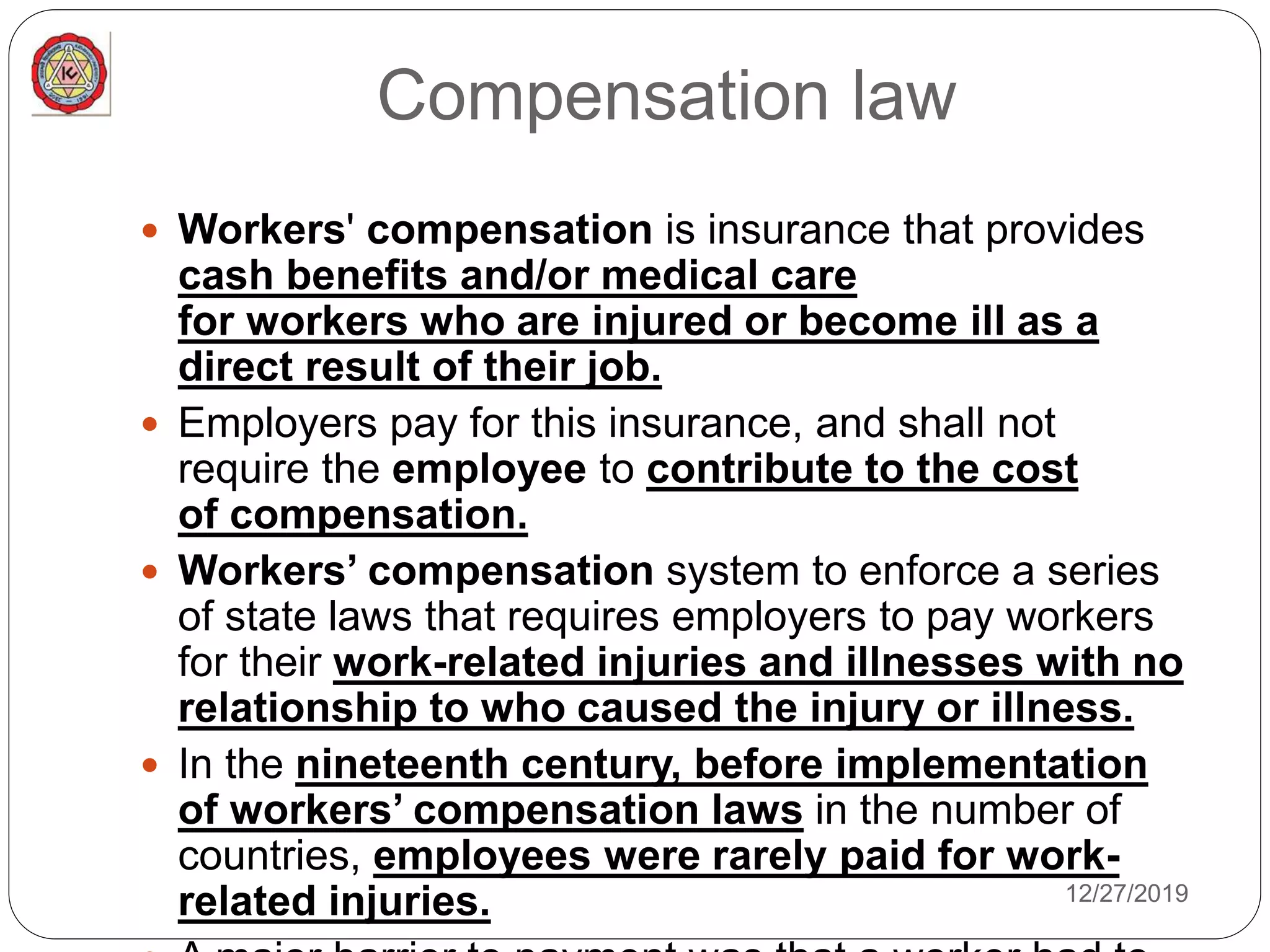
The framework of workers compensation rests on a legislative compromise: employees surrender their right to sue their employers in tort for workplace negligence, and in exchange, they receive guaranteed, expedited medical and financial benefits regardless of who was at fault for the accident. This system applies to nearly all public and private sector employers within the state, including those operating within S.C. County, provided they meet specific employee thresholds.
Under South Carolina law, managed by the South Carolina Workers' Compensation Commission (SCWCC), any business that employs four or more regular employees—whether full-time or part-time—is generally required to maintain workers compensation insurance or qualify as a self-insured entity. This requirement encompasses a wide variety of organizational structures, from small local retail shops to large manufacturing facilities and construction contractors.
Core Benefits Provided Under the Law
When an employee sustains a compensable injury arising out of and in the course of employment, the statutory safety net triggers several forms of relief:
- Medical Treatment: Comprehensive coverage for all authorized medical, surgical, hospital, and pharmaceutical care required to treat the injury, including physical therapy and necessary medical devices.
- Temporary Total Disability (TTD) Benefits: Weekly wage replacement benefits if the injury causes the worker to be totally disabled from work for a period exceeding seven days. These benefits are typically calculated as a percentage of the worker's average weekly wage, subject to statutory maximums.
- Temporary Partial Disability (TPD) Benefits: Compensation provided if the employee returns to work at a reduced wage or on restricted duty while recovering.
- Permanent Disability Benefits: Compensation awarded if the injury results in a permanent impairment to a scheduled member (such as an arm, leg, hand, or eye) or the body as a whole.
- Vocational Rehabilitation: Assistance for retraining if the permanent injury prevents the worker from returning to their pre-injury occupation.
Employer Obligations and Insurance Compliance in S.C. County
Employers operating within S.C. County bear strict legal responsibilities regarding workers compensation. Failure to maintain mandatory coverage carries severe civil penalties, stop-work orders, and potential criminal liabilities for business owners and corporate officers.
To maintain compliance, employers must purchase an approved commercial workers compensation insurance policy or secure authorization from the SCWCC to act as an individual or group self-insurer. Additionally, employers are required to display official workplace notices informing employees of their rights under the South Carolina Workers' Compensation Act, including the identity of the insurance carrier or third-party administrator handling claims.
Immediate Employer Responsibilities After an Incident
When a workplace injury occurs within S.C. County, the employer must follow a precise protocol to avoid statutory penalties and ensure the claim is processed efficiently:
- Provide Immediate Medical Care: Facilitate emergency medical treatment if the injury is severe. For non-emergencies, direct the employee to authorized medical providers designated by the employer or insurance carrier.
- File an Employer's First Report of Injury (Form 12-A): Report the incident to the insurance carrier and the SCWCC within the statutory timeframe, typically within ten days of acquiring knowledge of an injury that causes more than perdita of work or requires medical treatment beyond first aid.
- Maintain Open Communication: Keep records of all medical reports, lost-time tracking, and correspondence with the claims adjuster.
Employee Rights and the Step-by-Step Claim Process
For employees injured on the job in S.C. County, knowing the correct sequence of actions is vital to securing benefits without unnecessary delay. The process begins the moment an accident occurs and extends through medical recovery and ultimate claim resolution.
| Step | Action Required | Responsible Party | Timeframe / Notes |
|---|---|---|---|
| 1 | Report the Injury | Employee | Immediately, but no later than 90 days from the date of the accident or medical diagnosis. |
| 2 | Seek Medical Attention | Employee / Employer | Promptly; must use authorized treating physicians designated by the employer/insurer (except in emergencies). |
| 3 | File Form 12-A / Claim | Employer / Insurer | Insurer files with the SCWCC; employee may file Form 50/51 for contested claims. |
| 4 | Receive Wage Benefits | Insurer | Initiated after a 7-day waiting period if total disability persists. |
| 5 | Resolve or Litigate | Parties / SCWCC | Through direct settlement (Form 16/16A) or formal hearing before a Commissioner if disputed. |
The Critical 90-Day Reporting Rule
One of the most common pitfalls for injured workers is failing to notify the employer in a timely manner. Under South Carolina law, an employee must give notice of an accident to the employer within 90 days of the occurrence. Failure to provide timely notice can result in a complete bar to receiving benefits, unless the employee can demonstrate that the employer had actual knowledge of the injury, that the employer was not prejudiced by the lack of written notice, or that a reasonable excuse exists.
Common Disputes and the S.C. County Dispute Resolution Track
While many workers compensation claims are processed smoothly, disputes frequently arise between injured workers and insurance carriers. Common points of contention include the compensability of an injury, disputes over average weekly wage calculations, disagreements regarding maximum medical improvement (MMI), and the termination of temporary disability benefits.
When a dispute cannot be resolved informally through communication with the insurance adjuster, the matter enters the formal dispute resolution pipeline overseen by the SCWCC.
Requesting a Hearing and Mediation
To initiate formal litigation, the injured worker must file a Form 50 (Request for Hearing) or Form 51 (for death claims) with the Commission. Once filed, the case is assigned to a Commissioner, and the parties generally enter a mandatory or voluntary mediation process to attempt a negotiated settlement before proceeding to a trial-like evidentiary hearing.
- Evidentiary Hearings: Held before a single Commissioner who hears testimony, reviews medical records, and issues a binding legal opinion and award.
- Appeals Process: If either party disagrees with the single Commissioner's decision, an appeal can be filed to the Full Commission (consisting of multiple commissioners). Subsequent appeals may be taken to the South Carolina Court of Appeals and the South Carolina Supreme Court.
Strategies for Managing Costs and Mitigating Risks for Employers
Employers in S.C. County must take proactive measures to manage workers compensation exposure, control insurance premium costs, and foster a safe working environment. Effective risk management reduces the frequency and severity of workplace accidents, directly impacting the employer's experience modification rate (EMR).
Implementing Effective Safety and Return-to-Work Programs
- Comprehensive Safety Training: Establish regular safety protocols tailored to the specific risks of the industry, ensuring all workers are trained in equipment operation and hazard recognition.
- Modified Duty/Return-to-Work Policies: Create transitional or light-duty job assignments to bring injured workers back into the workforce as soon as medically cleared. This reduces temporary total disability payouts and aids in physical and psychological recovery.
- Prompt Accident Investigation: Investigate every workplace incident immediately to identify root causes, correct hazardous conditions, and document witness statements while memories are fresh.
Frequently Asked Questions
Can I choose my own doctor for a workers compensation injury in South Carolina?
No. In South Carolina, the employer or their insurance carrier has the right to direct medical care. You must seek treatment from authorized medical providers designated by the employer or insurer. Seeking unauthorized medical treatment without prior approval may result in the insurance carrier refusing to pay the medical bills, unless an emergency situation exists.
What happens if my employer refuses to report my injury to their insurance company?
If an employer fails or refuses to file the required injury report, the injured worker should contact the South Carolina Workers' Compensation Commission directly to file a claim. Employees have the right to initiate a claim independently by submitting the appropriate claim forms to protect their statutory rights, even without employer cooperation.
Are independent contractors eligible for workers compensation benefits?
Generally, independent contractors are not covered under workers compensation law because they are considered self-employed businesses rather than employees. However, South Carolina law looks closely at the actual working relationship rather than just a signed contract. If a hiring company exercises significant control over the worker's hours, methods, and tools, the worker may be reclassified as an employee, granting them eligibility for benefits.
What compensation is available if I suffer a permanent disability?
If an injury results in a permanent physical impairment, you may be entitled to permanent partial disability (PPD) benefits based on a schedule of losses set by state statute, which assigns a specific number of weeks of compensation for the loss or loss of use of a specific body part. For injuries to the back, neck, or body as a whole, or psychological injuries, permanent total disability or industrial disability benefits may be awarded based on loss of earning capacity.
How long do I have to file a formal claim with the Workers' Compensation Commission?
In addition to the 90-day rule for notifying your employer of an accident, you must file a formal claim (Form 50) with the South Carolina Workers' Compensation Commission within two years from the date of the accident, or from the date of the last payment of medical or disability benefits, otherwise your claim will be permanently barred by the statute of limitations.
Conclusion and Next Actions
Navigating workers compensation law in S.C. County requires strict adherence to statutory timelines, prompt reporting procedures, and a clear understanding of administrative requirements. Injured workers should immediately report any accident to their employer, seek authorized medical care, and ensure formal claims are filed within statutory deadlines. Employers must maintain compliant insurance coverage, enforce rigorous safety standards, and establish structured return-to-work programs. Because workers compensation rules involve complex legal standards and potential disputes, consulting with a qualified workers compensation attorney or reviewing official guidelines from the South Carolina Workers' Compensation Commission is recommended for complex or contested claims.
Image Gallery