Unlocking the Deep: The History and Rituals of the Shellback Sailor Tradition
The shellback sailor tradition is a historic maritime rite of passage that marks a sailor’s crossing of the equator, transforming uninitiated "pollywogs" into seasoned "trusty shellbacks" through theatrical ceremonies, mock trials, and...
The shellback sailor tradition is a historic maritime rite of passage that marks a sailor’s crossing of the equator, transforming uninitiated "pollywogs" into seasoned "trusty shellbacks" through theatrical ceremonies, mock trials, and physical hazing overseen by King Neptune.
Contents
Maritime history is rich with superstitions, specialized jargon, and rigorous traditions designed to foster camaraderie, test endurance, and establish a shared identity among crews. Among these, few ceremonies carry the institutional weight, theatrical scale, and historical continuity of the shellback sailor tradition. Also known as crossing the line ceremonies, this maritime ritual transforms a naval vessel or civilian ship into the royal court of King Neptune. While contemporary adaptations have modernized the process to align with modern standards of safety and professional conduct, the core tenets of the tradition remain firmly anchored in centuries of seafaring lore.
Origins and Historical Evolution of the Line-Crossing Ceremony
The exact origins of the shellback sailor tradition are lost to maritime antiquity, though historians generally agree that it evolved from ancient seafaring practices designed to appease ocean deities and test the mettle of green hands. Early European mariners—particularly the Portuguese, Spanish, French, and British—undertook perilous voyages of exploration into uncharted southern waters. Crossing the equator represented a literal and symbolic threshold into the unknown hemisphere, requiring spiritual clearance from the gods of the sea.
In its earliest iterations, the ceremony was often a brutal affair. Senior sailors subjected novices to severe physical hardships, duckings in the sea, and mock trials that frequently crossed the line into genuine cruelty. Over centuries, navies around the world—including the United States Navy, the Royal Navy, and various merchant marines—formalized these chaotic practices into structured, highly theatrical productions. The primary objective shifted from genuine punishment to team building, leadership training, and the psychological bonding essential for enduring long deployments at sea.
By the 19th and 20th centuries, the ceremony became a standardized fixture of naval operations. Elaborate scripts were written, specialized costumes crafted, and strict hierarchies established within Neptune's court. Even during times of war, such as World War II and the Cold War, line-crossing ceremonies provided essential psychological relief and morale boosts for crews operating under immense stress in hostile waters.
The Court of King Neptune: Key Roles and Hierarchy
Central to every authentic shellback ceremony is the establishment of King Neptune’s royal court. Senior officers and enlisted personnel take on specific mythological roles to preside over the initiation of the pollywogs. The hierarchy is structured, rehearsed, and treated with playful reverence for the duration of the event.
The primary figures in the court include:
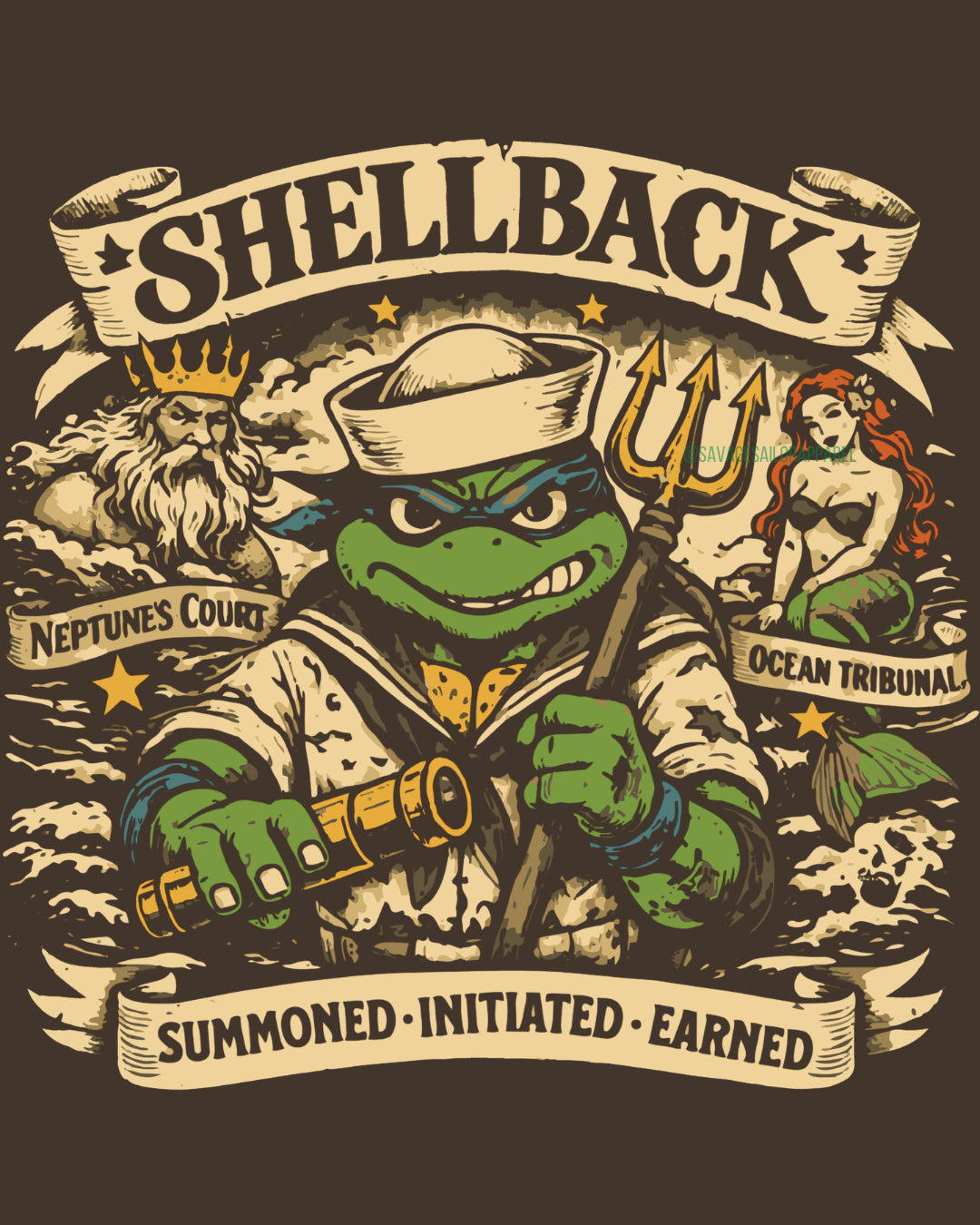
- King Neptune: The sovereign of the deep, typically portrayed by the commanding officer, executive officer, or a senior, highly respected enlisted sailor with a booming voice and commanding presence. He carries a trident and issues the final decrees.
- Davy Jones: Neptune's secretary, keeper of the deep, and general enforcer. Davy Jones usually wears dark, tattered clothing and acts as the master of ceremonies, leading the pollywogs before the king.
- Queen Amphitrite: Neptune's royal consort, traditionally portrayed by a burly male sailor in exaggerated, comedic drag to heighten the theatrical absurdity of the court.
- The Royal Baby: Often played by the heaviest or most junior officer or sailor onboard, requiring the pollywogs to perform humiliating acts of obeisance, such as kissing the royal baby’s artificially oversized, foul-tasting belly.
- Royal Scribes, Doctors, and Judges: Members of the court who administer mock medical examinations, hand down absurd sentences, and record the proceedings in official ledgers.
| Role in Neptune's Court | Traditional Persona | Primary Responsibilities |
|---|---|---|
| King Neptune | Sovereign Ruler of the Deep | Presides over the court, issues royal decrees, and validates the transformation of pollywogs. |
| Davy Jones | Secretary and Enforcer | Rounds up uninitiated sailors, reads charges, and maintains order during the chaos. |
| Queen Amphitrite | Royal Consort | Co-presides with Neptune, often assisting in the judgment and sentencing of initiates. |
| Royal Baby | Infant of the Deep | Demands symbolic acts of submission and reverence from incoming pollywogs. |
| Royal Doctor | Medical Examiner | Administers bizarre, non-medical diagnostics and foul-tasting concoctions to initiates. |
The Anatomy of the Initiation: From Pollywog to Shellback
The transition from pollywog to trusty shellback follows a strict narrative arc that begins days or weeks before the ship crosses the equator. Sailors who have never crossed the line are designated as pollywogs and stripped of their standard status. Those who have already earned the title are known as shellbacks, or "century shellbacks" if they have crossed the International Date Line as well.
1. The Summation and Eve of the Crossing
On the night before the equator crossing, pollywogs are traditionally subjected to minor harassment known as "wog day" or "wog eve." They may be required to wear their uniforms inside out, address shellbacks with elaborate deference, and perform mundane chores on behalf of the senior crew. The ship's atmosphere shifts into one of theatrical anticipation.
2. The Summoning of the Court
On the day of the crossing, King Neptune and his court make a dramatic entrance from the vessel's flight deck or bridge wing, appearing as though they have just emerged from the ocean depths. The ship halts or slows its progression across the equator, and the captain formally surrenders command of the vessel to King Neptune for the duration of the ceremony.
3. The Trials and Obstacle Course
Pollywogs are marched before the royal court to face fabricated charges—ranging from poor salutes to general unfitness for sea life. Following the mock trial, initiates must navigate a grueling, messy obstacle course on the deck. Common elements include:
- Crawling through foul-smelling garbage, grease, and rotting food waste.
- Navigating a gauntlet of shellbacks wielding canvas fire hoses and heavy shillelaghs made of fire hose material.
- Kneeling to kiss the royal baby’s belly, which is often coated in mustard, hot sauce, or engine grease.
- Rinsing off in saltwater baths or fire-hose rinses at the conclusion of the course.
4. Certification and Induction
Once an initiate successfully navigates the course and pays proper homage to King Neptune, they are officially granted the status of a trusty shellback. Each participant receives an ornate, hand-drawn certificate—often printed on specialized parchment—signed by King Neptune and the ship's commanding officer, verifying their new status in naval lore.
Modern Safety Standards and Institutional Oversight
In the 21st century, the shellback sailor tradition has undergone significant transformation. Historically, hazing rituals in military and maritime organizations occasionally involved excessive physical force, psychological distress, or injuries. Modern navies, including the United States Navy and international maritime forces, have implemented strict guidelines to preserve the morale-boosting aspects of the tradition while eliminating genuine hazards.
Today’s ceremonies operate under strict oversight by command leadership and medical personnel. Key modern safeguards include:
- Mandatory Participation Opt-Outs: While peer pressure to participate remains high, modern naval policies explicitly allow sailors to opt out of the physical elements of the ceremony without facing professional retaliation or administrative discrimination.
- Health and Hygiene Protocols: Contaminants used during the obstacle course are heavily vetted to ensure they are non-toxic, biodegradable, and easily washable. Dangerous chemicals, industrial waste, or hazardous materials are strictly prohibited.
- Physical Monitoring: Medical staff are stationed throughout the course to monitor heat stress, dehydration, slips, falls, and allergic reactions, ensuring that the theatrical hazing remains safe and controlled.
- Preservation of Dignity: Guidelines mandate that the initiation must not target individuals based on protected characteristics, nor should it involve sexual harassment, malicious degradation, or genuine physical abuse.
Golden Shellbacks and Special Classifications
While crossing the equator is the baseline requirement for becoming a shellback, maritime tradition recognizes several elite tiers for sailors who undertake even more complex navigational milestones:
- Trusty Shellback: A sailor who has crossed the equator at any longitude.
- Golden Shellback: A sailor who has crossed the equator at the exact point where it intersects the 180th meridian (the International Date Line) in the Pacific Ocean. This dual crossing is significantly rarer and carries elevated prestige.
- Emerald Shellback: A sailor who has crossed the equator at the Prime Meridian (0 degrees longitude) in the Atlantic Ocean off the coast of West Africa.
- Royal Shellback: A term historically used interchangeably with Golden Shellback or applied to sailors who cross the equator in the presence of royal vessels or dignitaries.
Receiving these specialized designations involves acquiring unique certificates and earning the right to wear specific insignia or display custom artwork within shipboard spaces.
Frequently Asked Questions About the Shellback Tradition
What is the difference between a pollywog and a shellback?
A pollywog is a sailor who has never crossed the Earth's equator. A shellback (or trusty shellback) is a sailor who has crossed the equator and successfully completed the initiation ceremony administered by King Neptune's court.
Is participation in the shellback ceremony mandatory?
In modern navies, participation in the physical hazing elements of the ceremony is strictly voluntary. While command encourages participation for morale and tradition, sailors have the right to opt out without professional consequences.
Can civilian passengers participate in the line-crossing ceremony?
Yes. Civilian scientists, contractors, journalists, and embarked passengers aboard naval vessels or research ships frequently participate in the ceremony as pollywogs, earning their shellback certificates upon completion.
What is a Golden Shellback?
A Golden Shellback is a sailor who has crossed the equator at the exact point where it intersects the 180th meridian (the International Date Line). This is a rarer and more prestigious designation than a standard equator crossing.
How are shellback certificates authenticated?
Authentic shellback certificates are traditionally illustrated with classic nautical artwork, featuring King Neptune, sea monsters, and mermaids. They include the ship's name, the exact coordinates and timestamp of the crossing, and the signatures of King Neptune and the commanding officer.
Next Actions for Maritime Enthusiasts and Researchers
For those studying maritime history, preparing for a deployment, or seeking to verify ancestral naval records, understanding the shellback tradition offers a unique window into military culture. If you are researching a relative’s naval service, check historical muster rolls, cruise books, and personal archives for official shellback certificates, which serve as verified documentation of ship deployments and equatorial crossings. For active-duty personnel preparing for a line-crossing event, review current command instructions and safety guidelines to ensure participation remains safe, inclusive, and faithful to centuries of honorable maritime heritage.
Image Gallery