How the Singapore Biometric Passport and IC Integration Work in 2026
The Singapore biometric passport works by integrating a high-security electronic chip with the holder’s National Registration Identity Card (NRIC) data and biometric identifiers, such as iris and facial patterns. As of 2026, this syste...
The Singapore biometric passport works by integrating a high-security electronic chip with the holder’s National Registration Identity Card (NRIC) data and biometric identifiers, such as iris and facial patterns. As of 2026, this system enables "passport-less" clearance at Singapore’s checkpoints, allowing citizens to bypass physical document scans through automated biometric gates.
Contents
In Singapore, the concepts of the National Registration Identity Card (IC) and the International Passport are deeply intertwined through the Immigration & Checkpoints Authority (ICA) database. While they remain distinct legal documents, the "IC passport" experience refers to the seamless interoperability between your national identity and your travel credentials. By 2026, the technology has evolved to a point where your biological markers—your face and your eyes—serve as the primary key to both your domestic identity and your international mobility.
The Architecture of the Singapore Biometric Passport
The Singapore passport is an ICAO-compliant (International Civil Aviation Organization) e-passport. Its functionality is centered on a contactless integrated circuit (IC) chip embedded within the polycarbonate data page. This chip does not merely store a digital version of the photo; it holds a sophisticated array of encrypted data that mirrors the information printed on the page, alongside unique biometric templates.
The Embedded Chip and Data Storage
The "IC" within the passport refers to the integrated circuit. This chip is protected by Basic Access Control (BAC) and Supplemental Access Control (SAC) protocols. These security layers prevent "skimming"—the unauthorized reading of the chip from a distance. To access the data on the chip, an electronic reader must first scan the Machine Readable Zone (MRZ) at the bottom of the data page to derive a digital "key."
In 2026, these chips have increased memory capacity compared to earlier versions, allowing for higher-resolution facial images and the storage of multiple biometric markers, including fingerprints and iris scans. This redundancy ensures that if a traveler has a temporary injury to their eye or a faint fingerprint, the system can still verify their identity through alternative markers.
Polycarbonate Data Page Technology
The physical construction of the passport is as technical as its digital components. The data page is made of several layers of polycarbonate fused together. Unlike traditional paper pages where ink is laid on top, the information on a Singapore passport is laser-engraved into the plastic. This makes it nearly impossible to alter the data without destroying the page itself. The integration of "Window Lock" technology—a ghost image of the holder visible in a transparent window—further prevents photo substitution.
How Biometric Integration Bridges the IC and Passport
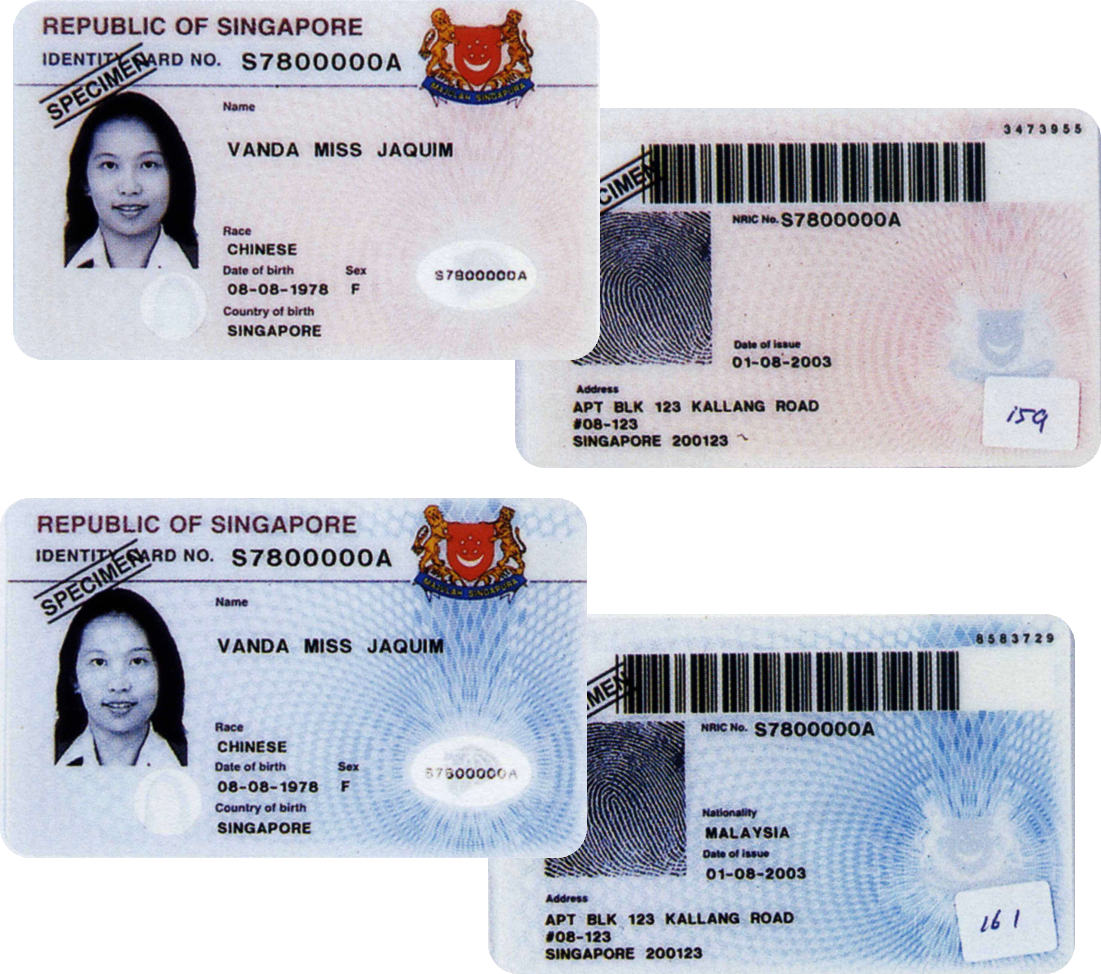
A common question for Singaporeans is how their NRIC (IC) relates to their passport. In the ICA's centralized ecosystem, your NRIC number is the unique identifier that links all your records. When you apply for a passport, the ICA draws from the biometric data already captured during your NRIC registration or previous renewals.
The New Clearance Concept (NCC)
By 2026, the Immigration & Checkpoints Authority has fully implemented the New Clearance Concept. Under this framework, the biometric data associated with your IC is used to facilitate "passport-less" travel for Singapore residents at Changi Airport and land checkpoints.
When you approach an automated lane, high-resolution cameras capture your iris and facial images. The system then compares these live scans against the biometric template stored in the ICA database (which was originally captured during your IC or passport application). If there is a match, the gates open. In this scenario, the "IC passport" functions as a digital token; you are the credential, and the physical book is only required for verification by foreign authorities upon arrival at your destination.
The Application and Renewal Process in 2026
The process of obtaining or renewing a Singapore passport is now almost entirely digital, leveraging the Singpass infrastructure. The efficiency of the system relies on the pre-existing data within the national identity system.
Digital Application via MyICA
Applications are submitted through the MyICA mobile app or the ICA website. Because the system is linked to your NRIC, most fields are pre-filled.
- Identity Verification: Users log in via Singpass, using biometric or two-factor authentication.
- Photo Requirements: In 2026, the ICA utilizes advanced AI-driven photo verification tools. When you upload a digital photo, the system instantly checks for lighting, head tilt, and "liveness" to prevent the use of deepfakes or old photos.
- Payment: Fees are settled via digital payment gateways. As of 2026, the standard fee for a 10-year passport remains stable, with subsidies occasionally available for specific age groups during national initiatives.
Biometric Enrolment
For first-time applicants or those whose biometrics need updating (such as children reaching the age of 16), a visit to the ICA Building is required. During this session, the ICA captures:
- Iris Patterns: A non-intrusive scan of the unique patterns in the iris.
- Facial Image: A 3D map of facial features.
- Fingerprints: High-resolution scans of both thumbs and index fingers.
Once these are enrolled, they become part of the "Identity Bio-Vault," which powers both the IC and the passport functionality for the next decade.
Comparison of Passport and Identity Systems in Singapore
The following table outlines the differences and intersections between the physical passport and the biometric systems used in 2026.
| Feature | Physical Biometric Passport | Passport-less Biometric System | NRIC (Digital/Physical IC) |
|---|---|---|---|
| Primary Use | International travel (Visa/Entry) | Singapore Checkpoint Clearance | Domestic identity verification |
| Data Carrier | Embedded IC Chip (RFID) | Centralized ICA Database | QR Code / Singpass / Physical Card |
| Biometrics Used | Face, Iris, Fingerprints | Face and Iris (Primary) | Face and Fingerprints |
| Validity Period | 10 years (for adults) | Continuous (linked to IC) | Life / Renewal at 30 and 55 |
| Requirement | Mandatory for all overseas travel | Available for SG Citizens/PRs | Mandatory for residents 15+ |
Security Features and Privacy Protections
With the "IC passport" system relying heavily on centralized data, security is a paramount concern for the Singapore government. The system operates on a "Privacy by Design" principle.
Encryption and Secure Access
The data transmitted between the automated gates and the ICA backend is encrypted using military-grade protocols. The biometric templates stored are not actual photos of your eyes or face; they are mathematical representations (hashes). Even if a data breach were to occur, these hashes cannot be easily reversed to recreate your physical likeness.
Optical Security Elements
On the physical document, several features protect the integrity of the IC-linked data:
- Kinegram: A sophisticated foil element that changes color and shape when tilted.
- Multiple Laser Image (MLI): A feature that shows the holder’s NRIC number and birth date depending on the viewing angle.
- UV Printing: Intricate designs of the Singapore skyline and the Vanda Miss Joaquim orchid that are only visible under ultraviolet light.
Troubleshooting Common Issues
Despite the advanced technology, users may occasionally encounter issues with the biometric integration.
- Biometric Mismatch: This often occurs due to colored contact lenses, significant facial trauma, or heavy makeup that obscures facial landmarks. Travelers are advised to remove spectacles and colored lenses at automated gates.
- Chip Failure: Although rare, the embedded IC chip in a physical passport can be damaged by extreme heat, bending, or exposure to strong electromagnetic fields. If the "e-passport" symbol on a reader fails to light up, the passport must be replaced.
- Data Discrepancy: If your name has changed (e.g., due to marriage or deed poll) but your IC has not been updated, your passport application will be flagged. The NRIC must always be updated first to ensure the "IC passport" link remains valid.
Frequently Asked Questions
Do I still need to bring my physical passport to the airport in 2026?
Yes. While you can clear Singapore immigration using only biometrics (passport-less), you are still required to present a physical passport to the airline for check-in and to the immigration authorities of your destination country. The "passport-less" feature is currently a localized convenience at Singapore’s borders.
How does the passport work for children?
For children under the age of six, biometric clearance is often restricted because their iris and facial features are still developing rapidly. Parents must typically use the manual counters or specialized family lanes. By 2026, the 10-year validity only applies to those aged 16 and above; children’s passports have a shorter validity to account for changes in physical appearance.
What happens if I lose my IC? Does it affect my passport?
Losing your IC does not automatically invalidate your passport, but you must report the loss to the police and ICA immediately. Since your passport is linked to your NRIC number, any security alerts placed on your identity record will be visible to immigration officers globally through INTERPOL databases.
Can I use the biometric gates if I have had eye surgery?
In most cases, yes. Modern iris scanners used in 2026 are designed to work with common procedures like LASIK or cataract surgery. However, if the surgery significantly alters the structure of the iris, you may need to visit the ICA to re-enroll your biometric data to ensure the "IC passport" system recognizes you.
Is the "IC Passport" data shared with other countries?
Singapore shares specific passport data (such as lost or stolen passport numbers) with INTERPOL. However, your full biometric NRIC profile is not shared wholesale with foreign governments. Data exchange is usually limited to bilateral agreements for "Known Traveler" programs or during specific criminal investigations.
Practical Recommendations for 2026 Travelers
To ensure the "IC passport" system works seamlessly for you, always ensure that your Singpass profile is up to date with your latest contact details. Before traveling, check the validity of your physical passport via the MyICA app; many countries still require at least six months of validity for entry, regardless of the technological sophistication of the document. If you find that the automated gates frequently fail to recognize your biometrics, schedule a "Biometric Re-enrolment" appointment at the ICA Building to refresh your digital templates.
Image Gallery