How to Get Auto Insurance SR22 in Texas: A Comprehensive Guide
Securing an SR22 filing in Texas is a regulatory requirement for drivers who have had their driving privileges suspended or revoked due to serious traffic violations, such as driving while intoxicated (DWI), driving without insurance,...
Securing an SR22 filing in Texas is a regulatory requirement for drivers who have had their driving privileges suspended or revoked due to serious traffic violations, such as driving while intoxicated (DWI), driving without insurance, or causing an accident without coverage. An SR22 is not an insurance policy itself, but a certificate of financial responsibility that your insurance carrier files with the Texas Department of Public Safety (DPS) to verify you maintain at least the state-mandated minimum liability coverage.
Contents
Understanding the SR22 Filing Process in Texas
An SR22 filing serves as a guarantee to the state that you are maintaining the necessary liability insurance to operate a vehicle legally. If your policy lapses, is canceled, or expires, your insurance carrier is legally obligated to notify the Texas DPS immediately, which typically triggers a secondary suspension of your license.
In Texas, the minimum liability limits required to satisfy an SR22 filing are commonly referred to as 30/60/25 coverage:
- $30,000 for bodily injury to one person.
- $60,000 for total bodily injury per accident.
- $25,000 for property damage per accident.
It is critical to understand that the SR22 is a monitoring tool. Because it informs the state of your compliance status, the insurance company you choose must be licensed to operate within the state of Texas. You cannot simply obtain a standard policy from an out-of-state provider and expect it to satisfy the requirements mandated by the Texas Transportation Code.
Step-by-Step Procedure to Obtain SR22 Coverage
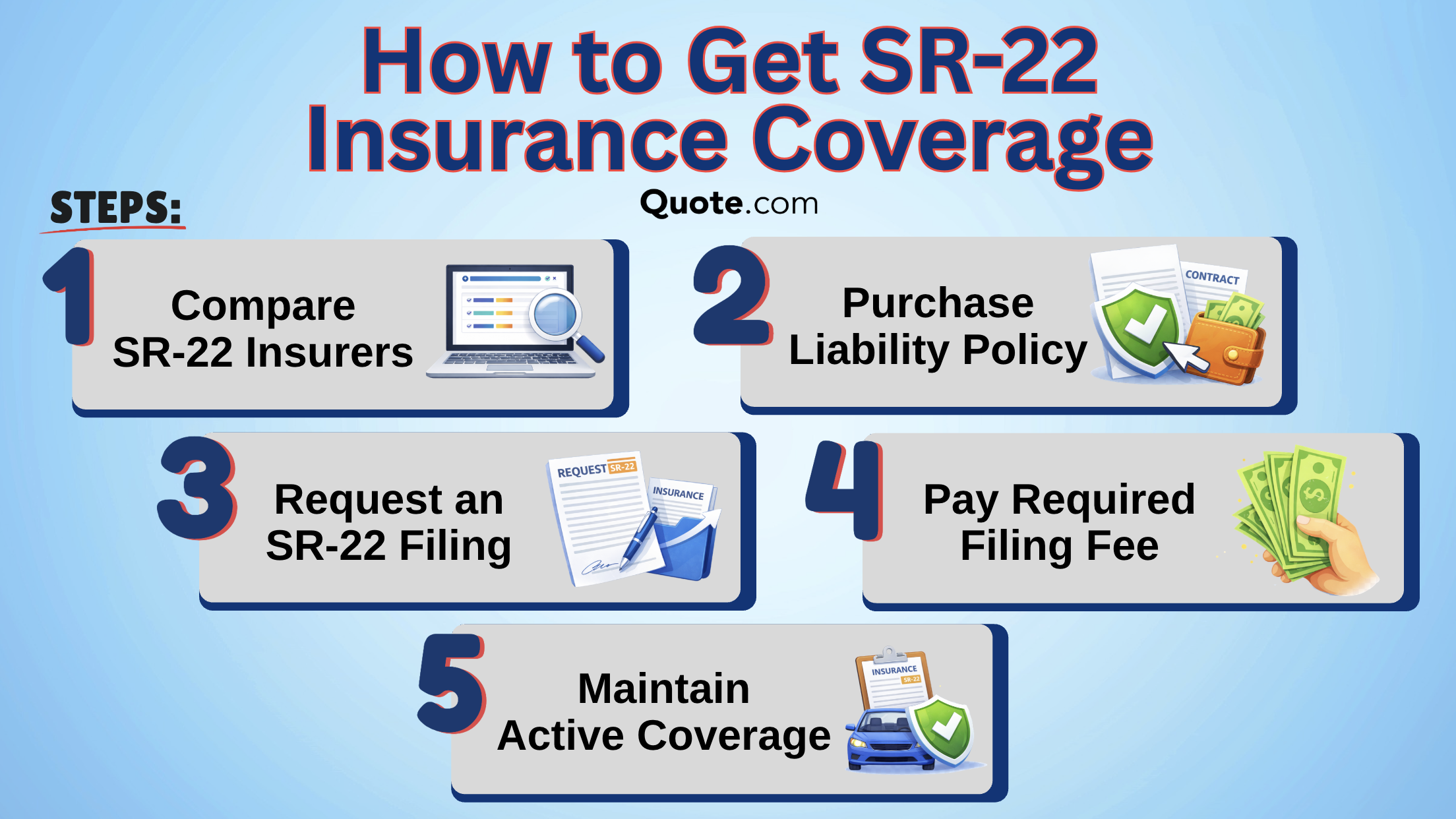
Obtaining an SR22 involves coordinating with both your insurance provider and the state government. Follow these steps to ensure your filing is processed correctly.
1. Confirm Your Requirement
Before purchasing a policy, verify that you are actually required to file an SR22. This is usually communicated to you via an official notice from the Texas DPS. If you are unsure of your status, you can visit the Texas DPS Driver License Reinstatement website to check your requirements. Proceeding without official notification may lead to unnecessary expenditures on "high-risk" insurance premiums.
2. Contact Your Current Insurance Provider
Before seeking a new policy, contact your existing auto insurance carrier. Many major insurers provide SR22 filings for existing customers. If your current provider does not offer this service, you will need to find a carrier that specializes in non-standard or high-risk insurance.
3. Request the SR22 Filing
Once you have identified a carrier, specifically request an SR22 filing. You will need to provide them with your driver's license number and any case numbers or documentation provided by the DPS. The insurer will then charge a small processing fee—typically between $15 and $50—to file the certificate with the state.
4. Wait for State Processing
After the insurer files the document electronically, there is a processing period. While many systems are now automated, it can still take a few business days for the Texas DPS records to update. Do not assume your license is reinstated the moment you pay your premium; always confirm the change in your status via the official DPS online portal.
Comparing Standard Auto Insurance vs. SR22 Requirements
While the liability coverage levels for an SR22 are identical to standard Texas minimums, the administrative handling of the policy differs significantly.
| Feature | Standard Auto Insurance | SR22 Insurance Filing |
|---|---|---|
| Notification Requirement | Insurer notifies state only at renewal/cancellation | Insurer MUST notify state of any lapse/cancellation |
| Eligibility | Open to most drivers | Restricted to drivers with prior violations |
| Policy Flexibility | Standard market rates | Generally higher premiums due to "high-risk" status |
| Duration | Renewable annually | Usually required for 2 years from date of conviction |
Managing Costs and High-Risk Classification
Drivers requiring an SR22 are categorized as "high-risk" because their past driving record statistically indicates a higher probability of future claims. Consequently, you will likely see an increase in your premium.
To manage these costs, focus on the following strategies:
- Maintain Continuity: The most important factor in keeping your rates manageable is preventing any lapse in coverage. Even a single day of an expired policy can force your insurance carrier to report you to the state, resulting in a fresh suspension of your driving privileges and the requirement to restart your SR22 filing period.
- Shop Around: While many providers avoid high-risk drivers, others specialize in them. Request quotes from multiple carriers that explicitly handle SR22 filings in Texas.
- Bundle Policies: If you own a home or have other insurance needs, bundling your SR22 auto policy with a renters or homeowners policy can sometimes yield a multi-policy discount, offsetting some of the premium increase.
- Paid-in-Full Discounts: If your financial situation allows, paying the entire policy term upfront can often lead to a reduction in the total premium amount compared to monthly installments.
Common Pitfalls and Troubleshooting
A frequent mistake drivers make is failing to update their address with the DPS. If your official residence does not match the information on your SR22 filing, the state may reject the certificate. Always ensure that your DMV records and your insurance company’s records match exactly.
Another common issue involves switching insurance companies before the SR22 period has expired. If you decide to change providers, you must ensure that your new policy has an SR22 attached before you cancel your old policy. If there is even a one-day gap between the cancellation of your old policy and the start of the new one, your insurer is required to inform the DPS that your insurance has lapsed, which triggers an automatic suspension of your license.
Frequently Asked Questions
How long must I carry an SR22 in Texas? In most cases, the Texas DPS requires drivers to maintain an SR22 for two years from the date of the conviction or the date the license was suspended. Always check your specific reinstatement notice, as certain serious offenses may carry longer mandatory filing periods.
Does my insurance company automatically stop the SR22 after two years? No. You must contact your insurance company after your mandatory period expires to request the removal of the SR22 filing. If you do not request the removal, the insurer may continue to charge you the processing fee, and the filing will remain on your record with the state.
Can I get an SR22 if I don't own a car? Yes. You can obtain "non-owner" SR22 insurance. This provides the necessary liability coverage if you are caught driving a vehicle you do not own, satisfying the state's requirement for financial responsibility even if you do not have a registered vehicle.
What happens if I move out of Texas while my SR22 is active? If you move to another state, you must still maintain the SR22 filing as required by the Texas DPS until your two-year period concludes. You will need to find an insurance carrier that is licensed in both Texas and your new state to ensure they can maintain the filing for you.
Will an SR22 filing show up on my insurance premiums forever? No. While an SR22 is a temporary requirement, the underlying driving violations (such as a DWI) will typically affect your insurance rates for three to five years, regardless of the SR22 filing status. The SR22 filing itself is an administrative requirement, not a permanent driver rating.
Next Steps for Reinstatement
If you are currently under suspension, your immediate next step is to obtain a "Reinstatement Fee Receipt" from the Texas DPS. Once you have confirmed your total reinstatement fees and the duration of your SR22 requirement, reach out to an insurance agent who specializes in high-risk filings. Ensure they submit the SR22 electronically to the DPS. Keep a copy of your insurance ID card in your vehicle at all times, as this serves as your primary proof of compliance during a traffic stop.
Image Gallery