Best Foundation Repair Company Lubbock
Choosing the best foundation repair company in Lubbock requires identifying contractors who specialize in the unique semi-arid climate and expansive clay soils of the Llano Estacado. Top-rated specialists prioritize structural engineer...
Choosing the best foundation repair company in Lubbock requires identifying contractors who specialize in the unique semi-arid climate and expansive clay soils of the Llano Estacado. Top-rated specialists prioritize structural engineering reports, offer transferable lifetime warranties, and utilize deep-driven pier systems—such as steel or concrete—to bypass unstable surface soils and secure the home to stable strata.
Contents
The Geologic Reality of Lubbock: Why Foundations Fail in West Texas
To understand which company is "best," a homeowner must first understand the specific challenge Lubbock presents. The region is characterized by expansive clay soils, often part of the Amarillo soil series. These clays are chemically reactive to moisture; they swell significantly when wet and shrink drastically during the frequent droughts common to the South Plains.
In 2026, the local climate continues to exhibit extreme volatility. When the soil under a perimeter beam dries out faster than the soil under the center of the slab, "differential settlement" occurs. This uneven movement puts immense stress on the concrete foundation, leading to structural failures. Furthermore, Lubbock’s high evaporation rates and the presence of a "caliche" layer—a hardened natural cement-like calcium carbonate—can complicate traditional repair methods. A company that does not account for the depth of the caliche or the moisture-wicking properties of local vegetation is not providing a long-term solution.
The best companies in the region are those that perform a comprehensive site analysis, measuring moisture levels and elevation changes across the entire footprint of the structure before suggesting a remedy.
Recognizing the Signs of Foundation Distress
Before contacting a professional, Lubbock homeowners should conduct a thorough interior and exterior inspection. Identifying damage early is critical to minimizing repair costs, which have seen a steady rise through 2026 due to material and labor overheads.
Interior Indicators
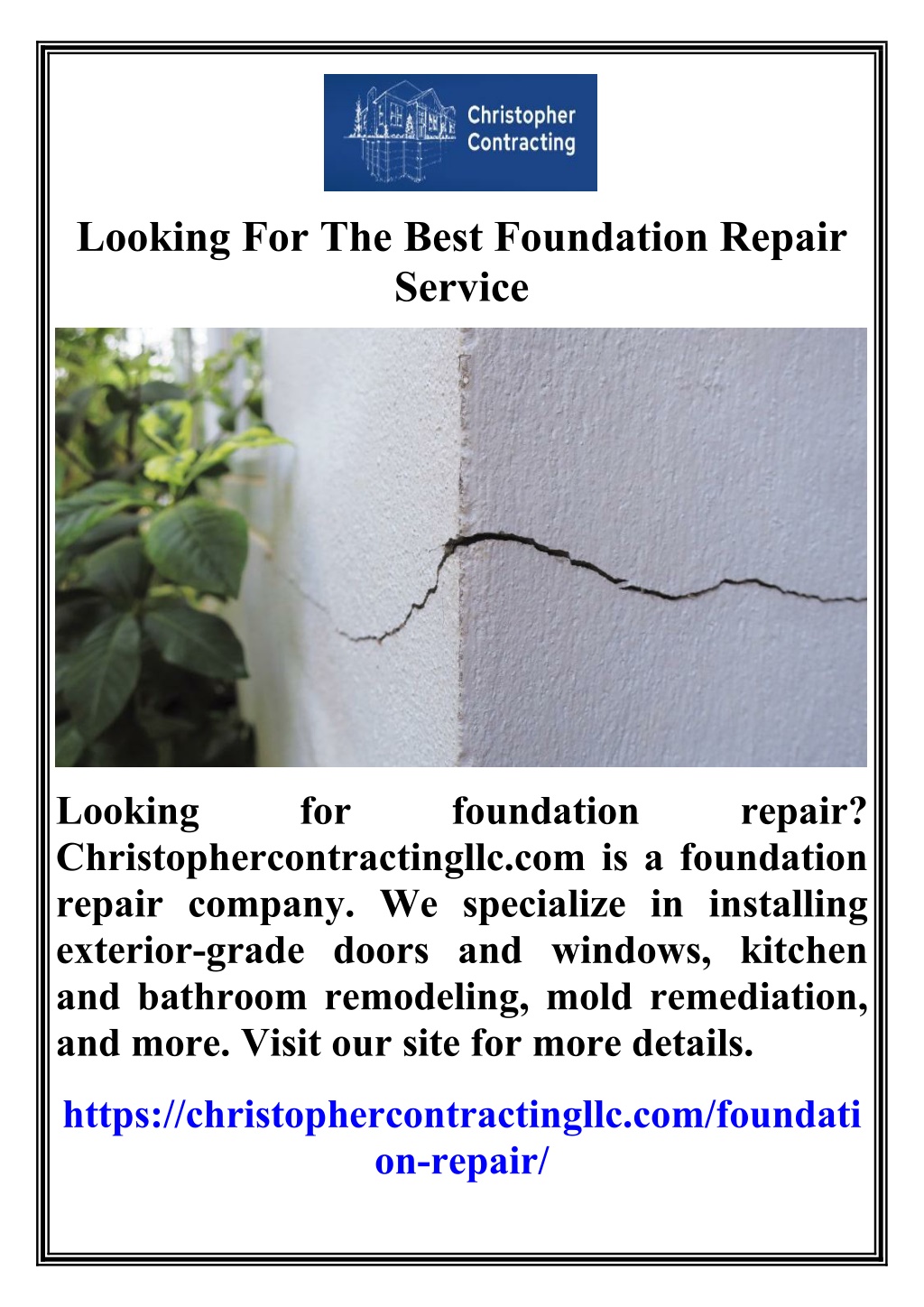
- Drywall Fractures: Look for diagonal cracks emanating from the corners of door frames and windows. These are rarely just "settling" cracks if they are wider than 1/8th of an inch.
- Misaligned Doors and Windows: If a door that used to swing freely now sticks or fails to latch, the frame has likely shifted out of square due to foundation movement.
- Floor Sloping: In Lubbock’s older neighborhoods near Tech Terrace or the Medical District, pier-and-beam homes may develop "soft spots" or noticeable slopes in the floor.
Exterior Indicators
- Stair-Step Cracking: This is a classic sign of settlement in brick veneer homes. The cracks follow the mortar lines in a zigzag pattern.
- Fascia Board Separation: Gaps forming between the roofline and the wall indicate that the perimeter of the foundation is sinking away from the rest of the structure.
- Soil Separation: During dry West Texas summers, a visible gap between the soil and the foundation signifies that the clay has shrunk, leaving the concrete unsupported.
Comparing Foundation Repair Methods for Lubbock Soils
Not all repair methods are suitable for the High Plains. The "best" company will offer a variety of solutions tailored to the specific construction of your home and the depth of the stable soil layers.
Steel Piers
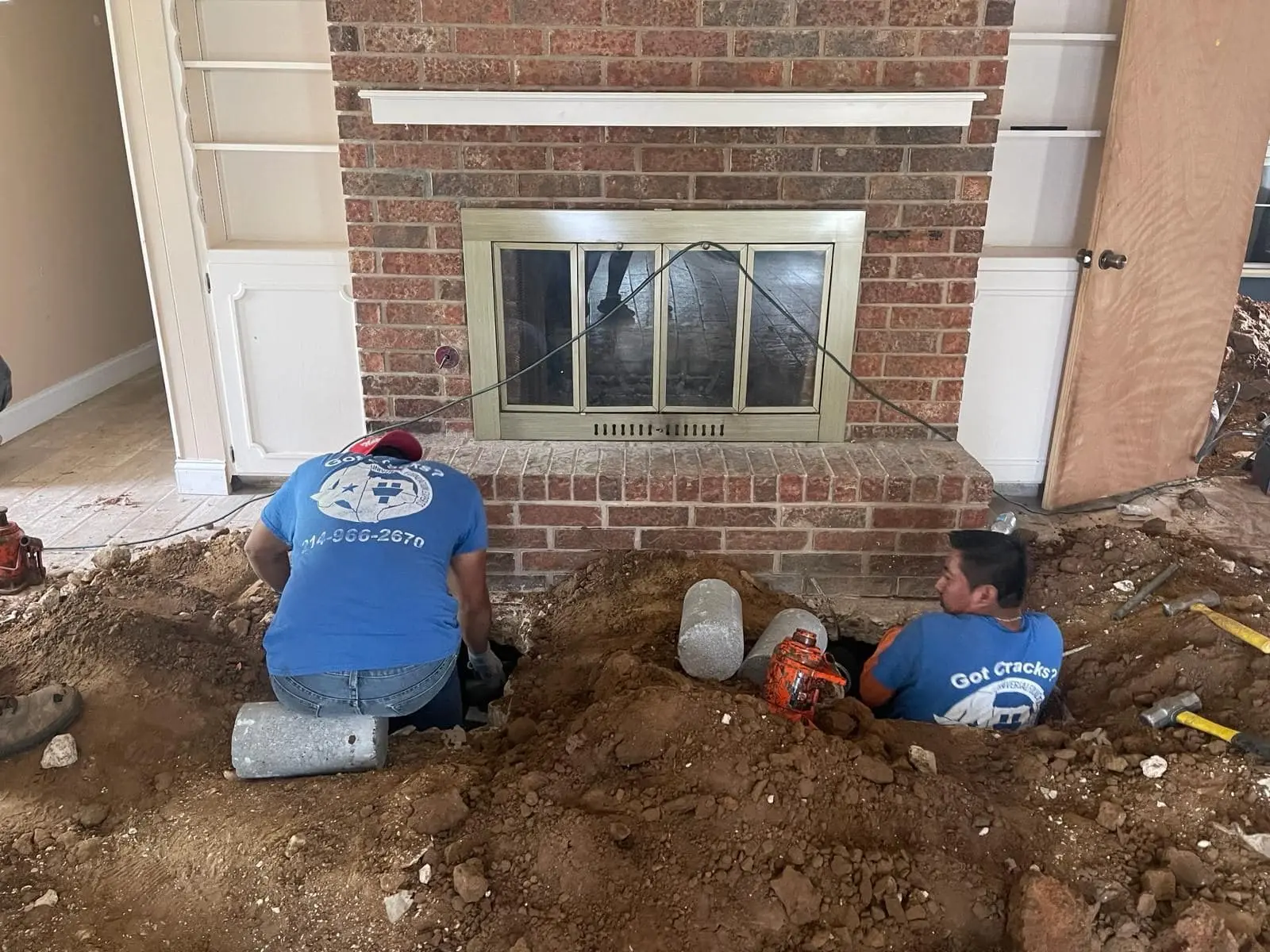
Steel piers are often considered the gold standard in 2026 for Lubbock’s deep clay deposits. These are hydraulically driven into the ground until they reach a "refusal" point—usually the dense caliche layer or bedrock. Because steel has a small surface area, it is not easily moved by the friction of swelling clay, providing a permanent, stable base.
Concrete Pressed Piles
This is a more cost-effective and common method in West Texas. It involves driving pre-cast concrete cylinders into the ground using the weight of the house as leverage. While effective, they are more susceptible to "skin friction," where the surrounding clay can pull the pier upward as it swells.
Helical Piers
Ideal for lighter structures or areas with specific soil load requirements, helical piers are screwed into the ground. They are particularly useful for stabilizing porches, chimneys, or adding support to existing foundations during a home expansion.
Polyurethane Injection (Foam Leveling)
For interior floor leveling or sidewalk repair, polyurethane injection is a non-invasive high-tech solution. A specialized resin is injected through small holes; as it expands, it lifts the concrete slab and fills voids created by soil erosion or shrinkage.
| Method | Best For | Pros | Cons |
|---|---|---|---|
| Steel Piers | Heavy residential/Commercial | Maximum depth, minimal soil friction | Highest cost |
| Concrete Piles | Standard slab-on-grade | Cost-effective, widely available | Susceptible to soil "heave" |
| Helical Piers | New construction/Additions | Precise load bearing, fast install | Requires specialized equipment |
| Poly Injection | Voids and interior slabs | Fast, clean, no excavation | Does not address deep structural failure |
Top-Rated Foundation Repair Specialists in Lubbock (2026)
While several national franchises operate in Texas, local expertise is invaluable in Lubbock. The following entities have established long-term reputations for handling the specific soil mechanics of the South Plains.
1. Childers Leveling
With decades of experience in West Texas, Childers Leveling remains a dominant force in 2026. They are known for their proprietary "Childers Method" and a deep understanding of the caliche layers found in Lubbock, Wolfforth, and Shallowater. Their focus on both slab and pier-and-beam homes makes them a versatile choice for the diverse housing stock in the area.
2. Abbots Foundation Repair
Abbots has built a reputation for transparency and rigorous testing. They often emphasize the importance of plumbing tests following a lift, as movement in the foundation can frequently cause breaks in aging cast-iron or PVC lines. Their commitment to secondary checks ensures that solving the foundation issue doesn't inadvertently create a water leak issue.
3. WRE (West Texas Repair & Engineering)
WRE distinguishes itself by integrating professional engineering into every project. In 2026, savvy homeowners prefer companies that use third-party structural engineers to verify the repair plan. WRE’s approach minimizes the "sales" aspect and focuses on data-driven stabilization, making them a preferred choice for high-value properties and commercial buildings.
The Cost of Foundation Repair in Lubbock (2026 Estimates)
Economic shifts leading into 2026 have influenced the pricing of structural repairs. On average, Lubbock homeowners can expect to pay between $4,500 and $15,000 for a standard residential repair. However, complex cases involving extensive piering or internal slab work can exceed $30,000.
Factors influencing the final quote include:
- Number of Piers: Most companies charge "per pier." In 2026, the price per steel pier ranges from $550 to $900, while concrete piles range from $350 to $600.
- Engineering Fees: A structural engineer’s report, which is highly recommended to ensure the work is done correctly, typically costs between $500 and $800.
- Plumbing Repairs: If the foundation movement has damaged under-slab plumbing, a "hydrostatic pressure test" and subsequent repairs can add thousands to the total.
- Landscaping and Access: If a company has to remove decks, porches, or significant landscaping to reach the perimeter beam, labor costs will increase accordingly.
Essential Questions to Ask a Lubbock Contractor
When vetting the best foundation repair company, the quality of their answers is as important as their price. Use these specific questions to gauge their technical competence:
- Do you require a structural engineer's report before and after the work? A reputable company should welcome third-party oversight to ensure the house is leveled according to industry standards like those found in the American Society of Civil Engineers (ASCE) guidelines.
- Is your warranty transferable? This is vital for home resale value. In Lubbock's active real estate market, a foundation warranty that doesn't transfer to the next owner is significantly less valuable.
- How do you handle the "Caliche" layer? Ask if they have the equipment to penetrate the hard calcium carbonate layers often found 5 to 10 feet below the surface in West Texas.
- Are you insured for General Liability and Workers' Comp? Never assume. Demand current certificates to protect yourself from litigation in case of on-site accidents.
- What is your plan for moisture management? The best companies won't just fix the piers; they will advise you on gutters, grading, and foundation watering to prevent future movement.
Preventive Maintenance: Protecting Your Investment
In the semi-arid environment of Lubbock, foundation repair is often preventable. The "best" company will usually be the one that tells you how to avoid needing their services again.
Foundation Watering: The most critical maintenance task is keeping the soil moisture levels consistent. Using a soaker hose placed 12 to 18 inches from the foundation can prevent the clay from shrinking away during the hot July and August months. In 2026, automated foundation irrigation systems have become a popular upgrade for Lubbock homes.
Proper Drainage: Ensure that downspouts discharge at least 3 to 5 feet away from the foundation. Water pooling near the house is just as dangerous as the soil being too dry, as it can cause "heave," where the soil expands and pushes the slab upward.
FAQ
How do I know if I need a foundation repair or if it's just normal settling?
"Normal settling" usually happens within the first few years of a home's life and results in hairline cracks. If cracks are wide enough to insert a coin, are accompanied by sticking doors, or if the cracks appear in the foundation's concrete beam itself, these are signs of structural distress rather than minor settlement.
Does homeowners insurance cover foundation repair in Lubbock?
Typically, no. Standard policies exclude "earth movement" or settlement. However, if the foundation damage was caused by a "covered peril," such as a sudden pipe burst (slab leak), insurance may cover the access costs and a portion of the repair. Check your specific 2026 policy riders for "Sewer and Drain Backup" or "Foundations/Waterback" coverage.
How long does the average foundation repair take?
For most Lubbock residential properties, the actual pier installation takes between 2 to 5 days. If interior piers are required, it may take longer as flooring must be removed and replaced. Engineering inspections and plumbing tests may add another week to the total project timeline.
Is it safe to stay in the house during foundation repair?
Yes, in almost all cases, it is safe to remain in the home. The lifting process is incremental and controlled. However, it can be quite loud due to the hydraulic machinery and jackhammering required to bypass the concrete perimeter.
Why is Lubbock’s soil particularly bad for foundations?
Lubbock sits on the High Plains, where the soil has a high concentration of montmorillonite clay. This specific mineral structure allows the soil to hold vast amounts of water and expand, then shrink drastically when the water evaporates, creating a constant "yo-yo" effect on concrete slabs.
Practical Next Action
If you suspect foundation issues, your first step should not be calling a repair company, but rather hiring an independent Structural Engineer who does not sell repair services. For a flat fee, they will provide an unbiased assessment of whether your home actually needs repair. If they determine that piers are necessary, you can then present their engineering plan to the top Lubbock companies for competitive bidding, ensuring you pay only for what is structurally required.
Image Gallery