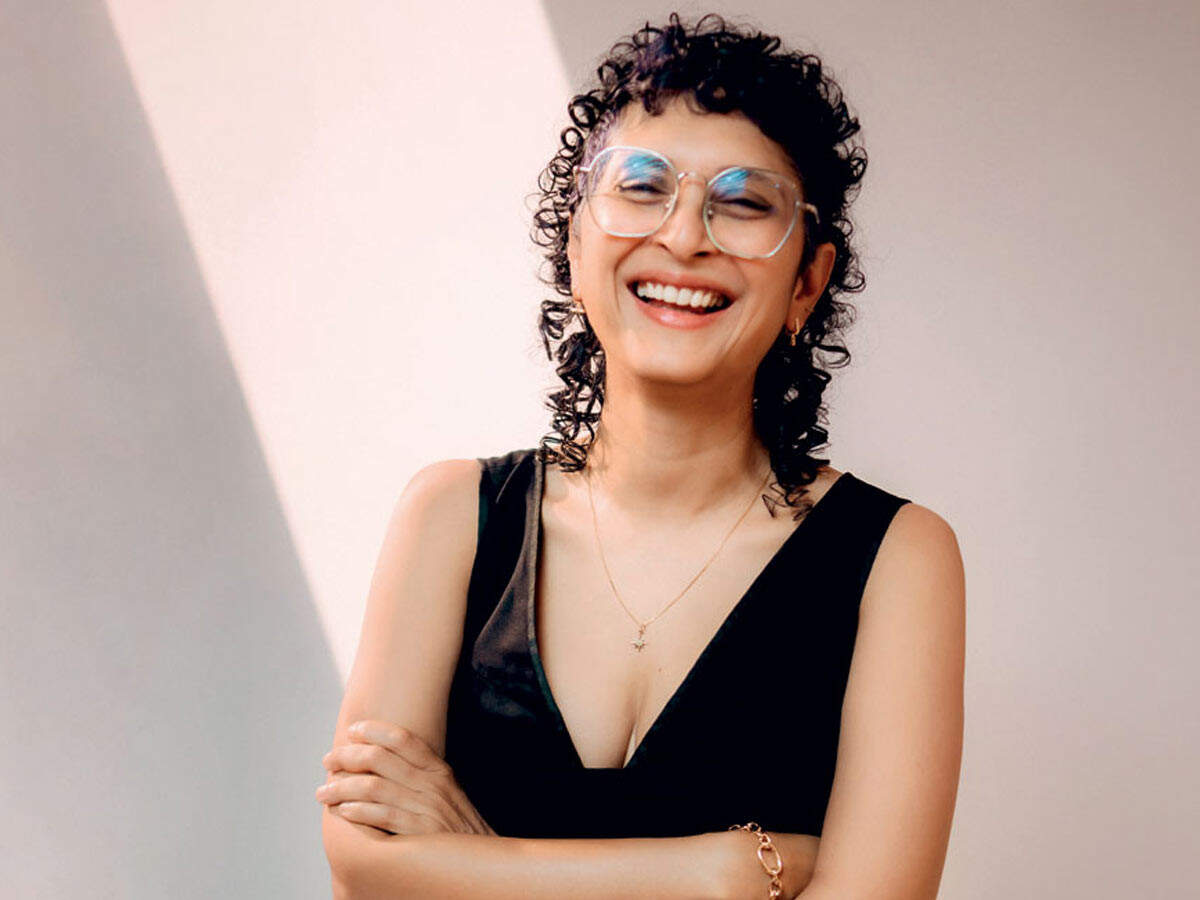
Kiran Rao: Biographical Profile and Age Analysis in 2024 and Beyond
Kiran Rao, the acclaimed Indian film producer, screenwriter, and director, was born on November 7, 1973. Consequently, in the calendar year 2024, she turned 51 years old. As of 2026, her age is 53, reflecting a career spanning over two...
Kiran Rao, the acclaimed Indian film producer, screenwriter, and director, was born on November 7, 1973. Consequently, in the calendar year 2024, she turned 51 years old. As of 2026, her age is 53, reflecting a career spanning over two decades of significant contributions to Indian independent cinema and global film production.
Contents
Understanding the Biographical Timeline of Kiran Rao
Kiran Rao is a multifaceted figure in the Indian film industry, widely recognized for her distinct approach to storytelling and her role in nurturing independent talent. Born in Bangalore, Karnataka, she is part of a family with significant historical connections to the region, including being a cousin of the actor Aditi Rao Hydari. Her educational background, including an undergraduate degree from the Sophia College for Women in Mumbai and post-graduate studies at the AJK Mass Communication Research Centre in New Delhi, provided the foundation for her technical and creative expertise.
When individuals search for "Kiran Rao age in 2024," they are typically looking to contextualize her professional achievements within the timeline of her life. By 2024, at age 51, Rao had reached a stage of artistic maturity where her influence extended well beyond directing; she became a key curator of cinema through initiatives like the Jio MAMI Mumbai Film Festival, where she served as a chairperson, influencing the landscape for emerging filmmakers.
Chronological Milestones and Career Context
To understand the trajectory that brought Kiran Rao to her 51st year in 2024, one must look at her emergence in the early 2000s. She began her career as an assistant director on notable projects such as Lagaan (2001) and Swades (2004). These foundational experiences under the tutelage of established filmmakers helped her develop the aesthetic sensitivity that would later define her directorial debut.
Her directorial career, highlighted by Dhobi Ghat (2010), marked a transition from assisting to authoring her own narrative voice. Throughout the subsequent years, her work as a producer—often in collaboration with Aamir Khan Productions—was instrumental in bringing unconventional, critically acclaimed films to the mainstream, such as Dangal (2016) and Laapataa Ladies (2024). By 2024, the success of Laapataa Ladies served as a testament to her sustained relevance and artistic evolution, demonstrating that her creative output remains as potent in her early fifties as it was during the onset of her career.
Comparative Chronology of Key Career Stages
The following table contextualizes Kiran Rao’s age relative to significant milestones in her professional life. This helps differentiate her early formative years from her established career as a creative producer and director.
| Year | Age | Professional Significance |
|---|---|---|
| 2001 | 28 | Assistant Director on the Academy Award-nominated Lagaan |
| 2010 | 37 | Directorial debut with the critically acclaimed Dhobi Ghat |
| 2016 | 43 | Co-producer of the record-breaking global success Dangal |
| 2024 | 51 | Directorial release of Laapataa Ladies; focus on independent cinema |
| 2026 | 53 | Current age; continued advocacy for Indian cinematic representation |
The Impact of Age on Professional Perspective
In the film industry, the concept of "age" often equates to "experience" and "perspective." For Kiran Rao, reaching her fifties has coincided with a shift in the types of stories she chooses to tell and support. While her earlier work focused on the nuances of urban alienation and personal identity, her later projects demonstrate a broader concern for social commentary and human-centric narratives.
This evolution is a natural progression for a director and producer who has spent over two decades observing the shifting demographics and tastes of the Indian audience. By 2024, at age 51, her work reflected a heightened sensitivity to the challenges faced by rural and semi-urban populations, as evidenced by the thematic choices in her recent film projects. This demonstrates that her age is not merely a number but a marker of her depth of field as a storyteller.
Essential Considerations for Biographical Accuracy
When analyzing the ages of public figures, accuracy is paramount. Kiran Rao’s birth date of November 7, 1973, is a matter of record derived from established biographical documentation. It is important to distinguish between accurate reporting and speculation. Because she has consistently maintained a focus on her work rather than her personal metrics, her public profile remains centered on her artistic contributions.
For researchers, students of cinema, or journalists, relying on verified dates ensures that their analysis remains grounded. When discussing someone of her professional stature, it is crucial to avoid mixing personal trivia with professional critiques. The focus should remain on the bridge between her lived experience—represented by her age—and her output as a creative force in the industry.
Addressing Common Queries
Discussions regarding public figures often attract repetitive questions. Below are the most frequent inquiries regarding Kiran Rao’s life and timeline, addressed to provide clarity.
Frequently Asked Questions
1. Is the age of Kiran Rao consistent across all biographical sources? Yes, her birth date of November 7, 1973, is widely documented and consistent across official records and reputable media profiles. There is no ambiguity regarding her birth year.
2. How did her age at the time of her directorial debut compare to industry standards? Directing her debut feature, Dhobi Ghat, at age 37 was a significant milestone. In the context of the early 2010s, this reflected a deliberate path of first gaining extensive production and assistant-directing experience before transitioning to lead director status.
3. Has her age influenced the themes of the films she produces? While age is not the sole factor, her transition into her late 40s and early 50s has clearly coincided with a more nuanced, socially conscious selection of scripts. The move from more experimental, niche urban narratives to broader, culturally resonant stories is a hallmark of this career stage.
4. Why is there a specific interest in her age in 2024? The interest in 2024 was primarily driven by the release of her film Laapataa Ladies. Public interest in a creator’s age often surges during major project releases as audiences look to understand the creator's current life stage and professional trajectory.
5. What is the current status of her work in 2026? As of 2026, Kiran Rao continues to be active in the film industry, focusing on both the production of new content and the promotion of diverse cinematic voices through her continued involvement in film festivals and industry panels.
The Significance of Continued Artistic Engagement
As of 2026, Kiran Rao remains a vital force in the Indian film ecosystem. Her career path offers a model for longevity in a high-pressure industry that often demands constant reinvention. By maintaining a balance between producing, directing, and mentoring, she has ensured that her influence is not limited to her personal filmography but extends to the health of the broader independent film sector in India.
The clarity provided by tracking her age is not for the purpose of personal surveillance, but for understanding the historical context of her work. Knowing that she was 51 in 2024 allows historians and critics to properly place her recent work in the timeline of her artistic journey. Her career serves as a case study for those interested in the role of the contemporary auteur, proving that with experience comes an increased capacity to affect change in the cultural narrative of a nation.
For those looking to follow her work or research her impact, the recommended approach is to focus on her production credits and the themes of her directorial ventures. These provide a more substantive insight into her career than biographical data alone. By paying attention to the evolution of her craft—from her early assistant roles in the early 2000s to her mature directorial voice in the mid-2020s—one gains a clearer understanding of why she remains one of the most respected figures in contemporary Indian cinema.
Image Gallery