The Phoenix Suns Championship History: A Complete Record of Finals Runs and Milestones
As of 2026, the Phoenix Suns remain one of the most successful franchises in NBA history based on regular-season winning percentage, yet they are still pursuing their first Larry O'Brien Trophy. Despite three historic trips to the NBA...
As of 2026, the Phoenix Suns remain one of the most successful franchises in NBA history based on regular-season winning percentage, yet they are still pursuing their first Larry O'Brien Trophy. Despite three historic trips to the NBA Finals in 1976, 1993, and 2021, the franchise has faced legendary opponents and narrow defeats that have defined its "championship-caliber" reputation without the hardware to match.
Contents
The Foundation of the Phoenix Suns (1968–1975)
The Phoenix Suns entered the NBA as an expansion team in 1968, bringing professional basketball to the desert. The early years were characterized by the struggle typical of new franchises, but the Suns quickly found a heartbeat. Under the guidance of Jerry Colangelo, who started as the team's first general manager and later became its owner, the team established a culture of competitiveness.
In their second season (1969-70), the Suns made the playoffs, led by Connie Hawkins and Dick Van Arsdale. However, the true transformation of the franchise into a perennial contender began in the mid-1970s. The acquisition of Alvan Adams and the trade for Paul Westphal set the stage for one of the most improbable runs in sports history.
The 1976 "Sunsational" Finals Run
The 1975-76 Phoenix Suns, often referred to as the "Sunsational" team, finished the regular season with a modest 42-40 record. Despite being underdogs, they defeated the Seattle SuperSonics and the defending champion Golden State Warriors to reach the NBA Finals against the Boston Celtics.
The Greatest Game Ever Played
Game 5 of the 1976 NBA Finals is widely regarded by basketball historians as one of the greatest games in the history of the league. It was a triple-overtime thriller at the Boston Garden. The Suns trailed late but forced overtime through the heroics of Curtis Perry and Gar Heard.
Heard’s "Shot Heard 'Round the World"—a high-arcing turnaround jumper as time expired in the second overtime—is the defining moment of this era. Although the Suns eventually lost Game 5 and the series in six games, this run established Phoenix as a legitimate basketball city and proved that the franchise could compete on the highest stage.
The Charles Barkley Era and the 1993 NBA Finals
After a period of rebuilding and a drug scandal in the late 1980s that rocked the organization, the Suns reinvented themselves. The 1992 trade for Charles Barkley from the Philadelphia 76ers remains the most significant transaction in franchise history.
The 1992-93 Season
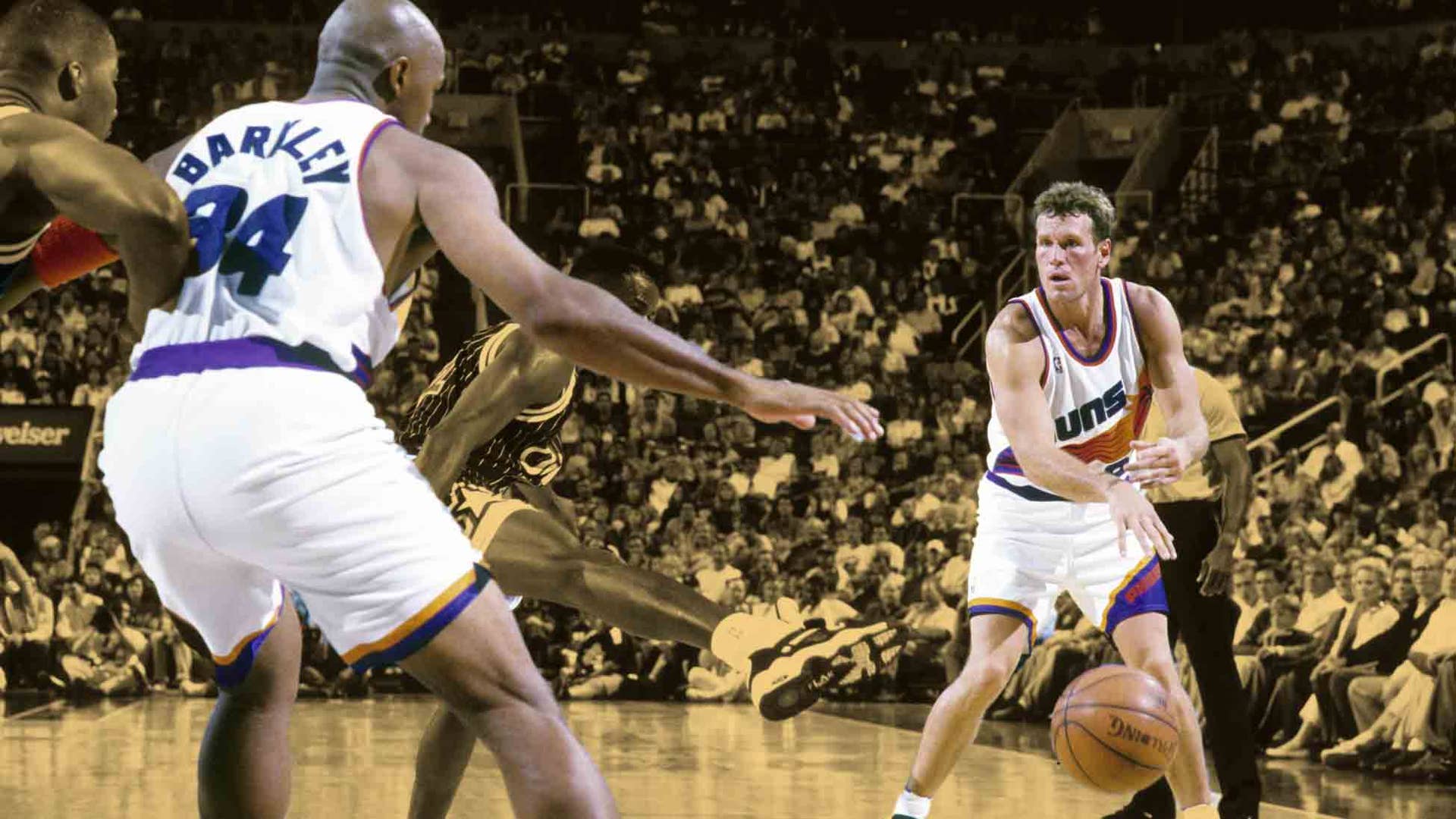
In their first year at the new America West Arena (now Footprint Center), the Suns posted a league-best 62-20 record. Barkley won the NBA MVP award, and the team featured a deep roster including Kevin Johnson, Dan Majerle, and Richard Dumas.
The road to the Finals was arduous, including a grueling seven-game Western Conference Finals against the Seattle SuperSonics. In the 1993 NBA Finals, the Suns faced Michael Jordan and the Chicago Bulls.
Obstacles to a Title
The 1993 series was a tactical chess match. The Suns lost the first two games at home, won a triple-overtime thriller in Game 3 in Chicago, and pushed the series to six games. The heartbreak occurred in Game 6 in Phoenix, when John Paxson hit a wide-open three-pointer with 3.9 seconds remaining to give the Bulls a one-point lead. A last-second block by Horace Grant on Kevin Johnson sealed the Suns' fate. This era proved the Suns were an elite offensive force, but they happened to collide with the greatest player of all time in his prime.
The Seven Seconds or Less (SSOL) Revolution
The mid-2000s saw the Suns redefine modern basketball under head coach Mike D'Antoni and visionary point guard Steve Nash. Nash, who won back-to-back MVPs in 2005 and 2006, led an offensive system that prioritized pace, three-point shooting, and high-screen-and-roll efficiency.
While this era did not result in a Finals appearance, it reached the Western Conference Finals in 2005, 2006, and 2010. The "Seven Seconds or Less" Suns are often cited as the philosophical precursor to the Golden State Warriors dynasty.
The 2007 Controversy
Many Suns fans believe 2007 was their best chance at a title. During a heated second-round series against the San Antonio Spurs, a late-game foul by Robert Horry on Steve Nash led to Amar'e Stoudemire and Boris Diaw leaving the bench area. The NBA suspended both players for a pivotal Game 5, which the Suns lost. The Spurs went on to win the championship, leaving Phoenix to wonder "what if."
The 2021 Finals Return and the Ishbia Era
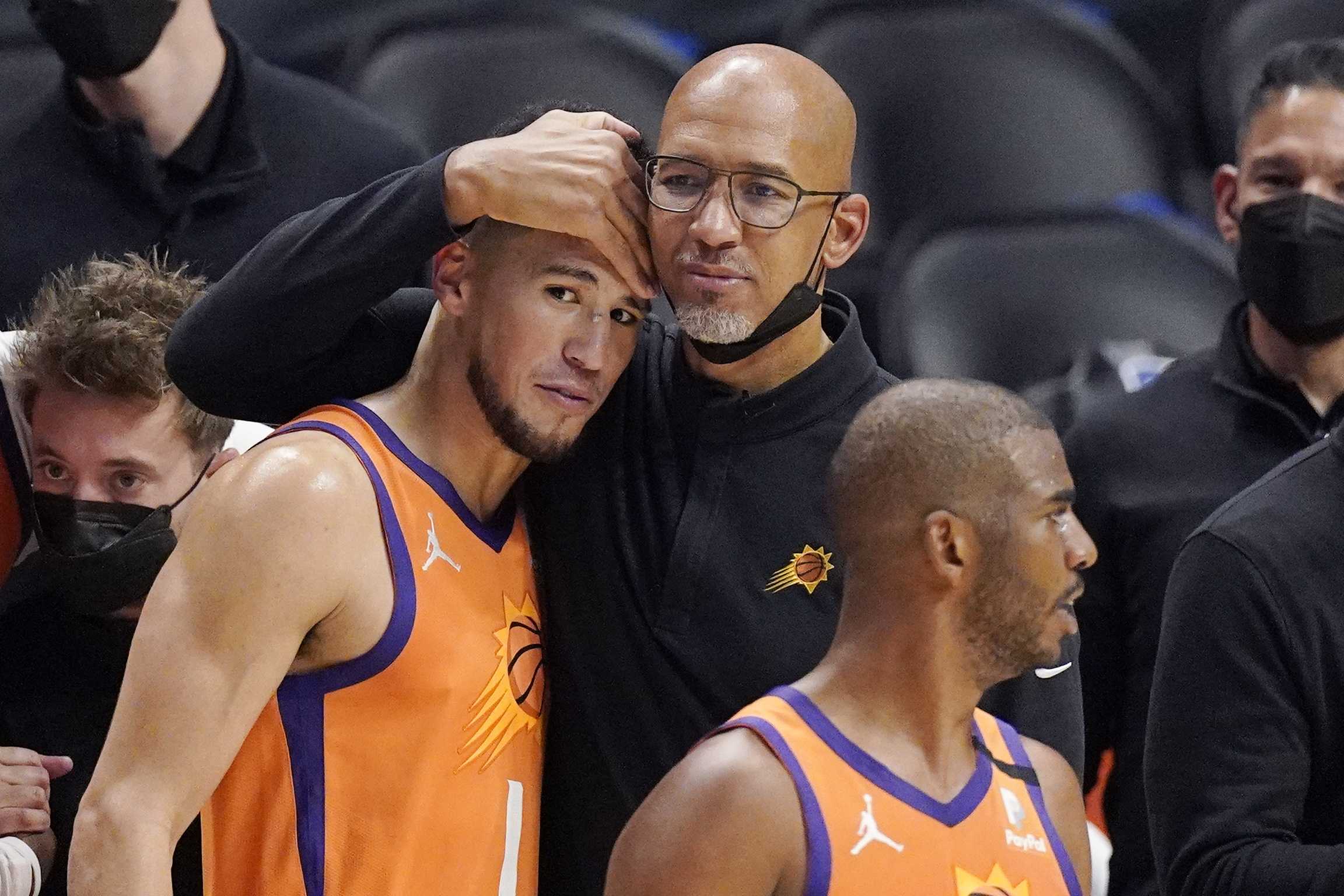
After a decade-long playoff drought, the Suns returned to prominence following the 2020 NBA Bubble and the subsequent acquisition of veteran point guard Chris Paul. Alongside rising star Devin Booker and former number-one pick Deandre Ayton, the Suns became a powerhouse in the Western Conference.
The 2021 Playoff Run
The 2021 postseason was a masterclass in execution. The Suns defeated the defending champion Los Angeles Lakers, swept the Denver Nuggets, and beat the Los Angeles Clippers to return to the Finals for the first time in 28 years.
Facing the Milwaukee Bucks, the Suns took a 2-0 series lead. However, Giannis Antetokounmpo delivered a legendary performance, leading the Bucks to four straight victories. The loss was a bitter pill for the Valley, as the team was only two wins away from the ultimate goal.
Modern Context (2024–2026)
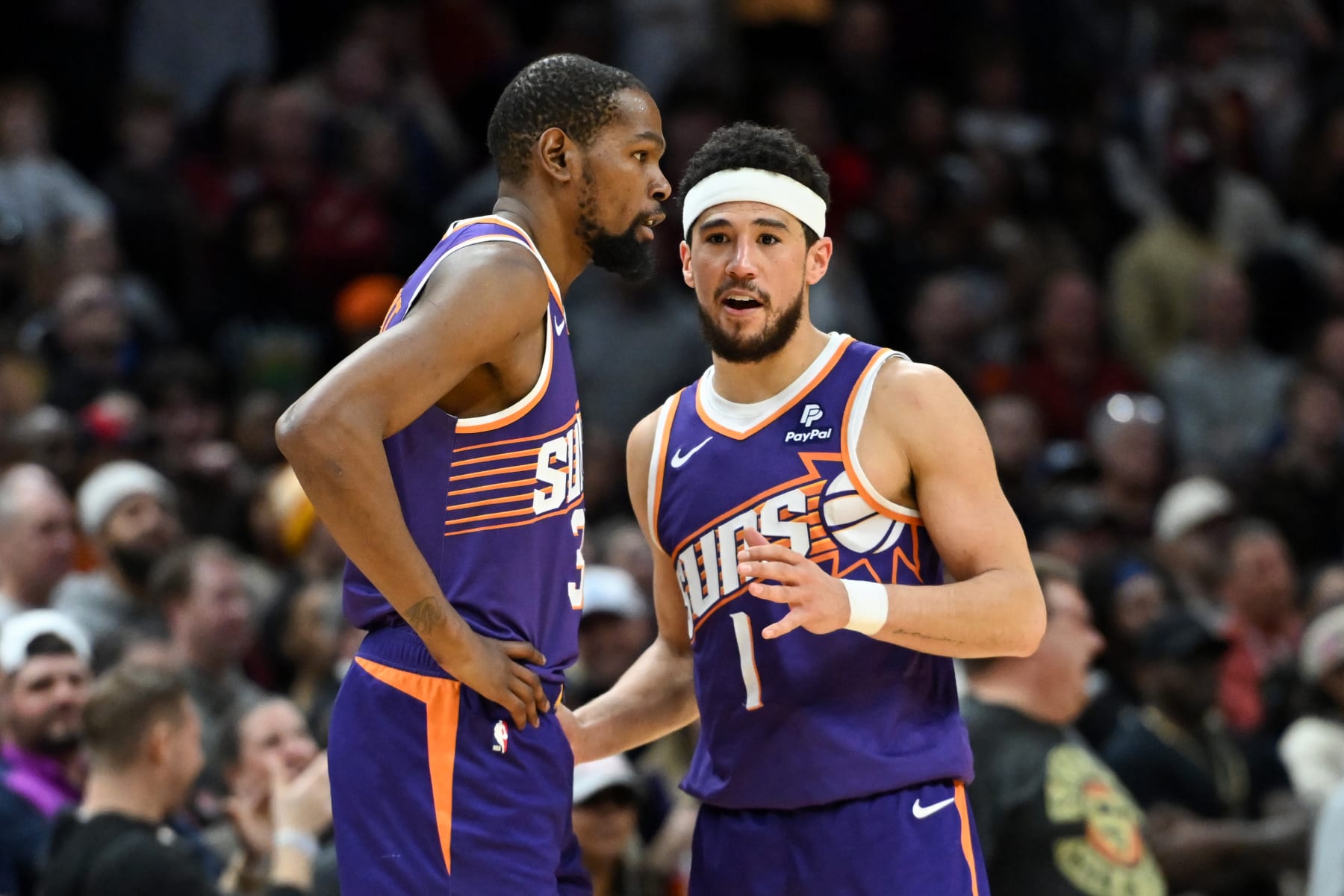
Following the 2021 run, the organization underwent massive changes, including the purchase of the team by Mat Ishbia in 2023. The acquisition of Kevin Durant and Bradley Beal signaled an "all-in" approach to securing the first championship in franchise history. As of 2026, the team continues to operate as a high-spending, star-studded contender, leveraging its core of Booker and Durant to navigate a highly competitive Western Conference.
Comparative Summary of NBA Finals Appearances
The following table outlines the three times the Phoenix Suns reached the pinnacle of the NBA and the results of those series.
| Year | Opponent | Series Result | Key Suns Players | Leading Scorer (Series) |
|---|---|---|---|---|
| 1976 | Boston Celtics | Lost 4-2 | Paul Westphal, Alvan Adams | Paul Westphal (20.8 PPG) |
| 1993 | Chicago Bulls | Lost 4-2 | Charles Barkley, Kevin Johnson | Charles Barkley (27.3 PPG) |
| 2021 | Milwaukee Bucks | Lost 4-2 | Devin Booker, Chris Paul | Devin Booker (28.2 PPG) |
Key Figures in Suns Championship History
Understanding the Suns' pursuit of a title requires looking at the "Builders" and "Players" who defined these eras.
- Al McCoy: The "Voice of the Suns," McCoy called games for over 50 years, providing the soundtrack to every championship run until his retirement.
- Jerry Colangelo: The architect who shaped the franchise's identity for nearly four decades.
- Devin Booker: The current face of the franchise, Booker holds the franchise record for most points in a single playoff run (601 in 2021).
- Steve Nash: Though he never reached the Finals in Phoenix, his leadership made the Suns the most entertaining team in the league for half a decade.
Why the Suns Struggle in the Final Stage
A common question among analysts is why a team with such a high historical winning percentage has struggled to close out the Finals. Several factors contribute to this:
- Elite Competition: In 1976, they faced the Celtics dynasty; in 1993, the Jordan-led Bulls; and in 2021, an all-time great performance by Giannis Antetokounmpo.
- Timing and Health: Injuries to key players (like Joe Johnson in 2005) or controversial suspensions (2007) often derailed their most promising seasons.
- Small-Ball Limitations: Historically, the Suns have favored speed and shooting over traditional interior defense, which sometimes left them vulnerable in the slower, more physical environment of the NBA Finals.
Frequently Asked Questions
How many NBA championships have the Phoenix Suns won?
As of 2026, the Phoenix Suns have not won an NBA championship. They have won three Western Conference titles (1976, 1993, 2021) and numerous Pacific Division titles, but the Larry O'Brien Trophy remains elusive.
Who is the Suns' all-time leading scorer in the playoffs?
Devin Booker holds the record for the most total points in Suns playoff history. He surpassed legends like Kevin Johnson and Charles Barkley during the team's deep playoff runs in the early 2020s.
What is the Suns' record in the NBA Finals?
The Suns have an overall record of 6-12 in NBA Finals games. They went 2-4 in 1976, 2-4 in 1993, and 2-4 in 2021. Interestingly, they have lost all three series by the same 4-2 margin.
When did the Suns join the NBA?
The Phoenix Suns joined the NBA as an expansion team in 1968. They were the first major professional sports team in Arizona, predating the Cardinals (NFL), Diamondbacks (MLB), and Coyotes (NHL).
Which Suns player has won the most MVPs?
Steve Nash is the only Suns player to win two NBA MVP awards (2005, 2006). Charles Barkley is the only other Sun to win the award (1993).
Practical Advice for Fans and Researchers
For those looking to explore the team's history further, the NBA Official History provides game-by-game box scores for all Finals series. Additionally, the Phoenix Suns Ring of Honor serves as the definitive list of individuals who have contributed most to the franchise's legacy.
If you are tracking the current 2026 season's progress, focus on the team's defensive rating and health going into the April playoffs, as these have historically been the deciding factors in their deep postseason runs.
Image Gallery