Why Are Roth IRAs Tax Free? Understanding the Post-Tax Advantage
Roth IRAs are tax-free because they are funded with after-tax dollars, meaning you have already paid income tax on the money before it enters the account. In exchange for forgoing an immediate tax deduction, the IRS allows your investm...
Roth IRAs are tax-free because they are funded with after-tax dollars, meaning you have already paid income tax on the money before it enters the account. In exchange for forgoing an immediate tax deduction, the IRS allows your investments to grow and be withdrawn completely tax-free during retirement, provided you meet specific timing and age requirements.
Contents
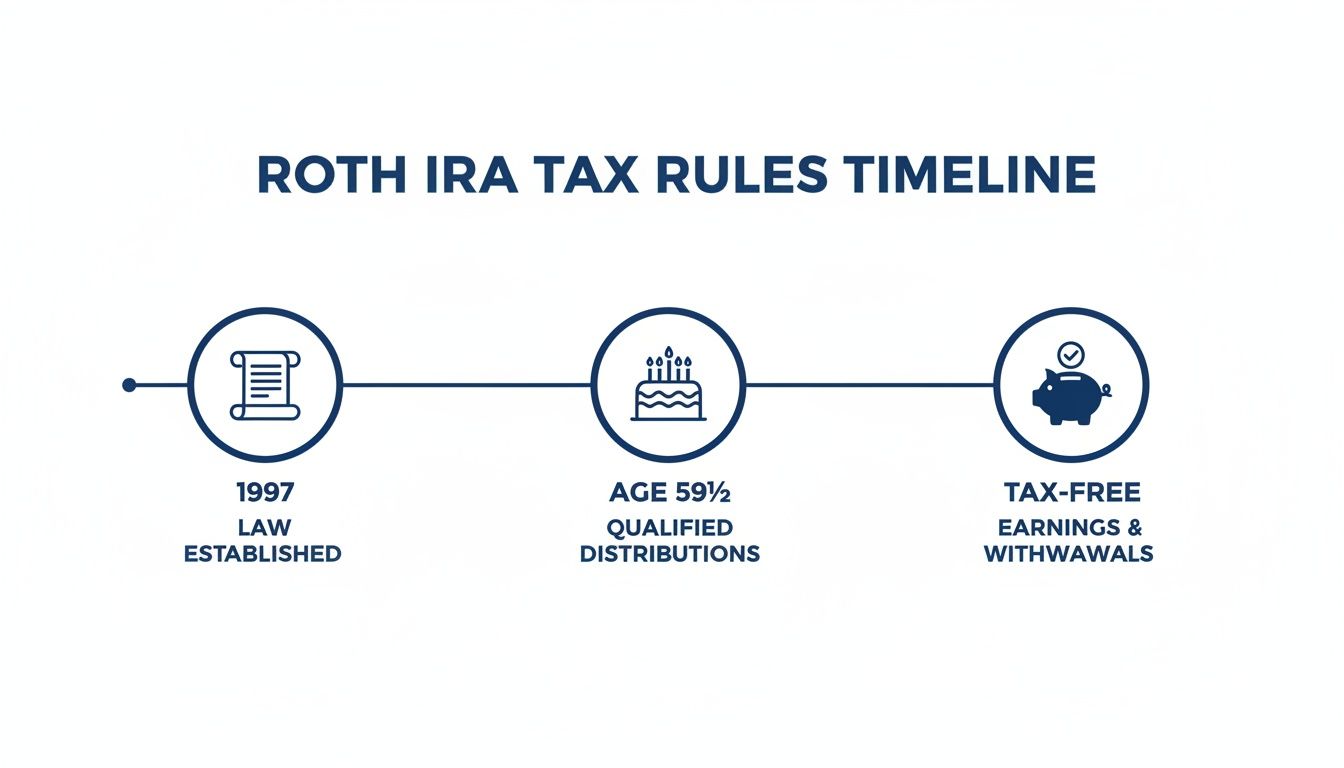
The Roth IRA remains one of the most powerful wealth-building tools in the American financial landscape. Named after Senator William Roth and established as part of the Taxpayer Relief Act of 1997, this retirement vehicle operates on a simple but profound "pay now, play later" philosophy. As we navigate the economic climate of 2026, where tax brackets and fiscal policies continue to evolve, understanding the mechanics of why these accounts offer tax-exempt status is essential for any long-term investor.
The Fundamental Mechanism: After-Tax Contributions
To understand why a Roth IRA is tax-free, one must first understand the concept of "after-tax" funding. When you earn a salary, your employer withholds federal and state income taxes. The money that lands in your checking account is your "net" or "after-tax" pay. When you contribute to a Roth IRA, you are using these funds that have already been subjected to the IRS’s reach.
Because the government has already taken its cut of the principal, it grants the account a unique "qualified" status. Under Internal Revenue Code Section 408A, the growth within the account—whether from capital gains, dividends, or interest—is shielded from annual taxation. This creates a stark contrast to a standard brokerage account, where you might owe taxes every year on realized gains or dividend payouts.
The Trade-off of Immediate vs. Deferred Benefits
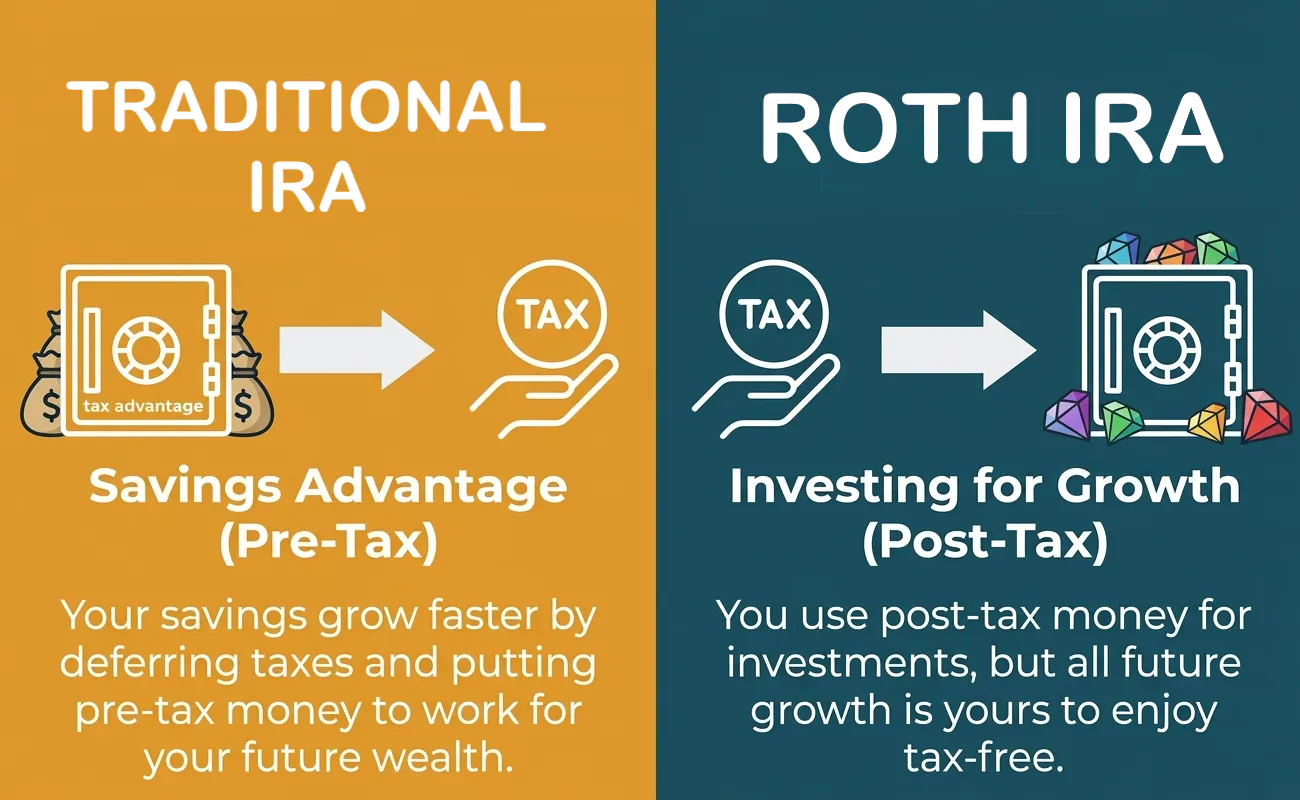
The primary reason a Roth IRA provides tax-free withdrawals is the structural trade-off compared to a Traditional IRA. In a Traditional IRA, contributions are often tax-deductible in the year they are made, which lowers your current taxable income. However, the government eventually collects its share by taxing every dollar you withdraw in retirement as ordinary income.
The Roth IRA flips this script. By "pre-paying" your taxes today at your current tax rate, you lock in a 0% tax rate for the future. This is particularly advantageous in 2026, as investors weigh the possibility of higher future tax rates to address national debt or shifting social programs.
The Power of Tax-Free Compounding
One of the most significant advantages of the Roth IRA's tax-free status is the absence of "tax drag." In a taxable account, your investment growth is constantly eroded by capital gains taxes. Even a 15% or 20% tax on annual gains can significantly diminish the total value of a portfolio over thirty years.
In a Roth IRA, 100% of the earnings remain in the account to compound. If you invest $7,000 annually (the projected baseline for 2026, adjusted for inflation) and achieve a 7% annual return, after 30 years, a substantial portion of your balance will consist of earnings rather than original contributions. Because the account is tax-free, that entire accumulated "gain" belongs to you, not the government.
Requirements for Tax-Free Withdrawals
The "tax-free" nature of a Roth IRA is not unconditional. The IRS mandates that distributions must be "qualified" to avoid taxes and penalties on the earnings. While you can always withdraw your original contributions (the principal) tax-free and penalty-free at any time—because that money was already taxed—the growth is subject to the following rules:
1. The Five-Year Rule
The most critical technical requirement is the five-year clock. This clock begins on January 1st of the tax year for which you made your first contribution to any Roth IRA. Even if you are over the age of 59½, you must have held a Roth IRA for at least five consecutive years before you can withdraw the earnings tax-free. It is important to note that this clock does not restart for every new Roth IRA you open; it begins with your very first one.
2. The Age 59½ Requirement
Generally, you must be at least 59½ years old when you take a distribution for the earnings to be tax-free. If you withdraw earnings before this age, even if you have met the five-year rule, you may owe income tax and a 10% early withdrawal penalty on that portion of the distribution.
3. Qualified Exceptions
The IRS allows for certain exceptions where earnings can be withdrawn tax-free even if you haven't reached age 59½, provided the five-year rule is met:
- First-time Home Purchase: You can withdraw up to $10,000 (lifetime limit) toward the purchase of a first home.
- Disability: If you become permanently disabled.
- Death: Distributions made to a beneficiary after your death.
2026 Contribution Limits and Eligibility
The ability to enjoy tax-free growth is restricted by income levels. For the 2026 tax year, the IRS sets specific Modified Adjusted Gross Income (MAGI) thresholds. If your income exceeds these limits, your ability to contribute directly to a Roth IRA is phased out or eliminated entirely.
| Filing Status | Full Contribution Limit (MAGI) | Phase-out Range (MAGI) | Ineligible Above (MAGI) |
|---|---|---|---|
| Single / Head of Household | Under $150,000 | $150,000 – $165,000 | Over $165,000 |
| Married Filing Jointly | Under $235,000 | $235,000 – $245,000 | Over $245,000 |
| Married Filing Separately | N/A | $0 – $10,000 | Over $10,000 |
Note: These figures represent 2026 projections based on standard inflation-indexing patterns. Always verify with the IRS official website for the final published figures for the current tax year.
Strategy: The Backdoor Roth IRA
For high earners in 2026 who exceed the income limits mentioned above, the "Backdoor Roth" remains a viable, legal strategy to access tax-free growth. This process involves making a non-deductible contribution to a Traditional IRA and then immediately converting those funds into a Roth IRA.
Since the contribution to the Traditional IRA was made with after-tax dollars (non-deductible), and the conversion happens before the money has time to grow, there is little to no tax liability on the conversion itself. Once the money is in the Roth IRA, it begins its journey of tax-free growth. This maneuver highlights that the tax-free nature of the Roth is so desirable that even the wealthiest investors seek specialized paths to utilize it.
Estate Planning and the Absence of RMDs
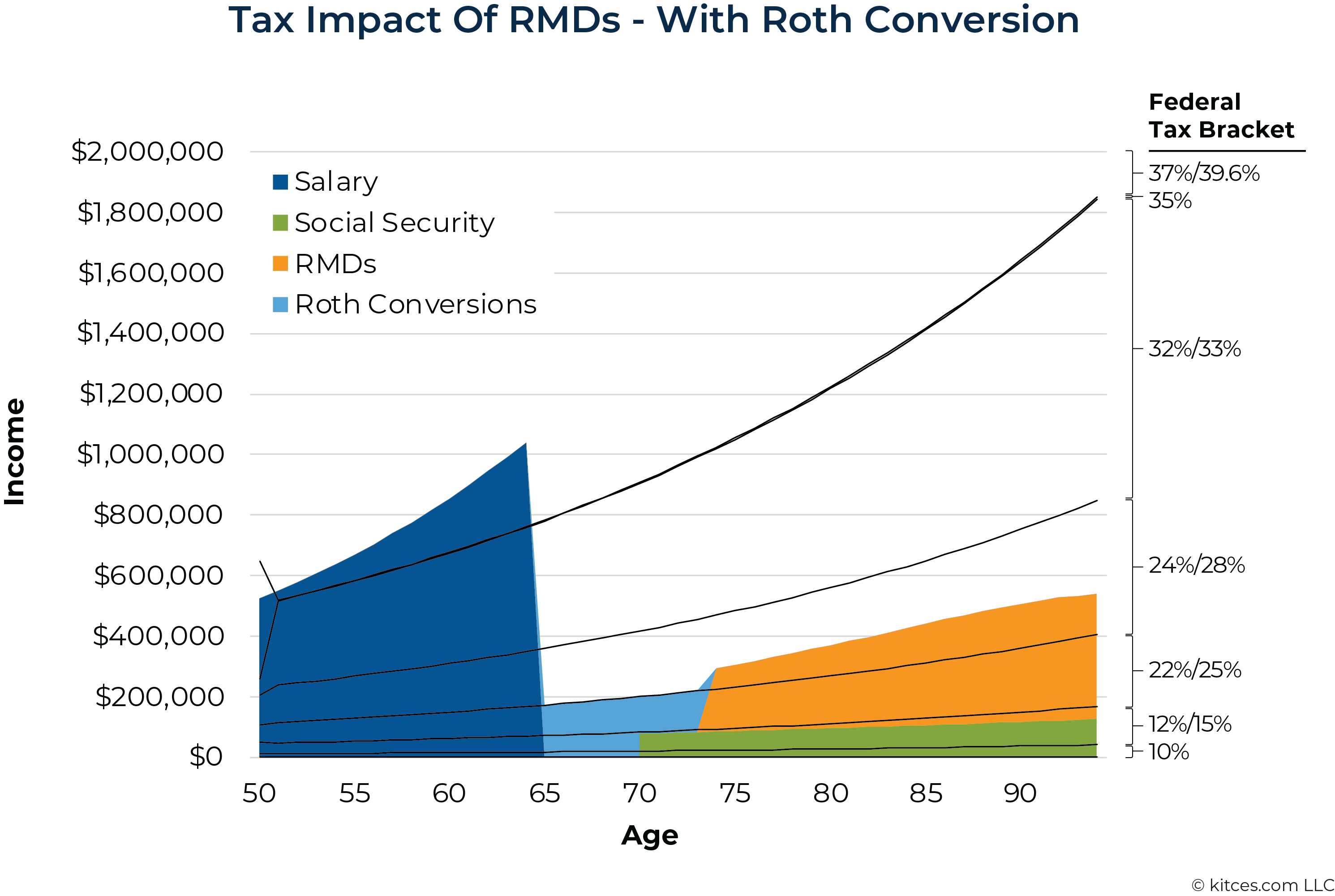
A unique feature that reinforces the tax-free value of the Roth IRA is the absence of Required Minimum Distributions (RMDs) during the original owner's lifetime. With a Traditional IRA or a 401(k), the IRS forces you to start taking withdrawals (and paying taxes) once you reach a certain age (73 or 75, depending on your birth year under SECURE Act 2.0).
The Roth IRA has no such requirement. You can leave the money in the account to grow tax-free for your entire life. This makes the Roth IRA an extraordinary estate planning tool. When you pass the account to your heirs, they generally receive the assets tax-free. While non-spouse beneficiaries are typically required to empty the account within ten years (following the SECURE Act guidelines), they do not pay income tax on those withdrawals, allowing the legacy of tax-free growth to continue for another decade after your passing.
Common Misconceptions About Roth Tax Status
Despite its popularity, several myths persist regarding why and how Roth IRAs are tax-free:
- "Everything is tax-free immediately": As discussed, only your contributions can be withdrawn at any time without tax. The earnings require the account to be five years old and the owner to be 59½.
- "I'll lose money if tax rates go down": While it’s true that a Roth is most beneficial if tax rates rise, it is rarely "bad" to have tax-free income. Even if your tax bracket stays the same, the benefit of not paying capital gains tax on decades of growth usually outweighs the loss of the immediate deduction.
- "Roth 401(k)s are exactly the same": While they share the tax-free withdrawal feature, Roth 401(k)s historically had RMD requirements that Roth IRAs did not. Recent legislation has harmonized many of these rules, but the Roth IRA remains the "gold standard" for flexibility.
FAQs
Can the government change the laws and tax my Roth IRA later?
While Congress has the power to change tax laws, the Roth IRA is viewed as a "contractual-style" agreement where the investor has already fulfilled their tax obligation. Taxing Roth withdrawals would constitute double taxation, which is a significant legislative hurdle. Most experts believe that if changes occur, they would likely affect future contributions rather than existing balances.
What happens to the tax-free status if I convert a Traditional IRA to a Roth?
When you convert a Traditional IRA to a Roth, you must pay income tax on the amount converted in that tax year. Once that tax is paid, the funds are treated as "after-tax" principal in the Roth IRA. From that point forward, all future growth and qualified withdrawals are tax-free.
Is there a limit to how much tax-free growth I can accumulate?
No. There is currently no "cap" on how large a Roth IRA can grow. Whether your account grows to $50,000 or $5,000,000, the qualified withdrawals remain 100% tax-free under current law. This is why many investors focus on high-growth assets within their Roth accounts.
Are Roth IRA distributions counted as income for Social Security taxation?
No. Because qualified Roth IRA distributions are not considered "taxable income," they do not increase your Modified Adjusted Gross Income (MAGI) for the purposes of determining if your Social Security benefits are taxable. This is a major advantage for retirees looking to keep their overall tax profile low.
How does the 5-year rule work for conversions?
Each conversion you perform has its own five-year waiting period for the principal to be withdrawn penalty-free if you are under 59½. However, for the earnings to be tax-free, you only need to meet the original five-year rule from your very first Roth contribution and be 59½.
Final Recommendation
To maximize the tax-free benefits of a Roth IRA in 2026, you should prioritize consistent contributions as early as possible to start the five-year clock. If you are a high-income earner, consult with a financial advisor to execute a "Backdoor Roth" conversion annually. Given the certainty of tax-free growth versus the uncertainty of future tax rates, diversifying your retirement "tax buckets" by including a Roth IRA is a vital step toward long-term financial security.
Image Gallery