Understanding Life Insurance Cost Per Year and Renters Insurance Deductibles
In 2026, the average annual cost for a 20-year term life insurance policy for a healthy 30-year-old is approximately $300 to $600, while renters insurance deductibles typically range from $250 to $1,000. Selecting a higher renters insu...
In 2026, the average annual cost for a 20-year term life insurance policy for a healthy 30-year-old is approximately $300 to $600, while renters insurance deductibles typically range from $250 to $1,000. Selecting a higher renters insurance deductible can reduce your monthly premiums, providing extra room in your budget for life insurance coverage.
Contents
Managing personal risk requires a dual focus on protecting your loved ones and your physical assets. While life insurance provides a death benefit to beneficiaries, renters insurance protects your personal property and provides liability coverage within a leased residence. Understanding how the "cost per year" of life insurance interacts with the "deductible" of a renters policy is a cornerstone of modern financial planning.
Calculating Life Insurance Cost Per Year
The annual premium for life insurance is determined by the "mortality risk" the insurer assumes. In 2026, underwriting has become significantly more precise due to the integration of real-time health data from wearables and electronic health records (EHR).
Term Life vs. Permanent Life Costs
Term life insurance remains the most cost-effective option for the majority of renters and homeowners. It provides coverage for a specific period (10, 20, or 30 years).
- Term Life: For a $500,000 policy, a healthy 35-year-old might pay $350–$500 per year.
- Whole/Permanent Life: Because these policies include a cash value component and last a lifetime, the annual cost can be 10 to 15 times higher than term insurance, often exceeding $4,000 per year for similar coverage amounts.
Factors Influencing Your Annual Premium
- Underwriting Class: Insurance companies categorize applicants into tiers such as "Preferred Plus," "Preferred," "Standard Plus," and "Standard." Moving from Standard to Preferred can reduce your cost per year by 20% or more.
- Payment Frequency: Most insurers offer a discount for paying your premium annually rather than monthly. Monthly payments often include "fractional premiums"—small administrative fees that can add 3% to 5% to the total annual cost.
- Age and Health: In 2026, BMI, blood pressure, and nicotine use remain the primary drivers of cost. However, many carriers now offer "accelerated underwriting," which waives the medical exam for applicants who maintain a verified history of wellness.
Navigating Renters Insurance Deductibles
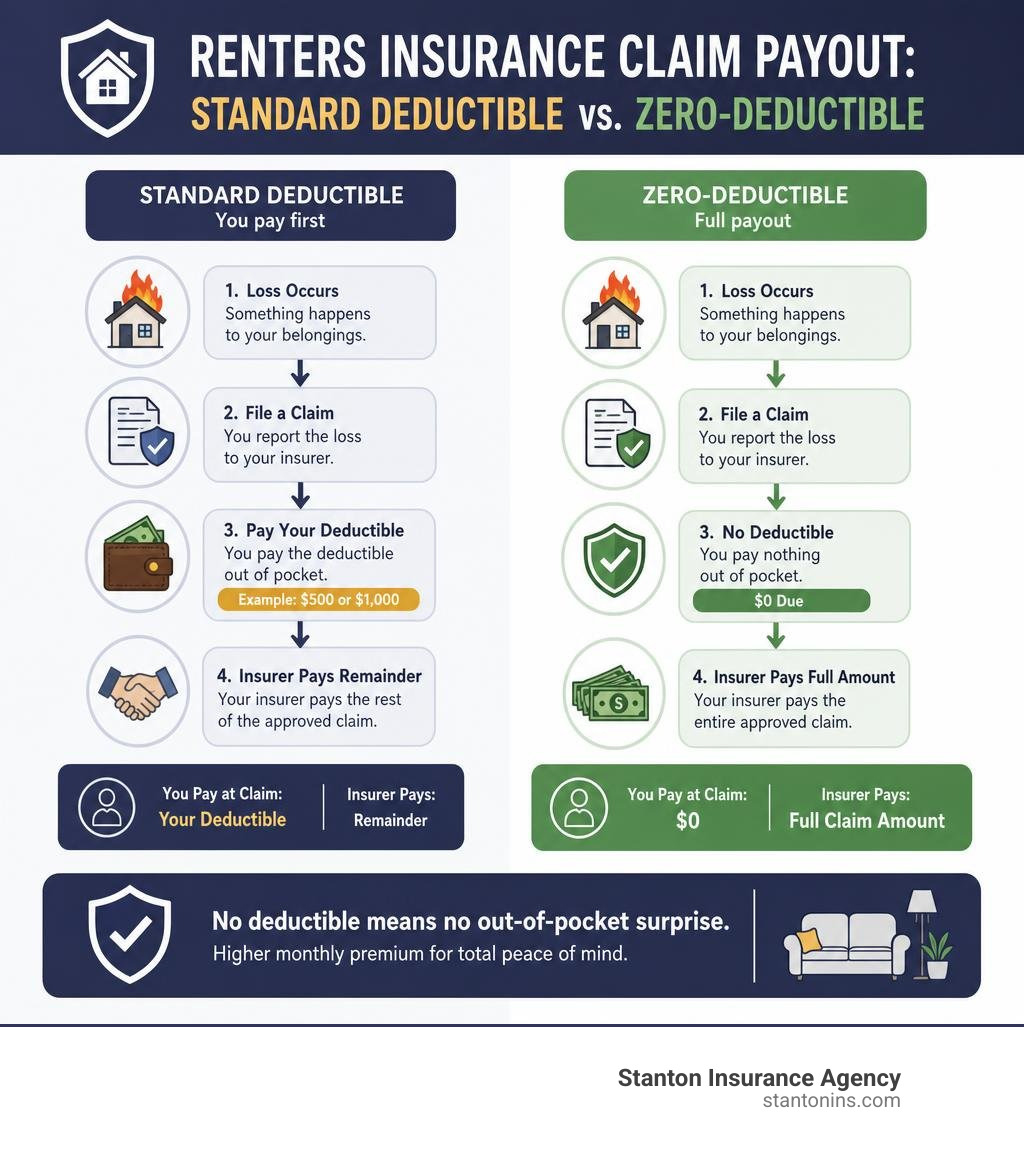
A renters insurance deductible is the amount you agree to pay out of pocket toward a claim before your insurance coverage kicks in. It represents your "retained risk."
How Deductibles Impact Premiums
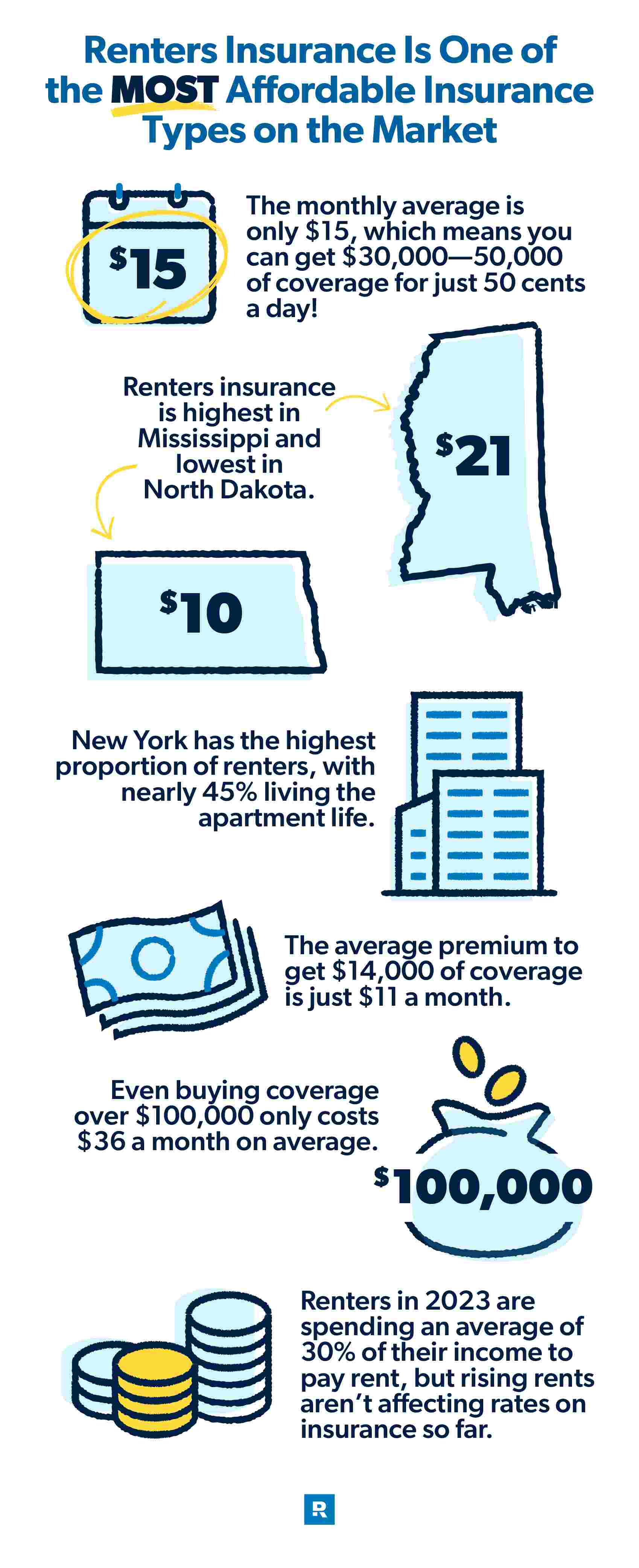
The relationship between a deductible and a premium is inverse: the higher the deductible, the lower the premium. In the current 2026 market, many policyholders are shifting from the traditional $250 or $500 deductible to a $1,000 deductible to combat rising insurance rates driven by inflation and increased replacement costs for high-end electronics.
- $250 Deductible: Offers the most protection during a claim but results in the highest monthly premium.
- $500 Deductible: The standard middle-ground, balancing out-of-pocket risk with affordable monthly costs.
- $1,000+ Deductible: Best for those with an established emergency fund who want to minimize their ongoing fixed expenses.
Actual Cash Value (ACV) vs. Replacement Cost Value (RCV)
The impact of your deductible depends heavily on whether your policy is ACV or RCV.
- ACV policies pay out the depreciated value of your items. If a five-year-old laptop is stolen, the insurer pays what the laptop is worth today, minus your deductible.
- RCV policies pay what it costs to buy a brand-new version of the item today. Even with a $500 deductible, an RCV policy provides significantly better financial recovery for the policyholder.
Comparing Costs: Life Insurance and Renters Insurance in 2026
To visualize how these costs fit into a budget, consider the following data based on 2026 market averages for a standard "Select" risk profile.
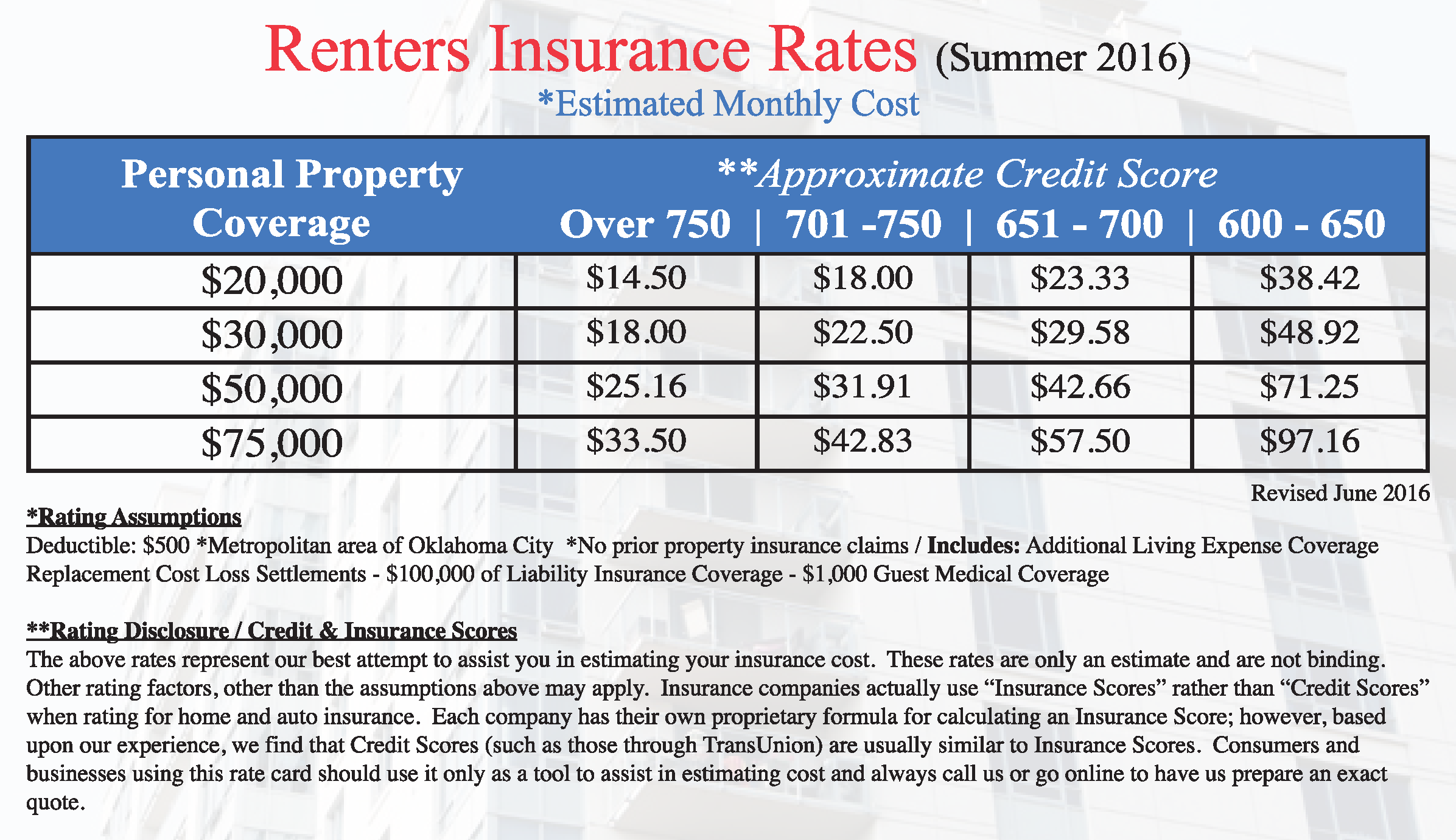
| Insurance Type | Coverage Amount | Deductible | Estimated Annual Cost |
|---|---|---|---|
| Term Life (20-Year) | $500,000 | N/A | $380 - $520 |
| Term Life (20-Year) | $1,000,000 | N/A | $650 - $850 |
| Renters Insurance | $30,000 (Prop) / $100k (Liab) | $250 | $240 - $300 |
| Renters Insurance | $30,000 (Prop) / $100k (Liab) | $500 | $180 - $220 |
| Renters Insurance | $30,000 (Prop) / $100k (Liab) | $1,000 | $120 - $150 |
Note: Data reflects averages for non-smokers in low-to-mid-risk geographic areas. Specific rates are subject to individual underwriting and local fire/crime statistics.
Strategic Budgeting: The "Deductible Trade-off"
For many individuals, the decision on a renters insurance deductible is not just about the renters policy itself, but how it frees up capital for life insurance. This is often referred to as "total cost of risk" management.
If you increase your renters insurance deductible from $250 to $1,000, you might save approximately $150 per year in premiums. In 2026, that $150 is nearly half the cost of a basic $250,000 term life insurance policy. By assuming more risk on your personal property (which can be replaced), you are able to afford coverage for your life (which cannot be replaced).
When to Choose a Low Renters Deductible
You should stick with a $250 or $500 deductible if:
- You do not have at least $1,000 in a liquid savings account.
- You live in an area prone to frequent small-scale losses (e.g., high theft rates).
- Your total property value is relatively low, making a $1,000 deductible represent a massive percentage of your total coverage.
When to Choose a High Renters Deductible
You should opt for a $1,000+ deductible if:
- You have a robust emergency fund.
- You primarily want insurance for "catastrophic" events (e.g., a total apartment fire or a major liability lawsuit).
- You want to redirect the premium savings into a life insurance policy or a retirement account.
Trends Affecting Insurance Costs in 2026
The insurance landscape in 2026 is defined by two major factors: AI-driven precision and climate-related adjustments.
AI and Machine Learning in Life Insurance
Life insurance companies now use predictive modeling to determine "life expectancy" with higher accuracy than traditional blood panels. This has led to "dynamic pricing," where some policyholders may see lower annual costs if they share data from fitness trackers that prove a consistent, healthy lifestyle. However, this has also made it more expensive for those with sedentary lifestyles or unmanaged chronic conditions.
Climate and Renters Insurance
Renters insurance premiums have risen in coastal and fire-prone regions. In these areas, insurers are increasingly mandating higher minimum deductibles for specific perils, such as wind or hail. It is essential to read the "Declarations Page" of your 2026 policy to see if your standard deductible applies to all losses or if there are separate, higher deductibles for certain events.
Common Mistakes to Avoid
- Over-insuring Personal Property: Many renters over-estimate the value of their furniture and clothes, paying for $50,000 in coverage when they only own $20,000 worth of goods. This inflates the premium unnecessarily.
- Under-insuring Life: Conversely, many people buy a life insurance policy based on a "round number" like $100,000, which in 2026 may not even cover five years of basic living expenses for a surviving spouse.
- Ignoring the "Fractional" Cost: Paying monthly for both life and renters insurance can lead to "fee creep." If your budget allows, paying both on an annual basis can save you enough to cover a month’s worth of groceries.
- Neglecting the Liability Portion: Renters often focus solely on the property deductible, but the liability portion of the policy (usually $100,000 to $300,000) is arguably more important. It protects you if someone is injured in your home or if you accidentally cause damage to the building.
Frequently Asked Questions
Does my renters insurance deductible apply to liability claims?
No. In almost all standard renters insurance policies, the deductible only applies to "Section I" (Personal Property) coverage. Liability coverage ("Section II"), which pays for legal defense and settlements if you are sued, typically does not have a deductible. This means the insurer pays from the first dollar up to your policy limit.
Can I change my life insurance annual premium after the policy is issued?
For term life insurance, the annual premium is usually "level," meaning it is guaranteed to stay the same for the duration of the term (e.g., 20 years). You cannot lower the premium later without reducing the death benefit or undergoing new medical underwriting to prove improved health.
Why is the cost per year for life insurance higher for men than women?
Statistically, in 2026, women still have a longer life expectancy than men. Because life insurance is based on the probability of the insurer paying out a death benefit, the lower risk associated with longer female lifespans results in lower annual premiums.
If I have a $1,000 deductible and a $1,200 loss, should I file a claim?
Generally, no. Filing a claim for a net gain of only $200 is often counterproductive. Most insurers will increase your premium or remove your "claims-free discount" following a claim. Many experts suggest only filing renters insurance claims if the loss is at least 2.5 to 3 times the value of the deductible.
Is renters insurance required by law in 2026?
While no state law mandates renters insurance, most corporate landlords and professional property management companies in 2026 require it as a condition of the lease. They typically require a minimum of $100,000 in liability coverage to protect the building from tenant-caused damage (like kitchen fires).
Practical Recommendation
To optimize your 2026 insurance budget, begin by auditing your emergency fund. If you have at least $1,500 in savings, increase your renters insurance deductible to $1,000. Use the resulting savings to purchase a term life insurance policy with a death benefit equal to at least 10 times your annual income. Ensure your life insurance is set to "annual pay" to eliminate monthly administrative fees. This strategy provides the best balance of immediate property protection and long-term family security.
Image Gallery