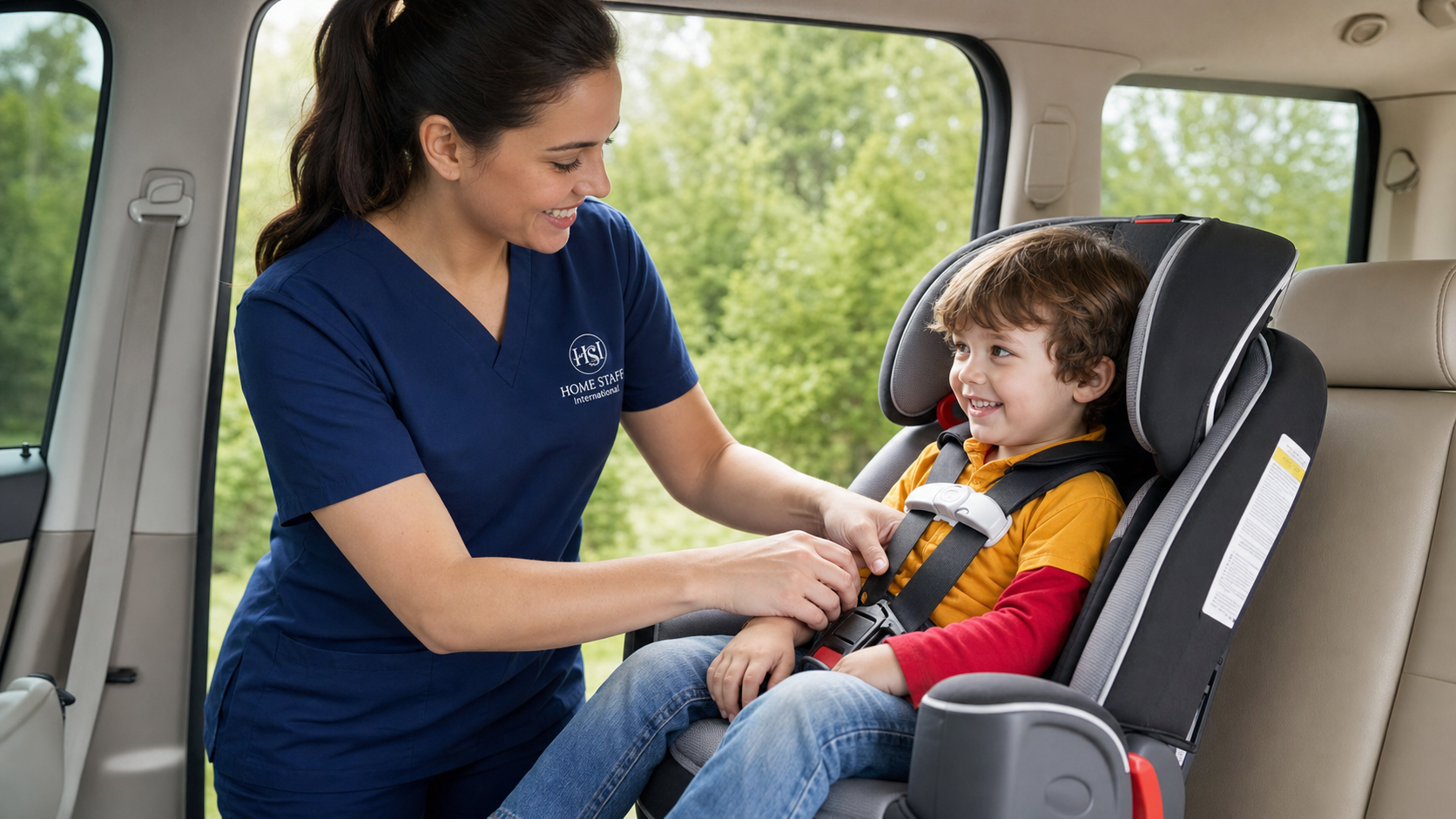
Car Insurance for Nannies: A Complete Guide for Families and Caregivers in 2026
Car insurance for a nanny requires ensuring the caregiver is either listed as a "named driver" on the family’s policy or has a "business use" endorsement on their own personal policy. Proper coverage prevents claim denials during work-...
Car insurance for a nanny requires ensuring the caregiver is either listed as a "named driver" on the family’s policy or has a "business use" endorsement on their own personal policy. Proper coverage prevents claim denials during work-related transport, such as school runs or errands, protecting both the employer’s assets and the nanny's livelihood.
Contents
The landscape of household employment in 2026 demands more than just a verbal agreement regarding vehicle use. As vehicle repair costs and medical expenses continue to rise, a single accident involving a nanny can lead to catastrophic financial liability for a family if the insurance coverage is improperly structured. Whether the nanny drives the family’s SUV or their own compact car, the distinction between "permissive use" and "regular employment use" is the pivot point upon which insurance claims succeed or fail.
Understanding the Legal and Financial Risks
When a nanny operates a motor vehicle as part of their job duties, they are no longer a casual guest driver. In the eyes of insurance providers, this constitutes a professional arrangement. If an accident occurs while the nanny is transporting children to soccer practice or picking up groceries for the household, the insurance company will investigate whether the driver was using the vehicle for "business purposes."
Standard personal auto policies are designed for commuting and pleasure. They often contain specific exclusions for "driving for hire" or "commercial use." While being a nanny is not the same as driving for a ride-share service, the frequent, scheduled use of a vehicle for an employer’s benefit can lead an adjuster to classify the activity as business use. If the nanny is not correctly disclosed on the policy, the insurer may deny the claim entirely, leaving the family personally liable for property damage and medical bills.
Furthermore, under the legal doctrine of respondeat superior, an employer can be held liable for the actions of an employee performed within the scope of their employment. This means that if a nanny causes an accident while working, the parents are often the primary targets for any resulting lawsuits, regardless of whose car was being driven.
Scenario 1: The Nanny Drives the Employer’s Vehicle
This is the most common arrangement for full-time childcare. It offers the family the most control over the safety of the vehicle and the specifics of the insurance coverage.
The "Named Driver" Requirement
Most families assume that "permissive use" covers their nanny. Permissive use typically applies to a friend or neighbor who borrows your car once or twice a year. Because a nanny drives the car regularly—often daily—they must be added to your policy as a Named Driver.
Adding a nanny to your policy allows the insurance company to assess the risk accurately. They will pull the nanny’s motor vehicle record (MVR) and adjust the premium based on their age, driving history, and experience. In 2026, most major insurers allow this update to be handled through a mobile app, though you will need the nanny’s driver’s license number and Social Security number to complete the process.
Impact on Premiums
The cost of adding a nanny varies significantly. A young nanny (under age 25) or one with previous citations will likely increase your premiums. Conversely, an experienced driver with a clean record may have a negligible impact. Families should view this cost as a standard business expense of hiring household help.
Coverage Limits for 2026
Given the current costs of litigation and healthcare, "state minimum" coverage is insufficient. For families employing a nanny, an Umbrella Policy is highly recommended. An umbrella policy provides an additional layer of liability protection (typically starting at $1 million) that kicks in after your primary auto insurance limits are exhausted.
Scenario 2: The Nanny Drives Their Own Vehicle
When a nanny uses their personal vehicle to transport your children, the insurance situation becomes more complex. The nanny's personal auto policy is the primary coverage, but it likely contains gaps.
The Business Use Endorsement
The nanny must inform their insurance provider that they are using the vehicle for work. They should request a Business Use Endorsement. Without this, if an accident occurs during work hours, the nanny’s insurer could deny the claim because the vehicle was being used for employment rather than personal transit.
Employers should ask for a "Certificate of Insurance" from the nanny and verify that this endorsement is active. It is common practice for the employer to pay the difference in premium caused by this endorsement.
Employer Non-Owned Auto Insurance (ENOL)
Even if the nanny has their own insurance, the employer remains at risk. If the nanny causes a major accident and their policy limits are reached, the injured party will likely sue the employer (the parents).
To mitigate this, families can add Employer Non-Owned Auto Insurance to their own auto or homeowners' policy. This coverage protects the employer specifically when an employee is using a vehicle the employer does not own for business purposes. In 2026, this is often a low-cost add-on that provides peace of mind.
Comparison of Insurance Strategies
The following table outlines the differences between the three primary ways to structure nanny car insurance.
| Feature | Nanny Added to Family Policy | Nanny Uses Personal Policy | Employer Non-Owned (ENOL) |
|---|---|---|---|
| Primary Vehicle | Employer's Car | Nanny's Car | Nanny's Car |
| Who Pays Premium | Employer | Nanny (often reimbursed) | Employer |
| Claim Handling | Employer's Insurer | Nanny's Insurer | Employer's Insurer (Secondary) |
| Best For | Daily use of family car | Occasional use of nanny's car | Liability gap protection |
| Risk Level | Low (Full control) | Moderate (Dependent on nanny) | Low (Backstop protection) |
Standardizing Reimbursement and Maintenance
If the nanny is driving their own vehicle, the financial arrangement must be clear. In 2026, the standard method for covering the nanny’s costs is the IRS Standard Mileage Rate. This rate is designed to cover not just fuel, but also wear and tear, maintenance, and the "business" portion of insurance costs.
- Documentation: The nanny should keep a daily log of miles driven specifically for work (excluding their commute to your house).
- Maintenance Verification: If your children are being transported in the nanny's car, you have a vested interest in that car's safety. It is reasonable to require proof of regular maintenance, such as brake inspections and tire rotations, as a condition of employment.
- Deductibles: You should agree in writing who pays the insurance deductible in the event of an accident. Most fair-market "Nanny Contracts" specify that the employer covers the deductible if the accident occurred while the nanny was on duty.
Step-by-Step Implementation for Families
- Review the Nanny's Driving Record: Before hiring, run a professional background check that includes a motor vehicle report. Look for patterns of reckless driving or multiple at-fault accidents.
- Contact Your Agent: Inform your insurance agent that you are hiring a household employee who will have access to your vehicles.
- Update the Nanny Contract: Include a "Vehicle Use" section that specifies which cars can be driven, who is allowed as passengers (no unauthorized friends), and the requirement for seatbelt use.
- Verify Coverage Annually: Insurance policies renew every six months or yearly. Set a calendar reminder to verify that the nanny’s policy is still active and that they haven't been dropped by their carrier.
- Install Safety Tech: Many families in 2026 utilize dash cams or telematics (GPS tracking) to monitor driving safety. If you choose to do this, it must be disclosed to the nanny in writing to comply with privacy laws.
Common Pitfalls to Avoid
- Assuming Homeowners Insurance Covers Auto Liability: Homeowners' policies almost never cover liability related to motor vehicle accidents, even if the driver is a household employee.
- Neglecting the "Commute" Distinction: Generally, an employer is not liable for accidents that happen during an employee's commute to and from work. However, if the nanny is running an errand for you on their way to your house, the "clock" may have started on your liability.
- Ignoring Expired Licenses: If a nanny’s license is suspended or expired, your insurance coverage may be voided. Periodically ask to see their physical license to ensure it remains valid.
Frequently Asked Questions
Does the nanny's insurance rate go up if I add them to my policy?
Adding a nanny to your policy does not affect their personal insurance rates on their own vehicle. However, any accidents they have while driving your car will go on their permanent driving record (MVR), which could lead to higher rates for them in the future when they renew their personal policy.
Can I exclude my nanny from my car insurance if they never drive?
Yes. If you have a live-in nanny who does not drive your vehicles, some insurers allow you to sign a "Named Driver Exclusion." This lowers your premium but means there is absolutely no coverage—even in an emergency—if that person gets behind the wheel. Use this with extreme caution.
Who is responsible for the deductible if the nanny crashes my car?
Legally, the policyholder (the employer) is responsible for paying the deductible to the insurance company to initiate repairs. However, many employment contracts specify that if the nanny is at fault, they may be responsible for reimbursing the employer for the deductible, though some states have labor laws that limit an employer's ability to deduct this from wages.
What happens if the nanny has an accident with my kids in the car?
The "Medical Payments" or "Personal Injury Protection" (PIP) portion of your policy will typically cover the children’s immediate medical needs. The liability portion of the policy would cover any third parties involved. This is why high liability limits are essential; you want to ensure there is enough money to cover all injured parties without touching your personal savings.
Is mileage reimbursement taxable for the nanny?
As of 2026, if you reimburse the nanny at the standard IRS mileage rate, that money is considered a non-taxable reimbursement for expenses, not taxable income. If you pay a flat "car allowance" that exceeds the IRS rate, the excess amount may be considered taxable wages.
Final Recommendation
For the highest level of protection, families should provide a vehicle for the nanny's use and add them as a named driver to the family's auto policy. This ensures the vehicle is properly maintained, the coverage limits are high enough to protect the family’s assets, and the insurance company is fully aware of the risk profile. If the nanny must drive their own vehicle, the employer should mandate a "Business Use" endorsement and carry a supplemental "Non-Owned Auto" policy to close any liability gaps. Always document these arrangements in a formal written contract to ensure clarity for both parties.
Image Gallery