Crosier-Pearson Cleburne Funeral Home: 2026 Guide to Services, Costs, and Johnson County Arrangements
Crosier-Pearson Cleburne Funeral Home stands as one of the primary mortuary service providers in Johnson County, Texas, serving Cleburne, Keene, Joshua, Godley, and surrounding rural communities. Navigating funeral arrangements, whethe...
Crosier-Pearson Cleburne Funeral Home stands as one of the primary mortuary service providers in Johnson County, Texas, serving Cleburne, Keene, Joshua, Godley, and surrounding rural communities. Navigating funeral arrangements, whether during an immediate bereavement or through advance pre-need planning, requires a clear understanding of Texas mortuary laws, Federal Trade Commission (FTC) price transparency rules, and county-specific logistical realities.
Contents
Located along North Ridgeway Drive, Crosier-Pearson coordinates end-of-life logistics, traditional burials, modern cremations, and military honors. Making informed decisions during a time of grief demands transparency regarding costs, legal documentation requirements, and local service coordination.
Operational Overview and Johnson County Mortuary Infrastructure
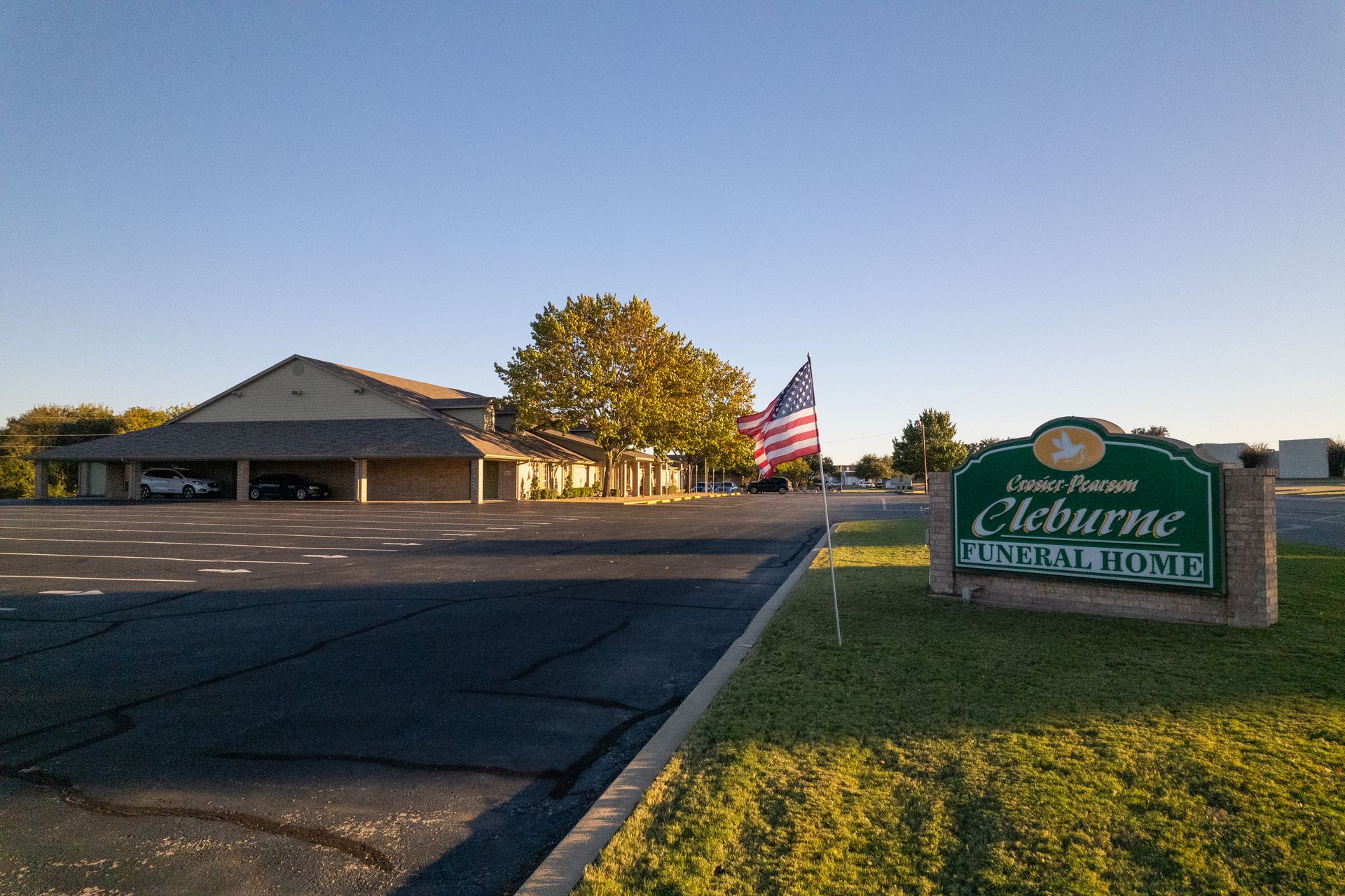
Operating at 512 North Ridgeway Drive in Cleburne, Crosier-Pearson functions within the regulatory oversight of the Texas Funeral Service Commission (TFSC). The mortuary provides full-spectrum end-of-life care, handling on-site preparations, visitations, chapel services, and transfers across the Dallas-Fort Worth metroplex.
Its geographic position provides direct accessibility to key local medical and institutional centers, including Texas Health Harris Methodist Hospital Cleburne, local hospice networks, and the Johnson County Medical Examiner's jurisdiction. When an unexpected death occurs outside a clinical setting, decedents are processed through local emergency response before release to the mortuary, requiring coordinated paperwork between the Justice of the Peace, attending physicians, and the funeral home staff.
Transfer Authorization Protocols
In the state of Texas, a funeral establishment cannot take custody of a deceased individual without explicit, written authorization from the legal next of kin or an appointed designated agent under Texas Health and Safety Code Section 711.002. Securing this authorization immediately prevents delays in transfer from medical facilities or residences.
Service Offerings and Care Specifications
Modern funeral planning requires distinguishing between various disposition paths, regulatory mandates, and ceremony structures. Crosier-Pearson accommodates multiple traditional and contemporary pathways.
Traditional Ground Burials
Traditional services remain a common choice in North Texas, generally encompassing:
- Professional Embalming and Preparation: Embalming is not legally required by Texas law for every circumstance, but it is mandated by funeral home policy if an open-casket public viewing or extended visitation is scheduled.
- Visitations and Gatherings: Facilities provide private family viewings as well as open community visitations, typically held the evening before the funeral service.
- Chapel and Graveside Liturgies: Services can take place in the on-site mortuary chapel, a designated church within Johnson County, or strictly at the graveside.
- Cemetery Logistics: Crosier-Pearson coordinates committal services at major local sites such as Rosehill Cemetery, Cleburne Memorial Cemetery, Keene Memorial Park, and rural church burial grounds across the county.
Cremation Pathways and Regulatory Requirements
Families opting for cremation have access to varying degrees of ceremonial inclusion:
- Direct Cremation: The most cost-effective approach, involving the legal transfer, minimum 48-hour mandatory statutory holding period, non-ceremonial cremation in a licensed crematory unit, and return of the cremains in a selected urn.
- Cremation with Memorial Service: The disposition takes place first, followed by a formal memorial gathering in the chapel or family venue with the urn present.
- Full Traditional Service Followed by Cremation: A complete viewing and funeral liturgy utilizing a specialized ceremonial rental casket, after which the cremation process is executed.
Under Texas law, a mandatory 48-hour waiting period must elapse between the recorded time of death and the cremation, unless a Justice of the Peace or medical examiner waives the timeline via an official emergency variance.
Military Honors and Veteran Protocols
With numerous military veterans residing across Johnson County, coordinating military honors is a core function. Eligible honorably discharged personnel are entitled under federal law to:
- The folding and presentation of the United States flag by a uniformed military detail.
- The sounding of Taps via live bugler or high-fidelity ceremonial audio.
- Interment or inurnment privileges at Dallas-Fort Worth National Cemetery in Dallas, which includes the grave site, opening and closing fees, a government-provided marker, and perpetual care at zero federal expense to the family.
Crosier-Pearson staff interfaces directly with the Department of Veterans Affairs (VA) and military branch casualty assistance offices to secure DD-214 service records and schedule national cemetery committal slots.
2026 Funeral Pricing Structures and FTC Compliance
Under the Federal Trade Commission's Funeral Rule, every consumer possesses the federal right to receive an itemized General Price List (GPL) upon discussing funeral goods, services, or pricing in person or over the telephone. Funeral providers are prohibited from bundling services into mandatory all-or-nothing packages without offering itemized options.
Breakdown of Mortuary Expenses
Funeral expenses fall into three operational categories:
- Basic Services of Funeral Director and Staff: A non-declinable professional fee covering initial consultation, regulatory compliance, vital statistics filing, securing death certificates, and general overhead.
- Supplemental Facility and Operational Selections: Optional fees based on family selections, including embalming, dressing, cosmetizing, viewing facility use, chapel use, transfer vehicles (hearse, utility van), and transfer of remains from the place of death.
- Third-Party Cash Advance Items: Charges paid by the funeral home to third parties on the family's behalf, which must be itemized without hidden markups unless disclosed. Examples include certified copies of death certificates, cemetery opening/closing fees, flowers, musicians, police escorts for funeral processions, and local newspaper obituary notices.
| Service Category | Operational Inclusions | Primary Variables Affecting Total | Regulatory / Practical Constraints |
|---|---|---|---|
| Direct Cremation | Transportation from place of death, sheltering, 48-hour holding, alternative container, crematory processing, temporary urn container. | Selection of decorative urn; medical examiner cremation permit fees ($25–$100 depending on jurisdiction). | 48-hour mandatory Texas statutory waiting period before retort processing; death certificate sign-off required. |
| Traditional Burial Service | Staff services, embalming, preparation, evening visitation, chapel or church liturgy, formal hearse transport, committal coordination. | Selected casket grade (gauge steel, solid wood, or composite); outer burial container (vault); cemetery plot acquisition. | Most modern cemeteries mandate an outer burial vault to prevent ground settling; embalming required for public viewings. |
| Immediate Graveside Burial | Transfer, non-embalmed sheltering, dressing, refrigeration, transportation directly to the cemetery, graveside committal service. | Casket selection; cemetery opening/closing fee; outer burial container; presence of clergy or family floral arrangements. | Viewing is strictly limited to immediate family prior to closure; avoids formal chapel facility rental costs. |
| Memorial Gathering Post-Cremation | Direct disposition followed by mortuary chapel coordination, audio/visual presentation setup, and staff coordination of memorial ceremony. | Selection of keepsake urns, memorial register books, customized prayer cards, catering space accommodations. | Can be scheduled weeks or months after death, eliminating urgent travel pressures for out-of-state family. |
Administrative Procedures: Johnson County Vital Records
Filing the official Certificate of Death in Johnson County is managed through the Texas Electronic Vital Events Registrar (TxEVER). Prompt processing depends on several interdependent variables.
The Death Certification Workflow
- Medical Certification: The attending physician, physician assistant, or medical examiner must complete the medical certification portion of the record within five business days of receiving the death record, establishing the cause and manner of death.
- Demographic Submission: The funeral director collects all legal demographic data from the legal next of kin, verifies social security numbers, military records, and parental names, and uploads the record into the state database.
- Filing and Ordering: Once signed off medically and demographically, the local registrar in Cleburne issues the permit and authorizes certified copies.
Certified copies of the death certificate are required for settling estates, accessing bank accounts, transferring vehicle titles through the Texas Department of Motor Vehicles (TxDMV), real estate transactions, and claiming life insurance proceeds. Certified copies are ordered through the Johnson County Clerk’s Office or the City of Cleburne Vital Statistics department.
Pre-Need Contract Considerations in Texas
Planning funeral arrangements in advance allows individuals to fix service costs at today's rates, sparing surviving family members urgent financial and logistical burdens.
Texas Department of Banking Oversight
Pre-need funeral contracts in Texas are governed strictly under Chapter 154 of the Texas Finance Code. Funeral establishments selling prepaid arrangements must hold an active permit from the Texas Department of Banking. Funds collected must be held in a state-approved trust fund or placed into an approved pre-need life insurance policy to ensure the investment remains protected regardless of future ownership changes at the funeral establishment.
When executing a pre-need agreement with Crosier-Pearson Cleburne Funeral Home, verify the following details:
- Guaranteed vs. Non-Guaranteed Items: Ensure the contract clearly distinguishes between guaranteed goods/services (which will never cost more than the contracted price, regardless of inflation) and non-guaranteed cash advance items (such as cemetery fees, honorariums, or death certificate costs, which fluctuate based on market rates at the time of death).
- Transferability Clauses: Verify that the contract contains an irrevocable transfer clause, allowing the funds to be redirected to another funeral home if the contract holder moves outside Johnson County.
- Cancellation and Refund Terms: Texas law guarantees a full refund within 30 days of signing a pre-need contract; after 30 days, refund calculations are subject to statutory retention percentages set by state finance laws.
Actionable Steps for Families Facing an Immediate Loss
When a death occurs in Johnson County, following an organized series of steps helps families maintain clarity and avoid unnecessary expenses during the first 48 hours:
- Obtain the Legal Pronouncement: If the death occurs in a hospital or hospice, medical staff handle this automatically. If an unattended death occurs at home, call 911 immediately so law enforcement and the Justice of the Peace can formally pronounce death and clear the scene.
- Designate One Family Spokesperson: Choose one individual as the primary point of contact for the funeral home to eliminate miscommunications regarding disposition choices, casket selections, and authorizations.
- Gather Essential Documentation: Assemble the decedent's Social Security card, driver's license, complete legal name, date and place of birth, parents' full names (including mother's maiden name), highest level of education completed, and military discharge paperwork (Form DD-214), if applicable.
- Request the Itemized General Price List (GPL): Review all options with the funeral director line-by-line. Do not agree to general package pricing without examining the exact itemized costs for services you want and discarding those you do not need.
- Determine the Number of Death Certificates: Estimate death certificate needs by counting open financial accounts, real property deeds, vehicle titles, pensions, and insurance policies. Most families in Johnson County require between 5 and 10 certified copies.
Frequently Asked Questions
What happens if a loved one passes away at home in Cleburne without hospice care?
Call 911 immediately so local police and emergency medical responders can arrive on scene. Because the individual was not under active hospice or immediate physician care, the Johnson County Justice of the Peace must be dispatched to examine the scene, determine if an autopsy is warranted, legally pronounce the death, and authorize release to Crosier-Pearson Funeral Home.
Following the initial emergency response, the responding officers will ask which funeral home you have selected. The funeral home is then dispatched for transportation once the authorities release the scene.
Can an outside casket or urn be used at Crosier-Pearson Cleburne Funeral Home?
Yes. Under the FTC Funeral Rule, you have the legal right to purchase a casket, alternative container, or urn from any third-party retailer, such as an online vendor or warehouse club.
The funeral home cannot refuse to handle a third-party casket or urn, nor can they charge a fee or handling surcharge for receiving, unboxing, or inspecting it.
How many certified death certificates should be ordered in Johnson County?
Most families require between 5 and 10 certified copies depending on the complexity of the decedent's financial estate.
One certified copy is typically required for each major financial institution, life insurance carrier, title transfer agency (TxDMV), and the county deed records office for real estate transfers. Additional copies can be ordered at any time directly through the Johnson County Clerk’s Office in Cleburne.
Is embalming legally required in the state of Texas?
No, Texas law does not mandate embalming for every deceased person.
However, state regulations require that a body either be embalmed or refrigerated within 24 hours of death. If an open-casket public visitation or long public ceremony is requested, funeral home internal policy routinely requires professional embalming to ensure sanitation and preservation during the viewing period.
Can Crosier-Pearson handle burials at the Dallas-Fort Worth National Cemetery?
Yes, Crosier-Pearson regularly coordinates military committals at the DFW National Cemetery.
The funeral directors schedule the arrival with the National Cemetery Scheduling Office, verify military eligibility via form DD-214, arrange for the military honors flag folding ceremony, and provide hearse transportation from Johnson County to the national cemetery grounds in Dallas.
For families navigating a loss or preparing pre-need arrangements in Johnson County, engaging directly with licensed directors provides legal clarity and peace of mind. Request an updated General Price List, verify contract terms under Texas Department of Banking guidelines, and secure your family's personal legacy through transparent, dignified end-of-life planning.
Image Gallery