Understanding Whole Life Insurance Rates for a 55-Year-Old: Costs, Factors, and Options
At age 55, average whole life insurance rates typically range between $150 and $600 per month for coverage amounts between $100,000 and $250,000. Rates vary significantly based on biological sex, health tier, tobacco use, and benefit s...
At age 55, average whole life insurance rates typically range between $150 and $600 per month for coverage amounts between $100,000 and $250,000. Rates vary significantly based on biological sex, health tier, tobacco use, and benefit size. Unlike term policies, whole life premiums are locked in permanently, guaranteeing a fixed death benefit and cash value growth.
Contents
What Drives Whole Life Insurance Costs at Age 55?
Purchasing whole life insurance at age 55 places applicants at a specific juncture in life insurance underwriting. Actuaries calculate policy costs based primarily on life expectancy, mortality risk, and the temporal window available to compound cash reserves. Because whole life insurance guarantees a payout regardless of when the policyholder dies—provided premiums are paid—the insurer assumes 100% certainty of paying the claim.
At 55, several primary underwriting variables dictate premium rates:
- Mortality Risk and Age Curve: Age 55 marks a period where statistical health risks begin to accelerate. According to mortality tables maintained by the Social Security Administration, life expectancy for a 55-year-old is approximately 25 to 30 additional years depending on sex. Insurers must price the policy so that accumulated premiums, plus internal investment returns, fully fund the death benefit within that projected window.
- Biological Sex: Females generally pay less for life insurance than males of the same age due to higher statistical life expectancies. A 55-year-old female often pays 15% to 25% less per month for identical coverage compared to a 55-year-old male.
- Underwriting Class (Health Status): Insurers place applicants into health categories based on medical exams, lab work, personal medical history, and family history. Key categories include:
- Preferred Plus / Super Preferred: Exceptional health, optimal BMI, normal blood pressure and cholesterol, no family history of early cardiovascular disease.
- Preferred: Excellent health, minor well-controlled issues (e.g., mild managed hypertension).
- Standard Plus / Standard: Average health, slight overweight status, or manageable chronic conditions like controlled Type 2 diabetes.
- Substandard (Table Ratings): Moderate-to-high health risks resulting in premium surcharges applied via a letter or number rating system (e.g., Table A through Table H).
- Tobacco and Nicotine Use: Cigarette smoking, vaping, or chew usage dramatically inflates rates. A 55-year-old smoker will typically pay 200% to 300% more than a non-smoker for the exact same policy.
- Policy Face Amount: Larger death benefits carry higher absolute monthly costs, though larger policies sometimes feature lower administrative costs per thousand dollars of coverage ($D/1,000 face value).
Average Whole Life Insurance Rates for a 55-Year-Old
The following estimates illustrate typical monthly premiums for non-smoking 55-year-old applicants across common coverage tiers and health classes. These figures represent standard, fully underwritten whole life insurance policies with fixed premiums.
| Coverage Amount (Face Value) | Gender | Standard Health (Monthly) | Preferred Health (Monthly) | Primary Financial Use Case |
|---|---|---|---|---|
| $25,000 | Female | $50 – $75 | $40 – $60 | Final expense and burial coverage |
| $25,000 | Male | $65 – $95 | $50 – $75 | Final expense and burial coverage |
| $50,000 | Female | $95 – $135 | $75 – $110 | Debt payoff and small legacy gift |
| $50,000 | Male | $120 – $175 | $95 – $140 | Debt payoff and small legacy gift |
| $100,000 | Female | $175 – $250 | $140 – $200 | Estate liquidity and spousal safety net |
| $100,000 | Male | $230 – $330 | $180 – $260 | Estate liquidity and spousal safety net |
| $250,000 | Female | $410 – $580 | $330 – $460 | Wealth transfer and business succession |
| $250,000 | Male | $540 – $780 | $430 – $620 | Wealth transfer and business succession |
| $500,000 | Female | $800 – $1,150 | $640 – $890 | High-net-worth estate tax liquidity |
| $500,000 | Male | $1,050 – $1,500 | $840 – $1,200 | High-net-worth estate tax liquidity |
Note: Individual quotes vary based on carrier, state of residence, specific medical history, and policy structure. Working with an independent agent allows side-by-side verification of real-time rates.
Core Components of Whole Life Insurance at Age 55
Whole life insurance is a form of permanent life insurance. Unlike term life insurance—which covers a limited period (such as 10, 20, or 30 years)—whole life provides coverage for the policyholder's entire lifespan, provided premium payments are maintained according to the contract schedule.
Whole Life Policy Structure:
- Guaranteed Death Benefit
- Permanent coverage that never decreases
- Fixed Level Premium
- Rates locked at age 55; cannot rise due to aging/health
- Cash Value Component
- Grows tax-deferred at a guaranteed minimum interest rate
- Accessible via policy loans or withdrawals
1. Guaranteed Level Premiums
When a 55-year-old secures a whole life policy, the premium rate remains unchanged for the life of the contract. The insurance company cannot increase your monthly cost, even if your health degrades severely at age 65, 75, or beyond.
2. Guaranteed Death Benefit
The contract guarantees that upon the insured’s passing, the beneficiaries will receive the full face value of the policy, free of income tax under Internal Revenue Code Section 101(a).
3. Cash Value Accumulation
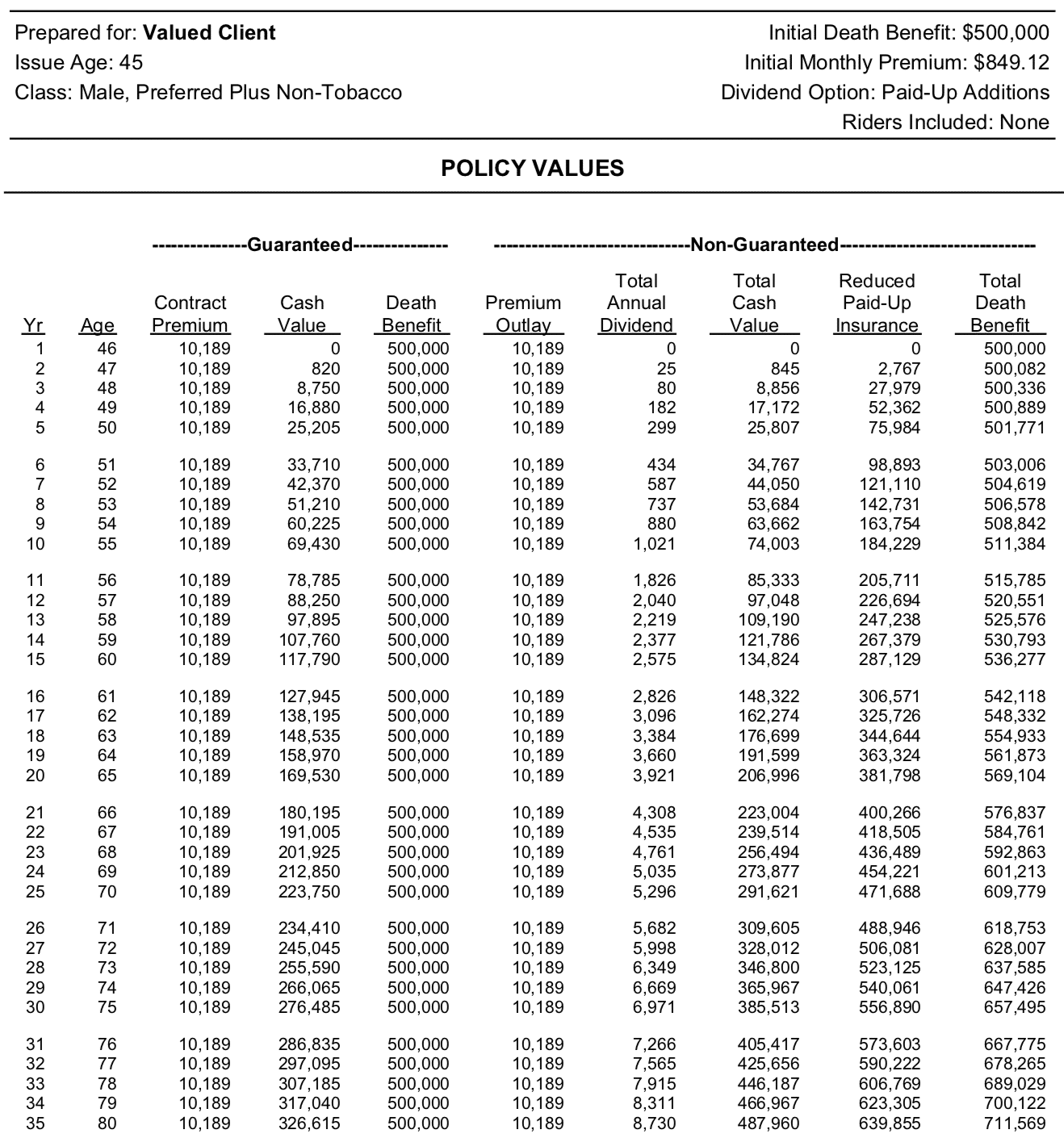
A portion of every premium payment is allocated into a cash value account. This balance grows tax-deferred at a guaranteed base rate (often between 2% and 3.75%, depending on the policy contract and current economic environment).
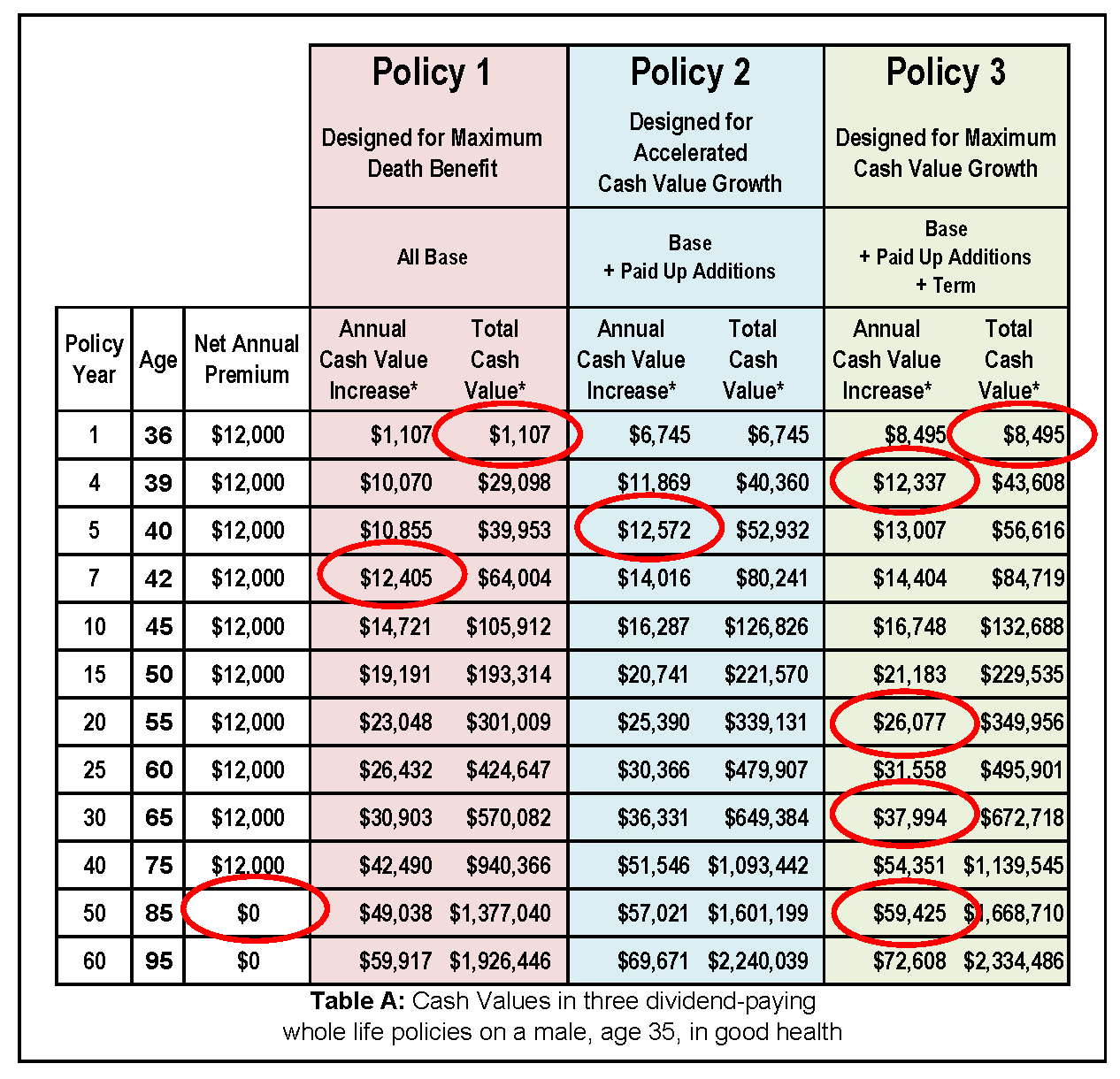
Because you are starting the policy at age 55, cash value takes longer to build substantial momentum compared to a policy started at age 30. During the first 5 to 10 years, a significant portion of early premiums covers insurer administrative expenses, underwriting costs, and agent commissions. However, by years 10 to 15, the cash value provides a dependable source of liquid equity that can be accessed through tax-free policy loans or partial withdrawals.
4. Policy Dividends (Participating vs. Non-Participating)
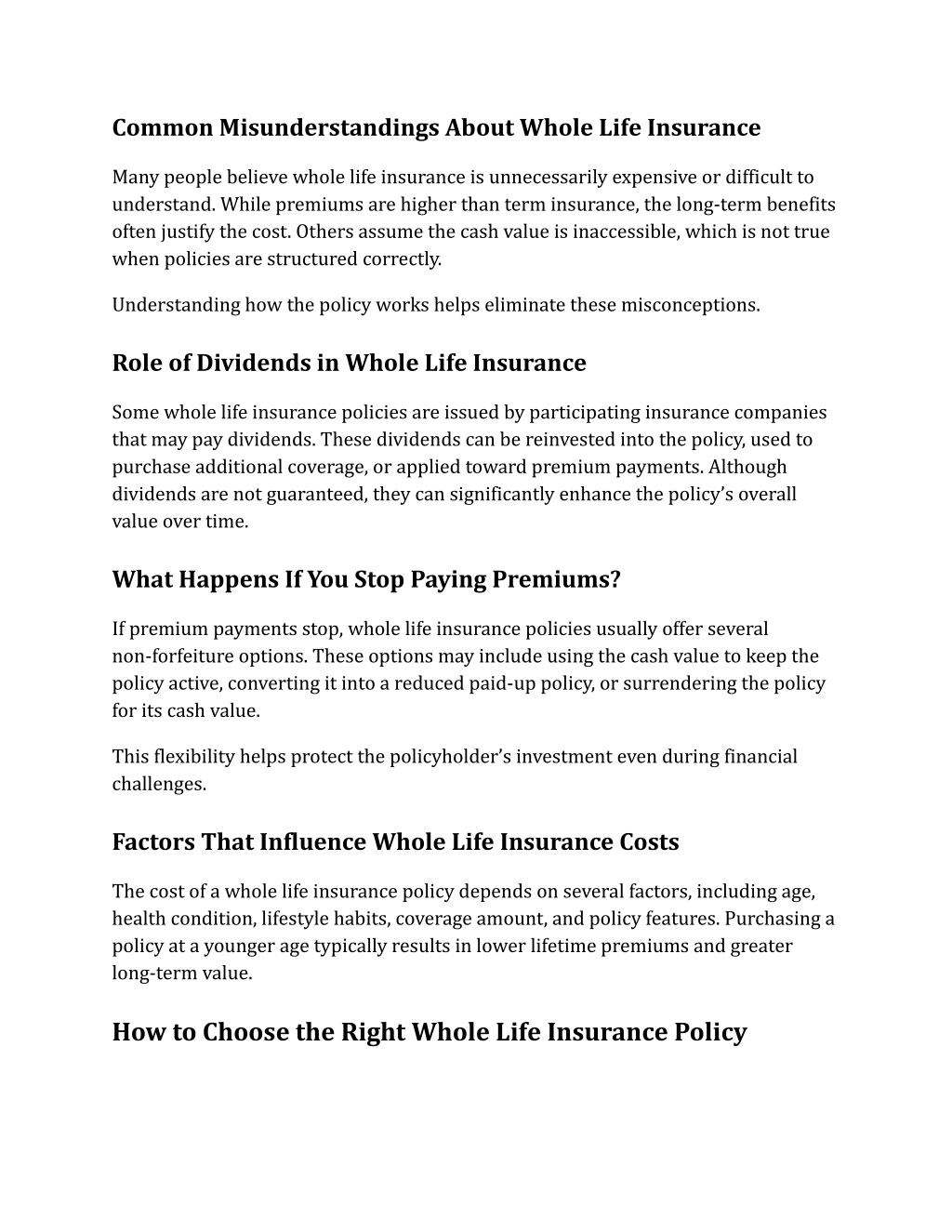
If you purchase a policy through a mutual insurance company (a company owned by its policyholders rather than public shareholders), your policy is typically participating. This means you may receive annual dividends.
While dividends are not guaranteed by law, major mutual insurers have paid them consistently for over a century. Dividends can be:
- Paid out in cash.
- Used to reduce monthly out-of-pocket premiums.
- Reinvested to purchase paid-up additional insurance (which increases both the total death benefit and cash value accumulation).
- Left to accumulate interest inside the policy.
Comparing Whole Life to Other Policy Types at 55
Before committing to whole life insurance rates at age 55, it is essential to compare whole life against other life insurance vehicles to ensure it aligns with your broader financial plan.
| Feature | Whole Life | Term Life (20-Yr) | Guaranteed Universal |
|---|---|---|---|
| Payout Duration | Lifetime | Until Age 75 | Lifetime (e.g. to 121) |
| Premium Cost | Highest | Lowest | Moderate |
| Cash Value | Yes (Guaranteed) | None | Minimal to None |
| Rate Lock | Fixed for Life | Fixed for Term | Fixed for Life |
| Primary Purpose | Permanent Legacy | Income Replacement | Low-Cost Payout |
Whole Life vs. Term Life Insurance
- Cost: A 20-year term policy for a 55-year-old male seeking $250,000 might cost around $60 to $90 per month, whereas a whole life policy for the same amount could run $430 to $780 per month.
- Duration: Term insurance expires at age 75. If you outlive the term, coverage ends with no returned value. Whole life covers you for your entire lifetime.
- Purpose: Term life is ideal for temporary financial obligations, such as replacing working income or covering an outstanding mortgage. Whole life is designed for permanent financial needs, such as estate liquidity, final expenses, or leaving a guaranteed legacy.
Whole Life vs. Guaranteed Universal Life (GUL)
Guaranteed Universal Life acts like a hybrid between term and whole life. It offers lifetime coverage with fixed premiums (often guaranteed up to age 100, 110, or 121), but builds minimal to no cash value.
- Cost Efficiency: GUL policies for a 55-year-old can be 30% to 50% cheaper than whole life policies while still offering a permanent death benefit.
- Trade-off: If your sole goal is leaving a death benefit without needing cash value equity, a GUL policy may offer lower permanent premiums. If you want cash accumulation for liquidity in retirement, whole life remains the standard choice.
Medical Underwriting Options at Age 55
When applying for whole life insurance at 55, the structure of the underwriting process directly determines your rates and eligibility.
1. Fully Underwritten Policies
- Process: Requires a detailed medical history application, access to historical medical records via the Medical Information Bureau (MIB), prescription database checks, motor vehicle reports, and typically a paramedic exam (blood sample, urine sample, blood pressure reading, and sometimes an EKG).
- Rate Impact: Offers the lowest possible premium rates if you are in good or excellent health.
- Timeframe: Takes 3 to 8 weeks for final approval.
2. Simplified Issue Whole Life
- Process: Eliminates the physical medical exam. Applicants answer detailed health questions on the application, and the insurer checks pharmacy databases and MIB records.
- Rate Impact: Premiums are higher than fully underwritten policies because the carrier assumes greater unmeasured risk.
- Timeframe: Approval can occur within minutes to a few business days. Ideal for individuals with moderate health issues who might not pass a physical exam or who need coverage quickly.
3. Guaranteed Issue (No Health Questions)
- Process: No medical exam and no health questions. Enrollment is automatically accepted for individuals within specific age brackets (typically ages 50 to 80).
- Rate Impact: Highest cost per dollar of coverage, with face amounts usually capped at $25,000 to $50,000.
- Graded Benefit Warning: Almost all guaranteed issue policies feature a 2- to 3-year graded death benefit clause. If the insured dies of natural causes during the first two years of the policy, the beneficiary receives only a refund of premiums paid plus a small interest percentage (e.g., 10%), rather than the full face benefit. Full benefits apply immediately for accidental death.
Strategic Reasons to Buy Whole Life Insurance at 55
While whole life premiums are higher at 55 than at 35, securing permanent coverage at this stage serves distinct financial planning purposes:
- Estate Planning and Tax Liquidity: Estate taxes or probate settlement expenses can place immediate financial stress on heirs. A whole life policy provides quick, tax-free cash to settle debts, cover legal costs, or pay estate obligations without liquidating real estate or investment assets during market downturns.
- Converting Expiring Term Policies: Many adults in their mid-50s hold 20-year term policies purchased in their mid-30s that are nearing expiration. Most quality term policies contain a contractual conversion privilege, allowing policyholders to convert some or all of their term coverage into a whole life policy without undergoing a new medical exam. This is a critical option for individuals who have developed health conditions that would make new policies cost-prohibitive.
- Final Expense and Funeral Planning: A smaller whole life policy ($10,000 to $50,000) guarantees that family members will not bear the financial burden of funeral expenses, burial or cremation costs, and medical debt settlement.
- Supplemental Retirement Asset: The cash value component provides an uncorrelated asset class. During severe stock market declines, retirees can borrow against their whole life cash value for income, allowing their equities time to recover.
Frequently Asked Questions
Is whole life insurance worth buying at age 55?
Whole life insurance is worth considering at age 55 if you have a permanent coverage need, such as leaving an inheritance, paying estate taxes, funding a buy-sell business agreement, or locking in final expense coverage. However, if your primary goal is replacing earned income during your remaining working years, a 10- or 20-year term life policy is significantly more cost-effective.
How much does a $250,000 whole life policy cost for a 55-year-old?
A standard $250,000 whole life policy for a 55-year-old non-smoker generally ranges from $330 to $460 per month for females, and $430 to $620 per month for males in preferred health. Costs increase significantly for applicants with substandard health ratings or those who use tobacco.
Can a 55-year-old get whole life insurance without a medical exam?
Yes. 55-year-olds can qualify for Simplified Issue policies (which require health questions but no physical exam) or Guaranteed Issue policies (which require no health questions or medical exams). However, policies requiring no medical exam carry higher premiums and may include lower maximum coverage limits or a graded death benefit period.
What happens if I outlive my whole life insurance policy?
Unlike term insurance, you cannot outlive a traditional whole life policy. Modern whole life contracts remain in force until maturity, which is typically set at age 120. If the policyholder reaches maturity age, the insurer pays out the full face value in cash to the policyholder.
Should I convert my term policy to whole life at age 55?
Converting an expiring term policy to whole life makes financial sense if you have developed chronic medical conditions since taking out the term policy, as conversion requires no medical underwriting. It is also beneficial if your long-term estate goals now require a permanent, guaranteed death benefit.
How are whole life insurance policy loans taxed?
Policy loans taken against the cash value of a non-Modified Endowment Contract (MEC) life insurance policy are generally tax-free. However, if the policy lapses or is surrendered while an outstanding loan exceeds the tax basis of the policy, the unpaid loan balance may become subject to ordinary income tax.
Actionable Next Steps
To secure optimal rates and policy terms for whole life insurance at age 55, follow these steps:
- Calculate Exact Coverage Needs: Determine whether you require a small final expense policy ($10,000–$50,000) or a larger estate policy ($100,000–$500,000+). Avoid over-insuring with whole life if part of your temporary risk can be covered by cheaper term insurance.
- Review Existing Policies for Conversion Options: If you hold a term life policy, check its conversion window. Many policies allow conversion without evidence of insurability up to age 55 or 65.
- Check Medical Records in Advance: Obtain recent records from your primary care physician to verify blood pressure, cholesterol, and A1C levels. Treating controllable conditions prior to applying can move you from a Standard to a Preferred rate tier.
- Work with an Independent Broker: Independent life insurance brokers represent multiple carriers rather than a single insurance brand. They can shop your medical profile across dozens of insurers to identify carriers with favorable underwriting guidelines for your specific health history.
- Review Policy Illustrations Thoroughly: Examine the guaranteed cash value growth schedule versus the non-guaranteed dividend projections. Ensure the premium is fully affordable for the long haul, as surrendering a whole life policy in its early years typically results in financial loss.
Disclaimer: This article is for educational purposes and does not constitute formal legal, tax, or financial advice. Life insurance regulations, policy provisions, and tax treatments vary by jurisdiction. Consult a licensed financial professional or legal advisor regarding your personal situation.
Image Gallery